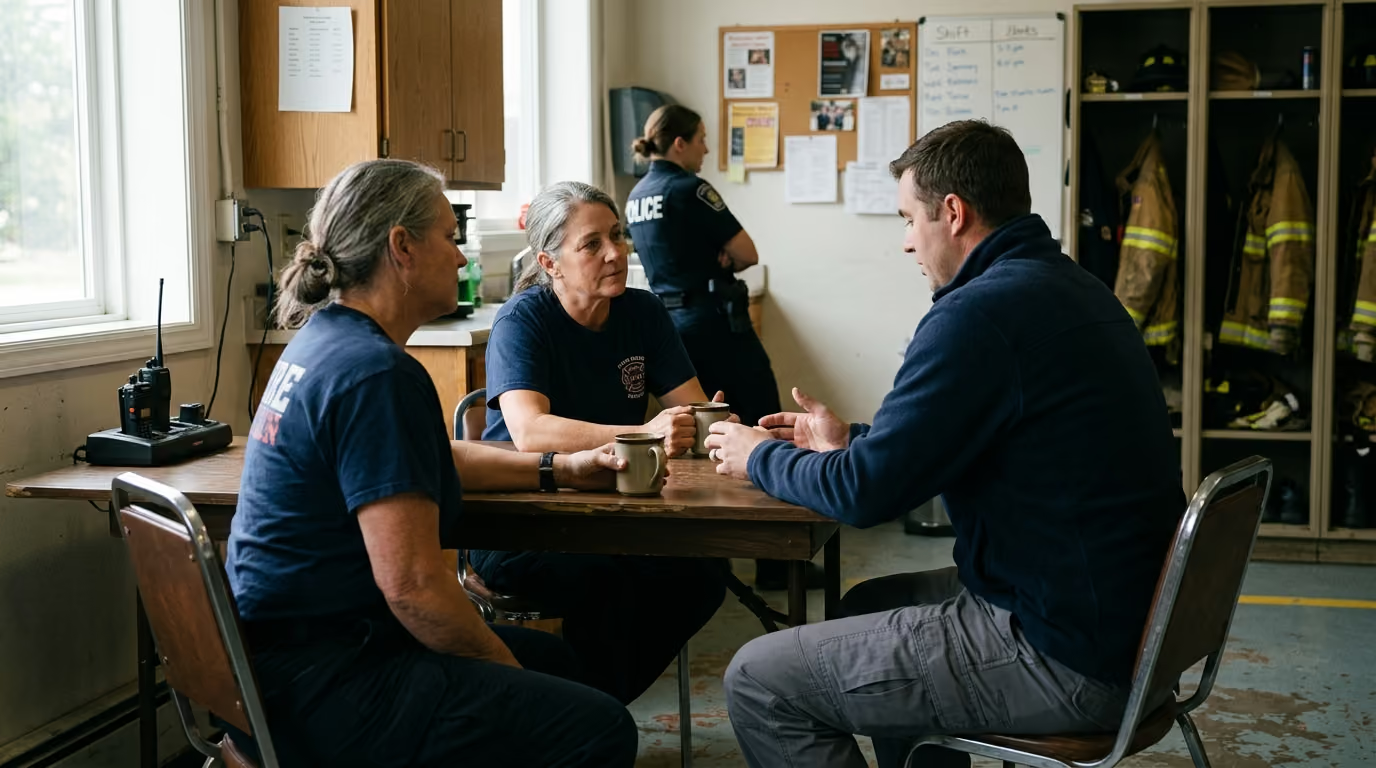

Emergency personnel navigating acute stress, burnout, and trauma can utilize confidential decision models to access effective mental health support without risking career repercussions.





If you are in immediate danger, call 911. For 24/7 support, call or text 988 and press 1 for the Veterans Crisis Line, or text 838255.
If you are wondering whether you can seek mental health support without losing your badge, your gear, or your career standing, the answer is clear. You can obtain professional, confidential psychological care while maintaining your autonomy, professional agency, and operational standing.
Seeking support is not an admission of operational failure or clinical instability. It is a proactive risk-management practice, an equipment check for the nervous system, and a method of preserving long-term capability.
If you or a colleague face immediate danger, contact emergency services at 911 without delay.
You can also call or text 988 to connect directly with the Suicide & Crisis Lifeline. Law enforcement personnel, firefighters, and veterans can press 1 to reach specialized support, or text 838255 for confidential assistance.
When acute emotional strain or safety concerns arise, securing personal equipment, department-issued gear, or medications should be arranged directly with a trusted partner, family member, or healthcare clinician. Creating physical distance from lethal means during periods of acute crisis provides critical reaction time and protects operational longevity.
Emergency responders work in high-demand environments defined by unpredictable physical threats, moral complexity, and constant performance expectations. Understanding the precise physiological and psychological impacts of this work helps distinguish normal occupational responses from conditions requiring specialized intervention.
The demands of emergency response extend across multiple public safety disciplines. This operational environment includes:
The primary risk across these roles is rarely a single traumatic scene. Instead, risk stems from repeated exposure to severe injuries, human suffering, threats to personal physical safety, circadian strain and sleep debt, and unrelenting organizational pressures.
Occupational stress describes the cumulative physiological and psychological load resulting from daily operational duties. It involves prolonged shifts, administrative scrutiny, equipment deficits, staffing shortages, and high public visibility. This form of stress taxes physical reserves, but it does not automatically indicate a psychological disorder.
An acute stress reaction is a brief response occurring immediately after an overwhelming or threatening incident. Personnel may experience heightened startle reflexes, intrusive mental imagery, sleep disruptions, sudden emotional numbness, or sharp irritability.
These early reactions represent predictable neurobiological signals that the brain is processing an extreme event. They serve as indicators to track rather than proof of permanent impairment.
Post-traumatic stress disorder involves persistent trauma-related symptoms that do not resolve naturally over time. Symptoms typically feature active re-experiencing of the event, physical and cognitive avoidance of incident reminders, cognitive changes, and continuous hyperarousal. These symptoms can degrade sleep quality, fine motor control, rapid decision-making, and personal relationships.
Complex post-traumatic stress disorder develops from chronic, repeated trauma experienced over extended periods without adequate recovery windows. In emergency personnel, this often manifests after years of continuous exposure to catastrophic calls combined with persistent workplace friction.
It includes the core symptoms of post-traumatic stress alongside persistent difficulties in emotional regulation, chronic feelings of professional failure, and interpersonal detachment. Clinical diagnosis requires evaluation by a licensed mental health professional rather than self-applied diagnostic labels.
Psychological distress in emergency responders rarely mirrors standard clinical stereotypes. Depression frequently presents as persistent anger, profound physical exhaustion, cynical detachment, excessive overtime selection, emotional flattening, or increased alcohol intake.
Generalized anxiety and panic responses often manifest as physical muscle tension, digestive distress, sleep-onset insomnia, or sudden hypervigilance off duty. Emergency responders often utilize work as a coping mechanism. They may continue performing at a high level on shift while their personal stability and physical health quietly deteriorate.
Moral injury occurs when an individual participates in, witnesses, or fails to prevent actions that violate their deeply held ethical standards. In public safety, moral distress arises from situations such as being unable to reach a victim in time, triaging limited resources during multi-casualty incidents, or carrying out administrative directives that compromise crew safety.
Moral injury is distinct from post-traumatic stress. It centers on guilt, shame, institutional betrayal, and grief rather than fear-based physiological reactivity.
Burnout describes chronic, unmanaged workplace exhaustion characterized by cynicism, physical fatigue, and a reduced sense of personal accomplishment. Compassion fatigue represents the secondary emotional wear resulting from constant exposure to the acute suffering of others.
Both conditions signal that recovery opportunities, administrative support, or work schedules require systematic adjustment. They do not indicate a lack of personal resilience.
The reluctance among emergency service professionals to utilize mental health services is well documented in occupational health research. This reluctance is not a personal character flaw. It represents a rational response to documented organizational and cultural factors.
Available research demonstrates substantial variation in psychological conditions across different response disciplines. Differences emerge based on survey methodology, exposure histories, diagnostic criteria, and whether studies evaluate self-reported symptoms or formal clinical diagnoses.
A systematic review published in Frontiers in Psychology identified suspected post-traumatic stress rates ranging from 8% among firefighters to 22% among psychiatric emergency nurses. A broader scoping review reported post-traumatic stress prevalence among first responders between 10% and 23.2%, general psychological distress at 27%, and depression and anxiety rates around 15%.
Data published by the Substance Abuse and Mental Health Services Administration (SAMHSA) indicates that approximately 30% of first responders develop behavioral health conditions over their careers, compared to 20% within the general public. In specialized emergency medical service reviews, lifetime estimates reached 28% for feeling life was not worth living, 10.4% for serious suicidal ideation, and 3.1% for past suicide attempts.
Research demonstrates that public safety personnel face distinct barriers when seeking professional behavioral healthcare. A systematic review and meta-analysis published in the Journal of Psychiatric Research analyzed data across 12 first responder cohorts.
The analysis found that 33.1% of first responders endorsed mental health stigma items, while 9.3% identified practical barriers to accessing care. The most frequently cited concerns focused on potential breaches of confidentiality and adverse career outcomes.
Practical obstacles centered on rigid shift schedules and a basic lack of knowledge regarding where to find competent clinicians. A related review in Trauma, Violence, & Abuse confirmed that trauma-exposed emergency workers consistently avoid care due to fears of career sanctions, compromised professional standing, and doubts about clinician competence.
Additional survey data cited by academic researchers found that 80% of surveyed responders cited disclosure fears as a primary barrier to care, while 78% feared their peers would view them as unreliable on the fireground or street.
A meta-analytic review highlighted by Canadian public health authorities confirmed a clear positive relationship between robust social support and improved psychological outcomes in emergency workers. The association was noticeably stronger for perceived support availability than for received support interventions.
First responders must have confidence that safe, confidential, non-punitive resources exist before a crisis occurs. Simply offering an unvetted hotline or assigning peer contacts without clear operational protocols does not resolve underlying trust deficits. Personnel need structured systems that respect their autonomy and maintain strict privacy boundaries.
Obtaining mental health support should never require surrendering personal autonomy or professional agency. Navigating care effectively involves understanding the balance between personal control, legal privacy rights, and operational safety obligations.
Every mental health interaction should be evaluated against three core operational standards:
Guidance from the National Institute for Occupational Safety and Health (NIOSH) emphasizes that public safety organizations must maintain strict confidentiality standards for all individual health screenings and clinical records. Information should never be released to department leadership without explicit, legally valid authorization from the individual member.
Many emergency professionals avoid therapy because they assume they must immediately describe their worst operational calls in graphic detail. This assumption is inaccurate and can lead to unnecessary distress. Responders can effectively utilize the minimum effective disclosure method to establish care while maintaining total control over their personal narrative.
This method approaches behavioral healthcare like physical therapy. If a firefighter injures their shoulder, they describe the functional impairment and pain levels rather than the entire history of every structure fire they have worked.
A responder can begin by addressing functional disruptions such as sleep loss, hypervigilance, and irritability. Specific incident details can remain private until the individual establishes absolute trust with their clinician and decides that processing those memories serves a clear clinical purpose.
Accessing psychological care is not an all-or-nothing event. It operates along a progressive ladder, allowing individuals to select the exact level of support required for their current circumstances.
The initial step involves tracking changes in baseline physical and psychological functioning. Warning signs that suggest accumulating strain include:
Catching these patterns early allows personnel to apply on-shift stress regulation skills and lifestyle adjustments before chronic symptoms establish themselves.
At this stage, an individual gathers information regarding available care pathways without making official disclosures. This includes reading agency Employee Assistance Program (EAP) confidentiality contracts, researching vetted regional trauma therapists, checking union health insurance coverage, and reviewing state public safety mental health statutes. Understanding your rights and available resources removes ambiguity and reinforces personal control.
Level three involves having a confidential conversation with a single trusted person. This may be a spouse, a seasoned crew member, a department chaplain, or an accredited peer support representative.
The focus of this conversation should remain on observable functional changes rather than formal medical terms. A practical opening statement might be: "I have noticed my sleep is broken, I am losing patience quickly at home, and calls are staying on my mind after shift. I want to look into professional options to clear this up before it impacts my family or my work."
This stage consists of a comprehensive, confidential diagnostic evaluation conducted by an independent licensed mental health clinician. The assessment covers symptom duration, trauma exposure history, family systems, sleep quality, and operational demands.
The evaluation helps determine whether the individual is experiencing acute stress, clinical depression, post-traumatic stress, or simple physical exhaustion. Completing an assessment does not obligate the responder to begin long-term therapy or take medications.
If the assessment identifies a specific psychological condition, the responder and clinician select an evidence-based treatment protocol. Professional clinical practice guidelines developed by the American Psychological Association (APA) and the Veterans Affairs and Department of Defense (VA/DoD) provide strong recommendations for manualized, trauma-focused psychotherapies.
These therapies include Prolonged Exposure (PE), Cognitive Processing Therapy (CPT), Eye Movement Desensitization and Reprocessing (EMDR), and specific trauma-focused Cognitive Behavioral Therapies. These modalities help the brain reprocess traumatic material systematically, reducing hyperarousal and restoring cognitive control.
The final step incorporates psychological maintenance into a responder's long-term professional routine. Similar to regular strength training or annual medical physicals, periodic check-ins with a culturally competent clinician ensure operational readiness throughout a multi-decade career.
Finding the right clinician requires active vetting. Emergency responders should interview potential mental health providers with the same rigor they apply to selecting medical specialists for orthopedic surgery.
Before scheduling an intake appointment or sharing personal history, ask prospective providers the following screening questions:
The first therapy session sets the foundation for treatment. You do not need to arrive with a comprehensive script or present every detail of your career immediately. A clear, direct opening statement establishes professional boundaries:
> "I have worked in emergency services for over a decade and have accumulated repeated critical incident exposures. Recently, I have noticed changes in my sleep patterns, baseline irritability, and ability to detach from calls at home. My goal is to complete a private assessment, learn practical tools to regulate my nervous system, and maintain my operational effectiveness."
Bringing a written list of physical symptoms, sleep patterns, current medications, and direct questions about medical record handling helps structure the conversation effectively.
Responders must understand how clinical records are created and shared across different treatment pathways:
Peer support teams and critical incident response groups are widely utilized across the emergency services. Understanding the precise capabilities and limitations of these programs ensures personnel use them appropriately without compromising their health or privacy.
Trained peer supporters bridge the gap between emergency crews and professional healthcare resources. They offer shared cultural understanding, validate operational stress, and guide members toward vetted clinicians. Research shows that peer connection can significantly reduce the isolation often felt after severe calls.
Peer support is not a replacement for clinical treatment. Peer supporters lack the medical training required to treat complex trauma, diagnose psychiatric disorders, or manage specialized psychopharmacology. Furthermore, peer conversations do not enjoy the same statutory legal protections as licensed clinician-patient relationships in many jurisdictions.
Peer supporters should never promise absolute secrecy if an immediate safety concern arises. Understanding these boundaries protects both the distressed responder and the peer volunteer.
For decades, mandatory Critical Incident Stress Debriefing (CISD) was standard practice following catastrophic incidents. Agencies gathered entire crews in a room and required every member to recount their actions and emotional responses. Modern occupational health research indicates that mandatory psychological debriefings do not reliably prevent post-traumatic stress.
A comprehensive systematic review examining post-disaster interventions published by Evidence Aid revealed that mandatory psychological debriefing often produced no significant clinical benefit, and in certain cohorts, worsened post-incident intrusive symptoms. A related occupational medicine review confirmed limited evidence for post-incident psychosocial group interventions, while noting that voluntary team-cohesion training and structured preparedness programs yielded positive mental health outcomes.
Forcing individuals to verbally recount distressing memories before their nervous systems have stabilized can disrupt natural coping mechanisms and cause secondary traumatization. Modern best practices emphasize Psychological First Aid.
This model focuses on voluntary participation, restoring physical safety, providing immediate practical resources, protecting sleep, and offering streamlined access to licensed trauma specialists for members experiencing persistent distress. Agencies seeking to improve operational readiness should adopt shared operational support systems rather than relying on mandatory group disclosures.
Transforming how an agency approaches mental health requires concrete administrative policy, supervisor education, and transparent operational systems. Leaders must replace vague wellness slogans with clear, actionable support structures.
Supervisors often avoid addressing behavioral changes because they fear saying the wrong thing, violating labor laws, or triggering an administrative grievance. When a supervisor notices functional performance drops or behavioral red flags, they should follow a structured, non-punitive intervention protocol:
Departments should publish an explicit, plain-language confidentiality map in their standard operating guidelines. This document must clearly state:
Examining common occupational scenarios illustrates how emergency responders can apply these principles across different disciplines while preserving their dignity, privacy, and career longevity.
Profile: A veteran company officer maintains high tactical performance on the fireground. Off duty, they sleep only three to four hours a night, consume heavy amounts of alcohol to decompress, and experience growing emotional detachment from their spouse and children.
Operational Risk: The officer equates functional capability with complete psychological health, believing that showing up for shift proves they are unaffected.
Applied Intervention: The officer avoids an immediate psychiatric evaluation and begins at Level 1 and Level 2 of the help-seeking ladder. They consult a private sports medicine or behavioral clinician specializing in sleep medicine.
By focusing initial clinical sessions entirely on sleep restoration, alcohol reduction, and autonomic nervous system regulation, the officer stabilizes their physical baseline. Once trust is established, they begin processing critical incident stress without departmental documentation.
Profile: A full-time paramedic has managed hundreds of pediatric calls, fatal motor vehicle accidents, and terminal resuscitations over a fifteen-year career. They cannot identify one single call that caused their distress, but they feel constant emotional numbness, cynicism, and persistent dread before shifts.
Operational Risk: The paramedic assumes that because they have not experienced a single catastrophic incident, their symptoms do not qualify as a valid stress condition.
Applied Intervention: The paramedic connects with an independent trauma therapist trained in emergency medical service culture. The clinician conducts an assessment focused on cumulative occupational exposure, compassion fatigue, and moral distress.
The paramedic completes targeted Cognitive Processing Therapy sessions, re-establishing emotional balance without having to identify a single defining call.
Profile: A patrol officer experiences intrusive flashbacks, severe startle responses, and hypervigilance following an on-duty critical incident. The officer avoids seeking help because they fear their department will immediately confiscate their duty weapon, pull them from the street, and deny them future promotional opportunities.
Operational Risk: The officer suppresses acute symptoms, leading to escalating sleep loss, compromised situational awareness on patrol, and increasing risk of tactical errors.
Applied Intervention: The officer uses an external, independent clinician vetted by their union or a trusted retired colleague rather than the department's internal administrative portal. During the initial consultation, the officer verifies the clinician's strict confidentiality parameters.
They utilize the minimum effective disclosure method, receiving evidence-based EMDR therapy to resolve trauma responses while remaining safely on full operational duty.
Profile: A 911 public safety telecommunicator coordinates the response to a fatal structure fire involving trapped civilians. Over the following months, they suffer from recurring nightmares, panic symptoms during complex dispatch queues, and persistent guilt.
Operational Risk: The dispatcher minimizes their suffering, believing that because they were not physically present at the scene, their psychological strain is invalid.
Applied Intervention: The dispatcher participates in a peer support conversation with a telecommunicator from an outside regional communications center. The peer validates that auditory trauma carries the same neurobiological weight as physical scene exposure.
The dispatcher then accesses a confidential online therapy platform, completing a brief course of Cognitive Behavioral Therapy to resolve their panic responses.
Profile: Following a mass casualty incident, agency leadership schedules a mandatory group debriefing for all responding companies, requiring members to speak openly about their emotional reactions in front of supervisors.
Operational Risk: Personnel feel coerced, share more personal information than they intended, or experience heightened anxiety hearing other members describe distressing imagery.
Applied Intervention: Senior company officers respectfully request that command structure the session around operational logistics and practical crew needs. They recommend transitioning psychological processing to voluntary individual follow-ups with independent clinicians.
The agency provides practical resources, monitors crew recovery over the following weeks, and establishes direct access to vetted external specialists for personnel showing prolonged distress.
Profile: An emergency responder gives away expensive personal gear, expresses feelings of worthlessness, drinks heavily before shifts, and makes comments suggesting their family would be better off without them.
Operational Risk: Crew members recognize the danger signs but avoid asking direct questions because they fear offending the individual or escalating the situation.
Applied Intervention: A close colleague approaches the member in private and asks clear, direct questions: "Are you having thoughts of suicide, and do you have a plan?" If the responder confirms these thoughts, the colleague stays with them continuously and initiates immediate crisis support through 988 or emergency medical channels.
The colleague coordinates the safe storage of all firearms and personal gear with the individual's family or a medical provider. They refuse to promise secrecy while providing steady, direct support through the immediate crisis.
True professional capability is not measured by emotional detachment or the ability to absorb unlimited psychological wear. It is defined by the discipline to monitor your operational readiness, maintain your mental and physical health, and seek expert support before acute stress impairs your judgment, your health, or your crew's safety.
You can build your psychological readiness plan this week by applying these direct steps:
Protecting your mental health safeguards your operational capability, your family life, and your longevity both on duty and throughout retirement. Seeking professional support with clear privacy boundaries is a mark of professional maturity and operational excellence.
Stay connected for research-led guidance on duty fitness, shift-work sleep, injury recovery, stress, nutrition and career longevity. Practical ideas for first responders who want to stay capable on the job, recover well and protect their health for the long run.



Read practical guidance on first responder fitness, recovery, sleep, nutrition and resilience for demanding work and a long, active career.
read the blog



