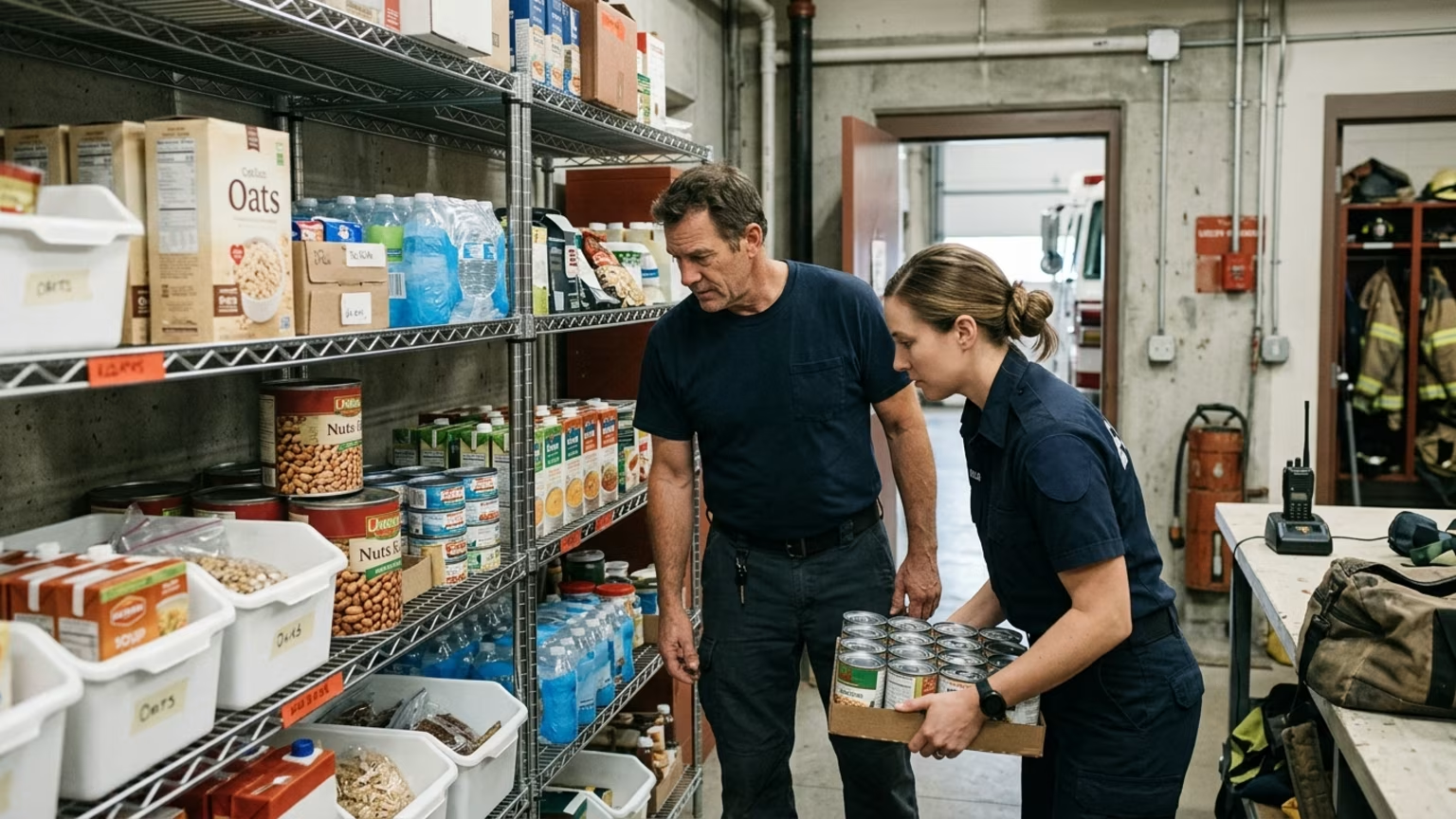

MedicalXpress outlines how to build a nutritious emergency food stockpile. Emergency personnel can adapt this advice for layered, shelf-stable station caches.





On September 14, 2026, MedicalXpress published an explainer, republished from The Conversation, detailing how to build a nutritious emergency food stockpile for prolonged infrastructure disruptions. The publication outlines practical methods for balancing shelf-stable proteins, usable carbohydrates, and hydration reserves.
The article frames its advice around the possibility of relying on stored food for a few weeks. An unbalanced diet may be less consequential over a few days of disruption. However, the core finding shows that nutritional balance becomes much more important as the period of reliance lengthens. A long-term reserve requires a strategic balance of nutrients rather than random calorie collection.
The publication refers to an unnamed UK government watchdog that reportedly warned that homes are not prepared for food-supply disruptions. It says that the government recommends stocking nonperishable foods that do not require cooking. Protein is heavily prioritized in the article for muscle maintenance, metabolism, and satiety. First responders need adequate protein to recover from the accumulated physical wear of demanding shifts.
Suggested shelf-stable protein sources include canned chicken, stewed steak, and meatballs. Salmon, sardines, and mackerel are also recommended. Herring and tuna provide additional options. Plant-based proteins such as beans, baked beans, and lentils are strongly recommended.
Shelf-stable milk and nonfat dry milk can further increase protein options without requiring refrigeration. These options provide the necessary building blocks for tissue repair during high-workload periods. Carbohydrates serve as a highly valuable energy source in any emergency cache. The article recommends prioritizing whole-grain staples where power and water remain available.
Useful options include brown rice, whole-grain pasta, rolled oats, and whole-wheat couscous. Microwave rice or grain pouches are also suggested as convenient alternatives when utilities are limited. Whole-grain carbohydrates provide essential fiber, vitamins, and minerals. The article links fiber to bowel regularity, post-meal blood-sugar stability, and gut microbiome support.
To increase dietary variety, the publication recommends stocking canned or jarred vegetables. Carrots, green beans, and potatoes offer iron and calcium. Tomatoes, corn, and peas provide potassium. Lentils supply essential B vitamins.
Adding these vegetables to meals provides important micronutrients that isolated carbohydrate sources lack. Whole nuts and seeds provide unsaturated fats, fiber, and additional minerals. Canned fruit in juice is suggested as a healthier alternative to relying exclusively on highly processed snack foods.
Translating these recommendations to emergency service requires adapting household advice into practical station guidance. First responders often assemble individual go-bags filled with convenient, highly processed snacks. A purely snack-based approach fails to provide adequate energy support during long, unpredictable deployments. Station caches must instead focus on complete meals that support physical capability over extended shifts.
Treating station nutrition as a deliberate operational requirement connects duty performance with long-term health. The MedicalXpress guidance provides a functional framework for organizing these reserves effectively. Combining canned proteins, beans, and vegetables with sauces or soups can produce a nutritionally complete meal without cooking. This modular approach allows crews to rotate flavors and maintain essential dietary variety.
The article specifically suggests sardines in tomato sauce as one way to combine a protein source with a tomato-based food. Mixing components prevents diet fatigue and helps personnel actually consume their rations. Agencies should view these modular combinations as a baseline for sustainable shift nutrition during emergencies. Palatability matters significantly in high-stress, unpredictable environments.
The publication notes that people are less likely to eat food they dislike. It clearly states that you do not get any nutrition from the food you do not eat. Keeping limited comfort foods can reduce monotony. Suggested items include canned rice pudding, custard, and jam.
Honey and cookies also provide psychological relief during deployments. Managing morale through familiar foods supports better overall dietary adherence during a prolonged disruption. Proper hydration planning remains a critical operational priority for every emergency agency. The article recommends storing unopened bottled water and planning for approximately 3 to 4 liters per person per day.
This equates to about 0.8 to 1.1 gallons per day. Additional water must be safely stored for necessary cooking and basic sanitation. First responders must actively adjust this baseline to account for heat, protective clothing, exertion, and overall crew size.
The guidance challenges the assumption that any shelf-stable food is operationally adequate over long periods. Canned foods, soups, and sauces often contain exceptionally high levels of sodium. This sodium can quickly accumulate when personnel consume multiple canned meals per day. The article advises choosing lower-salt baked beans and draining salted liquids from canned beans and fish.
Another challenged assumption involves the universal health benefits of frequent canned fish consumption. The article includes specific, targeted caveats regarding potential mercury and pollutant exposure. Pregnant women are advised to eat no more than four cans of tuna per week. Women and girls of childbearing age are advised to limit oily fish to no more than two portions per week.
The belief that dried survival foods provide complete micronutrient nutrition is also directly questioned. The article says that a diet based heavily on processed foods may be deficient in some nutrients. Vitamin C is particularly sensitive to industrial food processing. The article states that vitamin C helps iron absorption and is important for immunity and connective tissue.
It therefore suggests considering a multivitamin and mineral supplement to cover these potential nutritional gaps. First responders managing existing health conditions should not use this advice as a substitute for individualized medical care. However, the concept of a no-cook meal plan still requires essential, physical equipment. Emergency canned-food plans can easily fail if the necessary opening tools are missing from the cache.
The article concludes with a practical reminder to keep a can opener with the food supply. Without basic opening tools, even the most carefully planned station cache becomes completely useless.
Emergency service departments should restructure their station caches into clearly layered storage systems. A layered stockpile separates foods that can be eaten immediately from foods requiring preparation. Ready-to-eat canned foods and microwave grain pouches are highly practical when cooking capacity is lost. Items like brown rice, pasta, and oats should be reserved strictly for when utilities are functioning normally.
Personnel packing individual go-bags should swap highly processed snacks for sustained energy sources. A defensible approach pairs a shelf-stable protein with an easy-to-eat, complex carbohydrate. Canned or pouch-based meat, beans, and whole-grain foods offer better support for prolonged physical exertion. Including whole nuts or seeds provides healthy fats and steady energy for irregular shifts.
Transitioning away from simple sugars is essential for planning station meals around baseline sleep and sustained energy. Organizing a station cache around modular combinations creates far more flexible meal options. A standard module should include a protein source, a carbohydrate source, a vegetable, and a flavor component. Adding a lower-salt sauce or soup makes dense canned staples much more appetizing for fatigued crews.
This modular strategy helps crews turn basic emergency supplies into practical operational protocols. First responders can use this straightforward method to maintain physical capability during extended, unpredictable shifts. Departments managing sodium-sensitive personnel must actively check nutritional labels across their entire meal. A low-salt protein can quickly become a high-sodium meal when paired with salted canned soup.
Agencies should deliberately procure reduced-salt or no-added-salt products whenever possible. Rinsing canned vegetables and beans with safe water can further manage overall sodium intake. Small adjustments to procurement checklists can significantly reduce the cardiovascular burden of emergency rations. Crews must consistently review their station water reserves against realistic, severe operational demands.
The general recommendation of 3 to 4 liters per person per day serves only as a minimum baseline. Operational plans must separately account for crew size, expected duration, and physically demanding duty. Departments must provide sufficient clean water for active hydration and the preparation of dried grains. Proper water management directly supports active duty readiness and essential recovery.
Finally, agencies must organize their emergency caches to support a career-long training plan for first responders. Relying on poor nutrition during a crisis accelerates occupational fatigue and severely delays recovery. Integrating a balanced mix of proteins, fibers, and hydration into the station reserve protects long-term operational readiness. Translating operational demands into a sustainable routine requires consistent access to quality, reliable fuel.
Tracking how these general nutritional recommendations affect actual duty readiness remains critically necessary. The available guidance is designed for civilian households rather than controlled, high-intensity operational deployments. Future research should evaluate how these specific food combinations perform under the physical stress of emergency operations. We need clear, objective analysis to determine what is actually viable for active duty crews facing severe infrastructure loss.
Departments should monitor the practical application of modular meal planning during real utility outages. We need clearer operational data on hydration failure, performance outcomes, and body-composition changes during prolonged reliance on emergency caches. Field testing these combinations will reveal whether civilian guidance scales to the metabolic demands of rescue work.
Continued analysis will help refine these broad guidelines into validated, service-specific protocols. Until then, the MedicalXpress guidance serves as a practical procurement checklist and menu-design prompt for emergency personnel. Evaluating these strategies in the field will ultimately improve emergency service capability and resilience.
Organizing a station nutrition cache for prolonged infrastructure disruption is a vital operational decision, and turning those general supply guidelines into sustainable shift routines is where our work begins. When emergency personnel face the challenge of recovering from accumulated physical wear without losing duty readiness, Rescuris translates credible evidence into practical guidance built for irregular shifts.
Rescuris publishes evidence-aware guidance for firefighters, police officers, paramedics and other first responders on fitness, recovery, sleep, nutrition, stress resilience and long-term capability.






Read practical guidance on first responder fitness, recovery, sleep, nutrition and resilience for demanding work and a long, active career.
read the blog
