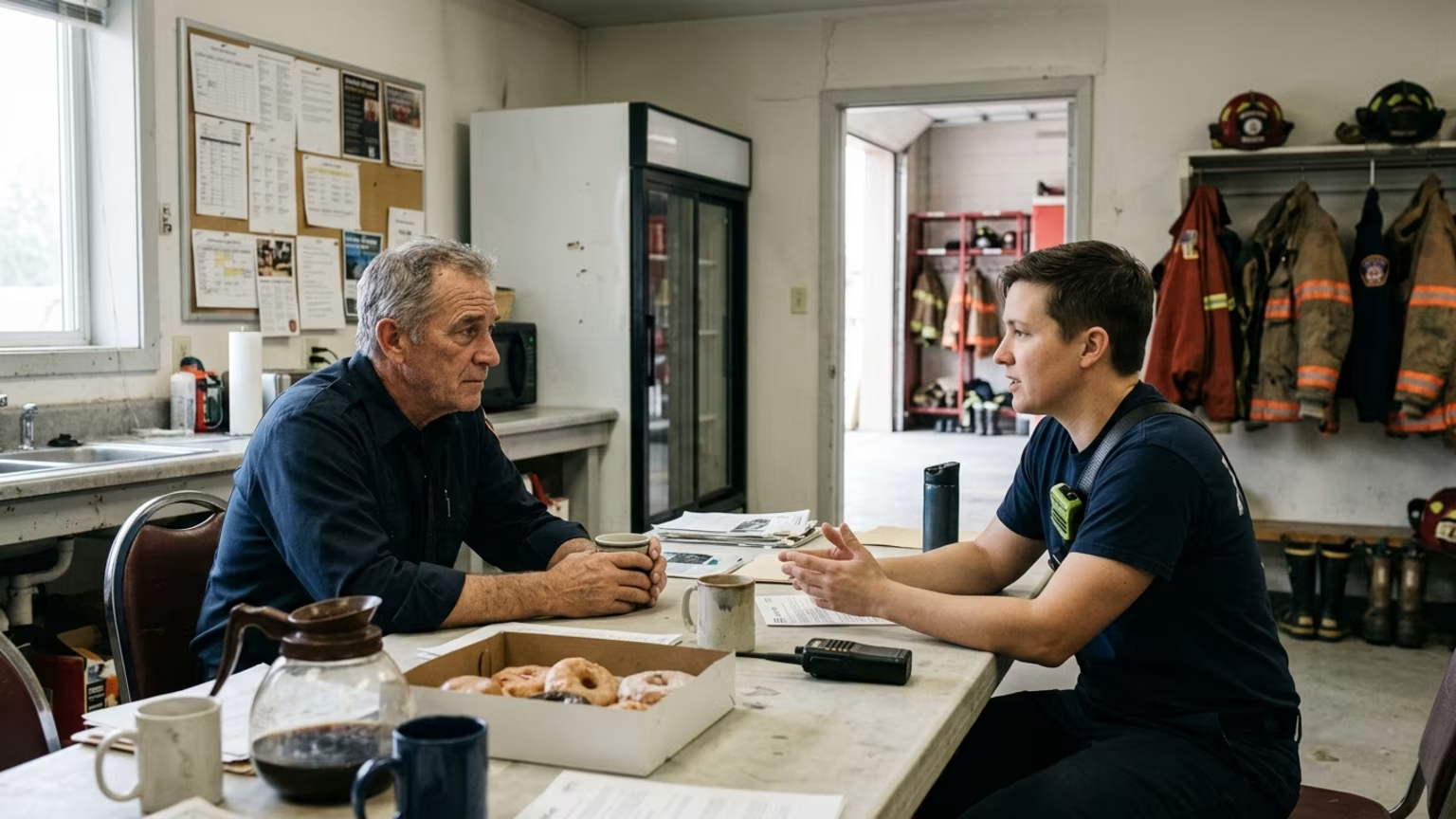

Former P.E.I. firefighter Ernie Gallant's PTSD presentations highlight the power of peer-led disclosure and the need for structured department support systems.





If you or someone you know is in immediate danger, call 911. For the Veterans Crisis Line and mental health support, call 988 (press 1) or text 838255.
Ernie Gallant, a former volunteer firefighter diagnosed with PTSD after two decades of service, recently began delivering peer-support presentations to fire crews across Prince Edward Island. He told CBC News that his mind and body crashed in the summer of 2020, leading him to speak openly about his experiences to active personnel in a series of talks called "Left Turn."
Gallant served for 20 years in New Glasgow, Prince Edward Island. He believes his two decades of firefighting likely played a major role in his PTSD diagnosis. According to his account, a recurring trigger developed when he looked left while leaving his driveway. He told reporters this reaction became associated with memories of a traumatic fire call from 2003.
When his crisis peaked in 2020, his legs gave way, and he found himself crying without understanding what was happening to him at the time. This severe physical manifestation of psychological distress demonstrates how cumulative trauma bypasses standard coping mechanisms. First responders often experience physical symptoms of burnout long before they recognize the psychological toll. Gallant began giving his presentations in P.E.I. firehalls the year before the CBC report. He designed these talks, called "Left Turn," intending to help other firefighters who might be struggling with similar unrecognized symptoms.
While his presentations offer a compelling personal narrative, the report does not quantify the reach of these talks or document measured outcomes. The core takeaway from this reporting centers on the role of peer-led disclosure in reducing stigma around occupational stress. Personal stories can prompt conversations among crews dealing with accumulated occupational exposure and delayed reactions. Informal talks help normalize distress, yet they do not substitute for clinical interventions or formal education. Departments must distinguish between an individual sharing their experience and an evaluated program.
A personal story from a veteran responder acts as a possible invitation to speak, rather than a diagnostic tool. The CBC article describes an instance where a young firefighter asked Gallant to speak to the Alberton fire department. This younger member believed older personnel needed to hear the presentation because newer recruits were receiving training that senior members lacked. This generational divide points to a need for broad communication strategies that reach every rank within a station.
Registered social worker Jayoda Tennekone told CBC that younger people are generally more comfortable discussing mental health. He noted that newer generations often possess more language for describing their psychological experiences. In contrast, Tennekone observed that men he works with can feel intense pressure to appear stoic and unemotional. This expectation of unwavering strength often prevents experienced personnel from seeking help until a full crisis occurs. He stated that creating a safe, non-judgmental space can help normalize expressing feelings.
Tennekone also described the process of unlearning long-standing expectations as highly challenging for veteran responders. Informal presentations provide a starting point for breaking down these stoic barriers and encouraging dialogue. However, translating this awareness into operational readiness requires formalizing the approach across the entire department. Formalizing support means relying on evidence-informed structures rather than hoping individuals speak up on their own. Linking this operational shift to resources like A First Responder’s Guide to Trauma Recovery After Leaving Service can provide structured guidance for retired personnel navigating these transitions.
The Canadian Mental Health Association describes its Resilient Minds program as an evidence-informed, peer-led model designed for frontline workers. Its stated training objectives include recognizing stress and trauma, communicating with struggling colleagues, and responding safely to distress. Utilizing structured programs like this moves a department from simple awareness to actionable skill development.
Relying solely on informal storytelling to alter department culture is a flawed assumption that ignores human behavior. While personal narratives hold immense value, assuming that a few brave individuals will single-handedly change a stoic culture places an unfair burden on those peers. A personal story from a veteran responder acts as an invitation to speak, but it does not serve as a diagnostic tool or a clinical intervention. Departments often assume that encouraging personnel to speak up is the final step in mental health support.
Without dedicated administrative follow-through, even highly motivating presentations fade from daily operations. Relying strictly on unstructured disclosure ignores the operational realities of emergency service. Establishing routines such as after-action reviews that improve performance and protect mental health can serve as practical tools for applying these concepts consistently. Formal integration requires continuous administrative backing, clear protocols, and accessible professional care.
When the initial enthusiasm for a new peer initiative wanes, the underlying organizational structure must sustain the practice. A successful environment requires dedicated time during shifts, transparent leadership support, and continuous reinforcement. Structured procedures fail without the necessary framework to support them in the long term. Providing the space for stories like Gallant's is merely the initial phase of building a resilient workforce.
Departments considering peer-led education must clearly distinguish an informal presentation from structured training. Resilient Minds sets out specific learning objectives, whereas an informal talk relies heavily on personal narrative. Make sure to pair peer connection with accessible professional support and careful attention to workplace context. Leaders should make space for experienced members and newer recruits when discussing psychological strain.
In October 2026, the Canadian Mental Health Association and the National Indigenous Fire Safety Council announced a partnership. They aim to bring an adapted version of the Resilient Minds program to Indigenous responders. The association notes this program began in 2016 and has since been adapted for several responder communities. Adopting programs with a history of contextual adaptation provides a stronger foundation for diverse crews.
Gallant served as a volunteer firefighter, a demographic that faces unique operational constraints compared to full-time career departments. Volunteer crews often balance full-time civilian jobs alongside unpredictable emergency calls, compounding the difficulty of finding adequate recovery time. While the reporting focuses on his individual journey, this background highlights the broader necessity of providing accessible resources to volunteer stations. Addressing mental health within these part-time roles requires strategies that fit into already stretched schedules.
Adjusting your approach means moving beyond generic solutions and listening to the specific friction points your personnel face. Gallant himself stated that he is still recovering, advising people who may be struggling to advocate for themselves and not hide. A broad approach to cumulative trauma and PTSD symptoms must acknowledge the specific geographical and operational realities of the department. Utilizing established models prevents the alienating effect of overly clinical language, grounding the support in practical occupational realities.
Future efforts to support responder mental health will depend heavily on tailoring interventions to specific operational environments. Intersecting organizational factors often complicate trauma exposure, meaning that broad interventions need local refinement. We must continue tracking how departments implement structured peer support after initial training concludes. The gap between initial enthusiasm for mental health awareness and sustained operational use requires ongoing study.
The partnership to adapt the Resilient Minds program for Indigenous responders represents a growing trend toward demographic-specific interventions. Watching how these adapted programs perform will yield important insights into the scalability of peer-led models. Organizations must provide outcome data and measure clinical effects to validate these structural changes. Personal disclosure initiates the conversation, but sustained operational support dictates its success.
As departments build their operational frameworks, they must avoid treating older firefighters as a uniform group. The assumptions surrounding reluctance to disclose require careful nuance, as generational and gendered expectations heavily influence help-seeking behaviors. Tracking how programs like Resilient Minds address these specific demographic challenges will inform future policy decisions. The ultimate goal is moving from episodic crisis management to sustained occupational resilience.
Introducing formal peer-support frameworks to a department is a necessary starting point, and building upon those mental health initiatives to support long-term physical capability is our primary mission. Because balancing strength, endurance, mobility and body composition across a demanding career remains a persistent challenge for active crews, Rescuris translates credible evidence into actionable editorial guidance built specifically around unpredictable schedules.
Rescuris publishes evidence-aware guidance for firefighters, police officers, paramedics and other first responders on fitness, recovery, sleep, nutrition, stress resilience and long-term capability.




Read practical guidance on first responder fitness, recovery, sleep, nutrition and resilience for demanding work and a long, active career.
read the blog
