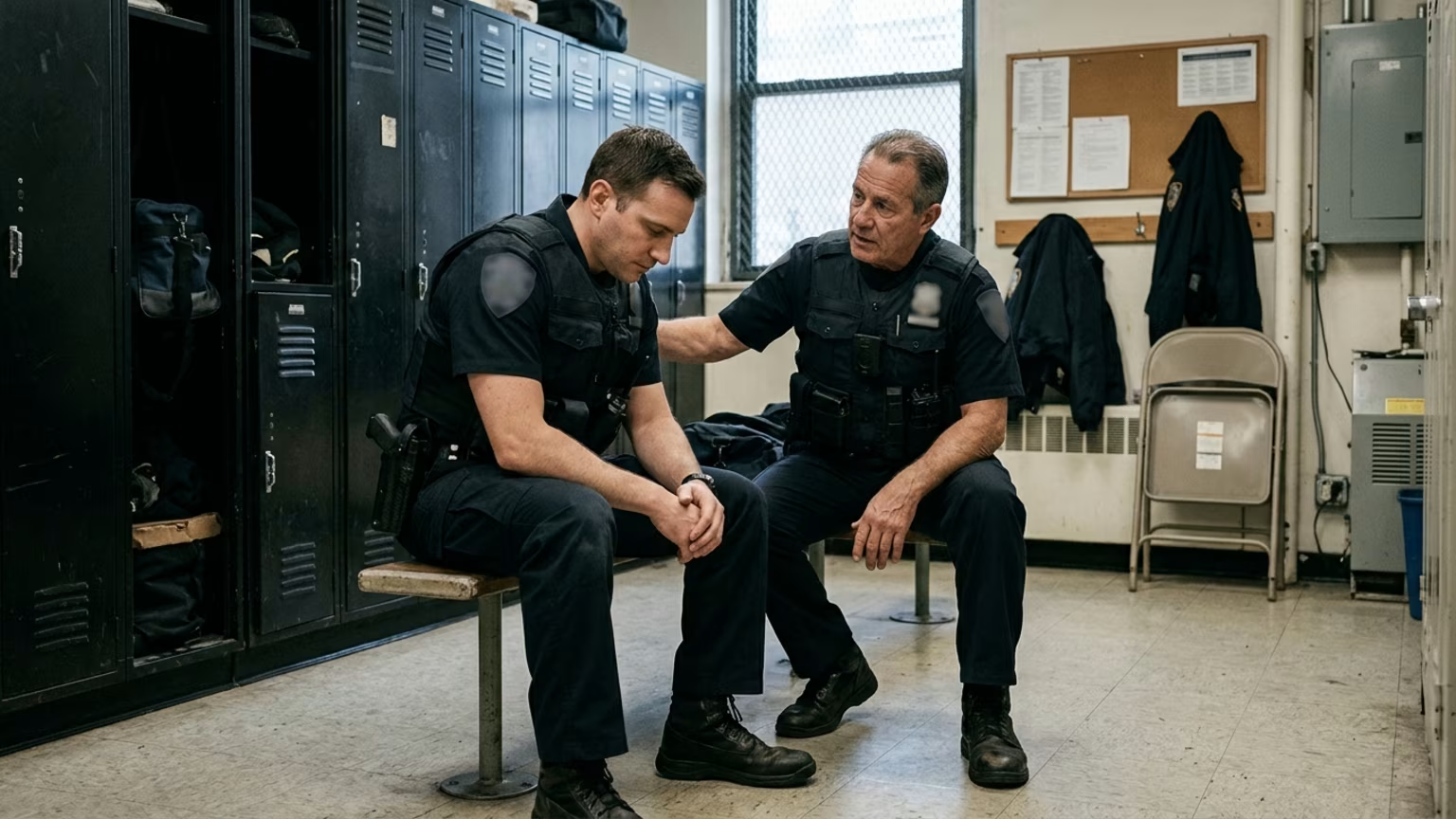

A police trauma article prompts a review of trusted peer support, clinical care, workload and practical ways to recognize cumulative stress.





If there is immediate danger, call 911. In the United States, call 988 for crisis support. Veterans can call 988 and press 1 for the Veterans Crisis Line or text 838255.
On September 14, 2026, American Police Beat published “Trauma exposure and preventing officer suicide,” examining repeated occupational trauma and prevention strategies for law-enforcement agencies. The trade article brings renewed attention to how departments recognize cumulative stress and connect officers with support.
The substantive evidence for this discussion comes from the Howard C. Liebengood Foundation’s review of police-suicide research. Its central message is that prevention should not focus on one difficult call or one diagnosis. Occupational trauma can interact with chronic stress and sleep disruption. Relationship strain, alcohol use and isolation can also contribute to the burden.
That framing changes the question from whether an officer is sufficiently resilient to whether support is accessible across a career. The Foundation describes a connected network that may include competent clinicians and trusted employee-assistance services. Peer support and chaplaincy sit within that network. Family education and substance-use treatment can also form part of it.
The care-access findings show why recognition alone is insufficient. In one large-department study summarized by the Foundation, 26% of officers screened positive for symptoms involving depression or anxiety, post-traumatic stress disorder, suicidal ideation or self-harm. Only 17.6% of that group reported receiving mental-health care during the previous year. The second figure describes officers who screened positive, not all officers in the department.
The practical takeaway is a systems-based approach: notice changes early and provide trustworthy routes to care while examining the conditions contributing to strain. The Foundation recommends prevention throughout an officer’s career rather than dependence on an annual training session or a crisis hotline. Resources need to connect with everyday supervision and working conditions.
The police-suicide literature remains limited and methodologically uneven. The Foundation reports that a 2024 systematic review identified only nine eligible studies from an initial pool of 119. A 2019 review found conflicting results across studies comparing police-suicide rates with other populations. Different definitions and comparison methods prevent a single universally accepted national rate from being drawn from these findings.
Screening results are not diagnoses, and associations do not establish a definitive profile of an officer who will experience a crisis. The material also does not provide a validated workout prescription or training threshold. American Police Beat’s full text was unavailable for verification, so its publication is the news starting point here rather than the source for the detailed recommendations.
For fatigue protocols, the review validates looking beyond tiredness during a single shift. The Foundation identifies persistent sleep problems and behavioral changes among earlier warning signs. Withdrawal and declining performance also deserve attention. A fatigue conversation should therefore include changes over time rather than treating each difficult shift as an isolated event.
That is an operational planning principle, not a diagnostic task for supervisors. The Foundation recommends training supervisors to notice meaningful changes and begin respectful conversations. They should understand available resources and help employees connect with care. Their role is to recognize concern without assigning a mental-health label.
A workplace approach to fatigue management fits this systems-based framing. The review calls for examination of shift patterns and mandatory overtime alongside staffing and recovery time. An officer’s coping habits belong in the discussion, but they should not carry the entire responsibility for managing occupational strain.
For physical training, the supported adjustment concerns planning rather than exercise dosage. The Foundation includes physical activity among healthy coping practices that complement organizational changes and care access. A completed workout should not be treated as evidence that persistent changes in sleep or functioning have resolved. Nor should a fitness session become a substitute for a conversation about support.
Thinking about training and recovery across career stages keeps physical capability within the discussion without reducing stress prevention to fitness. The editorial implication is straightforward: fatigue planning and training planning should acknowledge the same work demands. Neither should be used to explain away a sustained change in functioning.
The Foundation’s review challenges the assumption that providing wellness resources completes an agency’s responsibility. A department can advertise support while making it difficult to trust. Unclear confidentiality or punitive responses can undermine access. Treating behavioral-health services mainly as fitness-for-duty mechanisms can create another barrier.
More than 90% of respondents in a national police-personnel study summarized by the Foundation believed stigma negatively affected officers’ willingness to seek mental-health services. Reported concerns included appearing weak and losing colleagues’ confidence. Officers also worried about assignments or promotion and about control over personal information.
Peer support needs a defined place within that environment. The Foundation recommends confidentiality protections and clinical consultation, along with adequate supervision and release time for peer supporters. It also calls for referral pathways to competent professional treatment. Peer support is one component of prevention, not a replacement for clinical care or a complete program by itself.
The same reasoning applies to extended shifts and recovery pressures. Encouraging healthier individual routines does not answer questions about staffing or repeated trauma-heavy assignments. The review places those organizational conditions within prevention rather than outside it.
The immediate adjustments supported by this review are changes to observation and access, not a universal treatment routine. They can fit into ordinary shift preparation and supervisory practice. Personal assessment and treatment decisions belong with qualified clinicians.
The Foundation recommends attention to changes in sleep and irritability, alcohol use and withdrawal, concentration and work performance. The useful comparison is with a person’s usual functioning over time. Persistent changes deserve attention rather than automatic acceptance as part of the job.
For an officer preparing for another shift, this means acknowledging a pattern instead of dismissing each concern separately. For supervisors, it means remaining attentive to meaningful changes without turning an informal observation into a diagnosis. The review supports early recognition and connection to care rather than self-testing against an invented readiness cutoff.
A supervisor can ask how an employee is sleeping and whether anything has changed. The review also supports asking what assistance would make the next few shifts safer and more manageable. These are non-diagnostic conversations about functioning and support.
The supervisor’s preparation should include knowing where a referral leads. That requires familiarity with available clinical services and peer support as well as other agency resources. A respectful conversation is useful only if the employee can reach an appropriate next step.
The Foundation recommends making referral pathways visible before urgent help is needed. Officers and families should understand what confidentiality means and when information may be shared for safety. They should also receive clear information about possible effects on assignments or promotion and fitness-for-duty decisions.
Peer supporters need those boundaries explained too. Their preparation should include clinical backup and supervision, release time and a process for escalating urgent concerns. First-responder suicide-prevention guidance calls for direct connection to emergency or crisis support when there is immediate concern about suicide. Peer support alone is not the response to that situation.
The Foundation recommends examining workload and staffing, mandatory overtime and shift-related sleep disruption, along with repeated assignment to trauma-heavy duties. These are agency planning responsibilities. They should not be reduced to advice that an officer needs better motivation or a more disciplined recovery routine.
A practical review also includes supervision and leave policies. Communication and procedural fairness belong in the same assessment. The purpose is to identify organizational stressors that individual coping advice cannot address by itself.
The review’s practical message includes retired personnel as well as active officers. Persistent changes in mood or sleep, relationships or substance use, and everyday functioning deserve attention. Leaving an assignment or retiring should not make those changes seem unworthy of care.
For families, the useful preparation is understanding available resources and confidentiality boundaries. For the individual, the next step is connection with appropriate support rather than assuming that every lasting difficulty must simply be endured.
Future coverage should track whether prevention systems lead to earlier care and more trustworthy access. The Foundation recommends confidential assessment of workforce health and service-use patterns. It also calls for attention to barriers and organizational stressors across assignments and career stages. Attendance or download counts do not demonstrate improved workforce health.
There are current policy developments worth watching. As reported by Chosun Daily, South Korea’s National Police Agency announced a 2026 plan that includes comprehensive mental-health checkups for all police officers. It shortens the assessment cycle from five years to two. The plan also includes direct counselor contact for people identified as high risk or needing caution.
The follow-up questions concern what happens after identification: whether officers reach timely care and whether they trust the process. Evaluation should also examine supervisory responses and changes to preventable organizational stressors. The editorial priority is to track the connection between recognition and help, not mistake a larger program for a demonstrated improvement.
For police agencies, the most useful next evidence will assess how support functions across ordinary working conditions. That includes demanding assignments and interrupted recovery as well as periods of acute concern. Prevention deserves sustained scrutiny beyond the initial announcement.
Once the support network is identified, the next task is sorting the advice surrounding it, which Rescuris addresses through evidence-led writing about stress and recovery. For emergency-service professionals encountering mental-health stigma or messages about toughness, that coverage offers a clearer basis for weighing stress-resilience guidance without placing short-term output above lasting health.
Rescuris publishes evidence-aware guidance for firefighters, police officers, paramedics and other first responders on fitness, recovery, sleep, nutrition, stress resilience and long-term capability.






Read practical guidance on first responder fitness, recovery, sleep, nutrition and resilience for demanding work and a long, active career.
read the blog
