

A practical look at stress, fatigue and post-call check-ins for first responders, including peer support and when ongoing difficulties need qualified care.





Acute stress is a short-lived response to a demanding situation. It differs from fatigue, which involves mental or physical tiredness. For first responders, feeling activated during a task and being ready for the next one are not interchangeable.
Readiness requires more than engagement with the immediate task. A responder may feel involved in the work while fatigue still needs attention. That distinction matters when discussing the next assignment or whether someone needs support.
JEMS reports survey findings that more than half of EMS personnel experience severe mental or physical fatigue at work. It also cites an analysis comparing fatigued EMS workers with non-fatigued colleagues. The reported adjusted odds were 1.9 for occupational injury and 2.2 for medical error or adverse event. For safety-compromising behavior, the reported adjusted odds were 3.6.
Those findings make fatigue management a readiness issue rather than a judgment about personal resilience. Willingness to continue working should not close the discussion about rest or support. A post-call stress routine belongs alongside that discussion, not in place of it.
For a team, the practical question is therefore broader than whether someone feels stressed. Is the immediate task demanding their attention, or is tiredness and difficulty functioning carrying into the next task? Keeping those questions separate helps avoid treating every readiness concern as a problem of individual coping.
The evidence points to three psychological and performance-related processes worth separating:
The EMS World discussion concerns simulation, not proof of better field performance. The JEMS numbers describe fatigue associations, not a causal effect of acute stress. These sources do not establish a universal stress threshold or a validated self-screening test. ASPR TRACIE's resources support peer assistance and access to care, not a specific reset sequence as treatment or proof of preventing persistent symptoms.
That leaves a useful editorial distinction: pressure can accompany engagement without demonstrating readiness. The relevant question is what is happening to functioning and recovery, not whether a responder can describe the experience as helpful stress.
The contrast to watch is between a response tied to the immediate task and difficulty that continues into other parts of the shift or recovery period. Useful observations to discuss include:
These observations give a conversation somewhere concrete to start. They do not require a responder to decide whether they are resilient enough or to find a diagnostic label before asking for help.
A useful description can focus on what has changed and where the difficulty is showing up. Is the main concern tiredness, concentration or disrupted sleep? Is it affecting work alone or carrying into life away from duty? Those distinctions can give a workplace support contact or health-care professional clearer context for discussing the next step.
It is also worth looking at duty and training demands together rather than examining one difficult call in isolation. The broader recovery discussion should leave room for occupational demands as well as individual habits.
When distress persists or interferes with work, sleep, relationships or safety, qualified support through appropriate workplace or health-care channels is warranted. Where sleep is a central concern, a closer assessment of disrupted sleep may be a relevant part of that conversation.
A modest check-in can focus on immediate safety and basic needs, a moment to settle and connection with available support. The purpose is to identify what needs attention next rather than to produce a particular feeling or demonstrate perfect calm.
An initial check-in can ask whether immediate safety or a basic need requires attention. This keeps the focus on the present situation rather than on whether the last call was difficult enough to justify support. The issue can then be raised through the appropriate workplace or support channel.
Activation and fatigue should remain separate parts of that conversation. Feeling engaged is not evidence that tiredness has been resolved. A check-in that overlooks fatigue misses the safety concern highlighted in the JEMS reporting.
There is also a difference between noticing a need and having the resources to address it. A responder can identify a recovery problem without being able to change the shift conditions alone. That is where team and organizational responsibility enter the discussion.
When duties allow, a brief pause can serve as a transition between the completed task and what comes next. It does not need to become a test of whether every sign of stress has disappeared. The useful question is whether something still needs attention before the next demand.
A practical transition between calls can be considered within that modest purpose. The routine should make room for a check-in rather than become another performance standard that everyone is expected to meet identically.
The result of the pause may simply be recognizing that more support is needed. That is still relevant information for the next conversation. A routine need not end with a declaration that everything is fine.
The U.S. Department of Health and Human Services' ASPR TRACIE collection brings responder fatigue and behavioral-health resources into the same safety context. It includes Stress First Aid resources for firefighters, EMS and rescue personnel.
ASPR TRACIE describes Stress First Aid as supportive actions peers can use. Its Seven C's include Check, Coordinate and Cover. The remaining elements are Calm, Connect, Competence and Confidence.
For a modest post-call check-in, connection may mean speaking with a trusted peer or an appropriate workplace support contact. The question is what assistance is available rather than whether a responder can make the difficulty disappear alone. Peer contact can be part of seeking support without being the final destination for every concern.
JEMS reports that fatigue-risk guidance for EMS recommends limiting shifts to less than 24 hours. It also argues that caffeine may mitigate fatigue-related risk but does not eliminate it. Adequate rest and fatigue-risk management remain central to the discussion.
Those points belong in organizational conversations about scheduling and recovery opportunities. Staffing and shift-related fatigue should not disappear from view simply because a team also encourages stress-management skills. An individual routine and a workplace fatigue concern are different levels of the same readiness discussion.
For teams reviewing their approach, the useful distinction is between support available to the person and conditions that require an organizational response. A peer conversation may identify the concern. It should also leave room to raise shift-related problems rather than placing the entire burden of recovery on the responder.
A useful review separates task-linked engagement from persistent fatigue and difficulty functioning. It also considers whether the available response matches the problem. Some concerns belong in a brief check-in, while others need qualified support or attention to working conditions.
Before your next shift, does your current routine help distinguish temporary activation from ongoing strain, and does your team have a realistic route from that check-in to rest or qualified support?
Post-call stress checks sit with responders and the colleagues responsible for day-to-day support, while Rescuris supplies a research-led perspective for those conversations. Its editorial guidance helps distinguish useful stress-resilience approaches from motivational slogans and stigma, keeping the discussion grounded in demanding schedules and long-term health rather than personal toughness.
Rescuris publishes evidence-aware guidance for firefighters, police officers, paramedics and other first responders on fitness, recovery, sleep, nutrition, stress resilience and long-term capability.




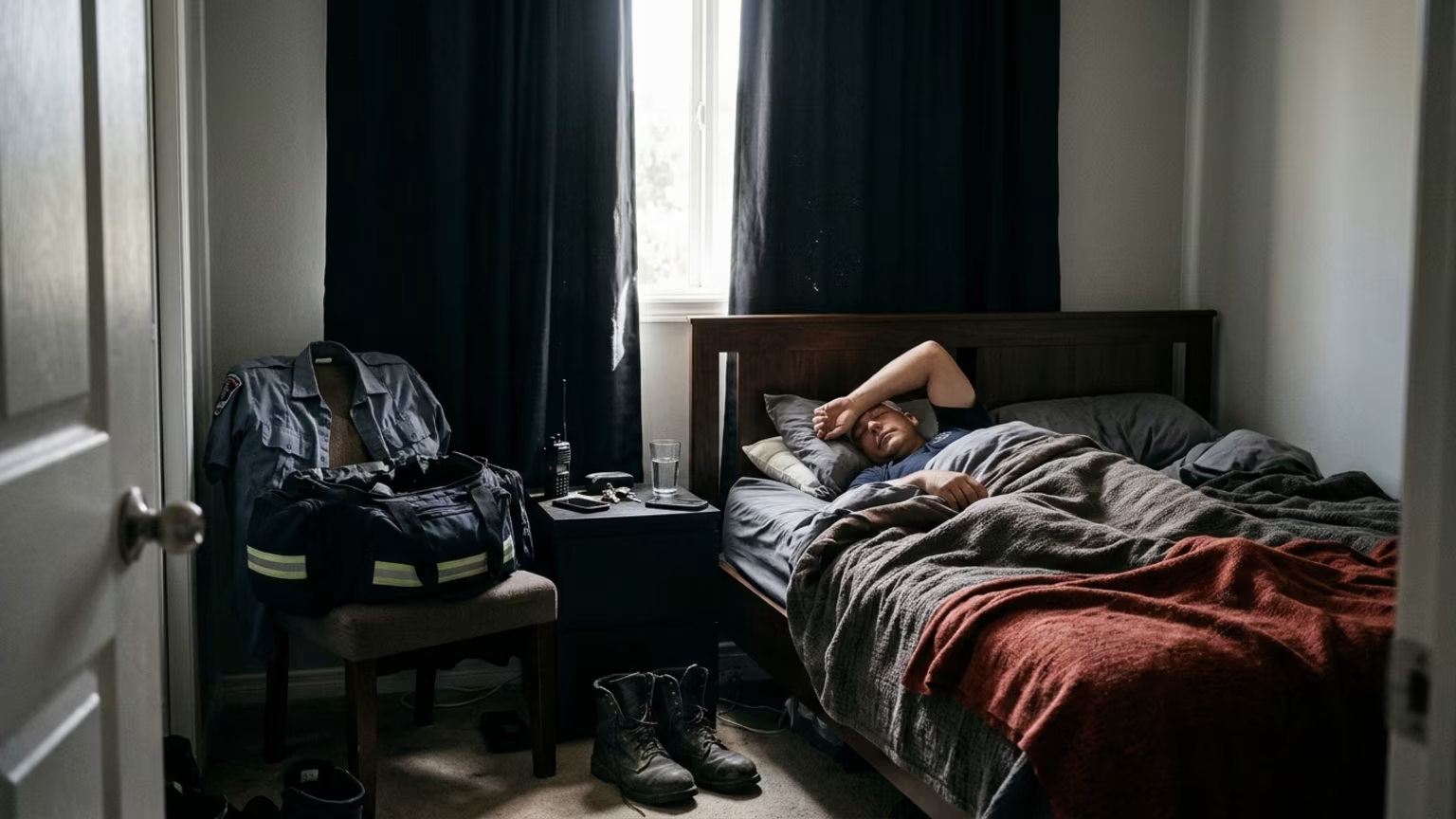

Read practical guidance on first responder fitness, recovery, sleep, nutrition and resilience for demanding work and a long, active career.
read the blog
