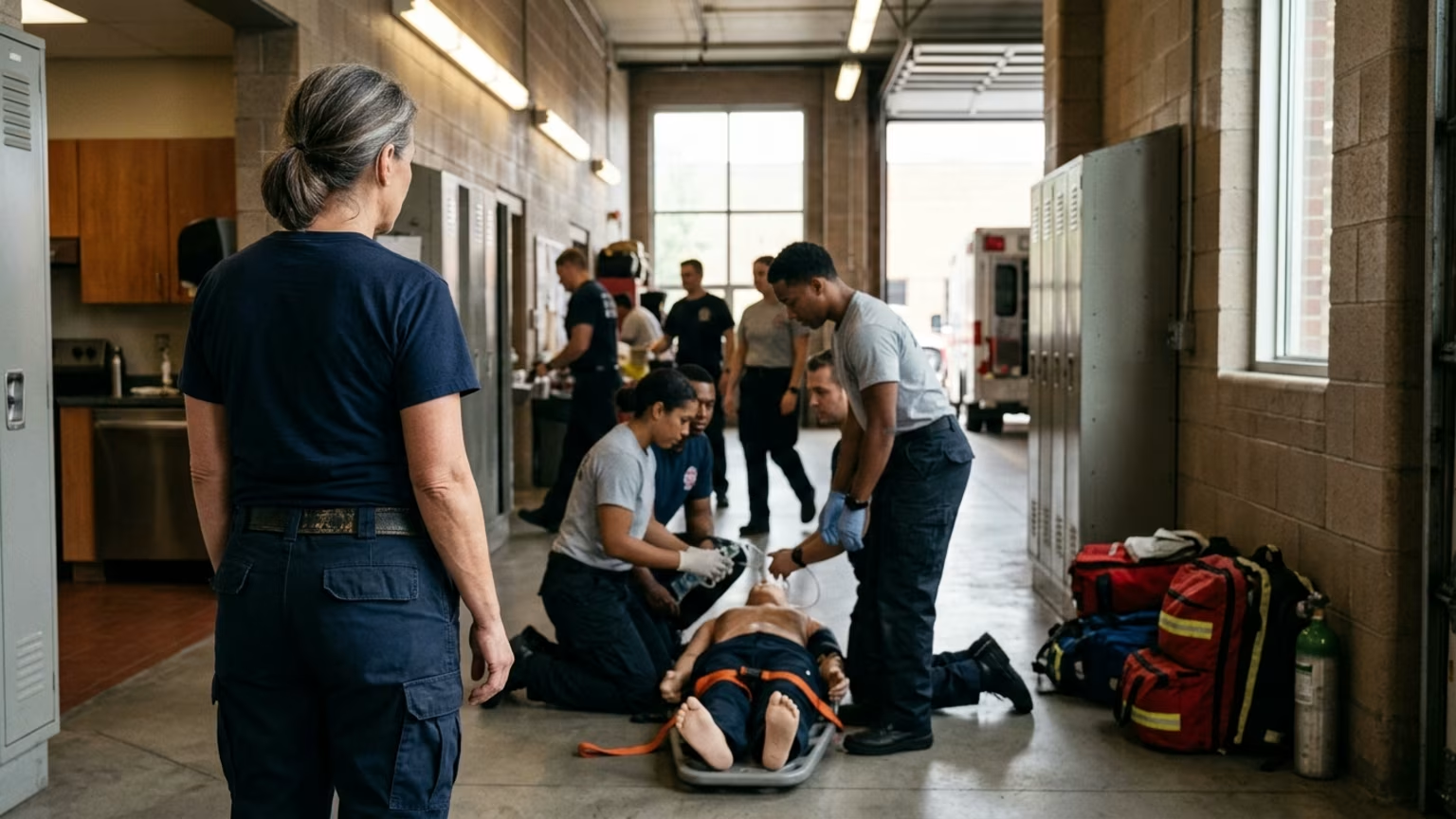

Learn how first responders can adjust progressive training to build strength, manage fatigue and maintain occupational readiness despite irregular shift schedules.





Progressive training is a structured method of gradually increasing physical demands to improve physical capability over time. For personnel working irregular shifts, this concept must function as a flexible workload-management system rather than a rigid weekly schedule. It requires adjusting volume, intensity and frequency based on current recovery levels. The goal is to build foundational strength and aerobic capacity without accumulating excessive fatigue.
A calendar-based plan may be poorly suited to unpredictable emergency work. This approach prioritizes adding small amounts of work only when recovery is adequate. It also allows responders to reduce training stress temporarily without treating the reduction as a failure.
Law-enforcement work can alternate between long sedentary periods and sudden high-intensity physical demands. Emergency responses frequently involve pursuits, suspect control, lifting and carrying. A recent National Strength and Conditioning Association review notes that higher aerobic capacity and muscular fitness are associated with better occupational performance. Conversely, lower fitness and higher body fat are associated with poorer occupational performance.
Personnel must treat physical training as a strict operational-readiness requirement rather than an optional recreational activity. However, responders face constant time constraints, shift-related fatigue, limited equipment and psychological stress. These barriers make regular exercise difficult for incumbent officers and emergency personnel. First responders must balance the physical stimulus of a workout against its immediate readiness cost.
The cited literature reflects a broader movement away from one-size-fits-all academy conditioning. Modern programming leans toward structured strength and conditioning, autoregulatory resistance training and individualized scaling. The review also describes a continuing need to sustain fitness beyond academy training across the entire career span. This sector context supports a cautious, adaptable message for all emergency-service professionals.
The NSCA review explicitly cautions that acute fatigue from exercise should not degrade performance during high-risk or cognitively demanding tasks. High-fatigue training sessions before a demanding shift can significantly compromise readiness. A rigid weekly calendar simply ignores the reality of unpredictable schedules and shift-related fatigue. Maintaining occupational capability requires matching the daily training stress to your current capacity.
The biological process of increasing strength relies on several specific adaptation mechanisms. The NSCA review outlines primary principles based on physical-training interventions for law-enforcement personnel. While this evidence base is primarily law-enforcement-specific, applications to fire and EMS serve as informed programming principles.
Establishing a durable physical foundation requires adapting the workload to your specific shift cycle. The available review supports flexible training but does not establish one universal minimum dose or deload formula. This flexibility is essential for career longevity.
When returning to training after inactivity, personnel should start with a deliberately small menu of movements. A practical entry session might include a squat pattern, a push, a pull and a carry. Personnel should pair these foundational movements with brief, low-impact aerobic work. Using reduced loads and fewer sets allows the body to adapt safely during this initial phase.
This systematic approach prevents excessive soreness and supports a progressive training framework for duty preparation. You can systematically increase volume or intensity as capacity returns rather than changing everything at once. For a responder coming off a busy rotation, restoring regular exposure and movement quality is the first priority. Testing maximal strength or replicating a full tactical circuit immediately is counterproductive.
Brief structured and self-directed programs can improve selected fitness markers when intensity and adherence are sufficient. Short workplace-based sessions using bodyweight, light loads or moderate-intensity intervals help overcome facility constraints. The NSCA review describes brief structured programs as a potentially useful option for improving aerobic capacity and grip strength. These short sessions keep personnel moving when time is severely limited.
The NSCA review cites several specific interventions to support this flexible approach. It references a 12-week structured physical-training study involving U.K. specialist police officers. The review also cites a 2022 study of supramaximal interval training in police officers. A 2020 retrospective cohort study of formal strength and conditioning for law-enforcement recruits provides further context.
Maintenance should be treated as a successful training outcome when calls, fatigue or staffing demands reduce available capacity. Short bodyweight or light-load circuits can preserve physical qualities during difficult stretches without adding excessive fatigue. Replacing a planned high-volume session with mobility or easy aerobic work is highly effective for maintenance. This strategy aligns perfectly with maintaining readiness on irregular schedules.
Maintenance programming acknowledges that brief sessions are not automatically a minimum effective dose. The cited review supports the feasibility of brief training but does not establish the smallest dose required. However, completing a shortened workout maintains the habit of regular movement during chaotic periods. This consistency is far more valuable than skipping training entirely when a full session is impossible.
Avoid placing the most fatiguing work immediately before high-risk tasks or long shifts. A maintenance session might include a few quality sets of push-ups, rows, split squats and easy aerobic work. The exact exercise menu should reflect your available equipment, your injury history and your specific role demands. The review does not establish one universal exercise list for all emergency personnel.
Use a staged return to normal training after an unusually demanding shift cycle. First restore training frequency and movement quality before you attempt to rebuild volume. Only introduce higher intensity or more demanding occupational circuits after this foundation is solid. This measured approach prevents injuries and supports successful shift cycle training plans.
A calendar-based progressive overload plan frequently fails when applied to irregular shift work. The source does not provide a formal rotating-shift periodization model for this exact reason. Its recommendations instead point toward scaling workload around your current capacity and your duty demands. Progressing one variable at a time keeps the added physical stress manageable.
A rebuild can use the same core exercises as your normal program. However, you should execute them with fewer sets, lighter loads, shorter intervals or longer rests. Once performance stabilizes and recovery is acceptable, add one progression variable at a time. The NSCA review supports describing deloading as an autoregulatory reduction in training stress when duty load makes normal workloads inappropriate.
Personnel should use repeatable field measures to track change and guide progression objectively. Practical assessments include push-ups, sit-ups and grip strength. Responders can also use shuttle-run estimates, vertical-jump performance or short obstacle courses. These field measures provide objective information without requiring a universal testing battery for every department.
A responder can maintain a simple readiness log to track these variables over time. This log should record recent duty demand, perceived fatigue, completed training and performance on selected repeatable movements. Tracking this data helps personnel adjust their daily expectations and avoid overtraining. This method is highly valuable when managing a return to training after injury.
Are you currently adjusting your physical training based on recent duty demands, or are you forcing a rigid exercise calendar despite accumulating shift fatigue?
Adjusting physical training variables based on daily operational fatigue requires constant evaluation. Rescuris establishes the framework to make these recovery and workload adjustments automatically. Managing nutrition, hydration and energy when meal timing is inconsistent creates severe physical stress, but our evidence-based protocols help you maintain occupational capability and long-term health.
Rescuris publishes evidence-aware guidance for firefighters, police officers, paramedics and other first responders on fitness, recovery, sleep, nutrition, stress resilience and long-term capability.






Read practical guidance on first responder fitness, recovery, sleep, nutrition and resilience for demanding work and a long, active career.
read the blog
