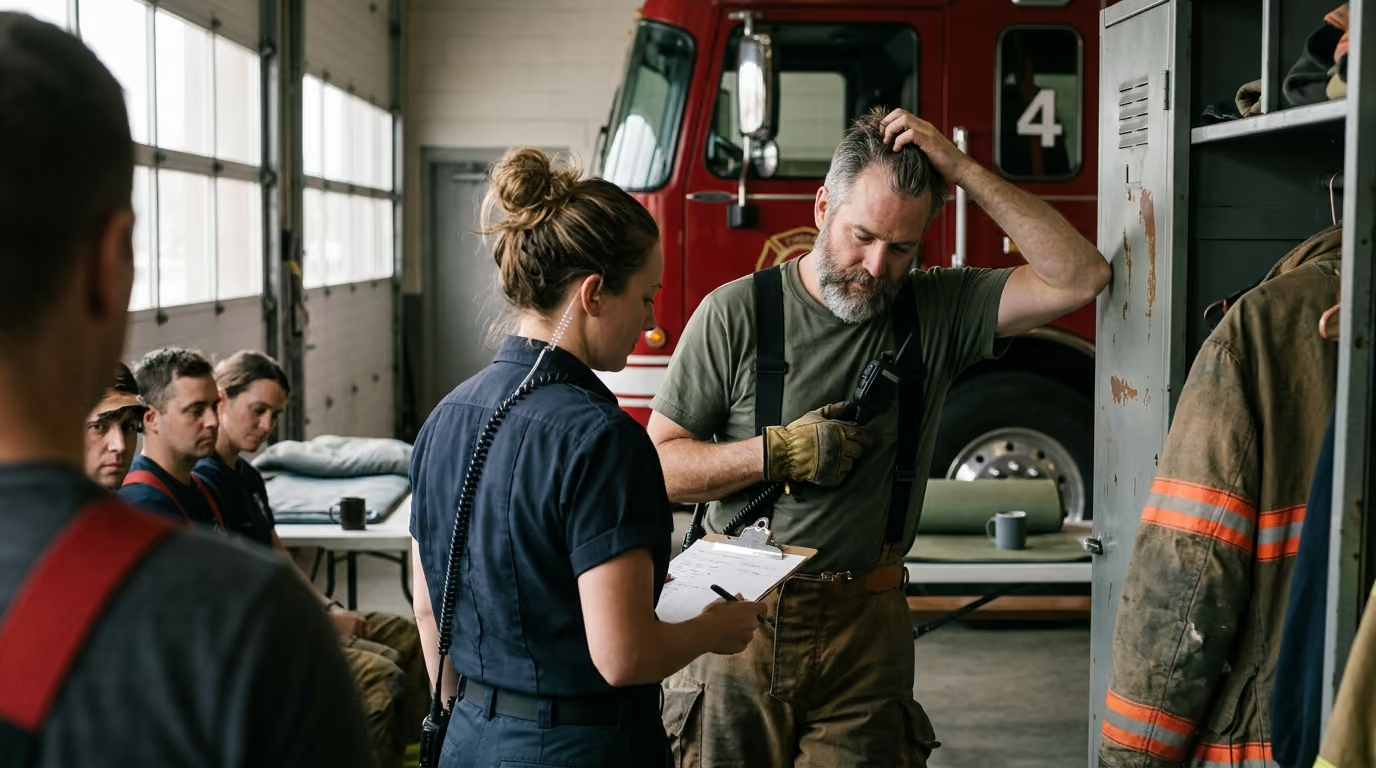

Stepping into high-risk shifts after fragmented daytime sleep requires a practical five-stream recovery framework to accurately evaluate fatigue and safeguard daily performance.





Most commercial readiness trackers operate on an enticing lie. They suggest that complex human capacity can be distilled into a single morning percentage. First responders often look at a watch screen, see an arbitrary green score, and assume their nervous system is prepared for high-stakes duty.
Relying on an isolated number is dangerous when schedules are unpredictable. Real operational readiness is not a score you download from a wrist sensor. It is an active decision process built by weighing multiple pieces of converging evidence against the specific operational risks of your upcoming shift.
A practical recovery assessment combines five distinct information streams. You must evaluate recent sleep opportunity, subjective fatigue, resting physiological trends, behavioral performance clues, and the consequences of error for planned duties. Instead of delivering a vague fitness score, this process yields three clear operational outputs: proceed with normal duties, proceed with tactical controls, or stand down from safety-critical tasks.
Viewing readiness as a structured risk judgment protects frontline personnel from cumulative fatigue. It prevents severe operational errors while supporting long-term health across decades of emergency service.
Algorithmic readiness scores fail frontline personnel because they compress multidimensional biological systems into a single metric. A wearable device measures a narrow set of variables, such as overnight heart-rate variability and skin temperature. It then applies proprietary formulas to guess your physical state.
These algorithms assume predictable circadian rhythms and regular nighttime rest. When you work rotating shifts or run calls at three in the morning, those mathematical assumptions collapse.
A high readiness score can easily create a false sense of security. A device might award an optimal score after seven hours of sleep in a noisy room during daylight hours. Yet that daytime sleep is often fragmented, lighter in quality, and out of sync with your core body temperature rhythm.
The device registers the absence of movement as restful recovery. In reality, your central nervous system remains under substantial strain.
The inverse scenario is equally problematic. An emergency responder might wake up feeling clear, focused, and physiologically stable. However, an anomalous heart-rate variability reading triggers a red warning on their device screen.
This creates unnecessary psychological anxiety. It can lead personnel to doubt their genuine capacity when operational demands require steady confidence.
Subjective self-assessment is also unreliable when used alone. Chronic sleep restriction creates an adaptation trap. When you sleep five hours a night for multiple shifts, your brain adapts subjectively to the deficit.
You stop feeling progressively sleepier each day. Yet laboratory testing shows that your objective reaction times, vigilance, and working memory continue to decline.
Relying solely on how you feel allows dangerous cognitive deficits to slip past unnoticed. A firefighter or paramedic might genuinely feel fine while their attention span and visual processing speeds are severely compromised.
True operational readiness requires cross-referencing what you feel against objective sleep tracking, baseline physiology, and observable performance. By using multiple independent data points, you remove the blind spots inherent in single-source scoring systems.
Building a dependable readiness assessment requires gathering five distinct categories of data before every shift. Each stream answers a different question about your current operational capacity.
The first stream establishes your biological foundation by assessing recent sleep duration and timing. You must measure total sleep achieved over the previous 24 hours, the rolling total across 48 hours, and the longest uninterrupted sleep block.
Sleeping six broken hours between dispatches does not provide the same restorative value as six continuous hours of deep rest.
Timing relative to your circadian rhythm is equally vital. Seven hours of sleep obtained during the biological day will not clear cellular waste or restore neurotransmitters as effectively as nighttime sleep.
Tracking the gap between when you woke up and when your shift starts reveals your current duration of sustained wakefulness. Extended wakefulness compounds any existing sleep debt.
The second stream records your conscious experience of fatigue and cognitive clarity. You must separate sleepiness from general fatigue. Sleepiness is your physiological drive to fall asleep, while fatigue represents a broader depletion of physical or psychological energy.
A person can experience profound physical exhaustion without feeling actively drowsy.
A reliable check rates sleepiness, mental processing effort, and physical depletion. It asks whether you require excessive effort to follow basic conversations or maintain focus on routine tasks.
Any hesitation or reduced confidence in your ability to make rapid safety decisions serves as an immediate caution signal.
The third stream tracks objective physiological markers against your established personal baseline. Resting heart rate and heart-rate variability provide insight into autonomic nervous system balance.
These metrics are useful only when tracked over weeks to establish personal ranges. Comparing your numbers to population averages provides little operational value.
These resting indicators act as secondary confirmation rather than final verdicts. A sustained elevation in resting heart rate combined with suppressed heart-rate variability often points to unrecovered physical strain, dehydration, or an emerging infection.
When resting physiological signs align with subjective fatigue and sleep loss, they confirm the need for operational caution.
The fourth stream examines real-time observable function and behavior. This includes motor coordination, speech patterns, reaction times, and working memory.
Observable performance slips often reveal nervous system fatigue before an individual consciously acknowledges it.
Small lapses indicate degraded processing capacity. If you notice yourself struggling to calculate standard medication dosages or fumbling routine gear latches, your functional state is compromised.
These real-world behavioral clues must always carry more weight than an optimistic wearable score.
The final stream evaluates the specific demands and hazards of the upcoming operational assignment. Readiness is entirely context-dependent. A responder who is slightly compromised may perform adequately on routine administrative work, low-intensity station maintenance, or structured training drills.
That same individual is a serious liability if assigned to drive apparatus, administer critical emergency medications, or lead technical rescue operations.
Assessing duty context requires looking at environmental stressors like extreme heat, chemical exposures, heavy protective gear, and the presence of backup personnel. If the consequence of an operational error is catastrophic, your tolerance for readiness deficits must drop to zero.
Matching your current biological state to the specific demands of the job is the defining step of a practical recovery system. Understanding how to manage shift-work fatigue guidelines ensures that personnel remain capable when high-consequence calls occur.
The physiological impact of irregular work hours and fragmented sleep has been studied extensively across occupational medicine and human performance laboratories. The scientific literature demonstrates that sleep restriction impairs cognitive speed, working memory, vigilance, and physical endurance in a dose-dependent manner.
Research published in sleep science journals confirms that chronic partial sleep restriction creates severe cumulative performance deficits. In controlled trials, restricting sleep opportunities to four or six hours per night for two weeks produced attentional lapses and cognitive slowdowns comparable to two full nights of total sleep deprivation.
Crucially, participants in these studies reported only modest increases in subjective sleepiness after the first few days. Their brains adapted to feeling tired, blinding them to their actual cognitive impairment.
Federal occupational health data underscores the scale of this problem across emergency services. Research from the National Institute for Occupational Safety and Health reveals that 61.8% of night-shift workers report short sleep duration, compared to 35.9% of daytime workers.
Night shifts disrupt the body's master circadian pacemaker in the suprachiasmatic nucleus. This internal disruption impairs natural melatonin secretion, elevates nocturnal core body temperature, and fractures daytime recovery sleep.
This elevated risk stems directly from the biological strain of operating during the circadian low. Between 2:00 AM and 6:00 AM, human alertness, reaction speed, and peripheral visual processing reach their lowest points of the 24-hour cycle.
Even well-conditioned personnel experience significant drops in vigilance during these early-morning hours. When chronic sleep debt is layered over this natural circadian trough, the probability of critical errors rises steeply.
Validation studies on commercial fitness trackers show that these devices reliably differentiate sleep from wakefulness, often matching clinical actigraphy with sensitivities above 90%.
However, systematic reviews reveal that consumer devices routinely overestimate total sleep duration and underestimate wake time after sleep onset. They often classify quiet wakefulness as light sleep.
Furthermore, wearable estimates of sleep stages such as deep and rapid eye movement sleep show broad disagreement with clinical polysomnography. Device-derived recovery scores must be treated as general indicators rather than medical facts.
The evidence regarding tactical countermeasures is equally definitive. Scientific evaluations demonstrate that short prophylactic naps lasting 20 to 30 minutes can temporarily reduce subjective sleepiness and restore psychomotor vigilance for six to eight hours.
However, naps do not erase accumulated sleep debt or reset cellular recovery markers. They serve as short-term operational bridges rather than permanent recovery solutions. Applying proper autoregulation and training readiness principles prevents cumulative duty strain from turning into permanent chronic fatigue.
Applying recovery science to emergency response requires acknowledging the harsh physical and psychological realities of the profession. Generic wellness advice assumes predictable routines, quiet sleep environments, and scheduled recovery days.
First responders operate in an environment defined by disrupted circadian rhythms, sudden adrenaline surges, extreme thermal strain, and unyielding physical loads.
Firefighters face rapid transitions from deep sleep to maximum cardiovascular output within minutes of an alarm. Heavy structural turnout gear adds over 50 pounds of dead weight while trapping metabolic heat, driving core temperatures upward.
This thermal stress compounds cardiovascular strain and accelerates central nervous system fatigue. A firefighter running multiple working fires on a 24-hour shift faces severe muscular glycogen depletion, micro-trauma, and neuroendocrine stress.
Emergency medical personnel confront repetitive spinal loading, awkward patient transfers in confined spaces, and continuous cognitive demands. Paramedics must calculate exact pediatric drug doses, interpret complex electrocardiograms, and make rapid clinical decisions under chaotic field conditions.
Mental fatigue degrades situational awareness and diagnostic accuracy long before physical breakdown occurs. A tired brain struggles with basic calculation checks, heightening the risk of medication errors.
Law enforcement officers endure long periods of low-intensity monitoring punctuated by sudden, violent encounters. Wearing heavy body armor and duty belts for 12-hour shifts produces chronic musculoskeletal stress on the lumbar spine and pelvis.
Prolonged seated patrol restricts circulation and tightens hip flexors, leaving officers vulnerable to acute soft-tissue injuries when called to sprint, vault obstacles, or physically control a combative subject.
The commute home represents one of the most dangerous operational phases of any shift. After working a grueling 24-hour rotation or a back-to-back night shift, responders often face long drives on congested highways.
Severe sleepiness slows reaction times, narrows visual scanning, and induces dangerous microsleeps behind the wheel. A complete readiness system must protect the responder through the shift and ensure safe arrival home. Reviewing modern sleep and operational fatigue analysis is vital for understanding agency-wide risks.
To make readiness practical on shift, you need a repeatable assessment process that takes less than two minutes to complete. Follow this six-step sequence before every shift and reassess whenever operational conditions change significantly.
Begin by identifying the risk level of your upcoming duties. Classify your primary operational tasks into one of three categories:
Record your actual sleep over the last 24 hours and calculate your rolling 48-hour total. Identify the longest uninterrupted block of rest and note whether it occurred during natural darkness or daylight. If your 48-hour total is under 11 hours, or your longest sleep block was under four hours, place an immediate flag on your assessment.
Take 30 seconds to rate three subjective variables on a simple zero-to-ten scale:
If your sleepiness score is six or higher, or if you feel a strong tendency to doze during passive tasks, note this as an elevated risk factor.
Reflect honestly on the previous 12 hours. Have you experienced any of the following warning signs:
Any affirmative answer indicates that fatigue has broken through your subjective defenses and is actively degrading motor control and vigilance.
Look at your resting heart rate and heart-rate variability trends over the past seven days. Note whether your resting pulse is elevated by more than five beats per minute above baseline, or if your heart-rate variability shows a severe downward drop.
Verify that these shifts are not caused by acute factors like recent heavy training, alcohol consumption, high room temperatures, or dehydration.
Synthesize the data across all five streams to determine your operational status using the traffic-light decision framework.
When your assessment falls into the Amber tier, you do not need to leave work. Instead, you introduce tactical safety mitigations before executing hazardous assignments. When the assessment falls into the Red tier, you must not drive emergency vehicles, operate dangerous machinery, or make isolated high-risk decisions.
When your readiness assessment lands in the Amber category, you must immediately apply operational controls. These countermeasures reduce error risks and sustain functional alertness until proper recovery sleep can be obtained.
A planned 20 to 30-minute nap is the most effective operational tool for restoring acute psychomotor speed. Keep the nap under 30 minutes to prevent entering slow-wave deep sleep.
Waking from deep sleep induces sleep inertia, a groggy state that temporarily impairs cognitive performance. Allow 10 to 15 minutes after waking for alertness to normalize before engaging in complex or hazardous tasks.
Fatigued brains struggle with rapid working memory and sequence verification. Institute mandatory secondary checks for all high-risk tasks.
Have a crew member independently verify calculated medication volumes, confirm technical rescue rigging setups, and cross-check navigation routes. Shared operational redundancy prevents isolated cognitive slips from escalating into catastrophic field errors.
Manage lighting carefully to regulate alertness on shift. Use bright, blue-enriched lighting inside stations and apparatus bays during night shifts to suppress melatonin and promote alertness.
When your shift ends in the morning, wear dark, polarized sunglasses on the drive home to prevent morning sunlight from resetting your master clock toward daytime wakefulness.
Use caffeine as a targeted operational tool rather than an all-day crutch. Ingest 100 to 200 milligrams of caffeine at the start of a demanding operational period or circadian low.
Avoid consuming caffeine within six hours of your planned recovery sleep window. High doses of stimulants late in a shift destroy sleep architecture, turning recovery sleep into low-quality rest. Following an evidence-based shift-work nutrition framework provides steady cellular energy without causing sharp digestive crashes.
Never compromise on the safety of your commute home. If you experienced microsleeps, severe head nodding, or extreme fatigue during your shift, do not attempt to drive home immediately.
Take a 20-minute nap in a quiet bunk room, arrange a ride with a colleague, or use rideshare services. Protecting yourself on the roadway is as critical as maintaining safety on scene.
Standard recovery protocols must adapt when personnel face unusual scheduling demands or personal life challenges. Specialized operational scenarios require distinct adjustments to the readiness assessment process.
Moving from a day shift to a night shift creates an acute circadian conflict. Personnel often struggle to sleep during the afternoon before their first night shift.
In this scenario, establish a dark, quiet anchor sleep window between 12:00 PM and 4:00 PM. Treat your readiness on that first night as Amber by default.
Your circadian rhythm will actively promote sleep between 3:00 AM and 5:00 AM, regardless of how much rest you obtained during the preceding day.
Responders with infants or ill family members often accumulate broken sleep. They may spend eight hours in bed but wake up every 90 minutes.
This fragmentation prevents the brain from completing full 90 to 110-minute sleep cycles, depriving the body of restorative slow-wave and rapid eye movement sleep.
When assessing readiness in these circumstances, evaluate your longest single block of continuous sleep rather than total time in bed. If your longest continuous sleep block is under three hours, adjust your operational tolerance downward.
Highly conditioned, motivated first responders often rely on sheer willpower to push through severe biological deficits. Physical strength and mental toughness can mask neurobehavioral fatigue during short, intense bursts of activity.
However, willpower cannot restore delayed visual reaction times, prevent microsleeps, or fix degraded peripheral vision.
Do not allow personal pride or a tough-it-out mindset to override clear objective fatigue signals. Acknowledge physiological limits to protect your crew and the public. Integrating smart injury recovery principles keeps your body resilient across years of intense physical strain.
A functional readiness system must establish absolute boundaries where operational duty is prohibited. These safety limits remove ambiguity and ensure personnel are protected from dangerous working conditions.
When any red-line condition is met, the individual must be removed from high-consequence duties. Do not attempt to override these safety boundaries with high-dose energy drinks, cold air, loud music, or motivational self-talk.
Fatigue-induced cognitive impairment mirrors alcohol intoxication. Operating emergency equipment while severely sleep-deprived puts everyone on the road at serious risk.
While daily operational fatigue is normal in emergency services, chronic, unresolving exhaustion points to deeper medical issues. You should seek a formal evaluation from a licensed healthcare provider or board-certified sleep specialist if you experience:
Clinical specialists can perform overnight diagnostic polysomnography to rule out obstructive sleep apnea, upper airway resistance syndrome, or chronic movement disorders.
They can also structure evidence-based behavioral strategies for shift work sleep disorder without creating dependency on sedating hypnotic medications. Taking proactive steps to address underlying sleep disorders is essential for career longevity and long-term health. Using dedicated shift-work sleep resources helps personnel resolve sleep problems before they cause lasting operational harm.
Viewing recovery as an active operational discipline changes how you approach every shift. First responder careers are long endurance events requiring sustainable physiological management.
Relying on a single automated readiness score leaves you vulnerable to hidden fatigue, cognitive slowdowns, and serious operational errors.
A practical recovery system gives you control over your physical and mental readiness. By tracking sleep history, checking subjective clarity, monitoring resting trends, watching for performance slips, and respecting duty context, you build an accurate picture of your capacity.
This multi-stream approach keeps you sharp during challenging calls, protects your crew on every scene, and ensures you return home safely at the end of every rotation.
Treating readiness as a dynamic, evidence-based judgment protects your operational effectiveness today while preserving your physical and cognitive health throughout your entire career and into retirement.
Stay connected for research-led guidance on duty fitness, shift-work sleep, injury recovery, stress, nutrition and career longevity. Practical ideas for first responders who want to stay capable on the job, recover well and protect their health for the long run.



Read practical guidance on first responder fitness, recovery, sleep, nutrition and resilience for demanding work and a long, active career.
read the blog



