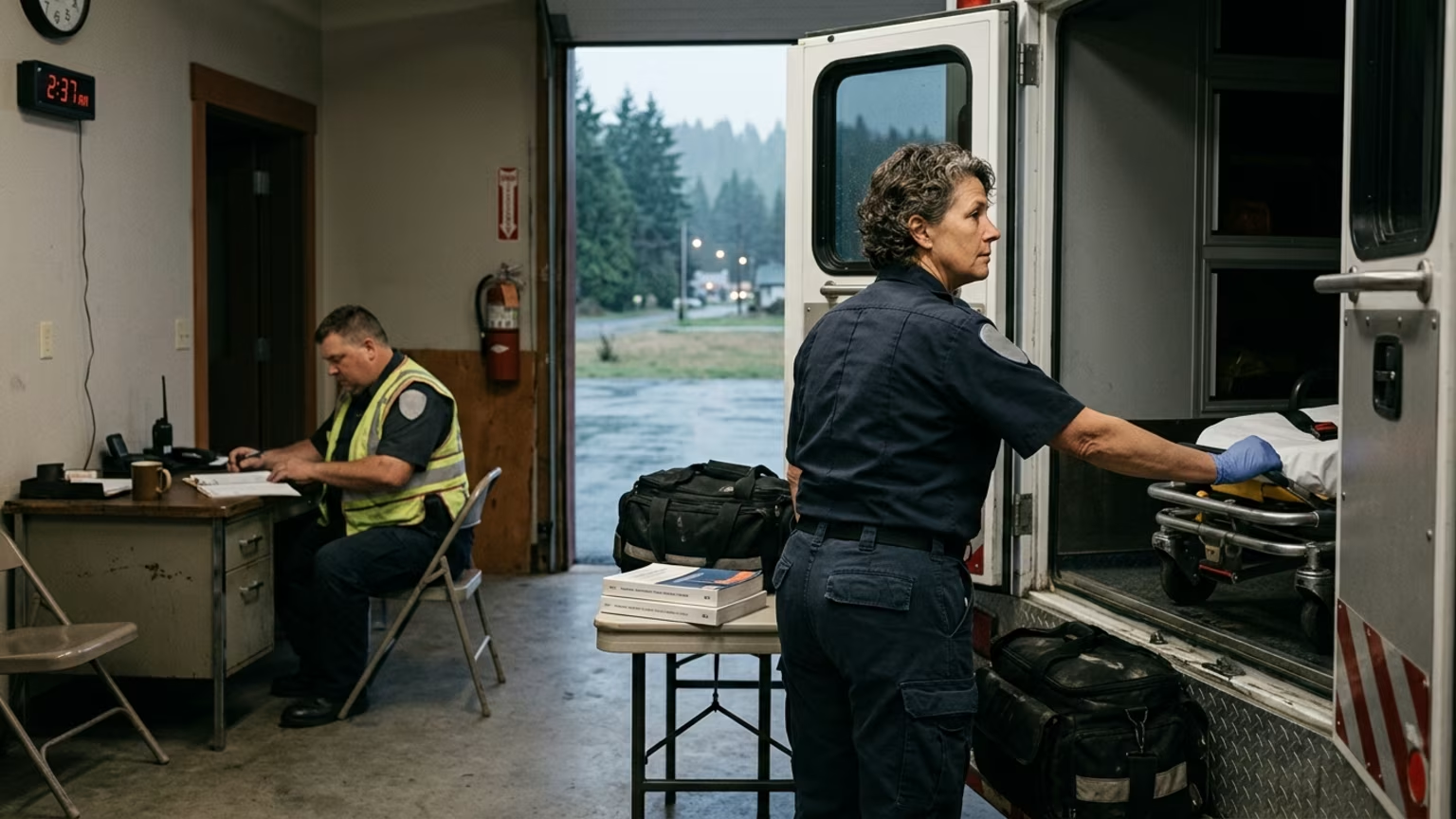

A 2026 Australian study highlights how geographic isolation, staffing limits and community visibility restrict rural first responders' access to recovery support.





If you or someone you know is in crisis, call 911 for immediate danger. You can also call 988 and press 1 for the Veterans Crisis Line. Or text 838255 to connect with dedicated support. Discussing safe storage of work equipment or medications with a trusted colleague is a practical step during difficult periods.
On September 23, 2026, PerthNow reported on an Australian study examining the severe mental-health risks facing emergency workers in rural communities. The research involved interviews with rural firefighters, paramedics, police officers and volunteers across three states to understand how geographic isolation affects post-incident recovery.
The primary takeaway from the recent study coverage highlights the compounded pressures that rural personnel navigate alongside their routine exposure to traumatic incidents. Participants detailed how their working environment actively complicates their ability to process demanding shifts. The study coverage describes geographic isolation, reduced anonymity, misogyny and expectations of stoicism as constant background pressures. According to the news reports, this research was published in the International Journal of Mental Health Nursing.
The interviews revealed a heavy psychological burden on these regional professionals. Participants reportedly described experiencing vicarious trauma, anxiety, depression and isolation. They also reported instances of post-traumatic stress disorder, suicidal ideation and burnout. These outcomes reflect the reality of operating in environments where the physical distance between calls is vast and backup is highly limited. Navigating these conditions day after day steadily degrades baseline operational readiness.
Despite these severe occupational hazards, the reporting points out a glaring gap in available care. The news reports say participants had not taken part in an effective mental-health program during their service. The coverage clearly describes difficulty accessing rural support services as a major barrier for these workers. When structural support is absent, the burden of managing accumulated trauma falls entirely on the individual responder.
This lack of effective intervention is further complicated by the social dynamics of small towns. The news reports highlight a possible reluctance among rural responders to seek help from a local clinician. A fear of being recognized in a waiting room or discussing confidential incidents with a neighbor creates significant friction. Consequently, many rural workers simply avoid seeking care altogether.
This new information directly validates the need to adjust standard fatigue and physical training protocols for isolated units. A volunteer firefighter told researchers that limited staffing could prevent responders from taking time off to recover after a traumatic incident. When structural recovery windows disappear, personnel cannot rely on standard days off to clear physical and mental fatigue. Operational readiness therefore requires a different approach to daily routines.
Without the option to hand off a shift to another crew, maintaining baseline health becomes a strict tactical requirement. Rural workers must actively account for the continuous strain of unpredictable calls within their daily schedules. This reality aligns with the need for a highly adaptable training approach based on actual daily fatigue. When institutional recovery time is scarce, nutrition and hydration must serve as primary recovery tools. A structured approach to eating on duty provides a necessary buffer when staffing shortages stretch working hours.
Operating in isolated areas often requires responders to spend hours inside heavy apparatus during a single call. This prolonged exposure combined with heavy uniform requirements accelerates fluid loss significantly. Maintaining physiological readiness requires a structured approach to fluid intake during these long transit times. Adopting a scheduled fluid framework helps personnel counter masked thirst when operating far from their base station.
Furthermore, the physical toll of rural emergency work demands consistent maintenance between calls. Driving heavy apparatus over long distances and handling equipment without sufficient backup strains joints and connective tissues. The lack of anonymity also complicates the physiological transition from an active shift to off-duty rest. Responders in cities can often decompress during a long commute, but rural personnel frequently interact with the public immediately after clocking out. Implementing a brief cooldown period at the station before driving home helps responders begin their recovery process before facing community scrutiny.
A widespread assumption dictates that tight-knit rural communities offer a protective layer of social support for local emergency workers. However, this study challenges the idea that being viewed as a local hero is strictly beneficial for long-term health. The coverage attributes a critical observation to University of New England researcher Rikki Jones regarding this dynamic. Jones stated that emergency workers’ “hero” status can make it significantly harder to switch off from work.
This heightened visibility creates an environment of intense public scrutiny for the responder. Jones told AAP that hero worship can actually cause responders to lose a sense of identity beyond their occupational role. Furthermore, the story attributes to her the view that this status can intensify the scrutiny these workers feel if they make a mistake. Living and working under a microscope removes the psychological distance necessary for proper rest.
Another volunteer firefighter interviewed for the study described rural residents as sometimes feeling a sense of ownership over emergency workers. This sense of public ownership means responders are frequently approached about work matters while off duty. A simple trip to the grocery store can turn into an informal debriefing session with curious neighbors. This constant engagement prevents the nervous system from fully returning to a baseline state of rest.
This finding overturns the expectation that community familiarity automatically eases occupational stress. Instead, the loss of anonymity demands that responders build deliberate psychological walls to protect their personal time. Recognizing this dynamic helps shift supervisors understand why highly visible personnel might experience faster rates of mental and physical fatigue. It reframes community recognition as a potential stressor rather than a guaranteed benefit.
The study findings highlight the need for rural personnel to actively manage their recovery pathways by setting distinct boundaries. Since local visibility complicates seeking care, responders should seek out support resources outside their immediate geographic area. Identifying remote providers before a crisis occurs is a practical step for managing this specific friction. Establishing contact with external networks removes the fear of local exposure.
Additionally, personnel must prioritize physical recovery strategies that they can control within their limited off-duty windows. Because staffing constraints frequently reduce available time off, focusing on joint health and mobility is essential. Incorporating a practical movement strategy helps responders protect their bodies between demanding rural calls. This consistent approach allows for physical recovery even when overall time away from work is heavily restricted.
Managing the constant occupational alertness required in rural settings also demands intentional downtime. Recognizing how this alertness drains energy reserves is crucial for long-term career survival and physical capability. Understanding how constant alertness drains energy can help rural personnel justify disconnecting completely when they are off duty. Setting firm boundaries around work communication is a necessary defense against the community’s expectations of constant availability.
Protecting sleep windows is another necessary adjustment when community visibility is high. Rural responders frequently struggle with neighbors knocking on their doors or calling their personal phones during off-duty hours. Establishing a rigid boundary around sleep schedules is a strict requirement for maintaining physiological recovery. Personnel should communicate clear do-not-disturb hours to their local communities to prevent constant sleep disruption.
Moving forward, the focus must shift to evaluating alternative models of care designed specifically for isolated emergency personnel. The reports identify online and in-person sessions, roving response teams and community hubs as possible approaches to improving rural support access. Tracking the implementation and effectiveness of these specific proposals will be vital for rural emergency service leaders. The goal is finding scalable methods that respect the unique constraints of rural duty.
While the study details the current gaps in access, these proposed models remain untested suggestions in the available reporting. Future developments will need to determine if roving teams can successfully bypass the privacy concerns associated with local clinicians. Evaluating these remote support frameworks will help departments understand which interventions actually reach their personnel. Administrators should monitor follow-up studies that measure the practical uptake of these alternative care models.
Any future support framework must also account for the irregular schedules that rural responders maintain. Proposing community hubs or online sessions is only the first step in addressing the current access crisis. Researchers must verify whether these services operate during hours that actual shift workers can utilize. A service that only functions during standard business hours provides little relief for a rural paramedic working a night rotation.
Building effective support frameworks for isolated personnel points toward measurable improvements in baseline physiological recovery when departments address their daily operational friction. Sleep disruption from nights, rotating shifts, overtime and unpredictable calls routinely challenges emergency personnel working under severe staffing limitations. Rescuris provides the clear, research-led guidance necessary to help these professionals maintain operational capability without sacrificing long-term health. Explore Resources
Rescuris publishes evidence-aware guidance for firefighters, police officers, paramedics and other first responders on fitness, recovery, sleep, nutrition, stress resilience and long-term capability.






Read practical guidance on first responder fitness, recovery, sleep, nutrition and resilience for demanding work and a long, active career.
read the blog
