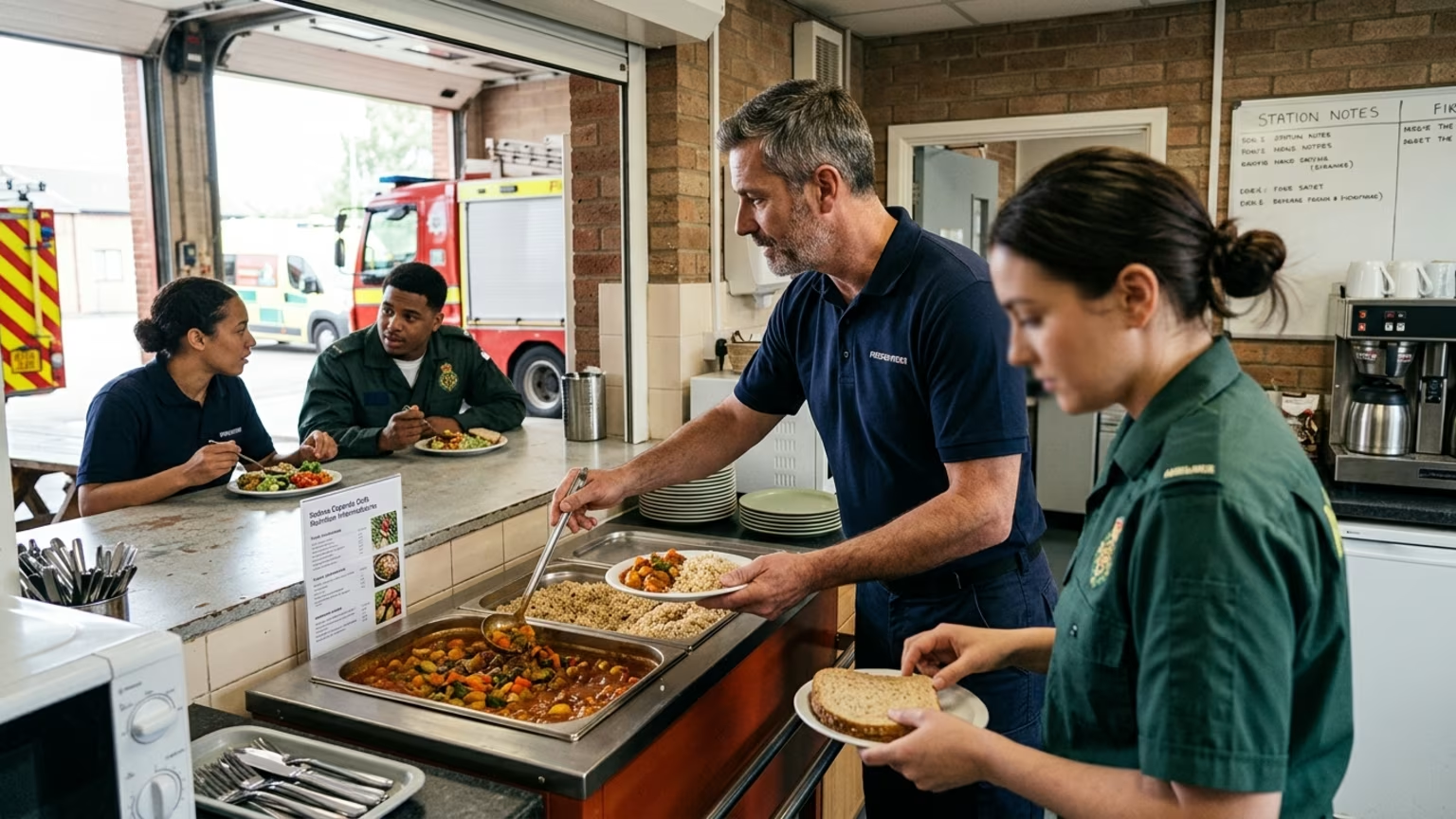

Sodexo is expanding its Mindful Active nutrition programme across UK sites. Learn how emergency workers can evaluate shift-specific hydration and diet advice.





On 14 September 2026, Sodexo (the workplace services provider) announced the expansion of its Mindful Active health and wellbeing programme across hundreds of additional sites in its Defence, Government, Agencies and Energy divisions.
The programme is organised around four distinct pillars known publicly as Fuel, Focus, Perform and Restore. Mindful Active comprises exactly 12 themed campaigns expressly intended to support healthier lifestyle choices for workers across diverse environments. The workplace initiative is formally led by registered dietitian Kate Hilton, who actively serves as Sodexo’s Nutrition and Wellbeing Manager. Sodexo says the newly expanded programme will sequentially add face-to-face professional workshops offering targeted guidance on several key operational health topics.
These detailed workshop topics strictly include diet, nutrition, mental wellbeing, fitness performance, rest and recovery. Digital and physical resources, specifically including detailed recipe cards, will be prominently promoted by designated Mindful Active Champions stationed at each site. The initial waves of educational campaigns will heavily cover the crucial fundamentals of a balanced diet, baseline hydration and sleep. Following those foundational topics, the programme will subsequently provide tailored advice for shift workers on targeted nutrition and continuous energy maintenance.
The latter stages of the corporate rollout will actively tackle myth-busting around diet and wellness misinformation frequently found on social media platforms. Sodexo says the programme was directly informed by the Ministry of Defence’s UK Armed Forces Continuous Attitudes Survey alongside Sodexo’s Annual Defence Survey. The company says the programme aims to engage and positively influence thousands of additional customers during its rollout phase. However, the public announcement does not provide a detailed participation target, formal evaluation methodology or independently verified outcome data regarding previous participants.
For first responders working at Sodexo-managed facilities, the primary relevance is that shift-aware nutrition education may soon become available through standard workplace channels. The programme initially began at selected military sites in 2022. It will now be made available across all Sodexo-serviced military sites, including locations like RAF Akrotiri in Cyprus. Furthermore, the initiative is actively expanding to major civilian sites such as the Scottish Parliament, Transport for London and Sella Ness in Shetland.
While the announcement does not explicitly identify specific fire, police or emergency medical service sites, the sequence of campaigns holds high relevance for emergency personnel. Establishing balanced eating and sleep routines remains critical before personnel attempt to implement highly specific shift-work nutrition adjustments. The programme design heavily reflects a practical workplace health model that brings actionable advice directly to where people work. This site-based approach actively reduces the operational burden of relying entirely on individual self-directed education.
Connecting generic workplace health education to emergency response protocols requires carefully adapting advice for high-stress operational environments. Personnel who want to understand how baseline sleep and strategic meal planning sustain high performance in emergency workers must align broad nutritional guidelines with stark operational realities. Routine missed breaks, sudden operational mobilisations, and the frequent need to eat rapidly all dictate how and when food is consumed on shift. Nutrition protocols must strictly support sustained energy and long-term health rather than encouraging aggressive dietary restriction during highly demanding duty periods.
Translating clinical nutrition advice into practical workplace guidance also demands a deep respect for the physical toll of emergency response. Recommending highly specific meal timings completely falls apart when a crew is actively deployed on a continuous multi-hour incident. Dietitians and wellness champions must fully understand that delayed meals are a mandatory feature of the job rather than a personal failure. Consequently, providing shelf-stable, nutrient-dense recipe options serves frontline workers far better than promoting rigid, uncompromising dietary schedules.
Hydration advice delivered in these new workplace workshops also needs to remain operationally realistic for frontline emergency responders. Finding the correct scheduled fluid frameworks to counter masked thirst and thermal buildup in heavy uniforms requires a clear understanding of individual sweat rates and extreme environmental conditions. Generic workplace posters casually recommending fixed daily water volumes routinely fail to account for severe heat exposure under heavy protective equipment. Practical hydration advice must remain entirely compatible with the harsh realities of limited toilet access, heavy protective gear, and overnight response driving.
Workplace health initiatives frequently rely on broad health surveys to justify their specific programme structures. For example, Sodexo’s announcement reports that 26 percent of surveyed service personnel rated their anxiety as high in the May 2026 AFCAS survey. However, that specific statistic concerns active military personnel rather than civilian first responders generally. It should strictly not be presented as broadly representative of firefighters, police officers, paramedics or emergency medical service personnel.
Furthermore, military deployment environments and civilian emergency services involve distinctly different employment conditions, operational structures and occupational risks. While both environments routinely demand extremely high physical performance, the daily operational stresses and recovery windows vary significantly. Emergency personnel should therefore actively approach broad corporate health statistics as useful background context rather than direct reflections of their own specific occupational risks. Establishing a practical meal strategy to keep emergency personnel properly fueled on demanding shifts relies entirely on individual operational constraints rather than generic military health data.
The assumption that military wellness solutions seamlessly translate to civilian first responders severely overlooks critical differences in workplace autonomy. Military personnel often operate within highly controlled environments with dedicated mess facilities and strictly regulated rest periods during standard garrison duty. Conversely, civilian paramedics or police officers frequently navigate unpredictable urban environments with severely restricted access to proper food preparation areas. Wellness programmes must rigorously adapt their core messaging to reflect these starkly different realities regarding basic food accessibility.
Blanket statements regarding the health detriments of shift work also frequently fail to account for individual lifestyle factors outside of duty hours. Not all negative health outcomes experienced by operational personnel stem directly from irregular scheduling or night shifts alone. Factors such as baseline physical conditioning, personal stress management, and non-occupational sleep habits play a massive role in overall longevity. Health education programmes that heavily fixate on generic shift-work warnings often miss the opportunity to provide actionable, individualised recovery strategies.
Emergency workers stationed at eligible Sodexo-managed sites should actively treat this corporate rollout as a valuable access opportunity rather than an instant performance guarantee. Operational personnel can directly ask their local site managers whether Mindful Active workshops, physical recipe resources or designated site champions will be available to them. When attending these scheduled educational sessions, workers should explicitly request highly shift-specific advice rather than simply accepting generic corporate wellness messaging. This proactive approach strictly includes asking the dietitian leads exactly how to structure meals when daily call volumes are highly unpredictable.
The planned sequence of the campaign explicitly covers maintaining continuous energy levels and tailored nutrition strategies specifically for shift workers. Operational staff should deliberately use these professional, face-to-face workshops to directly address their most frustrating practical constraints. Useful, actionable questions include how to manage food availability during long night duty cycles and how to safely carry portable meal options in response vehicles. They can also ask the champions how to successfully avoid relying on highly palatable convenience food when heavily fatigued after complex calls.
It remains utterly vital to separate general workplace education from highly targeted, individualised medical advice. Personnel currently dealing with cardiovascular conditions, kidney disease, or complex gastrointestinal issues must seek appropriately qualified individual clinical guidance. Those actively managing diabetes, specific pregnancy-related needs, or eating-disorder histories should not apply generic workplace nutritional recommendations to their highly specific medical requirements. Tailored corporate guidance delivered in a broad workshop setting simply does not replace professional individual medical nutrition therapy.
The public corporate announcement simply does not outline exactly how the expanded wellness programme will be externally or independently evaluated. Sodexo explicitly does not disclose the financial budget, designated staffing levels, expected attendance rates or targeted completion rates for the upcoming campaigns. The formal announcement also completely lacks concrete details on specific participant demographics, clinical outcomes or body-composition improvements measured from the earlier military rollouts. The currently available evidence is therefore significantly strongest for what Sodexo publicly says it is launching rather than what the programme has actually proven to achieve.
A truly credible evaluation of large site-level health interventions strictly requires transparent, rigorous reporting on actual behavioural changes over time. Tracking whether operational workers actually implement the new nutrition strategies provides substantially more value than merely recording basic workshop attendance figures. Without detailed outcome data or comprehensive corporate evaluations, it remains impossible to verify that a particular dietary intervention predictably improves operational performance. Access to professional educational workshops is undeniably a positive step forward for baseline occupational health.
However, improved educational access alone does not inherently guarantee better sleep quality, lower body fat percentages, or improved emergency-response capabilities. Future analysis from health practitioners should focus closely on whether these corporate campaigns actively adapt to the real-time feedback of operational personnel. Providing physical recipe cards is moderately helpful, but deliberately addressing systemic environmental issues like poor station kitchen access yields far greater long-term results. Shift workers should cautiously watch to see if Sodexo adjusts its provided materials based on participation feedback from highly demanding sites like Sella Ness.
Evaluating new workplace nutrition and hydration initiatives requires separating practical shift guidance from generic wellness messaging. Understanding testosterone and hormone claims without assuming testing or treatment is right for everyone remains a frequent challenge when navigating these broad health programmes, but Rescuris delivers objective research to guide those personal health decisions. Explore Resources
Rescuris publishes evidence-aware guidance for firefighters, police officers, paramedics and other first responders on fitness, recovery, sleep, nutrition, stress resilience and long-term capability.






Read practical guidance on first responder fitness, recovery, sleep, nutrition and resilience for demanding work and a long, active career.
read the blog
