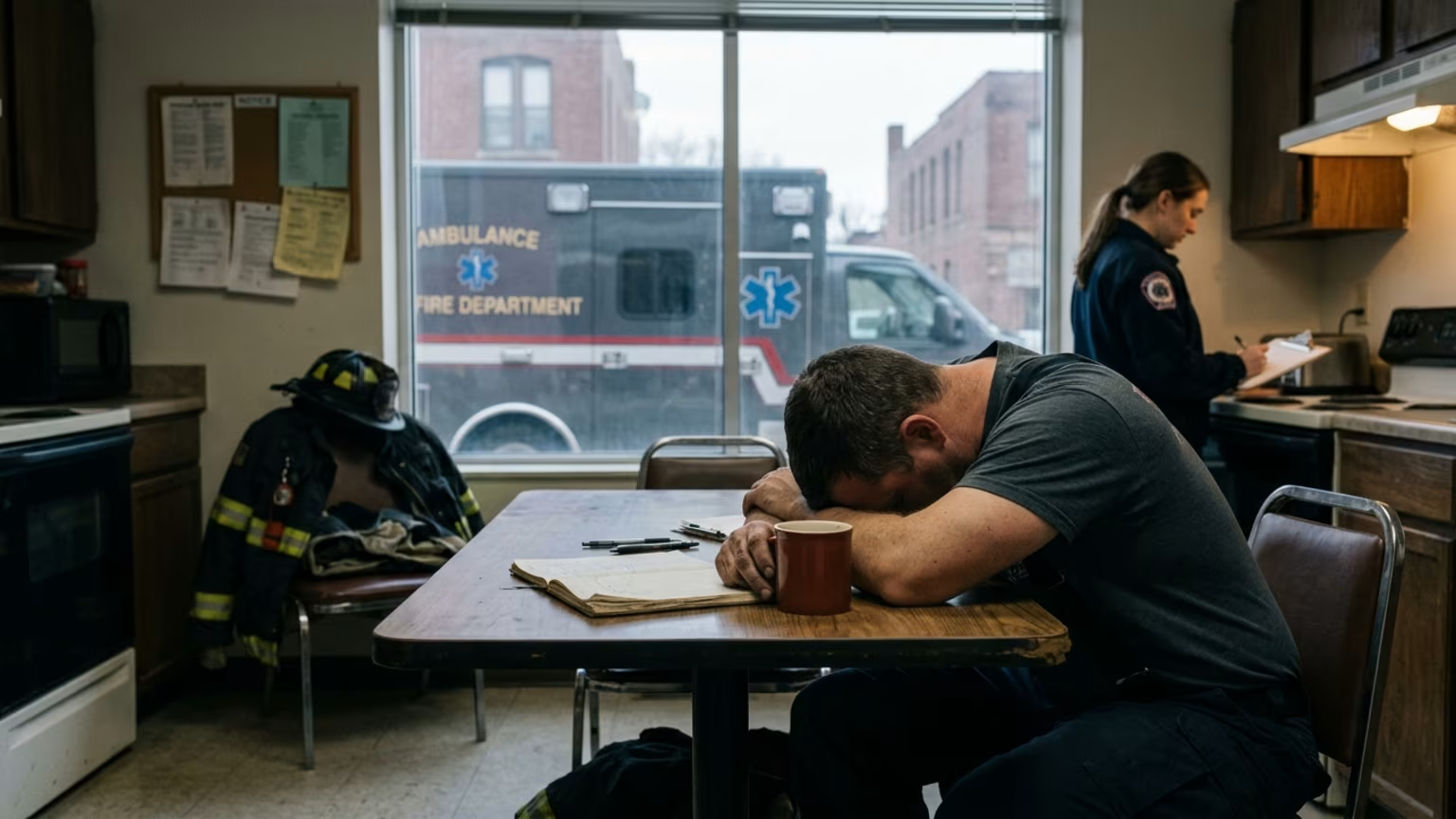

The St. Louis Fire Department links an 80-member staffing shortage to severe fatigue, highlighting the physical toll of 48-hour shifts on first responders.





In September 2026, the St. Louis Fire Department launched a targeted recruitment campaign to address a shortage of approximately 80 members and reduce the physical fatigue caused by 48-hour shifts.
The core issue connecting this hiring push to occupational health is the heavy burden placed on current personnel. Fire Chief Dennis Jenkerson told First Alert 4 that the department operates about 80 members below full staffing. He noted that response times have not slowed down. However, he warned that maintaining this performance while short-staffed places immense strain on the workforce. A standard tour runs for 24 hours. Jenkerson explained that working a 48-hour shift in a busy urban department takes a physical toll and deeply wears on crews.
To address this deficit, the department set an October 2 application deadline for a new hiring wave. Deputy Director of Personnel Bryan Boeckelmann presented the campaign as a generational recruitment effort. The department is specifically targeting applicants 18 to 33 years old. The overarching goal is to hire personnel who can spend the next 20 to 30 years working in fire and emergency-medical services. A new class of 50 recruits was scheduled to begin the department academy shortly after the report.
This recruitment effort faces distinct regional compensation challenges that complicate the hiring landscape. The report puts starting pay for probationary St. Louis firefighters at just under $61,000 per year. Nearby county departments offer significantly higher starting salaries for similar roles. New hires in Mehlville start at $69,000. Recruits in St. Charles City earn almost $70,000. Captain Cody Carpenter acknowledged this regional pay gap. He countered that the St. Louis job offers a unique sense of purpose and daily community impact that appeals to driven candidates.
The St. Louis staffing shortage illustrates exactly how administrative gaps translate into physical exhaustion for first responders. When an agency operates approximately 80 members below full capacity, the operational demand does not pause. The remaining workforce must absorb the missing labor hours through mandatory overtime and extended tours. A 48-hour shift requires personnel to maintain their baseline readiness across two full calendar days.
This extended duty dramatically alters the typical occupational fatigue curve. A 48-hour tour does not mean 48 hours of continuous wakefulness. It instead means two days of fragmented and highly unpredictable rest periods. First responders lose the critical deep sleep phases necessary for physical repair. Understanding how 24-hour rotations and shorter shifts drive circadian strain is essential for mapping this physiological cost. The biological debt accumulates with every missed sleep cycle.
While urban firefighting differs substantially from wildland operations, occupational research highlights the rigid limits of human endurance. One 2025 field study examined wildland firefighters during active deployments. The research found average active-fire shifts of 13.8 hours and approximately 6.7 hours of sleep. The study directly associated these longer shifts and poorer sleep periods with reduced cognitive function across the workforce.
Urban emergency responders face a different operational tempo but share these exact physiological boundaries. A busy municipal station might run multiple medical calls between midnight and dawn. This constant disruption prevents the continuous sleep necessary for cognitive baseline reset and hormonal regulation. The resulting sleep debt accumulates over successive shifts and steadily degrades long-term physical capability.
The explicit connection between the 80-member shortage and physical exhaustion challenges several older fire service assumptions. Historically, many departments treated scheduled off-duty days as guaranteed physiological recovery periods. This view assumes that a firefighter stepping off a 48-hour shift immediately begins resting. The reality of transitioning from a high-stress occupational environment is much more complex and demanding.
Extended continuous duty alters hormonal baselines and severely delays the transition to restful sleep. A first responder finishing a heavy urban tour often spends the first day off simply metabolizing the accumulated stress of the shift. They are not actively building readiness for the next tour. Recognizing the toll of these extended shifts moves the focus from individual toughness to structural scheduling limits.
Jenkerson's assessment highlights a critical truth about emergency response metrics. Maintaining fast response times does not equal a healthy or well-rested workforce. These public-facing performance indicators can easily mask severe underlying exhaustion. When leadership acknowledges that the work physically wears on crews, it validates the need for systemic fatigue management instead of generic wellness advice.
Emergency professionals facing regular 48-hour shifts must take a highly deliberate approach to their physical maintenance. You cannot manage continuous duty schedules with standard fitness advice. Surviving a high-volume urban workload requires practical adjustments to your sleep tracking, nutrition and exercise routines.
You must differentiate between your scheduled time off and your actual sleep opportunity. A nominal day off provides very little physiological recovery if you spend the morning struggling to fall asleep. Map out your actual uninterrupted sleep hours following a busy tour. Focus on establishing a dark, quiet and cool environment immediately upon returning home. Building a predictable shift-specific sleep plan helps establish a consistent baseline for recovery.
Your physical training must respond dynamically to your immediate shift demands. Forcing a heavy lifting session after a busy 48-hour tour will compromise your central nervous system. You must honestly assess your physical state before entering the gym. Use a reliable shift-work training decision tree to decide if you need active recovery or standard training. Protect your joints by prioritizing mobility work on high-fatigue days.
Extended tours routinely disrupt standard meal times and severely limit access to quality food. You must plan your nutrition around the reality of unpredictable emergency calls. Pack nutrient-dense meals that do not require lengthy preparation or consistent heating schedules. Avoid consuming large meals right before a potential rest window at the station. Digesting heavy food will further degrade the very limited sleep you might catch between dispatches.
Occasional exhaustion is an unavoidable part of emergency service work. However, chronic sleep issues require professional clinical screening rather than willpower. Firefighters who regularly snore loudly, experience insomnia or wake up unrefreshed should speak with a medical professional. Struggling to stay awake during the commute home is a major warning sign. Do not rely solely on caffeine to mask these persistent symptoms.
The fire service will need to closely watch how the incoming class of 50 recruits changes the daily reality in St. Louis. Hiring new personnel is only the first necessary step in addressing workforce fatigue. Departments must bridge the critical gap between an October 2 application deadline and the actual deployment of fully independent firefighters. Current crews still have to cover the heavy workload during this lengthy training period.
Future analysis should focus on objective operational metrics rather than just total applicant headcount. The true measure of this recruitment push will be the measurable reduction in mandatory 48-hour shifts. Departments evaluating their own fatigue risks should systematically track actual sleep duration, medical call volume and near misses across the floor.
Monitoring these precise metrics will show whether new staffing actually improves physiological recovery conditions. Until these new recruits finish the academy and hit the floor, existing personnel will have to manage the immediate strain. Tracking the transition will provide valuable operational lessons for agencies nationwide.
Sleep disruption from nights, rotating shifts, overtime and unpredictable calls routinely fragments the recovery windows required after a busy 48-hour tour. Managing this fatigue is difficult when standard health advice ignores the realities of emergency response, but Rescuris helps first responders build practical sleep and training protocols. We translate credible evidence into actionable physiological strategies that protect active-duty capability and support long-term career longevity.
Rescuris publishes evidence-aware guidance for firefighters, police officers, paramedics and other first responders on fitness, recovery, sleep, nutrition, stress resilience and long-term capability.






Read practical guidance on first responder fitness, recovery, sleep, nutrition and resilience for demanding work and a long, active career.
read the blog
