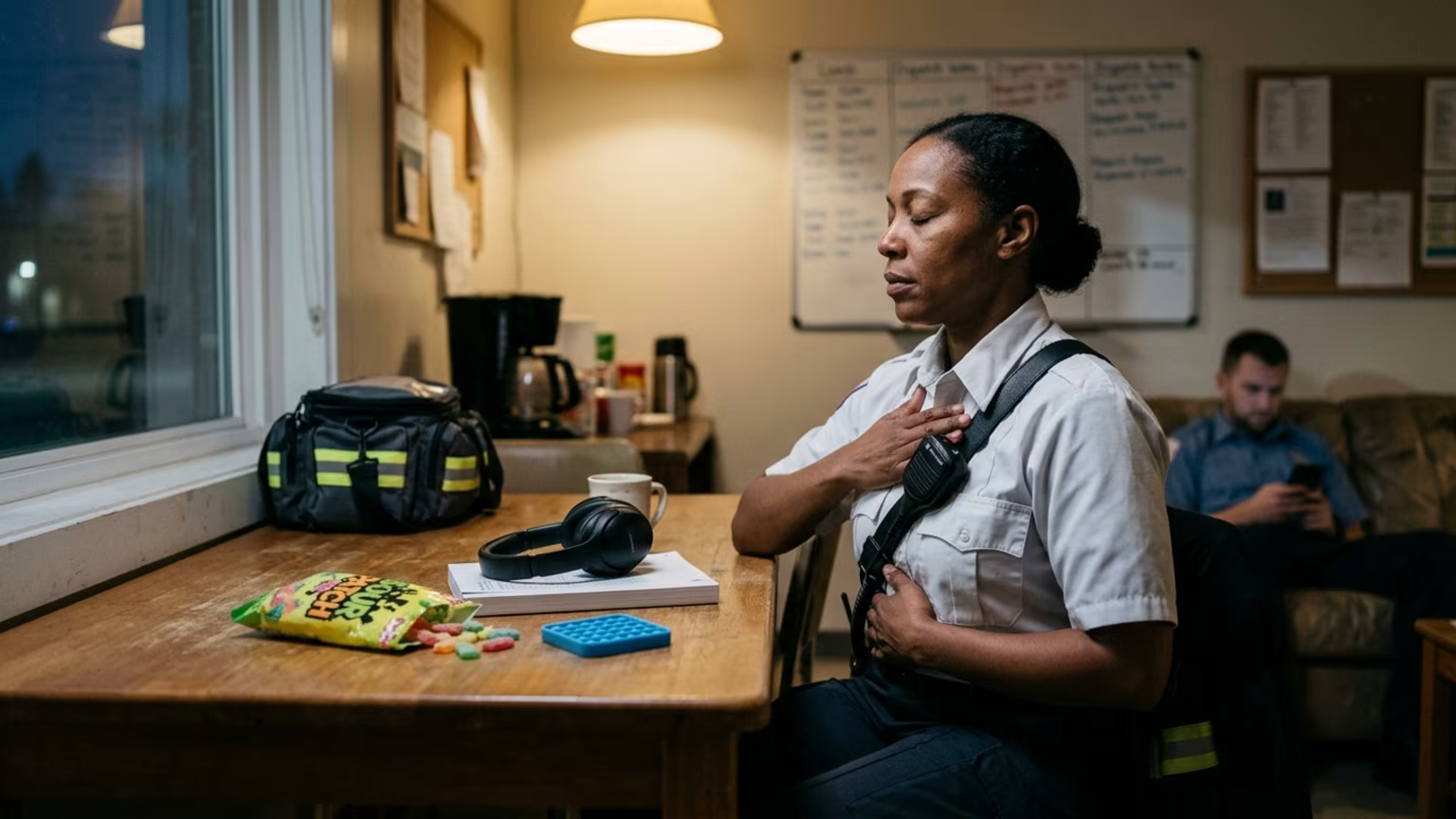

Compare internal physiological downshifting and external attention reorientation skills. Learn when to use paced breathing, grounding and structured decompression.





Deciding how to manage acute stress during a demanding shift requires choosing between internal physiological downshifting methods and external attention reorientation skills.
Paced breathing serves as a highly practical option when an emergency-service professional must remain seated in an ambulance or apparatus bay. This approach directly addresses physiological arousal without requiring a change of clothes or a quiet room. First responders often experience an elevated heart rate and rapid respiration after a high-stress incident. A deliberate breathing pattern can help interrupt this automatic physical response during a brief pause between dispatches.
During a critical incident, the sympathetic nervous system triggers a rapid, shallow breathing pattern to prepare the body for physical exertion. This physiological shift is highly adaptive during an active rescue but becomes counterproductive when sitting in a quiet station after the call. Paced breathing targets this specific respiratory reflex, using controlled exhalations to signal physical safety back to the brain. By consciously managing their respiratory rate, first responders can actively lower their own physical arousal before the next dispatch drops.
A responder-focused clinical guide describes box breathing as a useful structured sequence. This method involves a four-count inhalation, a four-count hold, a four-count exhalation and a final four-count hold. While some programs claim specific breathing patterns will reliably activate the vagus nerve in seconds, controlled evidence for these universal claims remains limited. First responders are advised to use a comfortable pace and return to natural breathing if the structured pattern feels unpleasant.
Rehearsing these respiratory skills outside of active emergency conditions builds reliable familiarity. The clinical breathing source suggests starting with five minutes of quiet practice during non-emergency periods. Responders might try a three-second inhalation followed by a five-second exhalation. They can also test a four-second inhalation paired with a six-second exhalation, provided the pattern feels physically sustainable.
Waiting for a critical incident to test these breathing strategies often leads to frustration or failure. Establishing a baseline level of comfort allows emergency personnel to deploy the skill smoothly when their cognitive load is high. This proactive between-call reset approach helps personnel maintain steady situational awareness throughout their shift. Implementing internal downshifting effectively requires recognizing that different respiratory rates work better for different individuals.
Sensory grounding provides an alternative methodology that directs attention toward present-moment details rather than internal physiological states. This approach works particularly well when a first responder feels mentally stuck replaying a previous scene or dissociating after a difficult call. Unlike internal breathing exercises, grounding does not require closing the eyes or focusing on internal physical sensations. The technique forces the brain to process immediate external data instead of dwelling on past or future scenarios.
Emergency-service professionals frequently experience intrusive thoughts or mental replay immediately following a severe trauma call. This cognitive loop keeps the nervous system trapped in a state of high alert, even when the immediate physical danger has passed. Sensory grounding disrupts this cycle by forcing the brain to allocate processing power to immediate, neutral external data. Paying attention to the temperature of the steering wheel or the texture of a uniform prevents the mind from running unchecked through past events.
A practical grounding description aimed at managing anxiety recommends a clear identification exercise. The protocol asks the individual to name three things seen, three sounds heard and three body parts moved. The same source notes that sensory grounding can also involve orienting to immediate surroundings while noting specific touches or environmental temperatures. By identifying concrete physical realities, the responder pulls their attention back to the current operational environment.
The primary strength of external orientation is its low visibility and high adaptability during active duty. A paramedic or police officer can practice sensory grounding while walking back to their vehicle or completing post-incident paperwork. The exercise blends seamlessly into normal operational routines without requiring a dedicated timeout. This makes it an ideal strategy for managing emotional regulation during conflict when stepping away is impossible.
While sensory grounding offers a practical attention-management skill, it is not a validated standalone treatment for clinical trauma. Some responders may actually find focused attention uncomfortable immediately after a severe incident. If grounding increases agitation or distress, personnel should feel completely free to stop the exercise. Selecting a different reset tool or seeking peer support is always an appropriate operational decision.
Different points in a shift require different recovery strategies based on call volume, sleep deficit and accumulated fatigue. When an individual has only thirty to ninety seconds between dispatches, comfortable paced breathing serves as the most immediate tool. This short timeframe does not support complex routines, making simple respiratory adjustments the most logical choice. Responders who feel physically restless but have safe time to move might benefit more from a brief walk.
A short walk changes the immediate environment and adds light movement to help shift attention before returning to duty. However, personnel must recognize the difference between a brief transition walk and specialized clinical trauma treatments. While light movement helps dissipate physical restlessness, an unsupervised walk behind the station is not a proven intervention for severe occupational stress. When symptoms persist, emergency personnel require professional evaluation rather than just a quick change of scenery.
Physical tension often builds up over long hours and repeated alerts, requiring a different physiological intervention. A first-responder behavioral-health article outlines progressive muscle relaxation as a method for releasing accumulated physical bracing. The protocol involves tensing each muscle group for approximately five seconds and then releasing it, moving slowly from the feet upward toward the shoulders. This technique fits perfectly during a longer station break or as part of a routine for protecting recovery sleep at the end of a shift.
This specific technique targets the physical byproduct of adrenaline, which often leaves the jaw clenching, the shoulders elevated and the hands tight. Releasing this accumulated tension physically is often more effective than trying to think through a feeling of stress. It requires more time and privacy than a few breathing cycles, making it better suited for the station recliner than the front seat of a cruiser. First responders should view muscle relaxation as a low-cost maintenance skill rather than a proven cure for occupational burnout.
Cumulative stress across an entire shift demands structured decompression rather than a single isolated technique. Structured decompression involves predictable sequences like securing equipment, hydrating, checking in with a colleague and completing a clear operational handoff. First-responder resources recommend building routines around sleep, physical recovery, honest conversations and peer support. This organized transition helps personnel leave the operational mindset behind before heading home to their families.
The emergency-services sector is gradually recognizing the need for sustainable, long-term health management. First-responder resources, such as those from S.O.P. 4 STRESS, emphasize that structured decompression is a vital transition process. They characterize this decompression as a healthy bridge between work and home rather than a license to disappear from family or social connection. Building these deliberate routines helps personnel protect their personal relationships from the lingering effects of a difficult shift.
The need for robust transition skills is supported by ongoing research into the long-term realities of emergency service. A publication called EMDRNews reports that a longitudinal study of 451 ambulance workers found an association between more frequent critical-incident exposure and higher post-traumatic-stress symptoms. Because each shift adds to this allostatic load, having a pre-planned menu of recovery options becomes an essential career survival skill. No single breathing or movement technique will erase the physical toll of a busy twenty-four-hour rotation.
Funding for behavioral-health initiatives also continues to generate discussion at the federal level. A legislative proposal discussed in August 2026 would authorize $7.5 million annually through fiscal year 2032 for an EMS and first-responder wellness grant program. This proposed funding would support confidential counseling, peer support and behavioral-health care. It also includes provisions for family support, education and stigma-reduction work.
One of the most frequent execution errors involves forcing a specific breathing protocol when it feels physically unnatural. Mandating extended breath holds can cause significant distress for someone who is exhausted, panicked or medically compromised. If a four-count box breathing sequence increases a feeling of air hunger, the responder should abandon the structure immediately. Returning to a natural breathing rhythm is always safer than trying to force a rigid physiological response.
Another major pitfall is treating simple reset techniques as permanent cures for occupational trauma. The available evidence does not support presenting brief sensory grounding or progressive muscle relaxation as clinical treatments for severe depression or substance-use disorders. Short-term calmness between calls does not replace the need for long-term recovery strategies. When symptoms persist and interfere with basic daily function, emergency personnel must access qualified behavioral-health support.
Structured decompression also carries specific risks if implemented poorly by department leadership. Post-shift decompression should never become a mandatory group disclosure session or compulsory emotional processing. Organizations must respect individual operational needs, family responsibilities and personal privacy when establishing transition routines. A healthy decompression framework gives personnel clear options rather than rigid emotional mandates.
First responders possess vastly different tolerances for inward attention after a stressful event. An intervention that calms one paramedic might trigger intense physical discomfort or claustrophobia in their partner. Operational teams must avoid creating a culture where one specific reset technique becomes a loyalty test or an informal department mandate. Providing a varied menu of recovery skills respects these individual differences and increases overall crew compliance.
Finally, personnel sometimes compromise operational safety by attempting a reset technique at the wrong moment. No grounding exercise or progressive muscle relaxation routine should ever distract an operator from driving a heavy apparatus or monitoring scene safety. Immediate situational awareness and patient care always take absolute priority over personal physiological downshifting. Resets are designed for the brief, safe pauses between operational demands, not for the middle of an active emergency.
Department leadership must also clearly define the limits of between-call recovery tools. Utilizing professional counseling provides the necessary safety net when brief downshifting skills are no longer sufficient. Relying solely on deep breathing or a brief walk when facing severe operational stress leaves responders vulnerable to long-term behavioral-health issues. Recognizing the boundary between a practical physiological reset and a required clinical intervention protects both the individual responder and their entire crew.
Managing acute stress on the job requires a flexible menu of skills rather than one universal technique. Paced breathing provides immediate physiological downshifting when time is short and the responder must remain stationary. Sensory grounding effectively interrupts mental replay by pulling attention back to the immediate physical environment. Progressive muscle relaxation and structured decompression help manage the cumulative physical tension that builds across a long shift.
Building these habits during calm periods makes them accessible during high-stress operational windows. Choose one comfortable breathing pattern and one grounding exercise to practice for just a few minutes during your next routine station break.
Company officers and field supervisors regularly struggle to implement realistic stress-reset protocols during heavy call volumes, but building sustainable crew habits becomes straightforward when Rescuris establishes the framework. Generic fitness advice that assumes a predictable nine-to-five schedule fails active-duty first responders, so we deliver evidence-based recovery strategies built for unpredictable shifts. Explore Resources
Rescuris publishes evidence-aware guidance for firefighters, police officers, paramedics and other first responders on fitness, recovery, sleep, nutrition, stress resilience and long-term capability.






Read practical guidance on first responder fitness, recovery, sleep, nutrition and resilience for demanding work and a long, active career.
read the blog
