
Temuco’s station workshops connect firefighter support with crisis preparation. Examine the reported approach, evidence limits and practical planning lessons.





U.S. crisis contacts for readers of this Temuco Fire Corps report: Call 911 for immediate danger. Call 988 for crisis support. For the Veterans Crisis Line, call 988 and press 1 or text 838255.
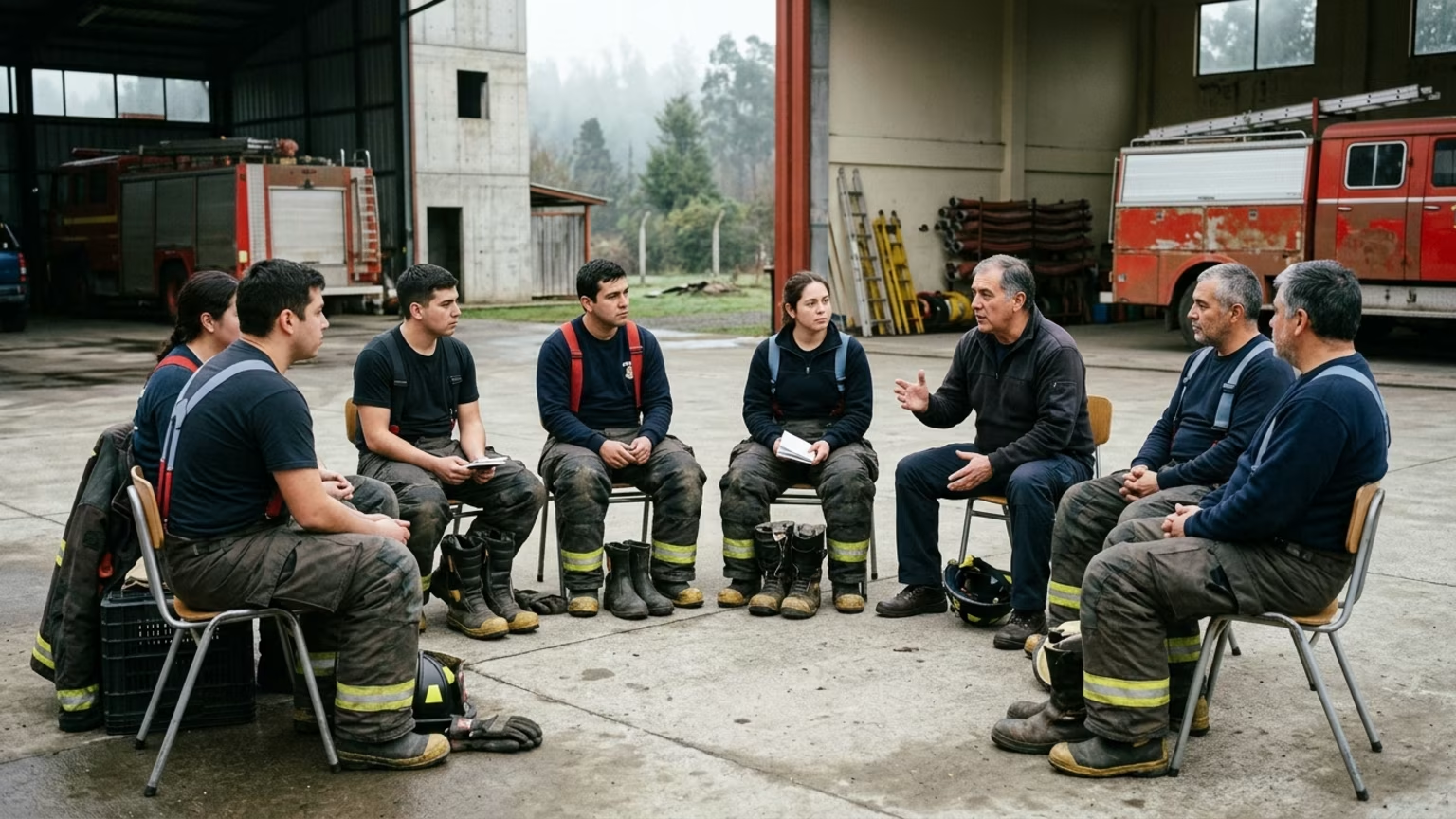
Local reporting published on September 21, 2026, described the Temuco Fire Corps in Chile integrating mental-health prevention into station workshops and emergency preparation. According to that coverage, the initiative followed a 2024 diagnostic exercise across eight fire companies, with workshops beginning in 2025.
Temuco’s reported initiative has two linked aims: supporting its volunteer firefighters and preparing them for encounters with people experiencing acute psychological distress. Professionals in the fire service’s Medical Department are developing the program. Its central policy feature is the placement of mental-health work within routine preventive activity rather than a separate awareness campaign.
Local coverage describes workshops covering communication and de-escalation during crisis encounters. Other reported subjects include leadership, conflict resolution and the emotional impact of especially difficult incidents. Fatal fires and traffic accidents are among the examples identified in the reporting.
These subjects address different responsibilities. Communication training concerns how volunteers respond during an emergency involving someone in distress. Support for firefighters concerns the emotional consequences of their own operational experiences. Keeping those aims distinct makes the program easier to understand and its responsibilities easier to assess.
Temuco Fire Corps superintendent Alfredo Lassalle said the work was intended to create spaces where volunteers could express and address emotional consequences associated with the emergencies they routinely face. Separate local reporting described workshops in the stations and further mental-health activities being planned. That supports reading the initiative as continuing institutional work rather than a single event.
A separate Florida study provides context for career-long prevention. UCF RESTORES researchers identified 307 suicide deaths among Florida fire-service members between 1999 and March 2026 by linking state records. More than a third of members with known licensing status were inactive at death.
The Florida findings make continuity worth discussing alongside support for active personnel. They also draw attention to a question that a station workshop alone does not answer: how does an organization maintain relevant support across changes in a firefighter’s relationship with the service?
Temuco’s public coverage provides no participant count, budget or formal evaluation. It does not establish confidential clinical access, peer-support coverage or routine screening. Follow-up after referral and support for retired firefighters are also unreported. No outcome measures demonstrate that the program has reduced suicide risk.
The Florida findings describe one jurisdiction rather than Chilean rates or universal firefighter risk. The observed inactive status does not establish that leaving active service causes suicide risk. Crisis communication training is also distinct from clinical treatment. These boundaries matter when deciding which features to borrow and which questions require further evidence.
The operational translation is a change in training agendas and support planning, not a new exercise prescription. This announcement provides no research-backed basis for a fatigue cutoff, workout schedule or return-to-duty rule. Its useful contribution is showing how mental-health preparation can sit within the same preventive work that departments already organize.
For departments reviewing fatigue or physical-training protocols, the supported adjustment is to give the emotional consequences of difficult incidents a defined place in that work. Temuco’s reported leadership and conflict-resolution topics also provide relevant material for routine training discussions. Neither subject should become a test of personal toughness or willingness to keep working.
A training plan should identify the purpose of each activity. A communication exercise prepares personnel for an operational interaction. A discussion about difficult incidents creates space to address emotional consequences. A referral pathway concerns access to professional support.
Those purposes can be connected without being treated as interchangeable. Workshop attendance is a record of participation. It should not be used as evidence that someone has recovered or that an organization has met every care-access need. Likewise, completing physical training does not answer questions about psychological support.
UCF’s reporting describes Florida’s State Fire Marshal’s Zero Suicide Prevention Framework as a broader organizational model. It includes leadership and training alongside identification and engagement. Treatment, transition and improvement are also part of the framework. The relevant comparison is its scope across a career rather than proof that Temuco uses the same system.
New York’s recent announcement adds a different part of the support picture. It describes a one-hour online mental-health and cultural-awareness course for professionals who work with first responders. Its modules cover occupational context and barriers to care alongside risk recognition, intervention and ongoing care. The intended audience distinguishes provider preparation from training responders themselves.
For a department reviewing its own arrangements, these examples suggest checking both sides of the connection: what personnel are taught and what support they can reach. The same distinction belongs in planning physical training around irregular shifts. Readiness planning should leave room for recovery and care rather than interpret every concern as a need for more effort.
The immediate adjustments supported by this reporting concern organization and communication. They do not require a new daily clinical test or a prescribed resilience routine. Departments can use the reported workshop subjects to review existing preparation, while individual responders can ask clearer questions about the purpose and availability of support.
For individual firefighters, the most direct routine change is to approach mental-health training with a clear understanding of its role. Bring questions about the session’s purpose and the route to professional support. If a personal concern requires clinical attention, take it to qualified care rather than treat class participation as the answer.
This approach also fits thinking about physical and mental recovery together. Fitness planning and support planning can sit within one readiness conversation while retaining different responsibilities. An exercise agenda addresses physical preparation; a care pathway addresses access to professional help. Keeping that distinction visible avoids asking physical training to carry a responsibility it was not designed to meet.
The next useful development would be reporting that connects program delivery with access and follow-through. Participant counts could establish reach. Documentation of referral arrangements could clarify how workshops connect with professional support. Sustained participation and appropriate outcome evaluation would help distinguish an ongoing system from a recurring series of classes.
Future coverage should also track how Temuco maintains the reported work across its fire companies. The useful question is not simply whether another workshop occurs. It is whether the program’s firefighter-support and emergency-preparation aims remain clear as activities continue.
For departments considering similar work, follow-up research should examine organizational delivery as well as individual experiences. Relevant questions include whether personnel understand the support route and whether referrals lead to qualified care. Leadership involvement and continuity through service transitions also deserve attention. These are evaluation priorities rather than demonstrated results of Temuco’s program.
The same lens applies to questions about follow-up after an initial support contact. An initial conversation and a continuing pathway are different parts of support. Editorial attention should stay on the connection between them rather than on reassuring language alone.
Temuco’s reported approach offers a concrete example of placing mental-health work inside preventive activity. The next stage to watch is how that activity connects with care and accountable evaluation. That is where the discussion can move from a program description to evidence about what reaches personnel and remains available over time.
Workshop participation and access to qualified support are separate measures, and Rescuris translates relevant evidence into practical guidance for emergency-service professionals. When motivational slogans or mental-health stigma cloud support decisions, its coverage connects stress resilience with duty fitness and recovery without treating long-term health as secondary to short-term performance.
Rescuris publishes evidence-aware guidance for firefighters, police officers, paramedics and other first responders on fitness, recovery, sleep, nutrition, stress resilience and long-term capability.





Read practical guidance on first responder fitness, recovery, sleep, nutrition and resilience for demanding work and a long, active career.
read the blog
