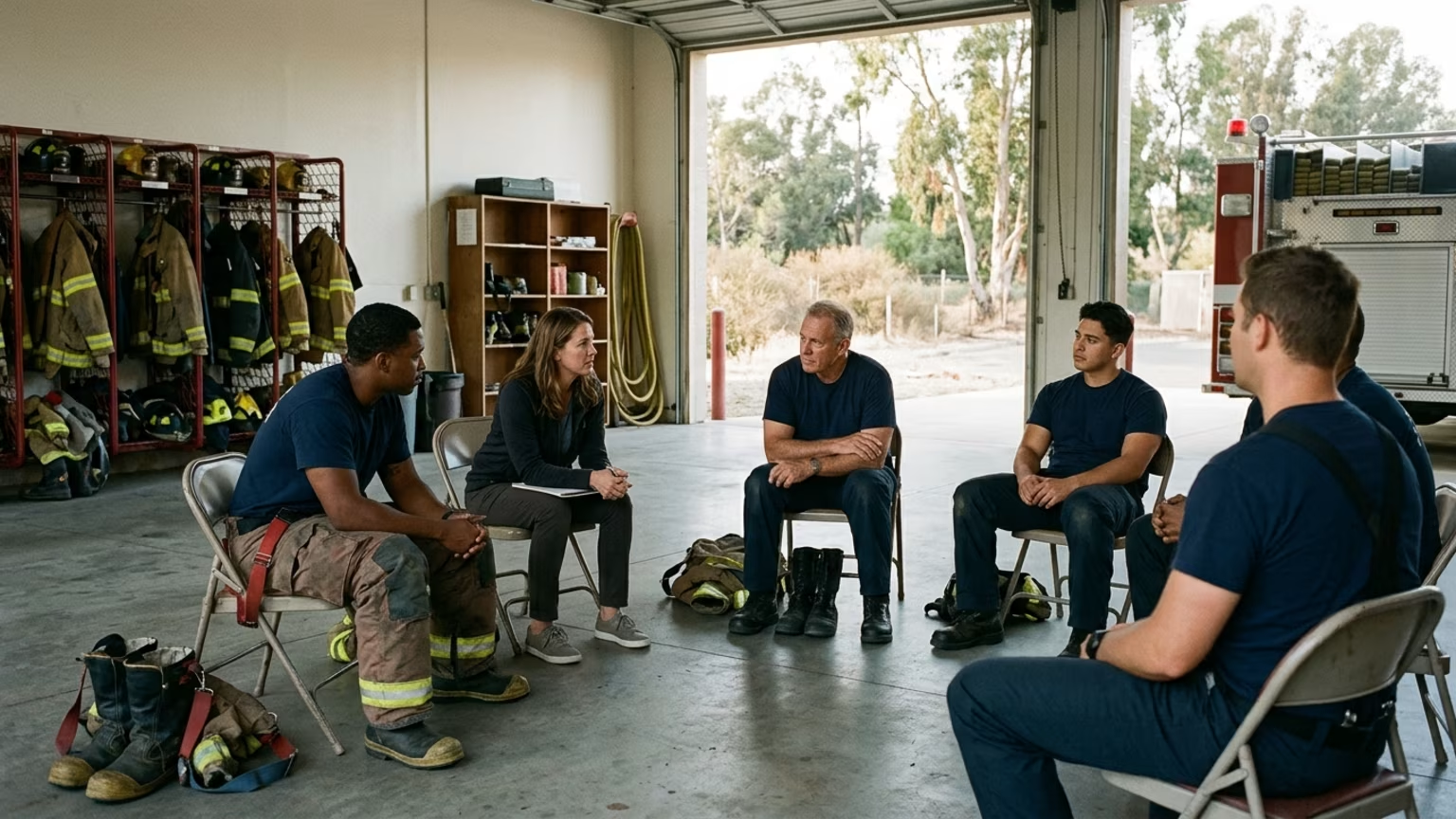

The California Fire Foundation marked its 2026 memorial by highlighting firefighter PTSI and occupational cancer risks alongside necessary long-term support.





If you are in immediate danger, call 911. For 24/7 support, call or text 988 and press 1 for the Veterans Crisis Line, or text 838255.
In October 2026, the California Fire Foundation marked California Firefighters Memorial Day by connecting annual remembrance with the severe occupational health risks facing fire-service professionals. The announcement highlighted post-traumatic stress injury and occupational cancer as persistent hazards that require long-term support long after a shift ends.
The California Fire Foundation announced a 45 percent increase in PTSI-related deaths among the firefighters represented among its 2026 memorial honorees compared with 2025. This specific year-over-year comparison applies strictly to the foundation's honorees rather than representing a statewide incidence rate. However, it reflects a heavy occupational burden for personnel who respond to approximately 3 million incidents each year. These responses encompass fires, medical emergencies, hazardous-materials incidents and water rescues.
If you or a colleague are in immediate danger, call 911. For immediate crisis support, dial 988 and press 1 for the Veterans Crisis Line, or text 838255. Establishing a connection with mental health professionals is a standard component of managing occupational stress alongside a qualified clinician. Storing medications securely and removing access to lethal means are practical steps to arrange with a healthcare provider during difficult periods.
Occupational cancer remains another leading health concern for the modern fire service. The foundation characterized repeated toxic exposures as a recognized hazard in the 2026 legislative resolution marking October as California Firefighter Appreciation Month. Broader epidemiological research provides concrete statistical context for this biological risk. Medical Xpress reported that a NIOSH study of nearly 30,000 career firefighters in three cities found cancer-diagnosis rates 9 percent higher than expected against U.S. population rates.
That same NIOSH study noted cancer-mortality rates 14 percent above the expected national baseline. The reality of these statistics became visible during the October 3 memorial ceremony in Sacramento. The foundation added 37 California fire-service professionals to a memorial that already carried more than 1,500 names. These figures illustrate the critical importance of treating long-term disease prevention as a daily operational necessity.
These figures change how departments and individuals must approach fatigue management and physical readiness. The sheer volume of 3 million annual incidents means that physical wear and chemical exposures accumulate constantly. Current protocols often prioritize acute physical recovery between shifts without fully addressing the long-term biological impact of these exposures. The recognition of cancer and PTSI as primary career threats validates the need for comprehensive daily recovery strategies.
To handle this operational reality, readiness protocols must integrate both physical capability and cumulative hazard mitigation. The foundation supports the California Fire Service Task Force on Behavioral Health’s Safety Stand Down. This dedicated program addresses mental health, suicide prevention and overall firefighter well-being. By treating mental health and physical recovery as equally vital to duty performance, departments can better prepare crews for unpredictable schedules. Practitioners must build routines that actively reduce stress rather than passively waiting for standard days off.
Professionals who focus on tracking cumulative risk across a career build a necessary foundation for maintaining their long-term occupational capability. The physical demands of responding to fires differ drastically from managing complex medical emergencies or water rescues. Transitioning rapidly from a resting state to maximum physical exertion during these varied calls heavily taxes the cardiovascular system. This constant physiological shifting requires training programs that prioritize adaptability alongside pure strength or endurance.
Beyond physical exertion, the mental fatigue of managing continuous statewide emergencies degrades situational awareness. Decision fatigue accumulates when crews must pivot from routine medical evaluations to high-stakes rescue operations within a single shift. Recognizing this cognitive burden explains why adequate rest periods are necessary for both physical recovery and critical thinking. Departments that acknowledge this combined toll can design schedules that better preserve the operational readiness of their personnel.
The connection between hazardous-materials incidents, structural fires and cancer risk requires strict adherence to decontamination protocols. The NIOSH data reported by Medical Xpress showing elevated cancer mortality proves that washing gear and managing exposure are core performance requirements. Personnel must treat the immediate removal of dangerous contaminants as a required phase of every single response. Operational readiness now dictates that the job is not complete until both the equipment and the individual are properly decontaminated.
The historical view of firefighting often limits the definition of injury to acute events like burns, structural collapses or immediate physical trauma. The foundation's focus on cancer and PTSI overturns the assumption that a career is only threatened on the active incident scene. Adding names to a memorial for illnesses developed over years shows that the most severe risks are often chronic. This reality demands a permanent shift from reacting to acute injuries to managing long-term health continuously.
This delayed onset of occupational disease complicates how departments measure the safety of their current operating procedures. If a toxic exposure takes twenty years to manifest as cancer, relying solely on immediate injury reports creates a dangerous blind spot. Leaders must evaluate their safety protocols based on long-term medical data rather than short-term operational convenience. Protecting the future health of a department requires making difficult procedural changes today before the damage becomes irreversible.
The 1987 formation of the California Fire Foundation by California Professional Firefighters initially aimed to help fallen firefighters' families. Today, that mission clearly encompasses providing emotional and financial assistance for the complex aftermath of toxic exposures and mental trauma. The assumption that an emergency professional leaves the job's risks at the station door is fundamentally inaccurate. Occupational illnesses develop quietly over decades of demanding service.
Acknowledging this timeline changes how professionals should plan their health strategies from their very first probationary shift. Developing clear protocols for managing respiratory health after smoke exposure requires consistent attention throughout an entire career. Recognizing that the physical toll extends into retirement requires active personnel to view fitness as a tool for longevity. This shifts the focus from simply passing an annual physical test to maintaining a highly functional body for life.
Personnel should immediately evaluate their daily shift preparations and post-incident routines based on this operational context. First, professionals must formalize their toxic exposure tracking and incident documentation habits. The foundation noted that California provides workers' compensation protections for qualifying firefighter occupational cancers and PTSI. While the specific statutory requirements and eligibility details vary, maintaining a thorough record of incident types is a necessary baseline. Firefighters should log every hazardous-materials incident and structural fire immediately after the call concludes.
When maintaining a thorough record of incident types, professionals should include specific details about their operational role. Logging the duration of the exposure, the specific tasks performed and the condition of personal protective equipment provides critical documentation. This detailed history becomes invaluable if a professional later needs to establish eligibility for workers' compensation benefits. Tracking these specific variables removes the guesswork from understanding a practitioner's true lifetime exposure burden.
Second, crews must actively participate in structured behavioral health checks rather than dismissing them. The foundation's support for the Safety Stand Down highlights the importance of standardized mental health evaluations. First responders should schedule regular check-ins with culturally competent clinicians to address the stress of responding to millions of statewide emergencies. Creating a baseline of mental well-being makes it easier to identify significant emotional deviations later in a career.
Third, responders must prioritize family communication regarding the realities of occupational hazards. The California Fire Foundation focuses on providing assistance to the families of firefighters and the communities they protect. Families need to understand the signs of PTSI and the clear importance of preventive health screenings. Having these practical conversations early prepares support networks to access available financial and emotional assistance programs if occupational illnesses occur.
Fourth, practitioners should actively seek financial planning advice tailored to the specific risks of emergency service. Understanding the workers' compensation system before an injury occurs allows families to prepare for potential income disruptions. Building a dedicated emergency fund specifically designed for medical leave provides a critical safety net during long recovery periods. Taking control of these financial variables reduces the secondary stress that often accompanies an unexpected occupational diagnosis.
Building practical support systems helps professionals better navigate how psychosocial stress interacts with occupational hazards over time. Establishing this foundation means that professionals do not have to navigate complex health challenges in complete isolation. Kara Haynes, executive director of the California Fire Foundation, urged Californians to honor firefighters and help the foundation support these families. Engaging with these support networks before an acute crisis hits is a critical component of practical career management.
As the fire service continues to study the long-term impact of the job, several crucial developments require ongoing attention. Professionals should monitor how state legislatures update and clarify workers' compensation protections for occupational diseases. The current mention of qualifying cancers and PTSI indicates progress, but understanding the precise clinical criteria for these benefits remains essential. Changes to these statutory requirements will directly dictate how retired and active personnel access necessary medical care. Keeping track of legal definitions will help responders protect their financial and physical health after service.
Additionally, the industry must follow further epidemiological research tracking the exact mechanisms of occupational cancer. While the NIOSH study reported by Medical Xpress outlines the broad statistical risks of career service, future data may clarify which specific exposures drive the highest mortality rates. Identifying the most dangerous toxins will eventually lead to better personal protective equipment and more effective decontamination technologies. Tracking these scientific advancements will allow departments to continuously refine their physical training and recovery expectations.
Personnel should carefully track emerging evidence regarding how toxic exposures impact cardiometabolic risks in the fire service. First responders should prioritize applying this emerging evidence to their own career longevity planning. They must also observe how organizations like the California Fire Service Task Force on Behavioral Health expand their resources. As the understanding of PTSI evolves, the availability of specialized treatment programs will likely expand to meet the specific needs of emergency professionals.
Observing how support programs adapt to serve retired professionals is another critical area for ongoing attention. The transition into life after service often removes the daily structured support of a firehouse environment. Monitoring how foundations provide continuous emotional and financial assistance to retirees will help active personnel plan their own departures. Ensuring that health resources remain accessible after retirement is fundamentally necessary for true career longevity.
Understanding testosterone and hormone claims without assuming testing or treatment is right for everyone requires careful evaluation after years of complex occupational exposures. When professionals face shifting physical capabilities due to irregular sleep and chronic stress, Rescuris translates credible biological research into actionable protocols. Explore Resources
Rescuris publishes evidence-aware guidance for firefighters, police officers, paramedics and other first responders on fitness, recovery, sleep, nutrition, stress resilience and long-term capability.






Read practical guidance on first responder fitness, recovery, sleep, nutrition and resilience for demanding work and a long, active career.
read the blog
