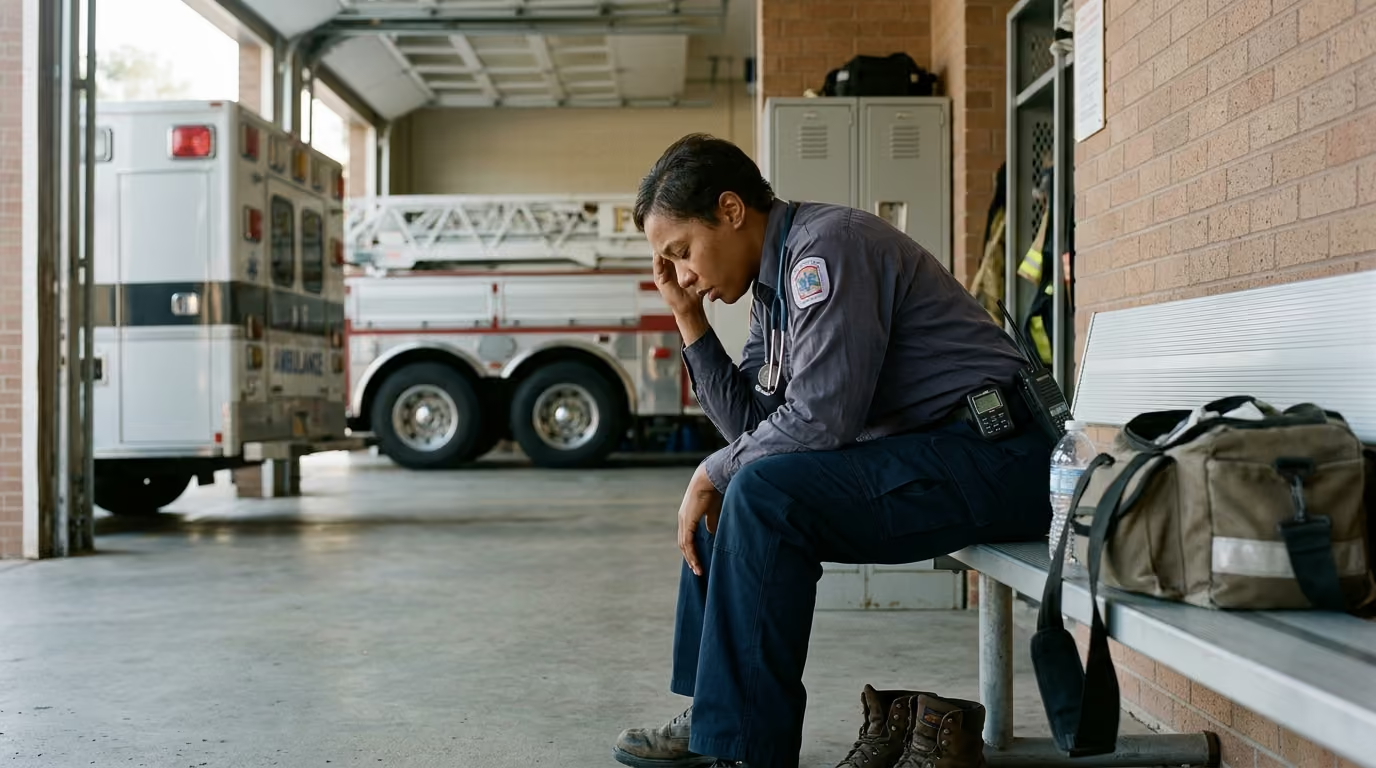

Targeted breath control exercises optimize heart rate variability and operational performance for emergency services personnel facing high-stress tactical and physical demands.





Breathing techniques are portable physiological tools designed to regulate acute arousal, steady attention, and support recovery between demanding tasks. They are not psychological cures, trauma treatments, or substitutes for sleep, physical conditioning, and competent incident command. This guide examines the clinical and operational evidence behind respiratory control in emergency services. It details how specific breathing patterns influence the nervous system, where their practical limits lie, and how to apply them safely across field operations.
In emergency operations, breathing techniques represent deliberate adjustments to respiratory rate, depth, and rhythm to manage acute physiological activation. They function by altering autonomic nervous system feedback, shifting cardiovascular dynamics, and giving responders a concrete attentional anchor during high-threat or high-cognitive-load events. They are low-cost and require no external equipment. This makes them accessible in high-pressure environments where other stress-management options are impossible to deploy.
These techniques are not universal solutions for occupational exhaustion, psychological trauma, or operational errors. A structured breathing pattern cannot compensate for chronic sleep deprivation, severe dehydration, or the metabolic demands of prolonged structural firefighting. When practiced correctly, controlled respiration provides a brief physiological pause. This pause can prevent runaway hyperarousal, reduce unhelpful muscle tension, and preserve the working memory required for critical field decisions.
Understanding the difference between physiological arousal and subjective stress is necessary when evaluating these methods. Arousal refers to the objective activation of the central and autonomic nervous systems, marked by elevated heart rate, heightened sensory awareness, and hormonal release. Stress involves an individual appraisal of threat versus available coping resources. A responder can experience high physiological arousal while remaining fully functional, focused, and effective on scene.
Controlled breathing primarily targets acute physiological arousal rather than the psychological appraisal of danger. A responder may utilize structured breathing to stabilize motor control, vocal tone, and visual scanning without necessarily feeling relaxed. In dynamic emergency operations, the operational goal is rarely complete calm. The real objective is functional regulation, allowing emergency personnel to think clearly, communicate accurately, and execute technical tasks under pressure.
The physiological foundation of breath control rests on the bidirectional communication between the respiratory, cardiovascular, and central nervous systems. Under spontaneous conditions, breathing rate and depth adjust automatically to metabolic demands and perceived danger via brainstem networks. When an individual consciously slows their breathing frequency, they modify afferent signaling through the vagus nerve. This process directly influences cardiac pacing and autonomic tone.
Systematic reviews demonstrate that slow breathing practices produce measurable changes across autonomic, central nervous system, and psychological markers. Controlled trials consistently report increases in time-domain heart rate variability parameters, specifically SDNN and RMSSD, alongside changes in electroencephalographic activity. These physiological shifts frequently correlate with self-reported reductions in acute anxiety, anger, and confusion. The evidence confirms that slow respiration changes immediate cardiovascular variability, though the magnitude of operational benefit varies across settings.
Central to this physiological response is respiratory sinus arrhythmia, the natural variation in heart rate that occurs during a single breathing cycle. Heart rate normally accelerates during inhalation and decelerates during exhalation. Slow, structured breathing amplifies this cyclic fluctuation by optimizing the timing of intrathoracic pressure changes and baroreceptor firing. Prolonging the exhalation phase extends the period of vagal brake application, temporarily dampening sympathetic outflow to the heart and peripheral vasculature.
The scientific literature reveals clear boundary conditions. Controlled trials demonstrate that while slow breathing modifies autonomic markers, an exact numerical frequency is not universally necessary for positive outcomes. A large randomized trial comparing coherent breathing at roughly 5.5 breaths per minute against paced breathing at 12 breaths per minute observed equivalent improvements in perceived stress and anxiety across both structured conditions. Structured attention and comfortable pacing often matter far more than rigid numerical precision.
Research also distinguishes acute state changes from lasting trait adaptations. A brief 45-second breathing intervention provides a momentary state adjustment, but evidence indicates it rarely overcomes severe physical exhaustion. In contrast, multi-week training protocols involving daily paced breathing or heart rate variability biofeedback aim for persistent adaptations in autonomic flexibility and baroreflex sensitivity. Responders should view single breathing bouts as short-term adjustments, reserving long-term capacity building for consistent training routines.
Emergency service duty imposes severe physiological and environmental loads that fundamentally alter normal breathing mechanics. During structural fire attack, tactical law enforcement operations, or complex vehicle extrications, physical exertion combines with acute threat. This combination triggers substantial sympathetic nervous system activation. Responders experience rapid increases in ventilation, elevated respiratory rates, and a natural tendency toward shallow, thoracic breathing.
Protective equipment further complicates respiratory dynamics. Structural turnout gear, body armor, and chemical protective suits trap metabolic heat and restrict normal rib cage expansion. Wearing self-contained breathing apparatus or tight-fitting air-purifying respirators introduces external respiratory resistance. When personnel breathe rapidly against mechanical resistance, work of breathing rises steeply. This accelerates respiratory muscle fatigue and increases the subjective sensation of air hunger.
Prolonged operational waiting followed by sudden high-intensity dispatch creates rapid shifts in arousal. While staging or monitoring radio traffic, anticipatory stress often leads to subtle breath-holding or irregular shallow respiration. Once dispatched, this baseline instability can transition directly into rapid over-breathing before the responder even arrives on scene. Unchecked hyperventilation lowers arterial carbon dioxide levels, causing cerebral vasoconstriction that can induce subtle light-headedness, visual narrowing, and diminished executive functioning.
Shift timing and chronic fatigue compound these respiratory vulnerabilities. Extended night duty and circadian disruption impair baseline autonomic regulation, leaving responders with lower baseline heart rate variability and reduced stress tolerance. When cumulative fatigue is high, the nervous system requires greater conscious effort to regulate acute arousal spikes. Utilizing structured tools like a practical stress reset between calls helps personnel interrupt acute arousal accumulation before it impairs technical decision-making on duty.
Different operational situations require specific breathing interventions tailored to task complexity, cognitive load, and environmental constraints. No single breathing pattern fits every emergency phase.
Comfortable paced breathing involves reducing overall respiratory frequency to a steady, sustainable cadence without forcing depth or counting rigidly. Responders inhale quietly through the nose or mouth and release the breath smoothly, aiming for roughly six to ten breaths per minute. This method avoids extreme tidal volumes while establishing a stable physiological rhythm.
The primary operational advantage of comfortable paced breathing is low cognitive friction. Because it does not require strict counting or breath holds, it leaves working memory free for situational assessment, navigation, or radio monitoring. Systematic reviews link paced breathing with improved time-domain heart rate variability and lower subjective stress. Responders should avoid forcing an unnaturally slow cadence if it produces feelings of breathlessness or discomfort.
Prolonged exhalation protocols deliberately structure the breathing cycle so that exhalation lasts roughly 1.5 to 2 times longer than inhalation. A responder might inhale smoothly for two to three seconds and exhale steadily for four to six seconds. This pattern maximizes the duration of respiratory sinus arrhythmia deceleration during the exhalatory phase.
Laboratory research indicates that prolonged exhalation is particularly effective when individuals must actively cope with complex, continuous tasks. In controlled comparisons, extending the exhalation phase supported superior task performance during active coping conditions compared to protocols requiring breath retention. Responders must ensure they do not blow air out with excessive force, which can trigger thoracic muscle tension and unwanted light-headedness.
Tactical breathing, commonly termed box breathing, uses a four-part symmetrical structure consisting of equal duration for inhalation, breath retention, exhalation, and post-expiratory hold. A typical cadence uses a four-count for each phase. This structured sequence provides a distinct, highly memorable pattern designed for high-stress operational environments.
In a preregistered critical-incident simulation with police students, tactical breathing instructions supported superior team performance during complex scenarios compared to standard procedures alone. Interestingly, these performance gains occurred without participants reporting lower subjective stress levels. The structured sequence appears to organize attention and stabilize behavioral output during threat conditions. Tactical breathing is less appropriate immediately following maximal physical exertion, where post-expiratory holds can induce sudden air hunger.
Diaphragmatic breathing focuses on expanding the lower rib cage and allowing the abdomen to move outward during inhalation, rather than lifting the clavicles and upper chest. This pattern engages the primary respiratory muscle, lowering the energetic cost of breathing and minimizing tension across the neck, trapezius, and shoulder girdle.
The American Lung Association highlights abdominal breathing as a foundational method for establishing efficient ventilation patterns while seated or resting. In tactical gear or tight duty belts, complete abdominal excursion is mechanically restricted, requiring responders to focus on lateral lower-rib expansion instead. Diaphragmatic breathing is a baseline movement pattern rather than a rapid calming switch. Attempting to take excessively large belly breaths can lead to over-ventilation and acute dizziness.
Resonance frequency breathing involves identifying an individual's specific optimal respiratory rate, typically between 4.5 and 6.5 breaths per minute, where heart rate variability fluctuations reach their peak amplitude. This approach is usually trained during dedicated off-duty sessions utilizing physiological sensors that provide real-time feedback on heart rate oscillations.
Clinical trials and systematic reviews demonstrate that sustained resonance frequency practice improves baseline autonomic regulation and baroreflex sensitivity. However, this method requires dedicated training time, baseline testing, and ongoing equipment feedback. It serves as a valuable off-duty conditioning practice rather than an active-duty emergency protocol. During critical calls, focusing on precise resonance frequencies can distract personnel from essential operational tasks.
Applying breath control effectively requires matching specific respiratory strategies to the distinct phases of an emergency response cycle.
Before calls occur or while apparatus is staged away from immediate danger, the operational objective is maintaining readiness while preventing unhelpful anticipatory escalation. Responders should avoid complex rituals and focus on comfortable, unforced respiration.
Immediately prior to initiating a high-risk action, such as forced entry, patient intubation, or technical rescue deployment, personnel need a rapid attentional reset. Long multi-minute breathing routines are impossible in this phase.
A single-cycle reset provides an immediate pause without delaying critical operations:
This micro-reset must never delay lifesaving medical care, interrupt team communications, or compromise weapons safety. It is a seamless micro-intervention integrated directly into operational movement.
During active physical labor or dynamic tactical movement, the objective is supporting working ventilation rather than maximizing relaxation. Personnel must preserve operational communication, situational awareness, and motor output.
Responders should rely on natural pacing during brief operational lulls, such as moving between equipment staging areas or waiting for radio confirmation. Exhalations should remain smooth and unforced. Personnel should avoid complex counting structures that divide cognitive resources. If a responder notices sudden vocal pitch elevation or rapid shallow panting, shifting attention to steady exhalations for two breath cycles can restore vocal control and clear operational speech.
Following intense physical tasks, such as dragging charged hoselines, performing continuous chest compressions, or running up stairwells, the body faces severe oxygen debt and elevated core temperature. In this state, the brainstem drives rapid ventilation to clear accumulated carbon dioxide and balance blood pH.
Responders must not attempt extreme slow breathing or breath holds immediately after heavy physical exertion. Research shows that brief tactical breathing bouts fail to improve shooting accuracy or cardiovascular markers immediately following anaerobic fatigue. The correct protocol prioritizes structural support and natural ventilation:
Once personnel return to the station or conclude critical handovers, breathing practices support the physiological transition from active duty arousal to baseline recovery. This phase helps reduce persistent sympathetic tone before eating, administrative reporting, or resting.
Personnel can sit quietly for three to five minutes, practicing comfortable diaphragmatic breathing with extended exhalations. This practice should remain entirely optional and self-directed. Breathwork must never be used as a forced debriefing ritual or a substitute for genuine downtime. Responders who prefer walking, stretching, or quiet peer conversation should use those recovery pathways freely. Integrating structured recovery habits alongside broader duty-readiness training methods preserves long-term physical capacity across an emergency service career.
Breathing techniques are safe when practiced as gentle physiological adjustments, but specific patterns introduce distinct physiological hazards. Understanding these risks prevents adverse events during training and operations.
A common misconception in emergency services is that taking the deepest breath possible enhances performance. Forceful, large-volume breathing moves far more air than metabolic demands require. This excessive ventilation rapidly blows off carbon dioxide, causing acute respiratory alkalosis.
Alkalosis causes cerebral vasoconstriction, reducing blood flow to the brain within seconds. This produces light-headedness, peripheral tingling in the fingers and lips, visual tunneling, and heightened anxiety. Responders who experience these symptoms often mistake them for worsening operational panic, leading to even more aggressive breathing. Instruction should always emphasize quiet, comfortable, and controlled breathing rather than massive lung expansion.
Intentional breath-holding protocols, particularly those involving extended post-inhalation or post-exhalation retention, carry operational risks. Practicing prolonged breath holds after intentional hyperventilation is especially dangerous. Hyperventilation suppresses the physiological urge to breathe, which is driven by carbon dioxide accumulation rather than oxygen depletion.
When carbon dioxide is artificially depleted, arterial oxygen can drop to critical levels before the individual feels air hunger. This creates an immediate risk of hypoxic syncope or blackout without warning. Breath-hold protocols must never be practiced in water, near vehicle traffic, while operating machinery, or during live firearms training. In tactical and rescue settings, unforced continuous breathing remains the safest operational standard.
Certain commercial breathwork systems promote rapid, forceful hyperventilation combined with prolonged breath retention to induce altered states or emotional release. These high-ventilation protocols are medically inappropriate for field stress regulation.
Medical literature identifies clear contraindications for high-ventilation breathwork, including cardiovascular disease, history of cardiac arrhythmias, hypertension, seizure disorders, asthma, and pregnancy. Forceful hyperventilation triggers profound autonomic shifts and coronary vasoconstriction that can provoke medical emergencies in vulnerable individuals. Emergency service organizations should exclude high-ventilation protocols from operational training curricula.
Responders frequently encounter predictable pitfalls when applying breathing techniques in the field:
Breathing techniques function exclusively as short-term physiological self-regulation tools. They are not clinical interventions for psychiatric conditions, severe cumulative trauma, or occupational sleep disorders. Believing that tactical breathing alone can solve deep occupational strain creates dangerous blind spots for individuals and leadership alike.
Following severe traumatic calls or critical incidents involving line-of-duty deaths, personnel may experience intense acute stress reactions, including involuntary tremors, intrusive memories, sleep disturbances, and emotional numbness. These responses represent normal neurobiological reactions to abnormal events. Gentle breathing may assist with immediate autonomic stabilization, but it cannot resolve traumatic grief or moral injury. The National Institute for Occupational Safety and Health emphasizes that recovery from traumatic incident stress requires structured operational pacing, protected rest breaks, regular nutrition, and unforced peer support systems.
When hyperarousal, panic attacks, severe insomnia, persistent avoidance, or depressive symptoms persist beyond several weeks, responders should consult licensed healthcare providers specializing in first responder mental health. Evidence-based psychological therapies provide structured clinical frameworks that far exceed the scope of breathing exercises. Structured respiratory regulation should complement comprehensive medical care, peer support networks, and agency-level wellness initiatives, never replace them.
Responders seeking to maintain long-term career longevity must address physiological recovery across multiple lifestyle factors. Managing meal timing during irregular rotations using a structured first responder shift nutrition framework supports stable metabolic energy and cardiovascular function. When combined with strategic first responder fatigue management, controlled breathing serves its proper role as one small component within a comprehensive operational health strategy.
Nasal breathing warms, humidifies, and filters incoming air while naturally moderating respiratory volume and promoting comfortable diaphragmatic recruitment. During low-intensity staging, administrative tasks, and post-call recovery, nasal breathing is generally optimal. During heavy physical labor, structural firefighting, or rapid patient extrication, metabolic oxygen demand rises sharply, making oral or mixed breathing necessary and normal. Responders should never force strict nasal breathing when high physical workloads demand greater ventilatory volume.
If slow or deep breathing produces light-headedness, air hunger, or heightened anxiety, stop the exercise immediately. Dizziness usually indicates that you are inhaling excessive volume, causing rapid carbon dioxide reduction. Return to natural, unforced breathing and open your eyes fully. Direct your attention outward by looking at concrete objects in your physical environment, feeling your feet firmly planted on the ground, and relaxing your jaw and shoulders.
Evidence in tactical and emergency medical settings is mixed. Controlled studies demonstrate that tactical breathing can improve overall team coordination and procedural execution during complex simulated incidents by organizing attention. A brief 45-second breathing intervention does not reliably overcome marksmanship degradation caused by physical fatigue. A study of paramedic personnel found that three minutes of slow-paced breathing did not improve physical CPR compression quality compared to an educational control. Use breathing to stabilize attention and reset motor tension, but do not rely on it as a substitute for motor skill repetition or physical fitness.
Practicing comfortable paced breathing or diaphragmatic respiration for three to five minutes once or twice daily is sufficient to build familiarity and make the response automatic under operational pressure. Practicing in calm environments, such as before sleep or during physical training warm-downs, reinforces healthy respiratory mechanics without placing heavy demands on your schedule. The goal is to make a calm, extended exhalation a familiar physical habit that you can access instantly during field operations.
Stay connected for research-led guidance on duty fitness, shift-work sleep, injury recovery, stress, nutrition and career longevity. Practical ideas for first responders who want to stay capable on the job, recover well and protect their health for the long run.



Read practical guidance on first responder fitness, recovery, sleep, nutrition and resilience for demanding work and a long, active career.
read the blog



