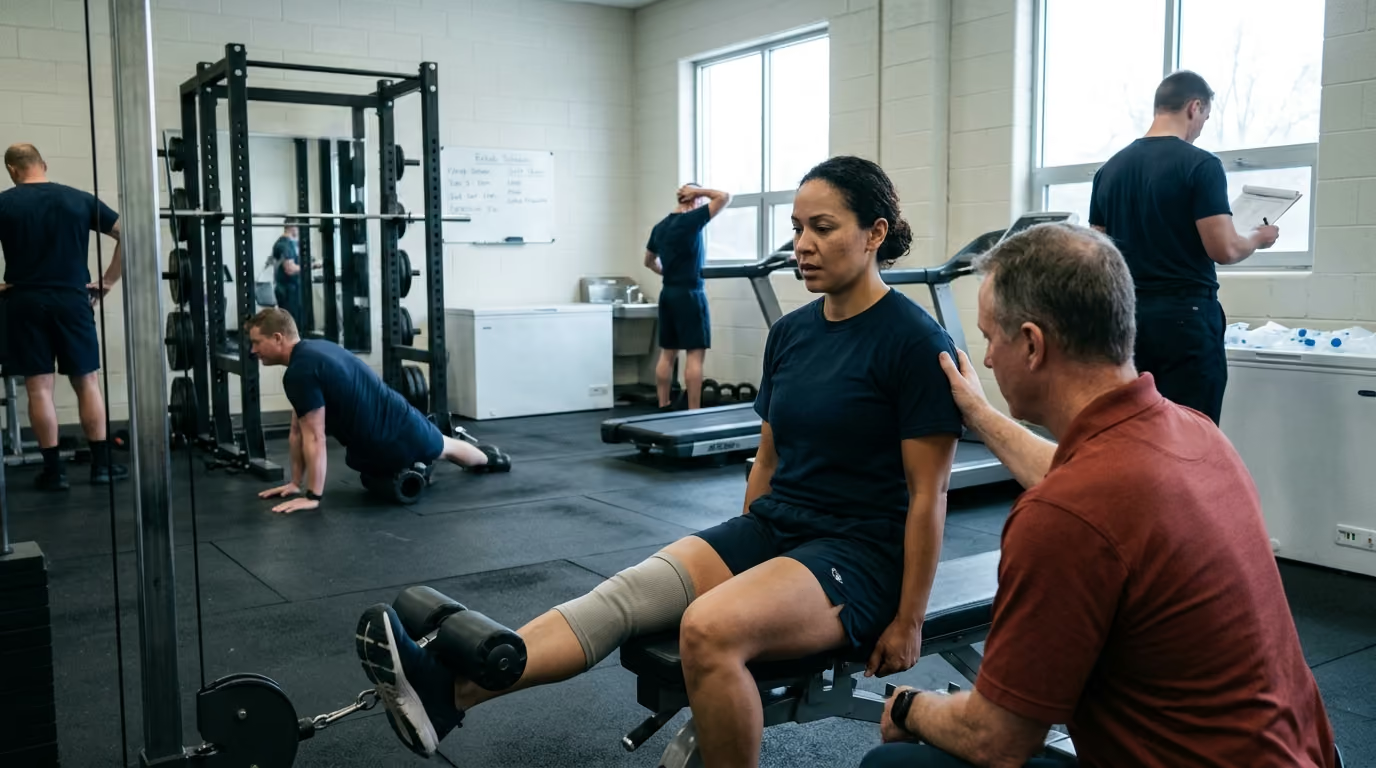

First responders with chronic pain require comprehensive recovery strategies addressing neuroimmune signaling, endocrine disruption, medication side effects, and shift work demands.





If you are in immediate danger, call 911. For 24/7 support, call or text 988 and press 1 for the Veterans Crisis Line, or text 838255.
When physical capacity drops after an on-duty injury, the standard response is often to look for a single broken part. First responders frequently assume that persistent fatigue, joint pain, and loss of strength stem purely from low testosterone or unhealed soft tissue. The biological reality is counter-intuitive.
Hormone suppression is rarely an isolated defect. Instead, it is usually an integrated biological reaction to ongoing pain, broken sleep, psychological stress, and analgesic medication use. Treating low testosterone in isolation while ignoring chronic pain pathways, sleep debt, and prescription side effects fails to restore duty readiness.
Rebuilding durable capacity requires looking at the entire neuroendocrine, musculoskeletal, and psychological system. Persistent pain and hormone dysfunction feed each other across multiple physiological pathways. Addressing these issues demands an evidence-based clinical approach that balances medical evaluation, gradual physical loading, and occupational reality.
Persistent pain is formally defined as discomfort that extends beyond the expected tissue healing window, typically persisting for longer than three months. It is not a moral failing or a simple lack of willpower. In emergency services, chronic pain frequently persists long after initial tissue damage has stabilized.
To understand why recovery stalls, clinicians categorize pain into distinct biological classifications:
Nociceptive pain originates from direct or threatened damage to non-neural tissue. It occurs when mechanical, thermal, or chemical stimuli activate peripheral nociceptors. Examples include acute ligament sprains, structural disc injuries, fractures, and joint inflammation from heavy bunker gear or structural firefighting.
Neuropathic pain is caused by a lesion or direct disease of the somatosensory nervous system. Responders often experience this as burning sensations, shooting radiculopathy down the leg, or focal numbness following spinal nerve root compression or peripheral nerve entrapment.
Nociplastic pain arises from altered nociceptive processing despite no clear evidence of ongoing structural tissue damage or discrete nerve lesions. The central nervous system amplifies incoming sensory inputs, turning ordinary movement into painful experiences. This central sensitization frequently develops when long-term sleep loss, occupational stress, and repeated injuries lower neurological pain thresholds.
Most first responders with long-standing duty injuries present with mixed pain mechanisms. A police officer may have healed lumbar disc pathology alongside persistent secondary central sensitization, local protective muscle spasms, and profound physical deconditioning.
Treating persistent pain requires recognizing that pain intensity does not equal the amount of active tissue damage. When an emergency responder remains in pain, the nervous system itself may have adapted into a state of heightened threat detection. Trying to solve this complex neurological and structural problem purely with exogenous hormones overlooks the primary drivers of physical limitation.
The communication network between the brain, endocrine glands, and immune system governs how the body responds to trauma, physical load, and recovery demands. When an injury occurs, this network undergoes immediate and sustained shifts.
The hypothalamic-pituitary-gonadal axis controls reproductive steroid production through a regulated sequence:
When systemic stressors accumulate, this axis downregulates. Clinicians separate hormone issues into three distinct categories:
Acute inflammation is an essential, time-limited immune response designed to repair damaged tissue after traumatic sprains, fractures, or surgical interventions. Persistent low-grade inflammation, however, represents prolonged immune activation. This sustained inflammatory state often accompanies obesity, severe circadian disruption, ongoing psychological stress, and metabolic strain.
Persistent pain involves complex neuroinflammation, where glial cells within the central nervous system become activated. Activated microglia and astrocytes release inflammatory cytokines such as interleukin-1 beta, interleukin-6, interleukin-8, and tumor necrosis factor alpha. These signaling molecules alter spinal cord pain thresholds, disrupt normal neurotransmitter signaling, and interfere with neuroendocrine regulation.
Measuring inflammatory biomarkers such as C-reactive protein can provide general health context, but routine cytokine testing does not offer a standalone diagnosis for pain or hormone imbalances. Neuroinflammation operates locally within central pathways, meaning systemic blood tests cannot pinpoint the exact cause of pain amplification.
The hypothalamic-pituitary-adrenal axis controls the primary neuroendocrine response to acute danger and chronic load. Chronic pain, rotating shift work, traumatic incident exposure, and fragmented rest disrupt normal daily cortisol rhythms.
Non-standard concepts such as adrenal fatigue lack scientific support. Symptoms like persistent fatigue, brain fog, and low motivation stem from central sleep architecture breakdown, depressive symptoms, autonomic dysregulation, and neurochemical shifts rather than adrenal gland exhaustion. Legitimate endocrine evaluation focuses on validated disease processes rather than broad, non-standard hormone panels.
Prescription pain medications play a major role in altering first responder hormone levels. When managing severe post-surgical pain or traumatic on-duty injuries, opioid analgesics are frequently prescribed. While they can provide acute relief, ongoing use significantly alters endocrine function.
Opioid-induced androgen deficiency, commonly abbreviated as OPIAD, describes the clinical syndrome where continuous opioid therapy suppresses hypothalamic-pituitary-gonadal activity. Opioids bind to mu-opioid receptors within the hypothalamus and pituitary, directly blunting the pulsatile release of gonadotropin-releasing hormone and luteinizing hormone. This suppression leads to central secondary hypogonadism.
The published literature shows broad variations in OPIAD prevalence due to differences in study populations, specific drug compounds, dosages, treatment durations, and laboratory criteria. Research reviews report overall prevalence figures ranging from 21% to 86%. A systematic review and meta-analysis across 15 studies found opioid-associated hypogonadism in 63% of 3,250 participants, with lower-risk bias studies reporting a 69% rate.
Administration methods also influence endocrine outcomes. Research indicates that intrathecal opioid administration suppresses sex steroid production in both men and women, while studies evaluating oral opioids generally observe higher rates of hypogonadism in men.
The clinical presentation of opioid-induced endocrine disruption differs significantly between male and female personnel:
In men, common symptoms include:
In women, the presentation often involves:
Because these symptoms overlap heavily with clinical depression, post-traumatic stress, chronic sleep debt, and metabolic conditions, hormone testing must confirm biochemical deficiency before initiating medical treatment.
First responders rarely recover in clean laboratory environments. The physical and environmental demands of emergency services directly alter pain perception, sleep quality, and endocrine health.
Sleep disruption acts as both a consequence and a primary driver of chronic pain. When an active injury recovery pathway is interrupted by sudden alarms, nighttime dispatches, and rotating schedules, restorative sleep cycles collapse.
A meta-analysis evaluating 16 studies and 116,746 participants demonstrated that baseline sleep problems increased the short-term risk of developing chronic musculoskeletal pain with an odds ratio of 1.64, and the long-term risk with an odds ratio of 1.39. Widespread pain increased the risk of developing long-term sleep difficulties with an odds ratio of 2.0. Prospective research has demonstrated that changes in sleep complaints directly predict future changes in pain severity, with a standardized path coefficient of 0.29.
Emergency personnel face unique sleep challenges, including:
According to clinical practice guidelines from the Centers for Disease Control and Prevention, clinicians should avoid prescribing opioids whenever possible to individuals with moderate or severe sleep-disordered breathing. Opioid analgesics depress central respiratory drive, raising the risk of severe nocturnal hypoxia.
Emergency duty involves unpredictable, high-stakes physical demands. Carrying heavy rescue equipment, lifting bariatric patients down cramped stairwells, or wrestling combative subjects in awkward postures places massive strain on compromised joints.
When personnel work through pain while carrying heavy duty gear, protective movement patterns emerge. Responders brace their spines, alter their gait, and avoid normal ranges of motion. Over time, these protective behaviors cause localized muscle fatigue, reduce mobility, and accelerate occupational deconditioning.
Simultaneously, chronic exposure to critical incidents, operational stress, and administrative demands maintains sustained sympathetic tone. Psychological trauma, hypervigilance, and depression share neurochemical pathways with chronic pain and sleep disruption. These shared pathways involve altered serotonin signaling, brain-derived neurotrophic factor changes, and increased neuroimmune sensitivity.
When a responder fears that reporting an injury will cost them their specialty assignment or badge, recovery stalls further. Addressing physical capacity requires understanding these occupational constraints. Implementing structured first responder shift work training principles helps maintain baseline capability without overloading a fatigued system.
Restoring duty readiness requires moving beyond isolated laboratory panels. A comprehensive evaluation framework organizes clinical findings into five interconnected domains.
This domain clarifies what is physically damaged, what is sensitized, and what is deconditioned. Clinicians evaluate the original injury status, check for red flag neurological deficits, evaluate radicular signs, and identify protective bracing behaviors. Functional assessments determine whether the responder can tolerate lifting, climbing, kneeling, and sustained tactical movement.
This domain evaluates sleep quality, duration, and safety. Clinicians screen for obstructive sleep apnea, nighttime hypoxemia, insomnia, conditioned hyperarousal, and shift-related sleep debt. Developing an evidence-based shift-specific sleep plan provides the foundation for systemic tissue healing and neuroendocrine recovery.
A complete medication review catalogs all active pharmaceutical agents, over-the-counter compounds, and supplements. Clinicians review:
The goal is identifying drug interactions, respiratory risks, and substance-induced endocrine suppression.
Endocrine testing must follow established guidelines rather than arbitrary commercial panels. Guidelines from the Endocrine Society emphasize that male hypogonadism should only be diagnosed when compatible signs and symptoms coexist with unequivocally low serum testosterone concentrations confirmed on repeat morning tests.
The testing protocol involves:
For female responders, evaluation includes detailed menstrual histories, pregnancy testing, and targeted assessments of estradiol, luteinizing hormone, follicle-stimulating hormone, thyroid markers, and prolactin based on clinical presentation.
This domain evaluates mental health, trauma history, and occupational demands. Clinicians assess for post-traumatic stress, major depression, panic symptoms, moral injury, and suicidal ideation. It also reviews duty restrictions, physical qualification standards, administrative stressors, and identity loss associated with being on modified duty.
If you or a colleague are experiencing an acute mental health crisis or thoughts of self-harm, call 911 for immediate danger, dial 988 (press 1 for the Veterans Crisis Line), or text 838255. Means-restriction guidance, including safe locking of department firearms and personal medications, should be arranged together with a trusted peer, clinician, or family member during acute crises.
The following illustrative models demonstrate how the five-domain framework applies to common field scenarios:
A 42-year-old firefighter suffered a severe lumbar lifting injury two years prior. He currently takes daily oral prescription opioids, sleeps broken five-hour intervals, and experiences low libido, afternoon fatigue, and muscle weakness.
The evaluation reveals secondary central hypogonadism, elevated apnea-hypopnea scores indicating obstructive sleep apnea, and significant lumbar deconditioning. The integrated plan involves continuous positive airway pressure therapy, a physician-guided opioid taper, graded lumbar spine rehabilitation, and sleep hygiene improvements. Once sleep and medication factors stabilize, his endocrine function is reassessed before considering medical hormone therapies.
A 35-year-old paramedic sustained an acute shoulder labral tear requiring surgery. Following surgical intervention, she experienced persistent pain, took prescription opioids, worked irregular night tours, and restricted calories while performing high-volume conditioning to avoid weight gain. Her menstrual cycles ceased completely.
Clinical assessment reveals low estradiol, low-normal gonadotropins, and normal prolactin, pointing toward functional hypothalamic suppression driven by high energy expenditure, low caloric availability, broken sleep, and opioid use. Her rehabilitation plan focuses on nutritional replenishment, shift-work schedule adjustments, physical therapy for shoulder mechanics, and an supervised medication review. Her menstrual cycle returns alongside functional capacity without external hormone replacement.
A 48-year-old tactical officer reports exhaustion, poor memory, joint aches, and reduced operational endurance. He suspects low testosterone, but two fasting morning blood tests reveal total and free testosterone within normal ranges.
Further investigation identifies severe obstructive sleep apnea, elevated systemic blood pressure, and chronic hyperarousal stemming from repeated critical incident exposures. By treating his airway obstruction with nighttime positive pressure therapy and addressing trauma-related hypervigilance with cognitive behavioral therapy, his physical energy and cognitive focus improve significantly.
Restoring physical capacity requires a phased, progressive rehabilitation system. Moving through these stages allows the body to adapt structurally, neurologically, and metabolically.
The first step rules out structural emergencies and systemic pathologies. Clinicians check for:
Addressing sleep and medications takes priority over aggressive conditioning. Establishing structured sleep windows, managing sleep-disordered breathing with positive airway pressure, and addressing nighttime environmental light are critical first steps.
Simultaneously, clinicians evaluate options for safely tapering opioid analgesics where appropriate. Medical providers may introduce non-opioid analgesics, topical anti-inflammatory agents, and targeted physical interventions. Abrupt cessation of opioids must be avoided to prevent acute withdrawal syndromes, severe pain rebounds, and autonomic instability.
Physical rehabilitation follows progressive loading principles rather than random workouts. Clinicians and strength coaches guide personnel through structured milestones:
Using structured training autoregulation strategies ensures that training volume adjusts based on shift-related fatigue, preventing flare-ups.
Chronic pain alters how the central nervous system processes sensory input. Behavioral interventions such as Cognitive Behavioral Therapy for Chronic Pain (CBT-CP) and Cognitive Behavioral Therapy for Insomnia (CBT-I) help retrain hypervigilant neural pathways.
These therapies reduce fear avoidance behaviors, dismantle catastrophic thinking around movement, and calm autonomic arousal. In accordance with clinical guidelines from the Veterans Affairs and Department of Defense, interdisciplinary care combining physical and psychological rehabilitation is strongly recommended for managing complex, chronic low-back pain.
When persistent secondary hypogonadism remains confirmed after addressing sleep, weight, and medication variables, medical hormone therapy may be evaluated. In a randomized controlled trial evaluating men with confirmed opioid-induced androgen deficiency, testosterone administration improved pain sensitivity, sexual desire, lean body mass, and specific quality-of-life parameters.
However, testosterone therapy is not an FDA-approved universal analgesic, nor should it be used as a shortcut around comprehensive rehabilitation. In men choosing testosterone therapy, baseline hematocrit, prostate health, cardiovascular risk, and fertility plans must be evaluated. In women, hormone therapies require specialist endocrine guidance tailored to their specific reproductive and bone-health status.
The final phase bridges clinical recovery with active occupational demands. A structured return-to-duty protocol outlines:
This sustainable approach protects long-term career longevity and supports an active life after retirement.
Hormone therapies carry distinct physiological trade-offs and medical contraindications that every first responder must understand.
Clinical guidelines from the Endocrine Society explicitly outline conditions where testosterone therapy should not be initiated:
When recovering from duty injuries, avoiding common diagnostic traps prevents delayed healing and unnecessary medical risks:
Rebuilding physical capacity often requires expertise across multiple clinical fields. Navigating healthcare systems effectively means knowing when and where to seek professional care.
First responders should seek formal medical evaluation when experiencing:
Working with an interdisciplinary medical team, including occupational physicians, endocrinologists, physical therapists, and sleep specialists, ensures that care addresses root biological causes rather than isolated symptoms. Exploring resources on career longevity can help personnel structure sustainable professional routines while managing long-term physical demands.
Restoring duty readiness requires treating pain, sleep, stress, and endocrine signaling as a unified system, building the durable physical and biological capacity necessary for a long career and a healthy retirement.
Stay connected for research-led guidance on duty fitness, shift-work sleep, injury recovery, stress, nutrition and career longevity. Practical ideas for first responders who want to stay capable on the job, recover well and protect their health for the long run.



Read practical guidance on first responder fitness, recovery, sleep, nutrition and resilience for demanding work and a long, active career.
read the blog



