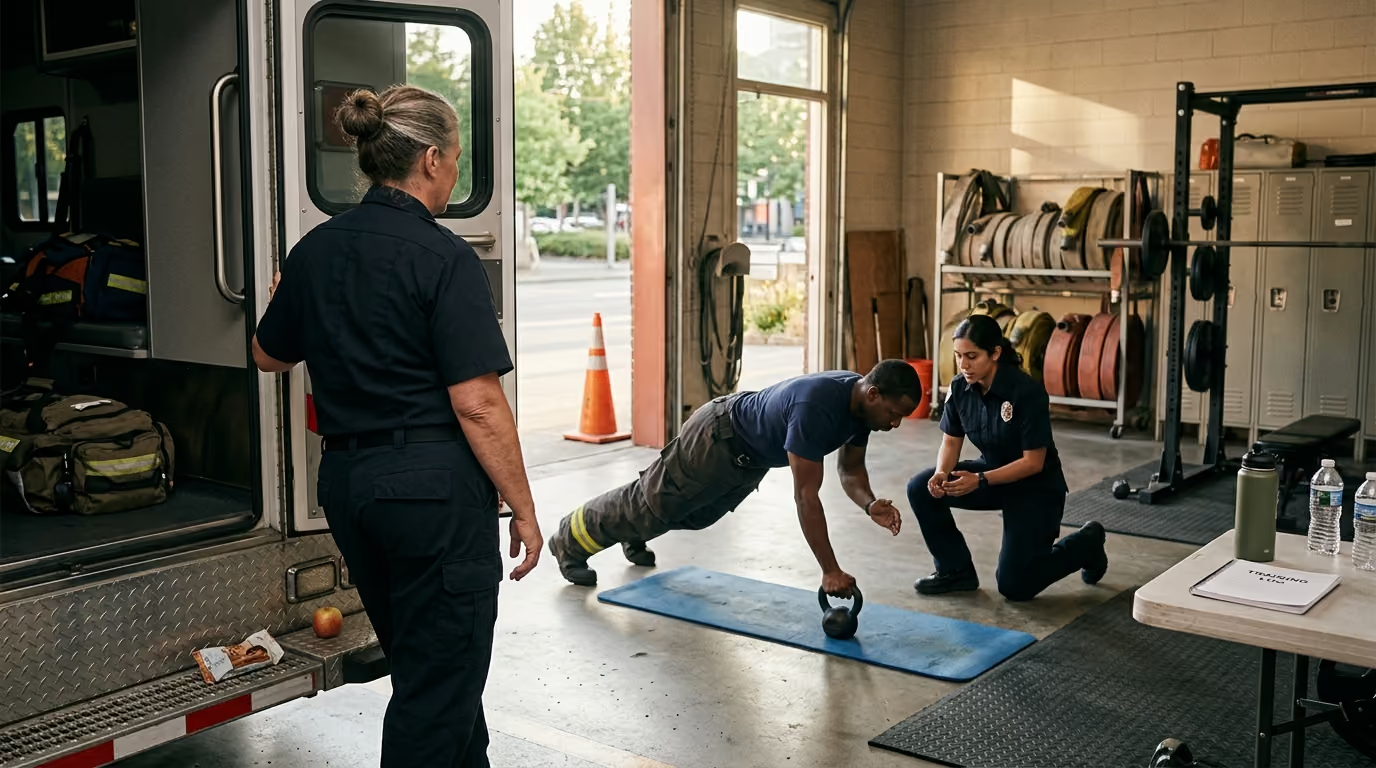

Balancing unpredictable emergency calls with severe sleep disruption demands tailored strength programs focusing on functional movement patterns and practical recovery strategies.





How do you coach emergency service personnel for peak physical capability without breaking them down under the weight of shift work, heavy gear, and cumulative fatigue? Coaches and peer fitness trainers often struggle with this exact question. The answer requires shifting away from punishment-based workouts, extreme bodybuilding splits, or rigid calendar templates. Sustainable performance for first responders requires an occupational preparation model built on general physical capacity, movement autonomy, flexible scheduling, and clear safety boundaries.
Sustainable performance means maintaining the capability to meet unpredictable operational demands, recovering adequately between calls, remaining free from preventable injuries, and sustaining training consistency across decades of service. When coaches stop asking how hard a responder can train today and start asking what training dose they can absorb and recover from over time, long-term operational readiness becomes achievable.
The physical demands placed on emergency personnel are substantial, but scientific evidence regarding how to prepare them has evolved. Early fitness programs often mirrored collegiate athletics or military boot camps. Modern occupational research paints a much more nuanced picture.
A systematic review of emergency responders found that higher physical fitness correlates with improved task performance, yet the direct link between isolated physical fitness test scores and overall injury prevention remains complex. Aerobic capacity shows the most consistent protective association against occupational strain and cardiovascular events. In occupational research evaluating firefighter cohorts, individuals with a maximal oxygen uptake below 43 milliliters per kilogram per minute demonstrated 2.2 times higher injury risk compared to peers exceeding 48 milliliters per kilogram per minute. Those falling in the intermediate range between 43 and 48 milliliters per kilogram per minute experienced 1.38 times the risk of the highest fitness tier. Furthermore, an increase in aerobic capacity of just one metabolic equivalent, or approximately 3.5 milliliters per kilogram per minute, correlated with a 14 percent decrease in general injury risk.
Aerobic capacity provides an essential physiological buffer during high-intensity incidents. However, aerobic fitness does not operate in isolation. Studies examining emergency service injuries highlight that acute overexertion, sprains, and strains account for over 65 percent of non-fatal duty injuries. The lower extremities and the lumbar spine bear the vast majority of this burden.
Worksite exercise trials demonstrate that structured, supervised strength and conditioning programs yield measurable occupational benefits. Controlled interventions lasting 12 to 24 weeks have documented 12 to 21 percent improvements in back and trunk muscular endurance among active crews without disrupting daily response operations. Recruit academy interventions implementing movement quality screening and progressive resistance training have achieved significant reductions in workers compensation claims and lost duty time.
Complex training protocols combining multi-joint resistance exercises with explosive power tasks produce greater transfer to real-world tasks like ladder carries, stair climbs, victim drags, and obstacle clearance than isolated bodybuilding movements. At the same time, researchers emphasize that physical fitness cannot compensate for unmanageable workloads, extreme sleep deprivation, thermal stress, or flawed operational tactics. Fitness serves as a primary layer of physical capacity, not an impenetrable shield.
Coaching emergency personnel requires understanding the environment in which they operate. A commercial gym client typically controls their sleep, meal timing, and recovery windows. A first responder lives under the constant pressure of unpredictable acute stress, heavy physical loads, and irregular circadian rhythms.
Total physical stress on a responder combines several distinct loads:
Every branch of emergency response presents unique physical and environmental challenges. Firefighters encounter severe thermal stress while carrying 45 to 75 pounds of personal protective equipment and self-contained breathing apparatus. Their peak operational tasks require substantial relative aerobic power, estimated between 33 and 49 milliliters per kilogram per minute during active fire suppression, ventilation, and search operations.
Police officers face long hours of low-intensity seated vehicle patrol interrupted by sudden, explosive physical conflicts. Officers carry 20 to 35 pounds of duty gear positioned around the waist and torso, altering gait mechanics and placing continuous stress on the lower back and hips. Their physical needs center on rapid acceleration, multi-directional agility, defensive tactics, grip strength, and the ability to maintain cognitive control while heart rates spike during critical incidents.
Emergency medical clinicians experience frequent patient lifting, lowering, and carrying across uneven terrain and confined stairwells. EMS personnel spend prolonged periods seated in moving vehicles, followed immediately by heavy isometric lifting in awkward, asymmetrical postures. Their dominant injury patterns involve spinal discs, shoulders, and knees, driven primarily by repetitive lifting combined with chronic circadian disruption.
When programming for these professionals, coaches must account for the compounding nature of duty fatigue. A high-intensity lower-body workout might be manageable on a rest day, but attempting the same workout following a night shift with five structure fires or multiple critical patient transfers creates severe overreaching and elevates injury risk. Coaches can explore practical training strategies around shift work to better balance volume against duty schedules.
Effective coaching begins with structured discovery rather than immediate exercise prescription. Coaches who implement generic templates without understanding a responder's operational realities quickly lose credibility.
A comprehensive intake process must examine five core domains:
The intake must clarify the responder's primary assignment and daily duties. A patrol officer on a foot beat has different physical demands than a tactical unit operator, a rural volunteer firefighter, or an urban transport paramedic. Coaches should identify the heaviest loads lifted on duty, the most physically demanding calls encountered, and any tasks the individual feels unprepared to handle.
Responders bring diverse movement backgrounds to the gym. Some possess collegiate athletic experience, while others have never lifted a barbell. Many have experienced punitive physical training during academy recruit courses, leading to lingering distrust of structured conditioning. Intake should establish which movement patterns feel natural, which have caused joint discomfort in the past, and what forms of exercise the individual genuinely enjoys.
Given the high prevalence of cumulative trauma in emergency services, coaches must document past surgical procedures, chronic joint pain, disc issues, and current movement limitations. Identifying which specific loading angles or movement speeds aggravate existing conditions allows the coach to build appropriate regressions from day one.
Understanding shift patterns is critical. Whether the responder works a 24/48 schedule, a 48/96 rotation, or rotating 12-hour day and night shifts determines how workouts are placed across the week. The intake must capture average sleep duration, commute times, secondary employment, and family commitments to build realistic weekly volume targets.
Coaches must identify why the responder wants to train. Some train to maintain duty capability, others to keep up with their children, and many to manage job-related psychological stress. Uncovering these underlying goals helps the coach frame training as a tool for career longevity and life outside the uniform.
To build resilient tactical athletes, programming must balance general physical preparedness with occupational movement demands. Coaches should avoid the trap of turning every training session into a job simulation. Constantly wearing turnouts or carrying weighted vests inside the gym creates excessive tissue wear without optimizing underlying physiological systems.
A structured training model follows a clear progression:
Coaches can review minimum effective dose programming to ensure that training volume remains productive without causing systemic exhaustion.
Rather than prescribing rigid exercises, coaches should program fundamental movement patterns that can be tailored to individual anatomy and injury histories:
These build the leg drive required for stair climbing, sprinting, and lifting heavy equipment. Useful options include goblet squats, safety-bar squats, front squats, Bulgarian split squats, and loaded step-ups onto stable platforms.
Hinging develops posterior chain strength, protecting the lower back during patient transfers and heavy equipment dragging. Preferred movements include trap-bar deadlifts, Romanian deadlifts, barbell hip thrusts, and single-leg kettlebell deadlifts.
Pushing strength supports forcible entry, patient handling, and physical control tactics. Implement horizontal pressing through push-ups, dumbbell bench presses, and neutral-grip floor presses, alongside vertical pressing options like landmine presses and angled dumbbell presses.
Pulling capacity counters prolonged seated driving postures and builds the grip and upper back strength needed to manipulate hoses, stretchers, and tools. Program chest-supported rows, inverted rows, neutral-grip pull-ups, lat pull-downs, and single-arm cable rows.
Carries build real-world work capacity, grip endurance, and trunk stiffness under dynamic loads. Incorporate bilateral farmer carries, unilateral suitcase carries, sandbag bear-hug carries, and offset front-rack walks. Pair these with anti-rotation movements like Paloff presses, side planks, and ab-wheel rollouts.
Power allows personnel to react instantly during rapid tactical movements or unexpected physical confrontations. Implement low-risk power exercises like medicine-ball chest passes, rotational wall slams, kettlebell swings, trap-bar jumps, and short sled push accelerations.
First responders require both strength and aerobic capacity. Combining these qualities without triggering extreme fatigue requires careful session planning. High-intensity conditioning sessions should not immediately precede heavy lower-body strength sessions. Placing aerobic base work on separate days, or after resistance training in the same session, minimizes interference with strength adaptations while building vital cardiovascular endurance.
Fixed weekly schedules often collapse under overtime, late calls, and shift rotations. Coaches should adopt a rolling session framework where workouts are completed in sequence regardless of the calendar day:
Responders complete the next session when duty and recovery allow. If an overnight shift involves continuous heavy calls, the scheduled high-intensity session shifts forward, replaced by low-intensity walking, mobility work, or complete rest.
The cultural environment of emergency services values competence, resilience, and operational capability. However, traditional training approaches have sometimes relied on authoritarian coaching, public shaming, and punitive workouts. Modern behavioral science shows that controlling coaching methods undermine intrinsic motivation, increase dropout rates, and encourage individuals to train through dangerous injuries.
Self-Determination Theory demonstrates that long-term exercise adherence relies on supporting three core psychological needs: autonomy, competence, and relatedness. A systematic review of adult exercise behavior confirms that autonomy-supportive leadership significantly improves training persistence, self-efficacy, and long-term physical activity habits.
Autonomy-supportive coaching does not mean abandoning standards or structure. It means giving the responder meaningful choices within a clearly defined framework.
Coaches can dramatically shift training culture by replacing punitive rhetoric with objective, performance-focused communication:
When responders understand the occupational purpose behind an exercise, receive options that match their joint comfort, and retain control over their effort, adherence rises. Training transforms from an imposed requirement into an essential professional resource.
Pain is common across emergency service personnel due to occupational wear, heavy protective equipment, and past injuries. A pain-aware coaching approach views exercise modification not as a failure, but as a practical programming tool. The objective is to maintain the target training stimulus while eliminating painful joint stress.
When a responder reports joint discomfort during an exercise, the coach should adjust mechanical variables systematically:
Coaches must educate responders on the difference between productive muscular burning and mechanical joint pain. Discomfort from metabolic work is a normal training adaptation. Sharp, clicking, pinching, or radiating pain indicates an unhelpful movement pattern that requires immediate adjustment.
Strength and conditioning coaches operate within a defined scope of practice. They are not physical therapists, orthopedists, or cardiologists. While coaches can modify training to work around chronic aches, they must recognize when an athlete requires medical evaluation.
Coaches must halt exercise and refer the individual to qualified medical personnel immediately if any of the following symptoms appear:
First responders often display high pain tolerance and may attempt to push through serious medical conditions out of pride or peer pressure. Coaches must enforce firm boundaries around acute trauma and cardiovascular symptoms.
Cardiovascular events remain a leading cause of line-of-duty fatalities in emergency services, particularly among firefighters. Sudden physical exertion in extreme heat, combined with underlying plaque buildup and dehydration, creates acute cardiovascular strain.
Coaches must advocate for regular occupational medical screenings and avoid prescribing extreme, unmonitored cardiovascular punishment sessions. Training should progress cardiovascular capacity systematically, prioritizing extensive aerobic base building before introducing maximal anaerobic intervals. When responders return from medical leave, cardiac procedures, or orthopedic surgery, coaches must coordinate directly with attending clinicians to align conditioning with formal rehabilitation protocols. Responders looking to build resilience across years of service can explore broad career longevity principles to ensure steady development.
First responder readiness fluctuates dramatically from day to day based on call volume, sleep disruption, and emotional stress. Imposing a fixed workout load on a responder who just completed an exhausting 24-hour shift with zero sleep is counterproductive.
Autoregulation uses real-time readiness feedback to adjust workout volume and intensity on the fly. Coaches can guide responders to use a simple three-tier readiness system:
Understanding how to read physiological and subjective signals helps emergency crews protect long-term recovery. For a deeper breakdown of fatigue management, see this guide on autoregulation and readiness for emergency crews.
Coaching emergency personnel is ultimately an investment in human capability and career longevity. When physical conditioning is designed to support the person rather than test their ego, first responders remain physically capable, mentally alert, and resilient across decades of demanding service.
Building sustainable physical readiness ensures that responders can meet emergency demands today, return home safely to their families tomorrow, and transition into a healthy, active retirement. Coaches who master the balance of structured strength, aerobic capacity, movement adaptability, and autonomy-supportive leadership provide their agencies with an enduring tactical advantage. For additional training methodologies tailored to tactical personnel, explore dedicated strength and duty performance resources.
Coaches and peer trainers can take immediate, actionable steps this week to refine their programs:
Stay connected for research-led guidance on duty fitness, shift-work sleep, injury recovery, stress, nutrition and career longevity. Practical ideas for first responders who want to stay capable on the job, recover well and protect their health for the long run.



Read practical guidance on first responder fitness, recovery, sleep, nutrition and resilience for demanding work and a long, active career.
read the blog



