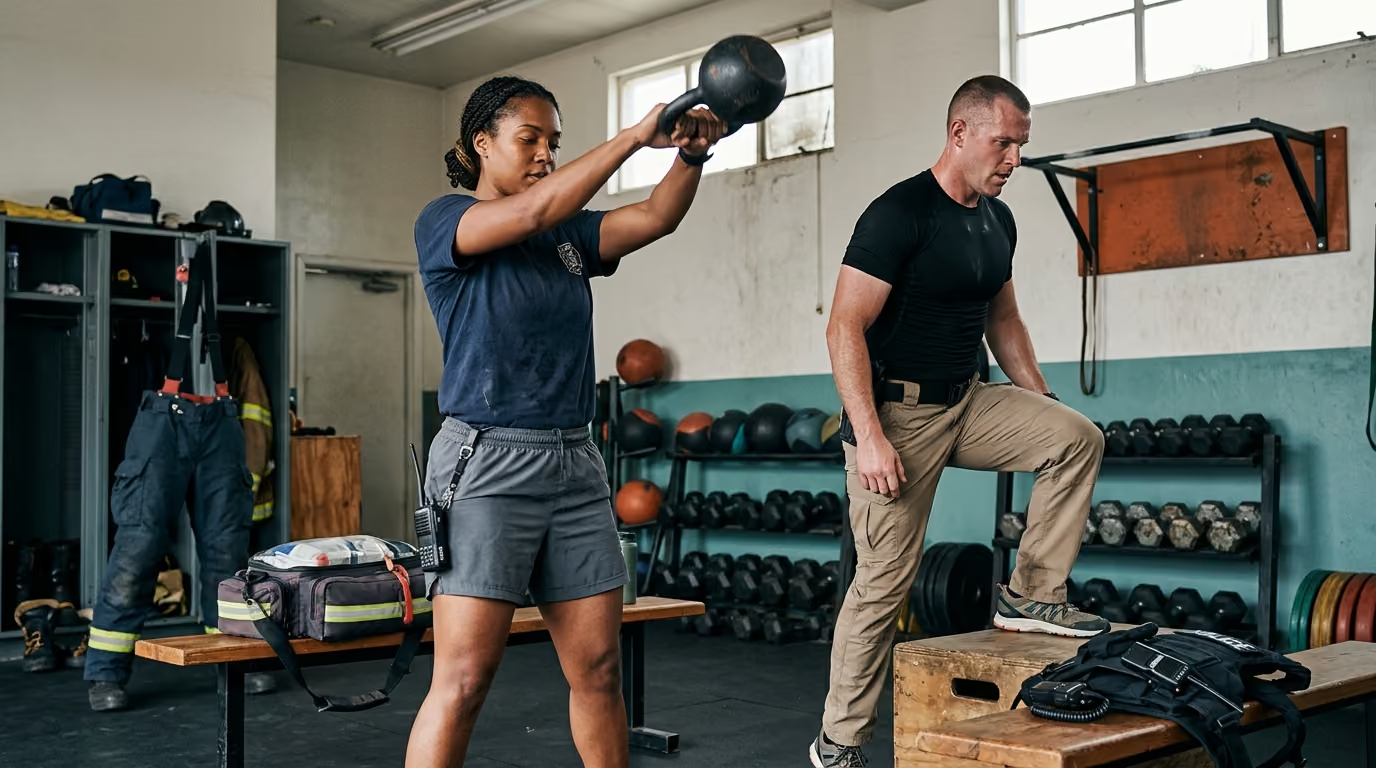

Balancing occupational duty fitness with recreational athletic goals requires smart concurrent training strategies, targeted session sequencing, and adaptive workload monitoring systems.





You finish a fourteen-hour night shift with heavy calls, aching joints, and four hours of broken sleep. On your calendar, your training plan calls for a twelve-mile trail run, an intense Brazilian jiu-jitsu sparring session, or a heavy lower-body lifting workout. You want to pursue endurance races, martial arts, cycling, or backcountry hunting, but you cannot afford to show up to your next shift physically broken or compromised.
Recreational sports should be integrated into your overall occupational physical system rather than treated as a separate, competing program. Balancing both requires viewing duty work, recreation, and strength training as a single cumulative stress budget. You can successfully pursue athletic hobbies by maintaining non-negotiable duty capabilities through minimum effective training doses, managing tissue-specific mechanical impact, and strategically separating high-intensity sessions.
Combining strength training and endurance work within the same athletic calendar is known as concurrent training. For decades, conventional fitness culture claimed that lifting weights and performing endurance sports canceled each other out completely. Modern exercise science shows a much more nuanced reality. Athletes can improve both aerobic capacity and muscular strength simultaneously when the total volume, intensity, and schedule are managed appropriately.
A comprehensive meta-analysis of concurrent training research evaluated forty-two separate studies examining strength, muscle growth, and power adaptations. The data revealed that concurrent training still produces substantial gains in strength and muscle size. Resistance training alone produced an average strength effect size of 1.76, while concurrent training produced an effect size of 1.44. For muscle hypertrophy, resistance training alone showed an effect size of 1.23, compared to 0.85 for combined training.
These findings show that concurrent training works, but high endurance volumes can reduce the maximum rate of strength and power adaptations. This blunting of adaptation is known as the interference effect. The interference effect is not an all-or-nothing switch. Its magnitude depends on several clear variables: the endurance modality chosen, total weekly volume, training frequency, session proximity, and the athlete's nutrition and sleep.
Research indicates that the specific exercise modality plays a major role in the degree of interference observed. The 2012 meta-analysis demonstrated that concurrent strength training combined with running resulted in significant decrements in lower-body strength and muscle hypertrophy. When resistance training was combined with cycling, however, those decrements were not statistically significant. Running creates substantial eccentric impact and high tissue stress in the lower limbs, whereas cycling involves lower impact and concentric-dominant loading.
Session sequencing also directly influences strength retention and adaptation. A systematic review and meta-analysis examining intra-session exercise sequence found that performing resistance training before endurance training produced a 6.91 percent greater increase in lower-body dynamic strength compared to the reverse order. Performing heavy or explosive work first prevents residual cardiovascular fatigue from degrading lifting mechanics and neuromuscular force production.
The timing between separate sessions further dictates how well your body adapts to concurrent demands. Research investigating same-day versus split-session programming found that separating strength and endurance workouts by at least six hours resulted in superior upper-body and lower-body strength adaptations compared to performing them back-to-back. Extended recovery windows give the neuromuscular system time to clear acute fatigue before the next training stimulus begins.
Recreational athletes with predictable office jobs can schedule their workouts around reliable rest days, uninterrupted sleep, and low daytime physical activity. First responders do not have that luxury. Firefighters, police officers, paramedics, and military personnel operate under an unpredictable physical baseline that must be accounted for within the total workload equation.
Every physical task on duty imposes an external load on the body. External load represents the objective physical work completed, such as carrying heavy equipment, dragging charged hoses, lifting bariatric patients, or wearing thirty pounds of body armor. Internal load represents your physiological and psychological response to that work. A systematic review across fifty-seven studies confirmed that subjective internal load measures correlate strongly with physical breakdown and training tolerance.
A major risk for active emergency personnel is the boom-bust training pattern. A boom-bust cycle occurs when occupational demands or fatigue force you to skip workouts for several days, after which you attempt to compensate by performing massive recreational sessions on your days off. Military training-load monitoring guidance highlights that sharp week-to-week spikes in physical volume significantly increase injury rates. Steady, predictable workloads protect connective tissues far better than sporadic high-volume training spikes.
Balancing duty readiness with athletic hobbies requires maintaining a positive fitness-fatigue balance. Every training session and demanding shift creates two distinct physiological outcomes: a long-term fitness adaptation and a short-term fatigue penalty. When chronic fatigue outpaces your ability to recover, your operational readiness drops quickly. You must evaluate every recreational workout by how it affects your overall readiness, not simply by whether you had the grit to complete it.
Preserving operational capability means defending a specific set of physical qualities that recreational sports do not always maintain:
You can explore these foundational capacities in our guide on foundational strength and fitness for duty performance.
Attempting to maximize your marathon pace, increase your Brazilian jiu-jitsu sparring volume, hit a personal record in the squat, and work forty-eight hours of overtime in the same month is a recipe for physical breakdown. Long-term athletic success requires dividing the year into distinct phases where specific qualities are developed while others are maintained.
A sustainable annual athletic structure incorporates several defined phases:
During phases focused on recreational performance, you must shift your duty fitness to a minimum effective dose. A maintenance dose is the smallest amount of training stimulus required to keep an existing physical quality from deteriorating. Research confirms that maximal strength and power can be preserved for months with a fraction of the volume required to build them initially.
To execute a maintenance plan, you should reduce training volume while keeping movement intensity high. If your standard strength block uses four sets of five heavy repetitions on the squat and deadlift, a maintenance dose might require only two sets of three to five repetitions at the same load. This approach preserves motor unit recruitment and connective tissue stiffness without generating systemic muscular damage.
Understanding how to program minimum effective dose training strategies allows you to free up recovery capacity for endurance miles or mat time.
Different recreational activities impose distinct physiological and mechanical stresses on the body. A marathon runner faces repetitive impact, while a jiu-jitsu practitioner absorbs rotational strain and joint friction. You must program your duty fitness around the specific demands of your chosen sport.
Road running exposes the lower body to continuous, high-repetition ground reaction forces. The feet, calves, Achilles tendons, and knees absorb tremendous mechanical stress over miles of pavement. When combined with running calls, stair climbing, and wearing heavy boots, running volume can quickly cause overuse injuries if lower-body lifting is not modified.
Cycling eliminates ground reaction impact, making it easier on connective tissues than high-volume running. However, extended cycling creates intense local muscular fatigue in the quadriceps and places the spine and hips in prolonged flexion. This posture can exacerbate the tightness caused by sitting in patrol vehicles or wearing heavy duty belts.
Brazilian jiu-jitsu, judo, wrestling, and striking arts demand high anaerobic power, isometric gripping strength, rotational control, and physical collision tolerance. The primary programming challenge with combat sports is that athletes often view hard sparring as technical practice, ignoring its massive metabolic and musculoskeletal toll.
Backcountry hiking and mountaineering involve sustained physical output across uneven terrain, often while carrying a weighted pack. While uphill movement taxes the cardiovascular system, long downhill descents produce severe eccentric loading on the quadriceps and patellar tendons.
Organizing a training week around emergency response schedules requires categorizing sessions by their physiological stress rather than simply counting the number of workouts on a calendar. Two workouts from different sports may tax the exact same biological system.
To program effectively, categorize every activity by its primary stress type:
Avoid stacking identical lower-body stresses on consecutive days. Pairing a heavy back squat workout with afternoon hill sprints, followed by a long run the next morning, overloads the patellar tendons and posterior chain without providing adequate recovery time.
When your duty shift turns unexpectedly demanding, adjust your training plan immediately. If a structure fire or complex rescue required hours of heavy physical effort, treat that shift as a high-intensity workout. You do not need to add planned intervals on top of real-world operational strain.
This sample framework shows how a first responder can balance running goals with essential occupational strength:
For deeper insights into managing rotating shift schedules, review our detailed guide on programming training around shift schedules.
Rigid training schedules often fail when applied to emergency services. A sudden callout at three in the morning can wreck your recovery, making a planned maximal lifting session counterproductive. You need an objective system to gauge daily readiness and modify workouts on the fly.
A straightforward way to track external and internal training load is calculating session load:
$$\text{Session Load} = \text{Session Duration in Minutes} \times \text{Session Rating of Perceived Exertion (1 to 10)}$$
Tracking this number helps you identify hidden fatigue spikes. An easy run that feels like an eight out of ten due to heat and sleep deprivation is a clear sign that your body is carrying excess systemic fatigue.
While modern wearable devices track acute and chronic workload ratios, scientific reviews emphasize that workload ratios should not be used as standalone injury predictors. Workload calculations provide useful context, but they cannot replace subjective awareness of movement quality, pain signals, and sleep quality.
Use a daily three-tier readiness model to determine when to push, when to adapt, and when to step back:
Learning when to modify training based on operational demands is explained thoroughly in our resource on readiness-based autoregulation.
High recreational training volume combined with emergency work creates an enormous daily caloric and physiological demand. You cannot out-train a chronic nutritional deficit or persistent sleep debt without compromising both your health and duty capability.
Adults require at least seven hours of quality sleep per night for tissue repair and cognitive recovery. In emergency services, obtaining seven continuous hours is not always possible. However, understanding the true cost of sleep debt helps you make smarter training choices following rough shifts.
Research published in military and sports medicine journals highlights the clear connection between sleep restriction and musculoskeletal injury. Maintaining seven hours or less of sleep across fourteen days was associated with a 1.7-times greater risk of physical injury. Personnel averaging four hours or less were 2.35 times more likely to sustain a musculoskeletal injury compared to those getting eight hours.
When duty deprives you of sleep, your nervous system loses its ability to stabilize joints rapidly and coordinate complex motor patterns. Attempting maximal lifts, technical sparring, or aggressive hill sprints on severe sleep debt spikes your injury risk. Use sleep-deprived days for technical movement, gentle aerobic flush sessions, or extra rest, and explore our dedicated section on sleep disruption from shift work.
Under-fueling accelerates muscle breakdown, suppresses immune function, and drains cognitive focus on shift. Managing concurrent demands requires a proactive approach to daily nutrition:
When preparing for an athletic event like a marathon, gravel race, or martial arts competition, you must reduce training fatigue so you can perform at your absolute best on event day. For first responders, tapering presents a unique challenge: you must shed recreational fatigue without losing the strength and chassis durability required for work.
Exercise science meta-analyses demonstrate that the most effective endurance taper lasts between fourteen and twenty-one days. Training volume should be reduced systematically by forty-one to sixty percent while exercise intensity and frequency are kept relatively high. This drop in volume clears accumulated systemic fatigue while maintaining neuromuscular sharpness and cardiovascular capacity.
To execute a taper without compromising job capability:
After your event, do not jump straight back into heavy operational lifting or high-volume workouts. Allow a week of active recovery, light mobility work, and gradual reload before resuming normal dual-focus programming.
Navigating the combination of job readiness and athletic hobbies is challenging. Avoiding these common programming errors will save your joints and keep your performance high.
Carrying hose packs up stairs, assisting paramedics with difficult patient extrications, or standing on a perimeter for six hours wearing heavy armor burns significant energy and creates real musculoskeletal wear. Logging these days as rest simply because you did not visit the gym leads to rapid overtraining.
Fix: Count strenuous duty tasks as significant physical training volume and adjust your gym work accordingly.
When an emergency call interrupts your training schedule, the worst response is trying to cram two days of missed workouts into your next off-duty day. This creates the exact boom-bust loading spike that triggers tendinopathies and muscle strains.
Fix: Accept the missed session, resume your current schedule as written, and protect your baseline recovery.
Many athletes completely stop lifting weights during the final two months of race preparation. This causes a swift drop in maximal force production, grip strength, and spinal stiffness, leaving you vulnerable to injury on shift.
Fix: Retain one or two brief, high-intensity, low-volume strength sessions every week throughout your entire athletic build.
Grappling and kickboxing involve constant isometric contractions, neck strain, and rotational torque. Labeling an open mat sparring session as light recovery because it does not involve a barbell is a mistake.
Fix: Classify live martial arts rounds as high-stress workouts and pair them with appropriate rest and recovery windows.
Athletes frequently track only mileage, heart rate, and elevation gain when planning trail runs or hikes. Downhill descents create heavy eccentric contractions that produce severe micro-tears in the quadriceps and connective tissues.
Fix: Track descent elevation explicitly and gradually build eccentric lower-body strength using controlled tempo work.
Balancing operational readiness with recreational training carries real physical trade-offs. You must recognize that during heavy athletic preparation, you will not maximize your absolute top-end lifting strength. Similarly, during high-volume tactical or strength phases, your endurance race pace will not reach its ultimate theoretical peak. Accepting these trade-offs keeps your expectations realistic and protects your long-term health.
Safety must always remain your absolute priority. You should never attempt heavy, technically demanding lifts or high-speed sprint intervals when severely sleep-deprived, injured, or cognitively impaired after a grueling shift. Driving, training, and responding to emergencies while exhausted puts your life, your crew, and the public at risk. If chronic fatigue begins to degrade your situational awareness or physical control, your athletic goals must yield to duty safety.
Managing persistent physical issues requires an evidence-based approach:
Return to this framework whenever your operational schedule or athletic goals shift. Review these principles when transitioning from off-season training to race preparation, when moving to a more demanding shift rotation, when returning from an injury, or when introducing a new recreational sport to your life.
Sustainable operational capability and athletic enjoyment are built across a multi-decade career, not a single training cycle. By treating duty work and recreational passions as parts of a unified, intelligent training system, you can pursue challenging athletic goals while remaining strong, capable, and ready for the demands of the job.
Stay connected for research-led guidance on duty fitness, shift-work sleep, injury recovery, stress, nutrition and career longevity. Practical ideas for first responders who want to stay capable on the job, recover well and protect their health for the long run.



Read practical guidance on first responder fitness, recovery, sleep, nutrition and resilience for demanding work and a long, active career.
read the blog



