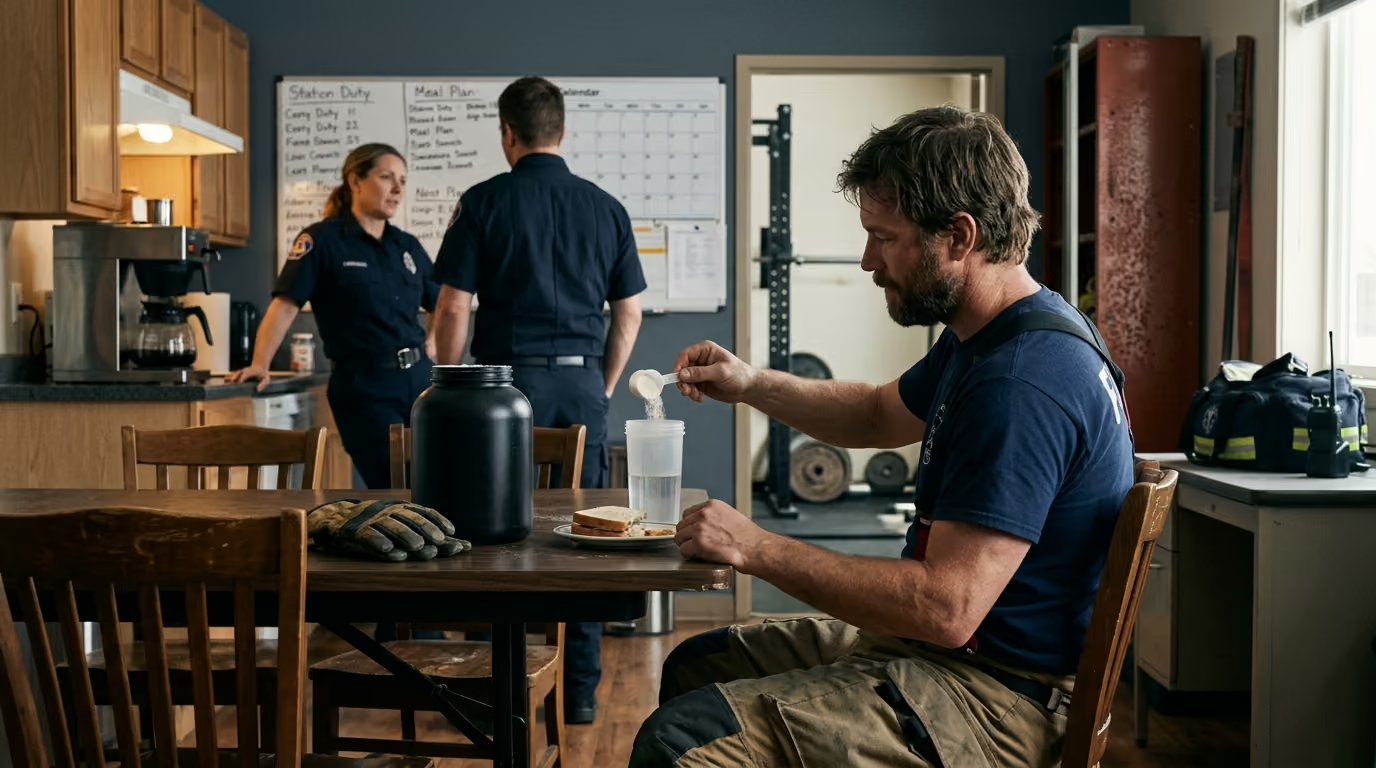

Often dismissed as just a gym supplement, creatine provides first responders with proven physical stamina and cognitive support during demanding shifts.





You are three hours into a night shift when the tones drop for a commercial structure fire. After twenty minutes of hauling heavy supply line, forcing an outward-opening steel door, and dragging equipment across uneven terrain, your heart rate is pegged. Your legs feel heavy, your forearms are burning, and your crew is assigned to search the floor above.
Demands like these define emergency services. Whether you are a firefighter forcing entry, a police officer sprinting after a suspect, or a paramedic performing chest compressions in a tight hallway, your body relies on immediate cellular energy.
Creatine monohydrate is one of the most thoroughly researched nutritional supplements in exercise science. It helps replenish the primary cellular fuel required for brief, repeated bouts of maximal physical effort.
This guide outlines what the current scientific literature says about creatine, how it applies to emergency response work, and how to use it safely within an unpredictable shift schedule.
Creatine monohydrate is a naturally occurring compound that increases muscle stores of phosphocreatine. This larger storage pool allows your muscles to regenerate cellular energy more rapidly during short, high-intensity efforts. The strongest evidence shows that consistent supplementation supports modest improvements in maximal strength, high-intensity work capacity, and lean body mass when paired with resistance training.
Creatine is not an acute stimulant. It does not produce an immediate surge of alertness, nor does it elevate your heart rate before a call. It is not an anabolic steroid, and it does not replace the foundational requirements of structured training, proper nutrition, adequate hydration, or sleep.
Controlled clinical research demonstrates that creatine is safe for healthy adults when taken at standard doses. It does not cause muscle cramps or dehydration in hot environments. However, it can cause a harmless rise in blood creatinine levels, which requires clear communication with your physician during annual occupational health screenings.
To understand how creatine supports physical performance, you must look at how skeletal muscle produces force during high-intensity activity. Muscle contractions are powered by the breakdown of adenosine triphosphate, commonly known as ATP. ATP releases energy when it loses one of its three phosphate groups, becoming adenosine diphosphate, or ADP.
The human body stores only a very limited amount of ATP within muscle tissue at any given moment. During all-out efforts like sprinting, lifting a heavy patient, or swinging a halligan bar, existing ATP stores are depleted within two to three seconds.
For the muscle to continue contracting with maximal force, it must regenerate ATP immediately. The fastest pathway to accomplish this is the phosphagen system. In this metabolic pathway, a molecule called phosphocreatine donates its phosphate group to ADP, turning it back into ATP.
Muscle cells have a finite capacity to store phosphocreatine. When muscle phosphocreatine stores are depleted after ten to fifteen seconds of maximal effort, output drops,
and your body must rely on slower metabolic systems like glycolysis and oxidative phosphorylation.
Supplementing with creatine monohydrate increases resting muscle phosphocreatine concentrations by roughly fifteen to forty percent. This extra reserve allows you to sustain peak power slightly longer and recover faster between intense efforts.
Over weeks and months, this extra capacity allows you to perform more total volume during physical training sessions. Doing more high-quality work during workouts stimulates greater gains in strength, muscular power, and functional muscle tissue over time.
Decades of laboratory and clinical research have evaluated creatine across diverse populations, from elite competitive athletes to aging adults. The evidence base can be categorized by the strength and consistency of published findings.
The evidence supporting creatine for repeated high-intensity exercise is robust and consistent. Meta-analyses encompassing hundreds of clinical trials show that creatine reliably improves single-bout and repeated-bout exercise capacity.
The average performance benefits observed in laboratory settings include:
These effects are modest rather than transformative. Creatine does not turn an untrained responder into an elite athlete. It provides an incremental benefit that supports progressive physical adaptations when combined with hard work.
Creatine supplementation consistently leads to increases in total body mass and lean tissue mass. A comprehensive meta-analysis reported an average difference of approximately 1.37 kilograms of lean mass in favor of individuals supplementing with creatine compared to placebo.
It is important to understand the biological nature of this mass gain. In the first one to two weeks of supplementation, the increase in scale weight is primarily driven by water drawn into muscle cells through osmosis.
Over longer training periods of eight to twelve weeks, the continued gain in lean mass reflects actual muscle protein accretion. This happens because higher training volumes stimulate greater muscle hypertrophy. Responders tracking their body composition should look at performance and long-term functional adaptations rather than short-term scale fluctuations.
Preserving muscular strength and functional capability across a thirty-year emergency services career is a major occupational challenge. Age-related muscle loss, known as sarcopenia, reduces power output and increases injury vulnerability in older personnel.
Systematic reviews evaluating older adults indicate that combining creatine supplementation with progressive resistance training produces clear benefits for lower-body strength and physical function. Modest improvements in lean tissue retention have been documented across multiple trials.
While creatine alone does not prevent muscle loss during complete immobilization or bed rest, it serves as a valuable adjunct to resistance exercise for veteran responders aiming to protect their physical capabilities into retirement.
Most sports nutrition research is conducted on college athletes or recreationally active adults in climate-controlled laboratories. First responders operate under vastly different conditions involving heavy structural gear, irregular sleep, thermal stress, and unpredictable physical workloads.
Direct occupational research on first responders is limited, but one notable trial evaluated career firefighters performing job-specific tasks. In this study, firefighters consumed a nutritional supplement with or without five grams of creatine monohydrate daily over a three-week training block.
The group receiving creatine achieved statistically significant improvements in two critical occupational simulations compared to the control group:
These findings show that increasing phosphocreatine availability can translate directly to occupational tasks that demand maximal, short-duration force production.
However, this study had limitations. It evaluated a small cohort over a short timeframe, and the supplement also included protein and carbohydrates. Creatine cannot be credited as the sole driver of all performance changes, and it did not improve performance across every single measured task.
Emergency response work rarely resembles steady-state endurance training. Instead, duty demands are characterized by unpredictable bursts of high-intensity physical exertion separated by periods of lower physical activity:
Creatine directly supports the metabolic pathways that power these specific operational tasks. To maintain capability across these demands, you can learn more about programming high output capacity workouts alongside maintenance sessions to balance duty readiness and recovery.
Shift work and midnight alarms cause severe sleep fragmentation among emergency personnel. Sleep deprivation depletes cellular energy stores within the brain, reducing processing speed, working memory, and situational awareness.
Recent clinical investigations have examined whether creatine can support cognitive performance during acute sleep deprivation. In one controlled trial, participants subjected to partial sleep loss received a single high dose of creatine (approximately 0.35 grams per kilogram of body weight). Researchers observed positive changes in brain energy metabolism alongside improvements in processing speed and working memory.
These cognitive findings are preliminary and should be interpreted with caution. A single laboratory study does not prove that creatine will prevent fatigue-induced errors during a complex vehicle extrication or high-stress incident command scenario.
Creatine is not a substitute for restorative rest. It should never replace practical fatigue countermeasures, strategic napping, or sensible duty scheduling. For a comprehensive look at sleep strategies, review our guide on building a sleep plan for night shifts and extended tours.
Military and tactical organizations have investigated creatine as a nutritional countermeasure for mild traumatic brain injury and concussion. When the brain experiences blunt impact or blast pressure, cellular energy demands spike while blood flow and glucose delivery temporarily drop.
Preclinical models suggest that higher baseline brain phosphocreatine levels may provide a metabolic buffer during this period of energy crisis. The Defense Health Agency and military researchers have published informational reviews exploring creatine for brain health after operational trauma.
However, clinical research in humans remains in early stages. Creatine must never be viewed as a treatment, cure, or protective shield against concussions. Any responder who experiences a blow to the head, blast exposure, or neurological symptoms requires immediate evaluation by a physician.
Implementing creatine into an irregular shift schedule does not require complicated routines or expensive designer formulations.
The marketplace is filled with heavily marketed forms of creatine, including:
Despite marketing claims of superior absorption or reduced bloating, rigorous comparative trials show that none of these alternative forms outperform standard creatine monohydrate.
Creatine monohydrate is the most stable, most studied, and most cost-effective option available. Alternative formulations are typically more expensive without providing any measurable physiological advantage.
First responders and tactical personnel subject to occupational drug testing must be careful when selecting dietary supplements. The dietary supplement industry is loosely regulated, and uncertified products can contain undeclared stimulants, prohibited substances, or heavy metal contaminants.
Always select creatine monohydrate products verified by recognized third-party certification programs:
These independent testing bodies audit manufacturing facilities and verify that the product contains only the ingredients listed on the label without prohibited contaminants. Keep purchase receipts and product lot numbers for your records.
There are two evidence-based methods for increasing muscle creatine saturation. Both approaches achieve the exact same muscle saturation level over time.
Take 3 to 5 grams of creatine monohydrate once per day, every day.
Take approximately 0.3 grams per kilogram of body weight per day (roughly 20 to 25 grams total for an average adult) for five to seven consecutive days. Divide this total into four or five smaller doses of 5 grams taken throughout the day. After day seven, reduce the intake to a single maintenance dose of 3 to 5 grams daily.
You do not need to stress over the exact minute you consume your creatine. The performance benefits depend on maintaining saturated muscle stores over time, not on an acute surge in your bloodstream right before a workout or emergency call.
For broader strategies on managing your dietary intake around unpredictable duty schedules, explore our practical meal framework for emergency personnel.
A persistent myth in gym culture and emergency service stations is that creatine causes dehydration, impairs heat dissipation, and triggers debilitating muscle cramps during hot shifts.
Extensive exercise physiology research conducted in high-temperature environments has directly refuted these claims. Multiple controlled studies have evaluated athletes and tactical operators performing hard physical work in extreme heat and humidity.
These investigations consistently show that standard creatine supplementation:
Because creatine draws water into muscle cells to maintain cellular osmolarity, total body water increases slightly. Some thermal research suggests this small fluid expansion might provide a slight buffer against thermal strain, although it should never be viewed as medical protection against heat illness.
First responders working structural fires, wildland deployments, or hot summer patrols face severe heat stress due to impermeable protective clothing and prolonged physical exertion.
Creatine will not protect you from the dangers of poor hydration practices or excessive heat exposure. You must still adhere strictly to foundational heat safety fundamentals:
Controlled clinical trials monitoring thousands of athletic sessions have found no causal connection between creatine supplementation and muscle cramping. In fact, large-scale surveillance studies in collegiate athletes have reported slightly lower rates of cramping and muscle tightness among creatine users compared to non-users.
If you experience recurrent muscle cramps on duty, look at the true root causes:
Creatine monohydrate has an exceptional safety profile in healthy adults. Long-term studies evaluating doses up to 30 grams per day for as long as five years have found no adverse health effects. However, there are important physiological and medical details that every responder must understand.
The most important clinical nuance regarding creatine involves routine kidney function tests. During your annual department physical or occupational medical exam, your blood panel will measure serum creatinine to estimate kidney filtration capacity (eGFR).
Creatine breaks down naturally in muscle tissue into creatinine, an inactive metabolic byproduct that is filtered out of the blood by the kidneys.
When you supplement with creatine, your circulating blood creatinine levels will naturally rise by a small to moderate amount. On a standard automated lab report, this elevated serum creatinine can artificially lower your calculated eGFR, making it appear as though your kidney function has declined.
Systematic reviews confirm that in healthy individuals with normal kidneys, this lab change reflects harmless creatine metabolism, not true renal damage or reduced filtration.
To prevent confusion during occupational medical exams:
Individuals with pre-existing kidney disease, a history of renal failure, a solitary kidney, uncontrolled diabetes, or severe hypertension should not take creatine without direct supervision from a nephrologist or physician. While creatine does not cause kidney damage in healthy organs, compromised kidneys may struggle to process elevated nitrogenous waste loads.
Mild gastrointestinal issues, including stomach cramps, nausea, bloating, or diarrhea, occasionally occur. These side effects are almost always caused by specific dosing mistakes:
If you experience stomach sensitivity, skip the loading phase completely. Take a single daily dose of 3 to 5 grams with a balanced meal and plenty of fluid.
Because creatine increases intracellular water storage, you should expect to gain roughly one to two kilograms (two to five pounds) of body weight during the first two weeks of use.
For most responders, this additional cellular hydration is harmless and supports muscular power. However, personnel who must maintain precise body weight for specialized assignments, or those who run extensive distances, should monitor how this weight change feels.
Track your movement quality, joint comfort, running mechanics, and uniform fit. If the added mass negatively affects your agility or climbing efficiency, you can adjust your training volume or discontinue use.
Misinformation regarding sports supplements is common across firehouses, squad rooms, and online forums. Here are the facts behind common claims.
Correction: Creatine is an amino acid derivative naturally synthesized in the liver and kidneys and found in foods like beef, salmon, and poultry. It has no structural or hormonal relationship to synthetic anabolic steroids. It does not alter your endocrine system, shut down natural testosterone production, or cause hormonal side effects.
Correction: Creatine does not stimulate the central nervous system. It does not contain caffeine, it will not keep you awake on night duty, and taking a scoop twenty minutes before a workout provides no immediate stimulant effect. It works through cumulative saturation of muscle tissue over several weeks.
Correction: When you discontinue creatine supplementation, muscle phosphocreatine stores slowly return to baseline over four to six weeks. You will lose the extra intracellular water stored in the muscle cells, which may slightly reduce muscle fullness on the scale. However, the actual contractile muscle tissue built through progressive resistance training remains intact if you continue training and consuming adequate protein.
Correction: Creatine and protein serve completely different physiological roles. Dietary protein provides the essential amino acids required to repair and rebuild damaged muscle fibers. Creatine provides the high-energy phosphate groups needed to power muscle contraction. You cannot substitute one for the other.
Correction: Skeletal muscle has a physiological ceiling for creatine storage. Once your muscle cells are fully saturated, any additional creatine consumed cannot be stored. Your body will simply excrete the excess through your urine, wasting your money and increasing the likelihood of stomach discomfort. Stick to standard, research-backed maintenance doses of 3 to 5 grams daily.
While creatine is well tolerated by the vast majority of healthy adults, certain situations require formal medical evaluation and individual guidance from licensed healthcare providers.
Schedule a consultation with your primary care physician or occupational health provider if you encounter any of the following scenarios:
Never attempt to self-diagnose kidney issues, alter prescription medications, or disregard physician instructions based on supplement advice or fitness articles.
Creatine monohydrate is a reliable, scientifically validated tool that can support muscular strength, high-intensity work capacity, and lean tissue retention across a demanding first responder career. It is inexpensive, safe for healthy individuals, and easy to integrate into an unpredictable shift lifestyle.
To make an informed decision about using creatine, walk through these five simple steps:
For more insights on sustaining your physical capability and operational readiness over decades of service, read our foundational resources on managing career longevity and physical health in emergency services.
Revisit these guidelines whenever you begin a new heavy strength training phase, prepare for a rigorous promotional or tactical physical assessment, or need to review how to communicate with your doctor before your annual department blood panel.
Sustainable operational capability is built through consistent, evidence-based daily habits that protect your physical readiness on duty and your health long after your final shift.
Stay connected for research-led guidance on duty fitness, shift-work sleep, injury recovery, stress, nutrition and career longevity. Practical ideas for first responders who want to stay capable on the job, recover well and protect their health for the long run.



Read practical guidance on first responder fitness, recovery, sleep, nutrition and resilience for demanding work and a long, active career.
read the blog



