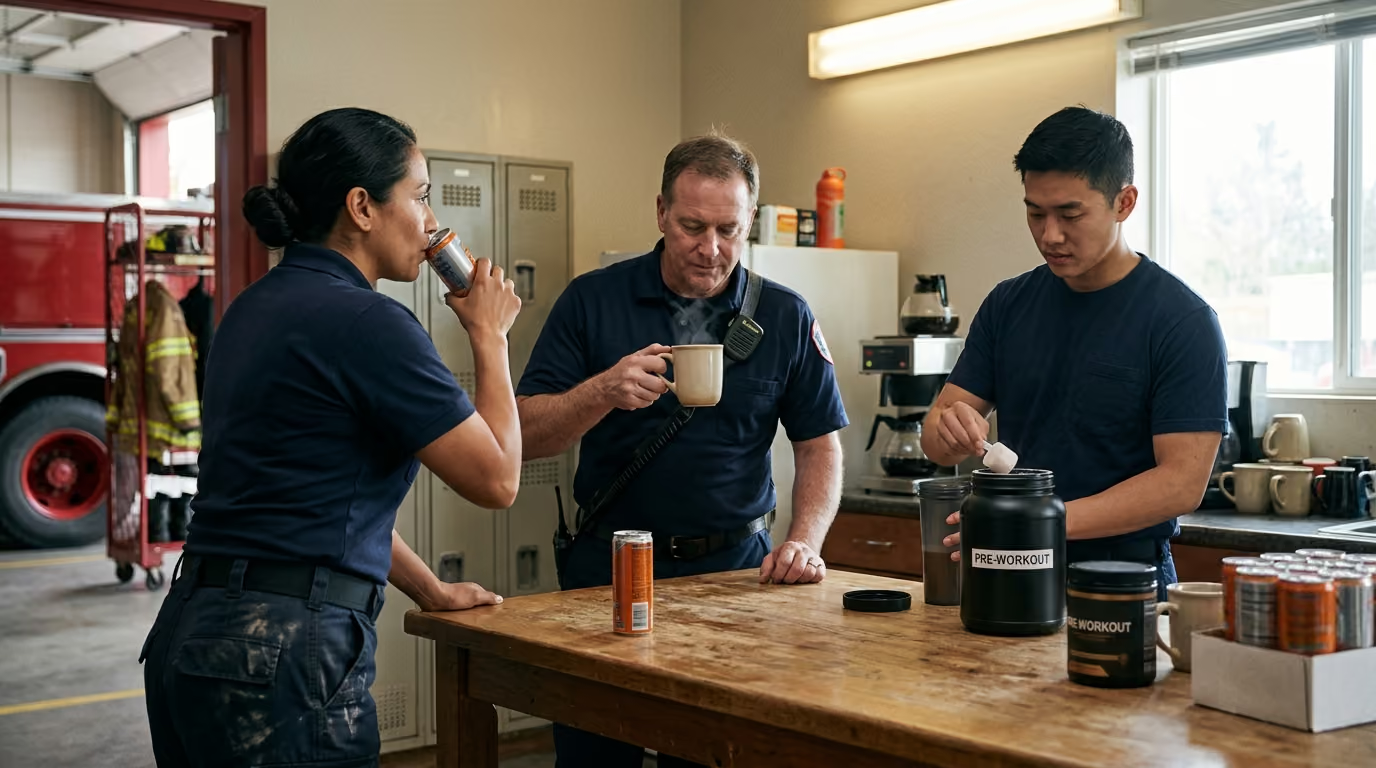

Optimal caffeine choices for first responders become clear when comparing how coffee, energy drinks, and pre-workouts affect shift timing, sleep, and physical performance.





How much caffeine is safe during a 24-hour shift, and which source actually works best without ruining recovery? If you have ever searched for whether energy drinks, station coffee, or pre-workout powders are better for staying awake on night duty, you know the answers are often full of marketing hype, extreme fitness advice, or blanket medical warnings. This guide provides a definitive comparison of caffeine sources, dosing strategies, active ingredients, and operational tradeoffs for emergency personnel.
Emergency responders do not need lectures on why eight hours of unbroken sleep is ideal. You need practical ways to manage alertness during unpredictable calls while protecting what little recovery time you have between shifts. Caffeine is not inherently good or bad. It is a pharmacological tool with specific dosing curves, active ingredients, and physiological consequences that depend on timing, delivery method, and individual biology.
Treating caffeine as a precise tool rather than a casual beverage is the key to maintaining physical capability and cognitive function over a decades-long career. Comparing coffee, energy drinks, and pre-workouts requires looking past marketing claims to analyze total milligrams, absorption rates, companion ingredients, and proximity to your next sleep opportunity.
Caffeine is a central nervous system stimulant that works primarily by blocking adenosine receptors in the brain. Adenosine is a neurochemical that accumulates during waking hours and creates sleep pressure. When caffeine occupies adenosine receptors, it temporarily blunts the perception of fatigue without clearing the underlying chemical sleep debt.
The United States Food and Drug Administration cites 400 milligrams per day as an upper intake benchmark generally not associated with adverse health effects in healthy adults. The European Food Safety Authority similarly concluded that single doses up to 200 milligrams and total daily intakes up to 400 milligrams do not raise safety concerns for healthy individuals. These population benchmarks provide a baseline, but individual tolerance, metabolic rate, and cardiovascular status vary considerably.
Research shows that caffeine is absorbed rapidly through the gastrointestinal tract, typically reaching peak plasma concentrations within 30 to 60 minutes. The National Institute for Occupational Safety and Health notes that caffeine generally requires roughly 30 minutes to produce noticeable alerting effects. However, the clearance rate of caffeine is substantially slower than its onset.
The average half-life of caffeine in healthy adults is roughly four to six hours, but research published by the International Society of Sports Nutrition indicates that half-life can range from 1.5 to nearly 10 hours depending on genetics, liver enzyme activity, and concurrent medication use. A half-life of six hours means that if you consume 200 milligrams at 02:00, roughly 100 milligrams remain active in your bloodstream at 08:00 when you attempt to sleep.
The impact of late-shift caffeine on sleep architecture is well documented. A landmark controlled trial evaluated the effects of 400 milligrams of caffeine administered at bedtime, three hours before bed, and six hours before bed against a placebo. The findings, highlighted by the American Academy of Sleep Medicine, demonstrated that caffeine consumed six hours before bedtime still produced statistically significant, objective sleep disruption. Participants in that study lost more than one full hour of total sleep time, even when they did not subjectively perceive difficulty falling asleep.
In athletic and tactical contexts, the International Society of Sports Nutrition reports that caffeine consistently improves endurance, strength, and high-intensity output at doses of 3 to 6 milligrams per kilogram of body mass. The same position stand notes that higher doses of 9 milligrams per kilogram or more offer no additional performance benefits while substantially increasing the risk of adverse side effects such as tremors, tachycardia, gastrointestinal upset, and acute anxiety.
First responders encounter caffeine across a wide variety of commercial and natural products. Choosing the right option requires evaluating dose predictability, speed of consumption, companion compounds, and practical convenience on duty.
Standard brewed coffee remains the primary caffeine source in station culture. The Food and Drug Administration reports that regular brewed coffee contains roughly 113 to 247 milligrams of caffeine per 12 fluid ounces, while Mayo Clinic figures cite approximately 96 milligrams for an 8-ounce cup and 63 milligrams for a 1-ounce espresso shot.
The primary advantage of brewed coffee is that it is typically sipped gradually over 15 to 30 minutes, which creates a steady rise in blood caffeine levels rather than an immediate spike. Coffee also provides natural polyphenols and antioxidants, and it can be consumed alongside a balanced meal to reduce stomach irritation.
The primary disadvantage is extreme dose variability. A large convenience-store cup or a heavy pour from a strong station pot can easily deliver 300 milligrams in a single serving. Responders who drink multiple station mugs throughout a shift often consume 600 milligrams or more without realizing how rapidly their cumulative intake has climbed. Specialty coffee drinks can also deliver excessive sugar and saturated fat, transforming a functional stimulant into a high-calorie burden.
Tea offers a lower-dose alternative that works well for stepping down stimulant exposure toward the end of an operational period. Mayo Clinic data indicate that an 8-ounce cup of brewed black tea provides approximately 48 milligrams of caffeine, while brewed green tea provides roughly 29 milligrams.
The primary advantage of tea is mild, steady stimulation with a lower risk of jitteriness or sudden heart rate spikes. Green tea naturally contains the amino acid L-theanine, which promotes relaxation without sedation and can help smooth out stimulant-induced nervous tension. Tea is an effective choice when a responder needs a minor boost in vigilance but plans to sleep in four to five hours.
The main limitation is that tea may not provide enough stimulation for severe acute fatigue during critical operations. Bottled commercial iced teas can also contain large amounts of added sugar, while some herbal teas contain botanical stimulants that are not clearly quantified on the label.
Energy drinks provide packaged convenience and clear labeling, making them popular across emergency services. The Food and Drug Administration reports that energy drinks range from 41 to 246 milligrams of caffeine per 12 fluid ounces, and 54 to 328 milligrams per 16 fluid ounces.
The main advantage of energy drinks is dosage transparency. Most commercial cans state the exact caffeine content per container, allowing responders to track milligrams rather than guessing. Sugar-free varieties offer rapid alertness without extra calories or metabolic disruptions during long sedentary patrol shifts.
The disadvantages stem from formulation and drinking speed. Because energy drinks are cold, carbonated, and flavored, responders often drink a 16-ounce can in just a few minutes, causing a steep spike in plasma caffeine levels. Many energy drinks also contain secondary stimulants such as guarana, ginseng, or bitter orange extract, along with mega-doses of B vitamins and taurine that can complicate individual tolerance.
Energy shots are small, highly concentrated liquids, typically sold in 1- to 2-ounce bottles. Mayo Clinic data show that a single 2-ounce energy shot typically contains roughly 200 milligrams of caffeine.
The advantage of energy shots is rapid portability and minimal fluid volume. A responder can carry a shot in a gear pocket and consume it quickly during prolonged incidents where carrying bottles or making coffee is impossible.
The disadvantage is that consuming 200 milligrams in a single swallow produces an aggressive stimulant bolus. Users frequently treat energy shots as minor drinks because of the small container, forgetting that one shot matches two standard cups of coffee. Stacking multiple shots during a prolonged structure fire or search-and-rescue operation can easily drive intake past safe thresholds.
Pre-workout powders are multi-ingredient dietary supplements engineered to enhance physical exertion in the gym. A comprehensive review of 100 commercial pre-workout products revealed that caffeine was present in 86% of formulas, with an average dose of 254 milligrams plus or minus 80 milligrams per serving.
The main benefit of pre-workouts is combined performance support before dedicated physical training sessions. In addition to caffeine, quality formulas provide proven ergogenic compounds that support strength, power output, and muscular buffering capacity.
The main drawback is operational mismatch. Pre-workout powders are designed for high-intensity gym sessions, not extended emergency operations. They often rely on proprietary blends that obscure exact ingredient quantities, and standard scoops are frequently overfilled by users, delivering far more caffeine than planned.
Caffeine tablets, mints, and gums deliver purified caffeine anhydrous in precise numerical increments. NIOSH notes that specialized caffeine gum typically supplies roughly 100 milligrams per piece, offering rapid buccal absorption through the tissues of the mouth.
The primary advantage is exact dosing and fast onset. Caffeine gum can increase blood levels faster than swallowed liquids because the active compound enters circulation directly through the oral mucosa. Tablets and gum are lightweight, inexpensive, shelf-stable, and fit into uniform pockets.
The major disadvantage is the absence of liquid volume, which makes accidental overconsumption easy. Responders may chew several pieces of gum or take multiple tablets throughout a shift while still drinking coffee, resulting in severe stimulant stacking. Pure bulk caffeine powders present an extreme hazard and should be avoided entirely due to the high risk of fatal measurement errors.
Using a pre-workout powder before a workout while on shift requires careful consideration. A pre-workout is not simply flavored coffee. It contains multiple active compounds that interact with your physiology, especially under physical load or heat stress.
Research analyzing commercial pre-workout profiles identified several common secondary ingredients alongside caffeine:
Each of these ingredients serves a distinct purpose in a training environment, but several create operational friction on duty. Beta-alanine frequently causes acute paresthesia, a harmless but uncomfortable tingling sensation on the face, neck, and hands. A responder experiencing intense paresthesia under structural turnout gear or body armor during a sudden emergency call can suffer significant distraction and discomfort.
Citrulline and other nitric oxide boosters promote peripheral vasodilation to create muscle fullness in the gym. However, when combined with high ambient temperatures, heavy protective clothing, and rapid fluid loss, strong vasodilators can complicate blood pressure regulation and thermoregulation.
A major concern with the supplement industry is product purity and label accuracy. Scientific reviews on dietary supplement safety note that adulteration with undeclared stimulants, synthetic analogs, or banned substances remains a persistent risk. For first responders subject to department drug screenings or medical standards, consuming multi-ingredient supplements with proprietary blends presents unnecessary career risks.
Personnel who choose to use pre-workouts should look for third-party certification seals such as NSF Certified for Sport or Informed Sport. These independent testing bodies verify that the product contains the ingredients listed on the label without toxic contaminants or unlisted stimulants.
When training while on duty, aligning your workout intensity with current fatigue levels is essential. Responders interested in maintaining capacity without overtaxing their nervous system can review guidance on duty fitness and structured training to balance heavy lifting with operational readiness.
Emergency service work introduces physical and environmental variables that standard caffeine research rarely accounts for. Using stimulants safely requires adjusting for shift patterns, protective gear, cardiovascular strain, and high-stakes decision-making.
On a standard daytime schedule, caffeine consumed before noon has ample time to clear before evening rest. On rotating shifts, 24-hour tours, or night shifts, caffeine timing becomes significantly more complex.
For night-shift operations, NIOSH recommends consuming caffeine near the beginning of the work period to support initial alertness while stopping all stimulant intake several hours before the shift ends. Consuming a large energy drink or concentrated shot at 04:00 to survive the morning commute directly undermines daytime sleep quality after arrival at home.
Responders working extended schedules can implement structured sleep planning for rotating shifts to protect their circadian health. Understanding how shift length and circadian misalignment drive sleep debt helps personnel treat caffeine as a temporary bridge rather than an ongoing replacement for genuine recovery.
One practical tool supported by occupational fatigue research is the strategic caffeine nap. NIOSH describes this approach for workers who face dangerous fatigue during long shifts or before driving home.
To execute a caffeine nap, consume a moderate dose of caffeine, roughly 100 to 200 milligrams from a fast-acting source, and immediately lie down for a 20-minute nap. Because caffeine takes approximately 20 to 30 minutes to cross the gastrointestinal barrier and begin blocking adenosine receptors, you can fall asleep before the stimulant takes effect.
When you wake after 20 minutes, you receive a dual benefit: the nap clears a portion of accumulated adenosine, while the caffeine begins occupying the remaining receptors. This protocol temporarily sharpens reaction times and vigilance without creating the profound sleep inertia of a long daytime nap.
Fireground operations, tactical callouts, and heavy physical rescues impose extreme thermal and cardiovascular loads. Structural turnout gear and tactical body armor trap body heat, driving core temperatures up and demanding massive increases in cardiac output to support cooling through skin blood flow.
Caffeine stimulates beta-adrenergic receptors, causing modest increases in resting heart rate and arterial blood pressure. Under ordinary conditions, this effect is well tolerated by healthy individuals. However, when combined with uncompensable heat stress, severe dehydration, and maximal exertion, high doses of caffeine amplify cardiovascular strain.
While moderate caffeine intake does not cause dangerous fluid loss in habitual users, relying on energy drinks or pre-workouts instead of water and electrolytes during prolonged incidents compromises physical output. Responders must balance stimulants with structured shift nutrition and hydration strategies to sustain muscle function under heat.
First responder tasks span a wide spectrum of physical and cognitive requirements. A dosage that feels effective for dragging hose or moving heavy gear can impair the fine motor coordination required for placing an intravenous line, drawing medications, or operating firearms.
High doses of caffeine frequently induce fine motor tremors, muscle tension, and heightened autonomic arousal. For law enforcement and EMS personnel, excessive stimulant use can narrow perceptual awareness, degrade patience during tense public interactions, and accelerate decision fatigue.
Caffeine improves simple reaction time and continuous vigilance during monotonous tasks, but it does not restore higher-order executive function, emotional regulation, or complex risk assessment. When critical decision-making is required, lower and more stable caffeine levels are far superior to high-stimulant spikes.
A lack of clear information often leads emergency personnel into preventable dosing errors. Recognizing these common traps helps prevent acute physical side effects and long-term sleep debt.
Many commercial energy drinks and bottled coffees contain multiple servings per can or bottle. A single 16-ounce or 20-ounce container may list 150 milligrams of caffeine per serving on the back panel while containing two full servings.
Drinking the entire container delivers double the anticipated dose. Always check the total servings per container before drinking, especially with unfamiliar brands or extra-strength formulations.
Responders often consume different caffeinated products throughout a tour without calculating their cumulative milligram total. A typical pattern involves:
By midnight, this individual has consumed close to 900 milligrams of caffeine. This level of intake significantly exceeds safe adult benchmarks, increases cardiovascular strain, and makes restorative sleep impossible for hours.
Sports science literature demonstrates that caffeine improves physical capacity at 3 to 6 milligrams per kilogram. However, applying this formula mechanically can produce dangerously high doses for larger personnel.
A 100-kilogram (220-pound) firefighter applying a 6-milligram-per-kilogram calculation would consume a single bolus of 600 milligrams of caffeine before a workout. That single dose exceeds the FDA general upper daily intake guideline. Tactical athletes should aim for the minimum effective dose that supports readiness, typically 1.5 to 3 milligrams per kilogram, rather than pursuing maximal athletic dosing models.
A frequent misconception is that if caffeine does not cause noticeable jitters or anxiety, it is not affecting sleep or cardiovascular health. Research demonstrates that high doses of caffeine disrupt deep slow-wave sleep and increase nighttime awakenings even in individuals who fall asleep without difficulty.
Caffeine clears sleepiness by occupying adenosine receptors, but it does not stop the heart from working harder or prevent sleep fragmentation. Evaluating your caffeine tolerance based solely on how your nerves feel is an unreliable strategy.
Sugar-free energy drinks eliminate excess calories and blood sugar spikes, making them a better choice than sugar-sweetened beverages. However, removing sugar does not alter the pharmacological potency of caffeine or secondary stimulants.
Consuming multiple sugar-free cans throughout a shift still delivers massive stimulant loads to the heart and central nervous system. Sugar-free formulations should be managed with the exact same milligram tracking as any other stimulant source.
To avoid accidental overconsumption and preserve sleep, use a systematic decision process before reaching for any caffeinated product on duty.
Evaluate what the next three to four hours require. Are you performing routine station maintenance, conducting vehicle inspections, engaging in physical training, or responding to high-heat calls?
If your assignment requires fine motor accuracy, calm communication, or structural firefighting in heavy gear, avoid large stimulant doses. If you are conducting routine station duties or low-intensity driving, a modest dose from tea or a small cup of coffee is sufficient.
Before consuming another beverage, add up the caffeine you have already taken from all sources over the preceding 12 to 24 hours. Include coffee, soda, tea, energy drinks, pre-workouts, and caffeinated gums or medications.
If your cumulative intake is approaching 300 to 400 milligrams, switch to water, electrolyte formulas, or decaffeinated beverages. Consuming more caffeine beyond this point delivers diminishing cognitive returns while drastically escalating physical side effects.
Determine when your next realistic sleep opportunity will occur. If you are within five to six hours of going off duty or taking a station rest period, decline additional caffeine.
If fatigue threatens driving safety during your commute home, employ a strategic low-dose option or execute a 20-minute caffeine nap rather than drinking a large energy shot right before leaving the station. Learning how to manage caffeine and energy on night duty ensures that shift stimulants do not destroy your daytime recovery window.
Select products that clearly list the total milligrams of caffeine on the nutrition or supplement panel. Avoid proprietary blends that conceal stimulant quantities behind marketing terms.
If you choose to use pre-workout powders or multi-ingredient dietary supplements, verify that they carry third-party testing certifications from recognized organizations. Avoid mixing multi-ingredient supplements with prescription medications or other over-the-counter stimulant products.
Ask yourself whether you are using caffeine to support acute alertness or to mask severe, chronic sleep deprivation. Caffeine cannot repair damaged tissue, restore hormonal balance, or clear metabolic waste from the brain.
If you find yourself requiring escalating doses of caffeine simply to maintain basic baseline functioning, your operational fatigue has reached a level that requires schedule adjustments, sleep management, or medical evaluation.
While caffeine has an established safety profile for most healthy individuals, specific operational contexts and medical conditions demand strict boundaries.
Caffeine raises blood pressure, increases cardiac output, and can trigger arrhythmias in susceptible individuals. If you experience any of the following symptoms after consuming a caffeinated product, immediately stop stimulant intake and seek medical evaluation:
These symptoms should never be ignored or dismissed as a normal pre-workout sensation, particularly given the elevated cardiovascular risks inherent in emergency service careers.
The general 400-milligram adult benchmark does not apply during pregnancy. Major medical organizations, including the American College of Obstetricians and Gynecologists, recommend that pregnant individuals limit caffeine intake to less than 200 milligrams per day from all sources.
Caffeine crosses the placenta, and fetal metabolic clearance rates are significantly slower than maternal clearance. Pregnant personnel should calculate caffeine intake meticulously, accounting for hidden sources in teas, sodas, and chocolate, and consult their healthcare provider regarding operational duty modifications.
Many emergency service organizations host youth explorer programs, junior firefighter programs, or cadet academies. The American Academy of Pediatrics states clearly that energy drinks and concentrated stimulant supplements have no place in the diets of children and adolescents.
Youth developing central nervous and cardiovascular systems are more vulnerable to stimulant toxicity, cardiac arrhythmias, and severe sleep disruption. Agency leaders, instructors, and senior personnel must ensure that high-stimulant energy drinks and pre-workout supplements are prohibited during youth training events.
Caffeine interacts with numerous prescription and over-the-counter medications. It can amplify the effects of prescription stimulants, bronchodilators, and thyroid medications, increasing the risk of hypertension and tachycardia.
Conversely, certain medications, such as oral contraceptives, specific antibiotics, and antidepressants, slow the liver clearance of caffeine, effectively doubling its half-life and intensifying its side effects. Responders managing hypertension, cardiovascular disease, gastroesophageal reflux, kidney conditions, or anxiety disorders should seek individualized guidance from a physician.
First responders experience disproportionately high rates of occupational sleep disorders. Irregular shift rotations, emergency tones, traumatic stress, and extended duty hours frequently lead to chronic sleep disruption that caffeine cannot solve.
If you struggle with persistent daytime sleepiness, find yourself falling asleep involuntarily while driving, experience chronic insomnia on off-duty days, or wake repeatedly gasping for air, you may have an underlying sleep disorder. Conditions such as obstructive sleep apnea, shift work sleep disorder, and chronic circadian rhythm disruption require clinical diagnosis and targeted medical management.
Using large doses of energy drinks, pre-workouts, or coffee to power through untreated sleep apnea significantly increases long-term cardiovascular risks, including hypertension, coronary artery disease, and stroke. A formal sleep study conducted by a board-certified sleep physician can identify physical airway obstructions or neurological sleep disruptions, allowing for effective treatments such as continuous positive airway pressure therapy or targeted behavioral protocols.
Similarly, personnel experiencing persistent anxiety, heart palpitations, severe digestive issues, or chronic fatigue should consult a qualified healthcare provider. Addressing the root causes of exhaustion ensures that your operational capability is built on solid physiological health rather than excessive stimulant reliance.
Building a sustainable relationship with caffeine protects your health, improves your performance on scene, and ensures you arrive home safely after demanding shifts. Use this checklist to optimize your stimulant habits this week:
Maintaining high operational readiness across a 25-year career requires viewing caffeine as a measured tool rather than a daily survival mechanism. When you control your dosing, respect clearance timelines, and protect your sleep windows, you preserve your physical capability, sharpen your decision-making on scene, and safeguard your long-term health for the years beyond the uniform.
Stay connected for research-led guidance on duty fitness, shift-work sleep, injury recovery, stress, nutrition and career longevity. Practical ideas for first responders who want to stay capable on the job, recover well and protect their health for the long run.



Read practical guidance on first responder fitness, recovery, sleep, nutrition and resilience for demanding work and a long, active career.
read the blog



