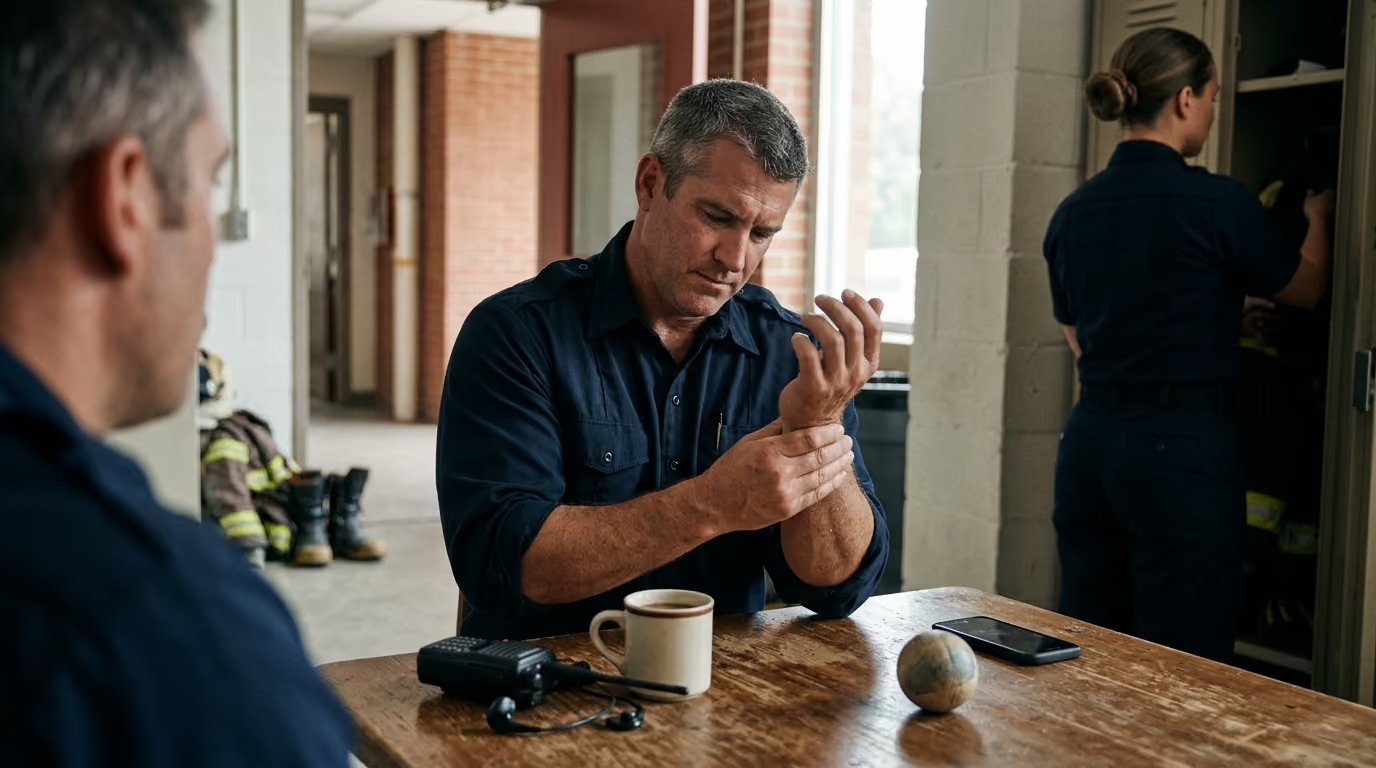

Clear insights into movement degradation help departments mitigate musculoskeletal injuries caused by thermal strain, restrictive gear, cold exposure, and fatigue in first responders.





You step off the apparatus into high humidity after working a prolonged structure fire. Your turnout gear is saturated with sweat on the inside and coated with water on the outside. Your legs feel unusually heavy, your grip on basic hand tools feels sluggish, and stepping over a single five-inch supply line requires conscious effort. You have not collapsed or experienced acute heat exhaustion, yet your coordination is degraded and your risk of a musculoskeletal injury has multiplied.
This scenario illustrates a common reality across emergency services. Environmental conditions are rarely just background weather. Heat, freezing temperatures, wildfire smoke, impermeable protective layers, and fluid loss directly alter neuromuscular control, balance, and tissue tolerance.
Understanding how environmental stress degrades movement quality allows crews to manage physiological strain, protect joint integrity, and sustain operational performance across entire shifts.
Environmental stress alters injury risk by imposing internal and external loads that degrade movement mechanics before overt clinical illness occurs.
When thermal load, respiratory resistance, fluid deficits, and heavy personal protective equipment (PPE) combine, the body redirects blood flow to thermoregulation. This circulatory shift accelerates central and peripheral fatigue.
As fatigue accumulates, joint proprioception declines, stride mechanics change, and postural balance falters. Responders experience a higher rate of slips, trips, falls, and soft-tissue strains under environmental stress.
Controlling these risks requires proactive hydration schedules, structured cooling or warming, optimized gear management, and active movement monitoring rather than relying solely on subjective feelings of effort.
Research across occupational physiology and emergency services demonstrates that environmental stress acts as a systemic multiplier of physical strain. The National Institute for Occupational Safety and Health (NIOSH) defines occupational heat stress as the combined total of metabolic heat from muscular work, environmental heat sources, and clothing or PPE resistance.
Heat strain represents the biological response to that cumulative stress, including elevated core temperature, increased heart rate, and high sweat rates.
When core temperature and cardiovascular strain rise, the central nervous system alters motor unit recruitment to protect vital organs. This neurological downregulation directly impairs muscular power, reaction time, and balance.
Biomechanical studies show distinct changes in human gait when wearing protective ensembles under thermal stress. Research published in occupational biomechanics indicates that protective firefighting clothing increases step width by 23.4 percent compared to standard baseline clothing.
The same research demonstrates that gait speed decreases by 9.1 percent and stride frequency drops by 6.4 percent.
These gait alterations represent compensatory strategies. The body widens its base of support to manage encumbrance and instability, yet this wide stance places higher shear forces across the knees, hips, and lumbar spine.
A 2026 scoping review examining United States firefighter personal protective equipment confirmed widespread functional deficits across literature. The review established that PPE ensembles impaired dynamic balance across all included balance studies and restricted static range of motion across all range-of-motion assessments.
Gait was compromised in every evaluated gait study, while perceived ease of movement declined consistently.
The practical outcome is clear: protective clothing and thermal fatigue combine to compromise physical stability long before a responder reaches medical exhaustion.
The statistical impact of these physical compromises is documented in national fire service data. According to reports from the National Fire Protection Association (NFPA), strains, sprains, and muscular pain account for 43 percent of all fireground injuries.
NFPA injury analyses show that overexertion or strain is the single leading cause of fireground injuries at 27 percent, followed directly by falls, jumps, slips, or trips at 22 percent.
Furthermore, NFPA data on on-duty firefighter fatalities documented 62 deaths in 2024. Overexertion or strain accounted for 40 of those 62 fatalities, representing 65 percent of the total loss of life.
Environmental heat, cold, and heavy physical work are consistent underlying contributors to these overexertion events.
Personal protective equipment is designed to shield responders from immediate thermal, chemical, biological, and mechanical hazards. However, the protective properties that keep external hazards out also trap internal metabolic heat and moisture inside.
Turnover gear, hazardous materials suits, and tactical body armor create microclimates that limit evaporative cooling, which is the primary physiological mechanism for human heat dissipation.
Under normal conditions, the evaporation of sweat from the skin surface removes heat from the body. Impermeable or semi-permeable PPE layers prevent ambient air movement across the skin and trap saturated air within the garment layers.
Once the microclimate inside the suit reaches near 100 percent relative humidity, sweat cannot evaporate effectively. Sweat continues to pour from the skin, leading to rapid fluid and electrolyte depletion without providing meaningful cooling.
This uncompensable heat stress causes core body temperature to rise continuously, even during moderate physical activity.
As core temperature climbs, the cardiovascular system faces competing demands. It must deliver oxygenated blood to contracting skeletal muscles while simultaneously shunting large volumes of blood to cutaneous vascular beds for heat dissipation.
This competition produces cardiovascular drift, characterized by a progressive increase in heart rate and a decrease in stroke volume.
The resulting reduction in peripheral blood flow accelerates muscular fatigue, compromises dynamic stabilizing muscles, and increases susceptibility to soft-tissue strains during routine lifting or climbing.
The bulk, stiffness, and weight distribution of PPE impose significant mechanical constraints on the body. Standard structural firefighting gear adds substantial external mass, with an additional self-contained breathing apparatus (SCBA) shifting the wearer's center of mass upward and backward.
To maintain balance with an elevated center of gravity, responders adopt an exaggerated forward trunk lean. This forward posture places high, sustained loads on the erector spinae and posterior chain musculature.
Encapsulating gear also restricts normal range of motion at the shoulders, hips, and knees. Bulk at the knee joints resists flexion, forcing responders to alter their mechanics during stair climbing, crawling, and ladder work.
Instead of flexing smoothly at the hips and knees during lifting tasks, responders frequently compensate by flexing through the lumbar spine.
Over the course of a multi-hour incident, these repetitive movement compensations create microtrauma in spinal ligaments and intervertebral discs, explaining why overexertion injuries represent such a large proportion of total line-of-duty casualties.
Heavy gloves and rigid protective boots degrade fine motor control and tactile sensory feedback. Structural firefighting gloves reduce manual grip strength by up to 30 to 40 percent through mechanical resistance and bulk.
When responders lose tactile feedback, they compensate by gripping tools with significantly more muscular force than necessary. This sustained isometric contraction causes rapid forearm fatigue, predisposing the wrists and elbows to acute strains or dropped equipment incidents.
Protective boots present similar biomechanical challenges. Thick, puncture-resistant soles with high ankle shafts restrict normal talocrural and subtalar joint articulation.
Without normal ankle dorsiflexion and eversion, the lower extremity loses its ability to absorb ground reaction forces and adapt to uneven terrain.
The kinetic forces of walking on debris, ice, or rubble are transferred directly upward into the knees, hips, and lower back, significantly increasing the likelihood of acute ligament sprains or meniscus damage.
For personnel looking to maintain joint durability under load, structured physical training should prioritize multi-planar stability. You can learn more about managing physical capacity around work demands through programming high output capacity workouts alongside low fatigue maintenance sessions.
While heat stress is a prominent operational concern, cold environments introduce distinct physiological hazards that impair movement quality and elevate injury risk.
NIOSH identifies cold stress as the result of low temperatures, high wind speed, dampness, and cold water immersion driving rapid body heat loss.
When exposed to cold conditions, the human body initiates cutaneous vasoconstriction to conserve heat in core organs, drastically reducing peripheral blood flow to the hands, feet, and superficial muscular layers.
As tissue temperatures drop in the extremities, nerve conduction velocity decreases and muscle viscosity increases. Cold muscles contract more slowly, generate lower peak force, and experience delayed relaxation phases.
This drop in neuromuscular responsiveness degrades manual dexterity, grip control, and rapid balance adjustments.
Responders operating in near-freezing conditions frequently experience a loss of fine motor coordination, making tasks such as operating pump panels, manipulating patient-care equipment, or handling hydraulic rescue tools dangerous.
Cold environments also trigger shivering, an involuntary metabolic mechanism designed to produce heat. Shivering disrupts coordinated motor patterns and elevates baseline oxygen consumption, accelerating whole-body exhaustion.
When combined with fatigue, stiffened connective tissues lose their elasticity, making tendons and ligaments far more susceptible to acute tearing when sudden, explosive movements are required.
Prolonged operational exposure to cold and moisture can lead to systemic hypothermia and localized cold injuries, including frostbite, trench foot (immersion foot), and chilblains.
Trench foot occurs when feet remain wet and cold for extended periods, causing severe nerve and tissue damage even in temperatures well above freezing.
Frostbite involves the actual freezing of skin and underlying tissues, leading to loss of sensation and potential tissue necrosis. NIOSH specifically warns that frostbitten tissue should never be rubbed or massaged, and personnel should avoid walking on frostbitten feet unless absolutely necessary for immediate life safety.
Winter PPE often requires bulky insulation layers, waterproof shells, and heavy thermal boots. While necessary for thermal protection, these layers can restrict mobility, limit peripheral vision, and add substantial weight.
Layering that fits too tightly restricts local capillary blood flow, accelerating peripheral freezing while compounding joint stiffness. Responders must balance adequate thermal insulation with the mobility required to operate safely on icy or unstable surfaces.
Atmospheric hazards on fire scenes, hazardous materials responses, and wildland urban interface incidents extend far beyond obvious heat. Inhalation of smoke and toxic gases produces direct physiological impairments that compromise muscular performance, cognitive clarity, and physical safety.
Smoke produced by structural fires and wildland combustion contains high concentrations of carbon monoxide (CO), hydrogen cyanide, and fine particulate matter. Carbon monoxide binds to hemoglobin with an affinity approximately 200 times greater than oxygen, forming carboxyhemoglobin (COHb).
This binding prevents oxygen transport to skeletal muscle and brain tissue, shifting cellular metabolism toward anaerobic glycolysis.
Even at low or moderate exposure levels, elevated COHb concentrations impair aerobic capacity, reduce muscular stamina, and cause subtle cognitive deficits.
Responders suffering from mild cellular hypoxia experience headache, delayed reaction time, impaired depth perception, and early physical exhaustion.
When muscular coordination and situational awareness decline due to oxygen deprivation, the margin for error when traversing compromised roofs, stepping over debris, or operating power equipment narrows significantly.
Wildland fire smoke consists predominantly of fine respirable particulate matter measuring 2.5 micrometers or smaller (PM2.5). These tiny particles bypass upper airway defenses and penetrate deep into the alveolar spaces of the lungs.
A comprehensive CDC/NIOSH review on wildland firefighter health reports that occupational smoke exposure is linked to acute declines in cross-shift lung function, systemic inflammatory responses, and elevated long-term cardiovascular risks.
The review identifies estimated increases in lung-cancer mortality risk of 8 to 43 percent and cardiovascular-disease mortality risk of 16 to 30 percent across various wildland firefighting career exposure scenarios.
From an immediate movement perspective, inhaling particulate matter causes acute bronchoconstriction, airway irritation, and increased work of breathing.
When respiratory muscles must work harder to draw air through irritated bronchial passages or through respiratory filters, they consume a higher fraction of total cardiac output.
This respiratory muscle work steals oxygenated blood from large locomotor muscles in the legs and core, leading to premature whole-body fatigue and unsteady movement patterns.
Sweating is the human body's primary defense against overheating, but it comes at a significant circulatory cost. During hard physical work in protective clothing, sweat rates for first responders can exceed 1.5 to 2.5 liters per hour.
Failing to balance these fluid losses leads to progressive dehydration, characterized by reduced total blood volume and increased blood viscosity.
As intravascular volume drops due to unreplaced fluid loss, central venous pressure declines. The heart struggles to maintain adequate cardiac output while pumping against elevated peripheral resistance.
This circulatory compromise reduces the delivery of glucose, oxygen, and electrolytes to active skeletal muscle fibers.
Dehydration directly affects neuromuscular function:
These physiological alterations mean that a dehydrated responder cannot absorb sudden impact forces or stabilize unexpected joint perturbations as effectively as a well-hydrated responder.
A minor misstep off an apparatus running board or a sudden shift in patient weight during a stretcher carry is more likely to result in an acute ligament rupture or spinal muscle strain.
Maintaining adequate hydration requires an active, structured approach rather than relying on subjective thirst cues. By the time a responder feels thirsty, they have often already lost one to two percent of their total body mass in water, which is enough to measurably degrade cognitive function and physical endurance.
NIOSH provides clear baseline guidance for occupational fluid intake. For moderate physical activity in hot environments lasting less than two hours, NIOSH recommends consuming approximately 8 ounces (240 milliliters) of cool water every 15 to 20 minutes.
However, NIOSH explicitly warns that total fluid intake should generally not exceed 6 cups (48 ounces or 1.4 liters) per hour.
Drinking excessive quantities of pure water during prolonged, heavy sweating can dilute blood sodium levels, leading to exercise-associated hyponatremia. This condition causes cerebral edema, confusion, severe muscle cramping, seizures, and potential collapse.
When incidents or physical operations extend beyond two hours with high sweat rates, fluid replacement strategies must incorporate balanced electrolyte solutions containing sodium, potassium, and magnesium.
To maintain healthy systemic recovery across irregular shift schedules, explore practical nutritional approaches through our shift nutrition framework and learn about managing caffeine and fluid strategies.
Mitigating the injury risks driven by environmental stress requires structured operational controls. Relying on individual willpower or personal resilience is ineffective against fundamental thermal and physiological mechanics.
Agencies and company officers should implement controls across engineering, administrative, PPE, and recovery tiers to protect operating personnel.
Engineering controls remove or isolate hazards at the scene without requiring conscious behavioral intervention from tired responders:
Administrative controls dictate how personnel interact with hostile operating environments:
Personal protective equipment must be managed to provide safety without creating avoidable biomechanical interference:
Understanding how to assess readiness before committing to physical work is critical for long-term health. For a comprehensive overview of managing operational capacity, read our guide on readiness and autoregulation, and review specialized protocols in the Injury and Recovery category.
On-scene rehabilitation must serve as an active physiological restoration station rather than a passive seating area. A structured four-phase rehabilitation protocol restores cardiovascular stability, reduces core temperature, replenishes lost fluids, and screens for movement deficits before personnel return to operations.
The moment a responder enters the rehabilitation sector, the objective is halting heat storage or cold loss:
Once external gear is removed, crews begin physiological replenishment:
Before clearing any responder to don gear and return to active operational tasks, rehabilitation staff should conduct a simple 30-second functional movement screen:
Responders who fail movement screening, demonstrate persistent tachycardia, or exhibit cognitive sluggishness must be held in rehabilitation for an additional cycle or transported for advanced medical evaluation.
Following the conclusion of an incident, recovery extends back to the station. Crews should complete gear decontamination to prevent secondary chemical absorption, prioritize a high-protein, balanced electrolyte meal, and protect an uninterrupted sleep window to allow autonomic nervous system recovery.
Physical conditioning is a foundational requirement for emergency services, but high fitness does not make a responder immune to physics or thermal laws. A highly conditioned responder can produce significantly more metabolic heat per minute than an unconditioned peer.
This high work capacity allows fit responders to push deeper into severe heat strain without recognizing the physiological danger, occasionally resulting in sudden, catastrophic collapse.
Operational safety requires clear guardrails:
Certain physiological responses to environmental stress represent medical emergencies that exceed on-scene rehabilitation capabilities. Company officers, incident commanders, and rehabilitation personnel must immediately escalate to advanced emergency medical care when specific red-flag symptoms occur.
Seek immediate emergency medical evaluation if a responder displays any of the following clinical indicators:
Post-incident medical evaluations are equally critical. Any responder who experienced significant smoke inhalation, heat exhaustion, or hypothermic symptoms should undergo a comprehensive occupational medical follow-up before returning to unrestricted duty.
Managing the combined impacts of heat, cold, protective gear, and dehydration is a fundamental component of operational movement quality and career longevity. When first responders implement proactive hydration, structured thermal controls, and objective movement screening, they protect their joint mechanics, preserve tactical readiness, and protect their long-term health.
Review this guide at the onset of seasonal weather transitions, before structural or wildland live-fire training evolutions, when updating departmental rehabilitation standard operating procedures, or whenever joint strain and fall patterns increase across your agency.
Operational readiness relies on treating environmental stress as a manageable physical system rather than an inevitable hazard of the job.
Stay connected for research-led guidance on duty fitness, shift-work sleep, injury recovery, stress, nutrition and career longevity. Practical ideas for first responders who want to stay capable on the job, recover well and protect their health for the long run.



Read practical guidance on first responder fitness, recovery, sleep, nutrition and resilience for demanding work and a long, active career.
read the blog



