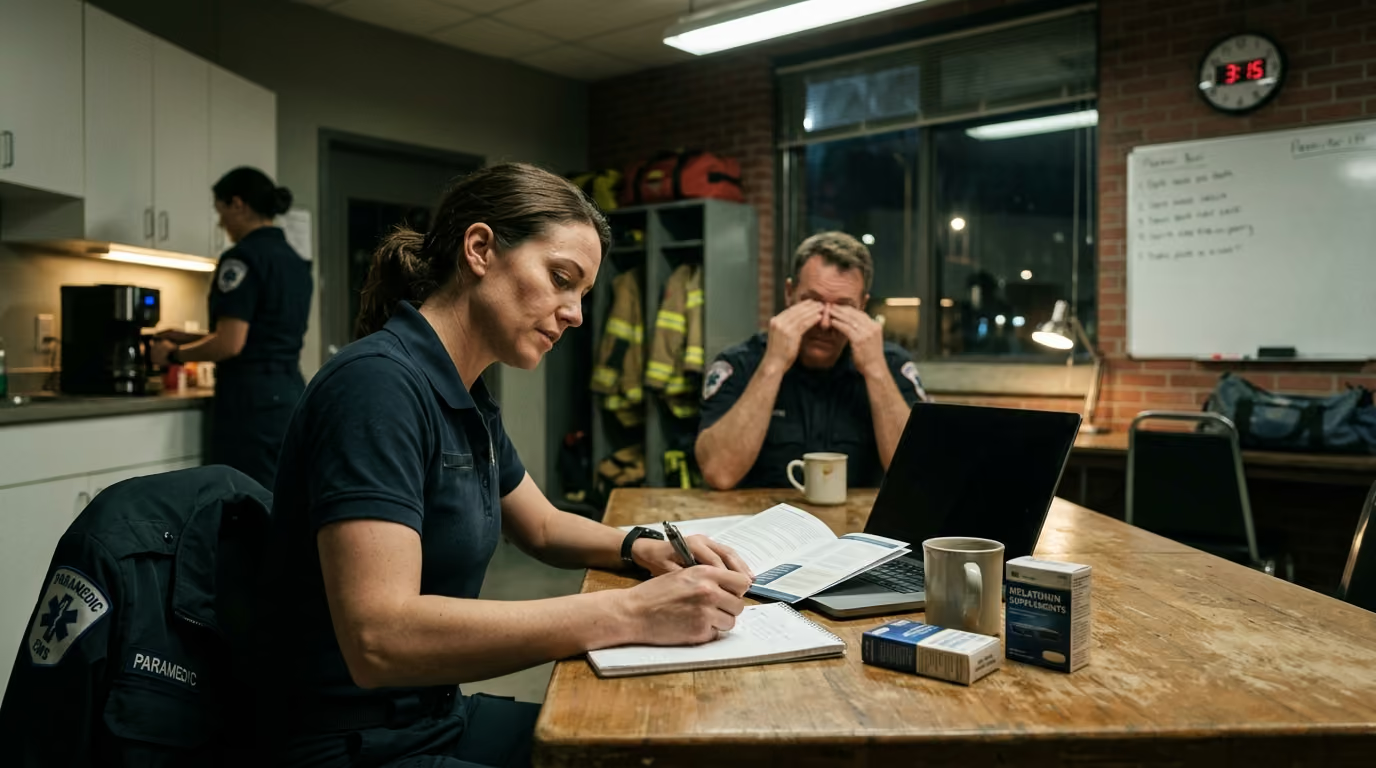

Practical appraisal criteria allow shift workers to assess commercial sleep aids, analyze scientific research accurately, and apply proven rest interventions to irregular working schedules.





Emergency responders frequently search for ways to fix disrupted sleep, maintain alertness on night shifts, and recover from demanding rotations. Commercial markets meet this demand with an overwhelming volume of sleep trackers, blue-light blocking glasses, specialized supplements, and tactical recovery protocols. Many of these products present impressive claims backed by scientific terminology, selective data, or appealing digital readiness scores.
A sleep claim is not credible merely because it sounds plausible, is popular, or produces an attractive wearable score. A reliable evaluation requires examining the quality of supporting evidence, the realistic size of any measured benefit, potential safety risks, and whether the intervention works under irregular schedules. It must directly address the outcomes that matter during emergency service, including reaction time, driving safety, clinical decision-making, physical recovery, and long-term health.
Evaluating recovery claims requires understanding the physiological realities of irregular work hours. Shift work is not a single, uniform occupational exposure. The term describes vastly different working arrangements, including permanent night duties, rotating day and night patterns, early-morning starts, and extended tours of 10, 12, or 24 hours. It also encompasses split shifts, on-call disruptions, heavy overtime, and long commutes between stations.
Night work is commonly defined in occupational research as work involving at least three hours between 11 p.m. and 6 a.m. An intervention tested on individuals working predictable eight-hour evening shifts cannot be assumed to work for paramedics managing unpredictable calls or firefighters working multi-day rotations.
Understanding sleep terminology prevents common misinterpretations of product benefits. A recommendation to obtain eight hours of rest addresses sleep opportunity rather than sleep obtained. Sleep opportunity represents the actual time available between shifts after accounting for station handovers, travel, meals, and family commitments. Sleep obtained refers to the total time spent asleep. Sleep quality reflects sleep continuity, the absence of frequent arousals, and alignment with internal biological rhythms.
A responder may spend eight hours in bed but achieve fragmented, unrestful sleep due to environmental heat, daylight, station alarms, or stress. Conversely, a brief nap provides acute alertness without replacing the full restorative benefits of an uninterrupted sleep cycle.
Circadian biology creates predictable fluctuations in alertness and sleep propensity across every 24-hour cycle. The internal master clock promotes alertness during daylight hours and drives sleepiness during biological night. Daytime sleep following a night shift takes place when the biological system actively promotes wakefulness. This fundamental mechanism explains why post-shift daytime sleep is shorter and more fragile than nighttime rest.
Any sleep recommendation must specify the timing of an intervention. Advice to use bright light or specific nutrients is incomplete without details on time of day, duration, schedule pattern, and the underlying physiological goal.
Shift Work Disorder represents a distinct clinical condition rather than ordinary workplace tiredness. It involves persistent, clinically significant insomnia or excessive sleepiness directly linked to a work schedule overlapping the normal sleep window. Reported prevalence rates vary across studies depending on diagnostic criteria, occupational sector, and whether non-work days are evaluated.
A systematic review identified an overall prevalence estimate of 26.5 percent among shift workers, with a confidence interval ranging from 21.0 to 32.8 percent. Population research in Australia identified Shift Work Disorder in 32.1 percent of night workers compared to 10.1 percent of day workers. Earlier literature reported that 14.1 to 32 percent of night workers and 8.1 to 26 percent of rotating workers met clinical criteria. These numbers demonstrate that schedule strain is widespread, but prevalence depends heavily on the specific definition and schedule evaluated.
Fatigue is a broad state that extends beyond simple sleepiness. Sleepiness is the physiological drive to fall asleep. Fatigue encompasses physical exhaustion, reduced energy, impaired cognitive processing, and decreased motivation. Circadian misalignment occurs when activity and sleep schedules conflict with internal biological timing. Sleep debt represents the cumulative deficit resulting from repeated nights of insufficient sleep.
Impairments in physical performance and decision-making can occur even when an individual subjectively feels awake. Products that artificially elevate perceived energy do not automatically restore reaction speed, motor coordination, or patient care accuracy.
Translating vague product promises into verifiable statements is the initial step in critical evaluation. Marketing language frequently relies on broad phrases such as improving recovery or optimizing deep sleep. Converting these claims into structured propositions reveals whether a product offers real utility.
A claim that a supplement improves recovery should be translated into whether it increases objectively measured sleep duration or shortens reaction time on duty. A claim that a wearable optimizes sleep stages must be evaluated as whether its sensors accurately identify those stages compared to clinical polysomnography. Every claim should define its target population, the specific intervention, the comparator used, the measured outcome, the time frame, the magnitude of benefit, and potential side effects.
Evaluating the measured endpoint is critical. Sleep marketing often substitutes easily recorded variables for meaningful operational outcomes. Meaningful endpoints include total sleep duration, sleep efficiency, wakefulness after sleep onset, psychomotor vigilance, driving simulator performance, clinical error rates, and long-term metabolic health. A statistically significant shift in a proprietary recovery score does not prove that an emergency responder is safer operating an emergency vehicle or navigating a structural fire.
Surrogate outcomes must be separated from functional capabilities. A surrogate outcome is a substitute measurement assumed to correlate with a real-world result. A wearable device reporting a higher percentage of restorative sleep is displaying a surrogate metric. Objective reaction-time testing, physical work capacity, and documented incident rates measure actual readiness.
If an intervention increases total time in bed but produces prolonged morning grogginess, it fails to improve operational readiness. If an alertness product improves mid-shift focus but ruins the subsequent daytime sleep window, the net 24-hour effect may be negative.
The hierarchy of study design determines how much confidence can be placed in a claim. Randomized controlled trials, randomized crossover trials, and prospective cohort studies provide stronger protection against bias than uncontrolled observations. Validation studies against established reference standards are required to verify device accuracy. Quasi-experimental workplace studies provide valuable insight into real-world operational conditions. Uncontrolled testimonials, user reviews, and before-and-after case reports cannot establish cause and effect.
Even randomized trials can produce misleading conclusions if they use tiny sample sizes, unrealistically short observation windows, or artificial laboratory environments that ignore operational stress.
The nature of the comparison group heavily influences study findings. An intervention tested against no intervention or a baseline period will often appear effective simply because participants changed their habits or expected an improvement. Testing against a credible placebo or current standard practice provides a much higher standard of evidence. Responders who know they are evaluating a novel sleep protocol frequently adopt better sleep routines during the study period, creating the illusion that the product alone produced the benefit.
Scrutinizing effect sizes and statistical uncertainty separates meaningful benefits from minor mathematical changes. A study may report a statistically significant improvement with a p-value below 0.05, yet the real-world difference may be negligible. Responders should evaluate whether the absolute increase in sleep duration or reduction in reaction time is large enough to influence safety on shift.
A Cochrane systematic review examining non-pharmacological interventions for shift workers evaluated ten trials and rated the overall evidence quality as very low to low. The authors concluded that the available evidence was insufficient to confirm whether interventions such as bright light, naps, exercise, or sleep education reliably improve sleepiness or sleep parameters. This conclusion does not prove these methods are useless, but it shows that high-quality confirmatory research remains limited.
Understanding how 24-hour rotations and shorter shifts drive circadian strain helps place these evaluation steps into practical context.
Strategic napping is one of the most widely recommended fatigue countermeasures, but its application requires careful assessment. The Cochrane review of non-drug interventions found low-quality evidence that planned naps can reduce sleepiness during night shifts. Evidence regarding the effect of naps on daytime sleep parameters remains insufficient.
A practical evaluation must differentiate between distinct napping approaches. A brief nap of 15 to 30 minutes during a shift can reduce acute sleepiness while limiting the risk of waking from slow-wave sleep. A longer nap of roughly 90 minutes taken before a night shift allows for a complete sleep cycle, expanding total sleep opportunity. Guidance from the National Institute for Occupational Safety and Health (NIOSH) recommends short naps of 15 to 30 minutes to manage on-duty fatigue and longer naps of approximately 90 minutes before night duty to prevent severe sleep deficits.
Emergency personnel must account for sleep inertia, which is the temporary grogginess and impaired cognitive function that occurs immediately upon waking. Alarms received during deep sleep can lead to impaired decision-making if a responder must act instantly.
Targeted light exposure can influence the circadian pacemaker and promote alertness, but its effects depend strictly on timing, intensity, and individual factors. Research syntheses show that bright light during night shifts can reduce subjective sleepiness. A Cochrane meta-analysis of two studies involving 184 participants observed an average reduction of 0.83 points on the Stanford Sleepiness Scale, although the quality of evidence was graded as very low. A separate systematic review found substantial evidence supporting bright light for night-shift alertness, but noted insufficient evidence for blue-light-blocking glasses alone.
Light exposure acts as a double-edged sword for emergency personnel. High-intensity light during duty supports wakefulness, but bright light encountered during the morning commute home can suppress melatonin and delay daytime sleep onset. Responders with conditions such as migraines, retinal disease, or bipolar spectrum disorders may experience adverse reactions to intense light exposure.
First responders encounter uncontrolled light from vehicle emergency bars, computer screens, scene lighting, and station fixtures. Sleep advice must address overall light timing across the complete 24-hour cycle rather than treating light as a simple stimulant.
Melatonin and pharmacological sleep aids represent another category with mixed evidence. A Cochrane review of pharmacological interventions identified low-quality evidence that melatonin doses between 1 mg and 10 mg can increase sleep duration following a night shift by approximately 24 minutes compared to placebo. A 2021 scoping review confirmed low-quality evidence for melatonin, caffeine, naps, and wake-promoting agents such as modafinil and armodafinil across shift-work settings.
Low-quality evidence indicates that a benefit may exist in select conditions, but confidence in the exact size and consistency of the outcome is limited. Over-the-counter supplements often suffer from variable manufacturing quality and inaccurate label dosing. Responders must also consider the risk of residual morning sedation, which could impair motor function during an early-morning emergency response.
Caffeine is the most common chemical countermeasure used in emergency services. It temporarily blocks adenosine receptors in the brain, masking feelings of fatigue without resolving underlying sleep debt. NIOSH guidance advises avoiding caffeine consumption for at least five hours before an intended sleep period to protect sleep continuity.
Evaluating caffeine advice requires assessing individual metabolic rates, total daily intake, and the timing of consumption relative to planned rest. When caffeine is used excessively to compensate for chronic sleep loss, it frequently fragments subsequent daytime sleep, creating a continuous cycle of worsening exhaustion. Practical guidance on structured fueling and caffeine strategies to protect daytime sleep provides methods to avoid this pattern.
Environmental sleep hygiene recommendations, such as keeping sleeping quarters dark, cool, and quiet, are practical baseline measures. NIOSH guidelines suggest consistent pre-sleep routines and quiet sleeping spaces. Sleep hygiene alone cannot overcome the biological drive of circadian misalignment or severe scheduling demands.
NIOSH guidance for high-demand scenarios recommends a minimum of 10 hours off duty between shifts and at least one full 24-hour rest period every seven days to permit physiological recovery. Individual sleep products cannot compensate for rosters that do not provide adequate sleep opportunity.
The popularity of wristbands, smartwatches, and rings has made personal recovery tracking common across fire stations and police departments. Evaluating these devices requires understanding what sensors actually detect. Most consumer wearables track physical motion via accelerometry, blood volume changes via optical photoplethysmography, and skin temperature variations. They process these inputs through proprietary mathematical models to estimate sleep periods.
These devices do not record electroencephalography, electrooculography, or electromyography. Laboratory polysomnography remains the clinical reference standard for diagnosing sleep architecture and staging.
A fundamental distinction exists between detecting the sleep-wake state and classifying specific sleep stages. A 2024 validation trial evaluating leading commercial devices from Apple, Fitbit, and Oura demonstrated over 95 percent sensitivity for detecting sleep. The sensitivity for correctly identifying specific sleep stages, including light, deep, and REM sleep, dropped to between 50 and 86 percent depending on the device and stage.
A related validation study found that while commercial devices detected over 90 percent of sleep epochs correctly, their specificity for identifying quiet wakefulness was poor, ranging from 29.39 to 52.15 percent. If a responder lies awake in bed without moving, a tracker will frequently record that time as sleep, artificially inflating the total sleep time.
Device accuracy does not automatically translate into improved operational safety or better health. Wearable technology should be judged on two separate dimensions: measurement accuracy and practical decision utility. A device that records sleep duration reasonably well may still generate unhelpful or misleading recommendations.
Tracking devices can contribute to a condition known as orthosomnia, where users develop chronic anxiety over achieving idealized recovery scores. A firefighter waking up feeling refreshed might see a low recovery score on their phone and experience unnecessary stress. Conversely, a high readiness score after broken on-call sleep may give a responder false confidence in their reaction time.
Validation studies must be checked for whether they tested people under real-world conditions. Many consumer devices are validated exclusively on healthy young adults sleeping regular nighttime hours. Optical heart rate sensors can lose accuracy due to loose device fit, rapid movement, tattoos, or variations in skin pigmentation.
Devices often struggle with daytime sleep periods and the frequent, fragmented awakenings common to emergency response work. Responders should look for validation studies that are independent of device manufacturers and include daytime sleep protocols.
The American Academy of Sleep Medicine (AASM) has published formal position statements regarding consumer sleep technology. The AASM states that consumer sleep tools are not cleared to diagnose or treat sleep disorders without appropriate clinical validation and regulatory clearance.
While wearables can provide useful general trends for discussion with a physician, they cannot diagnose sleep apnea, Shift Work Disorder, or chronic insomnia. Relying on an unvalidated app to rule out sleep conditions creates genuine safety risks for emergency personnel.
Evaluating published research requires checking whether study participants reflect the physical demands and stresses of emergency work. Many published sleep trials evaluate university students or industrial factory workers on predictable eight-hour shifts. These settings fail to replicate the sudden adrenaline surges, thermal stress from personal protective equipment, physical lifting, psychological trauma, and disrupted meal timing experienced by first responders.
Laboratory simulations provide controlled physiological data, but their findings must be verified under actual emergency operational conditions before being adopted as policy.
Schedule design heavily influences sleep outcomes and injury risk. Research from NIOSH demonstrates that accident and error risks increase by 28 percent on night shifts and 15 percent on evening shifts compared to standard day shifts starting after 7 a.m.
Work duration adds further risk. NIOSH data indicates that injury and error risks rise by 13 percent on 10-hour shifts and 28 percent on 12-hour shifts compared to shorter workdays. The greatest fatigue risks occur when extended shift lengths are combined with nighttime work hours. Any study evaluating a sleep intervention must account for shift duration, rotation speed, and recovery intervals between tours.
Studies should be scrutinized for their use of objective performance metrics alongside subjective surveys. Subjective questionnaires regarding sleepiness are vulnerable to placebo effects and personal bias. First responders often underestimate their personal fatigue levels after becoming accustomed to chronic sleep restriction.
High-quality research incorporates objective tools, such as the Psychomotor Vigilance Task, driving simulator tracking, continuous actigraphy, and documented workplace incident rates. A protocol that only asks participants if they felt more awake provides weak evidence of operational safety.
Participant attrition and study compliance reveal whether an intervention is practical for shift workers. Studies examining demanding protocols often suffer high dropout rates when emergency personnel find the requirements impossible to maintain around unpredictable calls.
If a research paper only analyzes the small subset of participants who followed a protocol perfectly, the reported benefit will not reflect real-world performance. Published reports should present intention-to-treat analyses and transparently disclose all missed sessions, non-wear time, and participant dropouts.
Financial conflicts of interest and publication bias represent common sources of distortion in commercial sleep products. Many supplements, light devices, and wearable algorithms are supported by research funded directly by their manufacturers.
Commercial studies may selectively publish favorable results while withholding neutral or negative findings. Responders should check whether study authors are employed by the product manufacturer and whether the research has been replicated by independent academic institutions.
Understanding how to review these publications connects directly with broader strategies for evaluating evidence across shift-work sleep and recovery.
The operational realities of emergency response work frequently conflict with idealized sleep recommendations. Traditional sleep hygiene advice assumes a predictable evening routine followed by seven to nine hours of undisturbed darkness.
A paramedic or firefighter on a 24-hour shift faces unpredictable emergency dispatches that interrupt sleep at random intervals. An officer working rotating shifts must repeatedly reset their sleep environment from nighttime darkness to midday sunlight. Generic advice that fails to accommodate these operational constraints is of limited use to active-duty personnel.
Physical demands, protective equipment, and environmental exposures further complicate post-shift recovery. Operating in structural firefighting gear or heavy ballistic armor elevates core body temperature and increases physical exhaustion.
The physiological recovery process involves thermal regulation, muscle tissue repair, and cardiovascular recovery. Sleep interventions must support physical restoration without creating grogginess that impairs rapid responses to emergency alarms.
Emergency work often creates direct competition between on-duty alertness strategies and post-duty recovery needs. Interventions designed to keep a responder awake during the early morning hours, such as high-intensity lighting or repeated doses of caffeine, actively undermine daytime sleep quality after shift completion.
A comprehensive fatigue management strategy must balance on-duty alertness against the requirement for restorative rest once the tour ends. Applying an isolated countermeasure without considering its 24-hour physiological impact will compromise recovery.
Organizational roster design remains the primary determinant of first responder fatigue. Individual sleep habits, nutrition choices, and recovery products cannot overcome structural deficits in sleep opportunity caused by excessive mandatory overtime, insufficient staffing, or backward-rotating schedules.
Interventions must be viewed as personal risk-mitigation measures that operate within the boundaries of schedule design. Placing the entire burden of fatigue management on individual personnel ignores the established safety risks associated with extended work hours. Guidance on building a shift-specific sleep plan for emergency services helps structure these personal routines effectively.
A common field scenario involves a firefighter whose wearable device reports an optimal recovery score following a fragmented overnight tour. The responder spent six total hours in bed but was awakened by three separate dispatches. The device algorithm classifies the time spent lying quietly in bunk quarters as restorative sleep, generating an inflated readiness score.
The responder should recognize the limitation of the device's optical sensors in distinguishing quiet wakefulness from genuine sleep. Operational decisions and driving vigilance should be guided by actual sleep continuity and subjective fatigue rather than a digital metric.
A second scenario involves blue-light-blocking glasses marketed as a complete solution for night-shift recovery. A responder must evaluate the specific physiological objective of the glasses.
If worn during the morning commute home, appropriate tinted lenses can reduce the alerting effects of bright sunlight on the master circadian clock, helping facilitate faster sleep onset at home. If worn inside the station during night operations, they may induce unwanted sleepiness and reduce contrast visibility during emergency vehicle operation. The tool must be matched to the appropriate timing window and operational context.
A third scenario involves an emergency medical technician using high doses of caffeine to maintain alertness through the final hours of a 12-hour night tour. The caffeine successfully prevents acute sleepiness during patient transport, but it prevents the technician from falling asleep at 8 a.m.
The technician obtains only three hours of restless daytime sleep, leading to severe fatigue on the subsequent night shift. Adjusting the protocol involves shifting caffeine consumption to the start of the tour and eliminating stimulant intake during the final five to six hours of duty, protecting the subsequent daytime recovery window.
A fourth scenario involves using pre-shift naps before starting an overnight rotation. A responder attempting a two-hour nap immediately before reporting for duty may wake up during deep slow-wave sleep, experiencing severe sleep inertia while driving to the station.
The practical solution involves either timing the longer nap to finish at least an hour before duty to allow grogginess to dissipate, or limiting the rest period to a 20-minute power nap that prevents deep sleep transitions.
A fifth scenario occurs when a protocol validated on permanent night-shift workers is applied to a rapidly rotating shift schedule. A permanent night worker can achieve partial circadian adaptation by keeping consistent sleep hours during days off. A rotating worker must repeatedly adjust their sleep timing across morning, evening, and night duties.
Interventions that rely on fixed circadian entrainment will fail on rotating rosters. Protocols on rotating shifts must prioritize acute alertness during work hours and rapid recovery during variable sleep windows rather than complete circadian realignment.
Reviewing agency fatigue baselines and shift-work recovery standards provides additional framework models for operational policy.
Safety considerations must always supersede recovery goals. Unregulated dietary supplements marketed for sleep frequently contain unlisted ingredients, inconsistent active doses, or botanical compounds with sedative effects.
Responders taking prescribed medications must check for interactions between over-the-counter sleep products and their clinical treatments. Products that induce heavy sedation or morning grogginess introduce safety hazards for personnel who may be recalled for emergency duty or who must drive home in morning traffic.
Relying on high-dose stimulants to push through dangerous levels of physical exhaustion creates severe cardiovascular and operational risks. Stimulants mask subjective feelings of tiredness while motor control, situational awareness, and fine decision-making continue to decline.
Emergency driving while experiencing severe sleep deprivation carries accident risks comparable to operating under the influence of alcohol. No supplement, beverage, or wearable metric can replace the physiological requirement for biological sleep.
Interventions that alter sensory input must be used with caution during active service. Wearing sleep masks, earplugs, or specialized noise-canceling devices in station environments can prevent personnel from hearing critical station tones, radio traffic, or emergency dispatches.
Environmental modifications must be configured to maintain emergency communication pathways. Safety-critical tasks must never be performed while managing unresolved sleep inertia or medication side effects.
Personnel experiencing severe fatigue should utilize departmental relief policies, designated rest areas, or alternative transportation rather than driving home while dangerously sleep-deprived. Operational readiness requires acknowledging physiological limits rather than attempting to overcome severe sleep debt through unverified recovery products.
Self-experimentation with commercial sleep products should never delay professional medical evaluation when chronic symptoms persist. Shift workers face an elevated risk for primary sleep disorders that cannot be resolved through behavioral adjustments or consumer devices.
Obstructive sleep apnea is widespread among emergency personnel and is characterized by loud snoring, witnessed breathing pauses, morning headaches, and severe daytime sleepiness despite spending adequate time in bed. Sleep apnea requires formal diagnostic testing via clinical polysomnography and evidence-based medical treatment.
Shift Work Disorder represents a formal clinical diagnosis that warrants medical care when symptoms compromise safety or quality of life. Board-certified sleep medicine physicians can provide targeted therapies, including prescribed circadian phase-shifting protocols, specialized behavioral therapies, and supervised medical treatments.
Responders who experience chronic insomnia lasting more than three months, sudden muscle weakness during emotional reactions, or an inability to stay awake during daylight hours should seek formal medical evaluation.
Fatigue can also stem from underlying medical conditions unrelated to work schedules. Thyroid dysfunction, clinical depression, generalized anxiety, chronic anemia, cardiovascular disease, and metabolic disorders frequently manifest as persistent exhaustion.
When fatigue fails to improve despite adequate sleep opportunity and structured routines, comprehensive clinical testing by a qualified healthcare provider is necessary to identify and treat the root cause.
Applying a systematic evaluation process ensures that sleep and recovery interventions genuinely support duty readiness without compromising long-term health. The following structured checklist provides a step-by-step method for evaluating any new sleep advice, product, or device this week.
Sustainable operational capability relies on matching evidence-based recovery strategies with the physiological realities of emergency service. By critically appraising sleep claims, emergency professionals can protect their health, maintain sharp on-duty performance, and support long-term career longevity.
Stay connected for research-led guidance on duty fitness, shift-work sleep, injury recovery, stress, nutrition and career longevity. Practical ideas for first responders who want to stay capable on the job, recover well and protect their health for the long run.



Read practical guidance on first responder fitness, recovery, sleep, nutrition and resilience for demanding work and a long, active career.
read the blog



