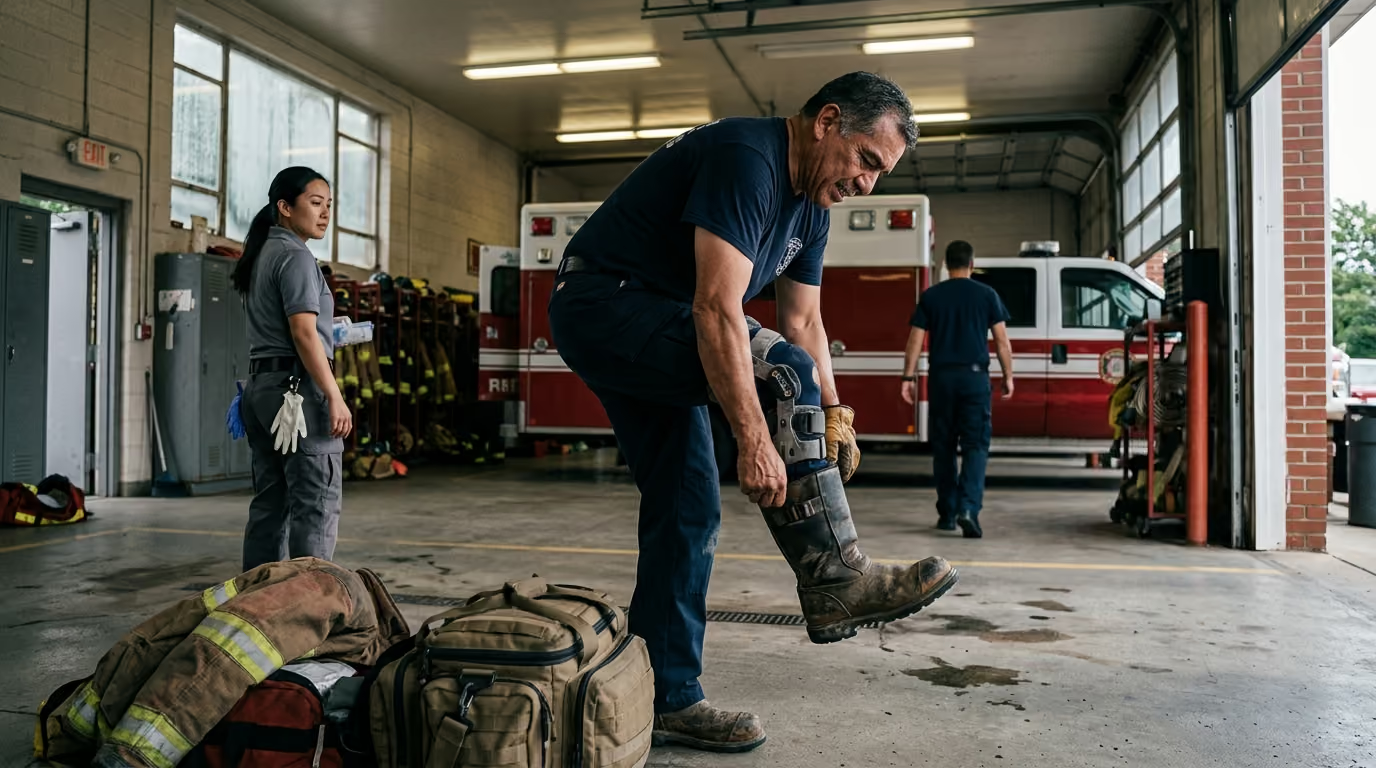

First responder injuries result from acute trauma, repetitive overuse, and cumulative occupational strain across demanding fire, police, and EMS environments.





First responders frequently search for answers when a sudden tweak during a lift or a nagging ache in the shoulder starts affecting their work. Many wonder whether an injury is simply minor muscle soreness, an acute tear, or the gradual breakdown of a joint from years on the road.
An acute injury happens in a single moment when a sudden load overwhelms a muscle, tendon, or ligament. An overuse injury develops when repetitive tasks break down tissue faster than the body can repair it. Cumulative strain is the slow buildup of wear from heavy gear, awkward postures, and long shifts over months or years. Understanding the differences between these three patterns helps personnel protect their physical capabilities, manage rehabilitation, and stay healthy throughout a long career.
Musculoskeletal injuries in emergency services generally fall into three distinct categories. While these categories have clear definitions, real-world duty often blurs the lines between them.
Acute trauma occurs when a discrete event applies force that immediately exceeds what a tissue can tolerate. The onset is sudden and identifiable. A firefighter may slip while stepping off an apparatus, an officer may twist a knee while pursuing a subject across uneven terrain, or a paramedic may feel an immediate pop in the lower back while catching a falling patient.
The physical mechanisms behind acute trauma include sudden impact, rapid acceleration or deceleration, joint hyperextension, and unexpected loads. When external forces exceed the tensile strength of soft tissue, structural failure occurs. This leads to ligament sprains, muscle strains, tendon avulsions, joint dislocations, or bone fractures. Acute injuries are not always minor or brief. A single moment of mechanical failure can require surgical repair and months of structured physical rehabilitation.
Overuse injuries develop when tissues experience repetitive mechanical loading without adequate time to rest and rebuild. Unlike acute trauma, an overuse condition rarely has an exact timestamp. Instead, microtrauma accumulates across days or weeks until localized inflammation, tendon degeneration, or structural irritation produces noticeable pain.
Common examples include patellar tendinopathy, shoulder impingement, medial epicondylitis, and plantar fasciitis. In emergency services, overuse comes from two distinct sources: repeated occupational tasks and physical training. Repetitive motions like climbing stairs with hose packs, carrying monitor bags, or operating extraction tools can irritate soft tissue. Rapid spikes in conditioning volume, such as running high mileage or performing excessive loaded conditioning without adequate recovery, also drive overuse breakdowns.
Cumulative trauma is the gradual development of tissue breakdown resulting from sustained occupational exposure over months or years. The National Institute for Occupational Safety and Health defines work-related musculoskeletal disorders as injuries affecting the musculoskeletal, peripheral nervous, and neurovascular systems caused or aggravated by occupational ergonomic hazards.
Cumulative strain is driven by prolonged exposure to suboptimal postures, sustained vehicle seating, heavy personal protective equipment, and regular spinal compression. Over time, these combined stressors alter joint mechanics and degrade passive stabilizing tissues like spinal discs, labrums, and joint cartilage. The primary distinction between overuse and cumulative trauma is time and scope. Overuse reflects a short-to-medium term imbalance between mechanical loading and tissue recovery. Cumulative trauma reflects the broad, systemic toll of occupational hazards across a multi-year emergency response career.
Musculoskeletal disorders represent the largest category of non-fatal occupational injuries across all branches of emergency services. While the work shares common risks, each discipline presents a distinct injury profile based on its operational environment.
Musculoskeletal injuries place a heavy operational and financial burden on the fire service. Systematic reviews show that the pooled prevalence of musculoskeletal disorders among career firefighters is approximately 41% to 46%. The lower back is the most frequently affected anatomical region, accounting for 31% to 34% of reported conditions. The lower extremities, particularly the knees and ankles, account for roughly 16% to 20% of injuries, while shoulder conditions represent 11% to 19%.
Workers' compensation data shows that firefighters experience workplace injury rates 3.5 times higher than private-sector workers. They are also 3.8 times more likely to suffer a work-related musculoskeletal disorder. Furthermore, recovery times for firefighters suffering from musculoskeletal injuries are roughly twice as long as those seen in the private sector. In state-level analyses, fire service personnel file compensable claims at a rate exceeding 716 per 10,000 full-time equivalents, with overexertion and bodily reaction serving as the leading primary cause.
Law enforcement personnel face a unique combination of static physical loading and unpredictable, violent physical encounters. Research indicates that up to 86% of police officers report experiencing at least one musculoskeletal complaint during a 12-month period. Lower-back pain is the primary complaint, affecting roughly 59% of surveyed officers, followed by shoulder issues at 48% and neck complaints at 43%.
Unlike firefighting, where overexertion during material handling dominates, police injury profiles show a higher proportion of upper-extremity soft-tissue trauma. Non-compliant subjects, physical restraint, and defensive tactics are leading causes of acute duty injuries. Concurrently, prolonged vehicle patrol, seat design, and the physical weight of duty gear create a steady baseline of cumulative back and hip strain. Police officers also suffer a higher percentage of motor-vehicle-related back injuries compared to fire and medical personnel.
Paramedics and emergency medical technicians work in uncontrolled, physically constrained settings that frequently prevent ideal lifting mechanics. Research indicates that annual back-pain prevalence among emergency medical personnel ranges between 30% and 66%. Overexertion while lifting, lowering, and carrying patients or equipment represents the single most common injury mechanism in the field.
NIOSH-funded research demonstrates that musculoskeletal disorders account for roughly half of all reported injuries among both fire-based and third-service EMS workers. High-risk operational tasks include negotiating stairs with occupied stretchers, performing lateral patient transfers across hospital stretchers, and delivering chest compressions in confined spaces. Observational studies demonstrate that lumbar muscle activation during routine patient handling often reaches up to 33% of maximum voluntary contraction, placing substantial strain on spinal structures.
Fireground operations require emergency personnel to transition instantly from resting states to maximal physical output while wearing heavy, restrictive thermal gear.
Structural firefighting gear, self-contained breathing apparatus, and hand tools add 45 to 75 pounds of external load. This load is distributed unevenly across the torso, altering the body's center of mass and restricting normal joint range of motion. To compensate, firefighters frequently adapt by increasing forward trunk lean and altering their gait patterns.
These biomechanical compensations significantly increase ground reaction forces and joint contact pressures across the hips, knees, and lumbar spine. Moving inside gear requires more muscular effort for basic tasks, which accelerates whole-body physical fatigue. As fatigue sets in, the body's neuromuscular coordination degrades, leaving passive spinal ligaments and joint capsules vulnerable to acute failure under dynamic loads.
Fireground tasks demand high force outputs in compromised body positions. Advancing charged hose lines creates sustained axial reaction forces that push the upper extremities and trunk into awkward extension and rotation. Forcible entry requires rapid rotational torque and high-impact loading through the shoulders, wrists, and elbows.
Victim extrication and drags are particularly hazardous. Unlike a barbell in a gym, an unconscious person provides an asymmetrical, shifting load with no secure handles. Firefighters often drag victims while crouching, crawling, or navigating debris-strewn floors. These movements produce massive compressive and shear forces across the lumbar discs, making victim removal a frequent source of acute disc herniations and severe lumbar sprains.
Thermal stress is a unique operational factor in firefighting. Encapsulating gear prevents evaporative cooling, which rapidly elevates core body temperature and leads to dehydration. As core temperature rises, muscular power output declines and central nervous system fatigue impairs reaction time and balance. This fatigue state dramatically raises the risk of acute slips, trips, and falls during overhaul operations.
Physical conditioning also contributes substantially to overall fire service injury statistics. Research shows that exercise accounts for roughly 27% to 33% of all reported firefighter injuries. Over 85% of these training injuries are musculoskeletal sprains and strains caused by acute overexertion. Unsupervised high-intensity workouts, improper movement progression, and failure to account for operational fatigue can turn a well-intentioned fitness program into an injury risk. Personnel can maintain capability by applying a structured training framework around shift work to balance workload and recovery.
Police officers face physical demands characterized by hours of low-intensity, seated work interrupted by sudden demands for maximal physical effort.
The modern patrol vehicle functions as a mobile office, but its ergonomic layout presents significant risks to the human spine. Officers spend extended periods seated in molded bucket seats while wearing body armor and a duty belt. The equipment mounted on the belt, including firearms, batons, radios, and conducted energy weapons, prevents the pelvis from resting flat against the seat back.
This setup forces the lumbar spine into asymmetric flexion and lateral rotation while riding over road vibrations. Prolonged sitting tightens the hip flexors and inhibits the gluteal musculature. When an officer abruptly steps out of a vehicle and sprints after a fleeing subject, the pelvis cannot stabilize effectively. The resulting shear force across the sacroiliac joint and lower lumbar vertebrae is a common cause of chronic low-back pain and acute hamstring strains.
Apprehending and controlling non-compliant subjects places sudden, unpredictable stress on the upper extremities. When an officer engages in physical control, forces are applied dynamically through the hands, wrists, and shoulders. Resisting subjects often pull, twist, or push with erratic movements.
These physical encounters frequently force the shoulder joint into external rotation and abduction, leading to anterior labral tears, rotator cuff strains, or acromioclavicular joint separations. Hand and wrist trauma, including scaphoid fractures, sprains, and tendon ruptures, often occurs during grappling or defensive impacts. Defensive tactics training must prepare officers for these forces through dedicated joint preparation rather than relying solely on technique practice.
A fully loaded law enforcement duty belt weighs between 15 and 30 pounds. Wearing this concentrated weight directly on the iliac crests compresses local neurovascular structures and the lateral femoral cutaneous nerve. This compression can cause numbness, burning pain, and tingling along the outer thigh, a condition known as meralgia paresthetica.
Load-bearing external vests help redistribute equipment weight from the pelvis to the thoracic spine and shoulders. While vests provide relief for the lower back and hips, they can increase cumulative loading on the cervical and upper thoracic spine. Balancing equipment distribution and maintaining upper-back strength are essential strategies within long-term career longevity planning for patrol officers.
EMS personnel encounter repetitive manual material handling tasks in environments that prevent standard lifting mechanics.
Transporting patients down stairs represents one of the most mechanically demanding tasks in emergency services. When carrying a patient on a manual stretcher or stair chair, the lower provider bears a disproportionate share of the load. This provider must step backward down stairs while maintaining a partial squat and resisting forward rotational forces.
Biomechanical studies show that stairway transfers generate high lumbar muscle activation and significant spinal compressive loads. Providers frequently experience sudden force spikes when a patient shifts weight or when a foot slips on a stair tread. These abrupt, unexpected loads frequently cause acute shoulder strains and lumbar disc injuries. The introduction of powered, tracked stair chairs significantly reduces these biomechanical loads, highlighting the value of engineering controls.
Emergency medical personnel regularly treat and extract patients from cramped, awkward environments. Typical scenarios include removing a patient from a narrow bathroom, lifting an individual from the floor between furniture, or reaching into a crushed vehicle. In these situations, providers cannot position their feet close to the load or maintain a neutral spine.
Lifting a patient from the floor while in a deep forward bend or full squat increases the moment arm acting on the lumbar spine. This mechanical disadvantage multiplies the compressive forces on the L4-L5 and L5-S1 spinal discs. Furthermore, providing chest compressions in a moving ambulance or kneeling on a hard floor creates sustained cumulative stress across the knees, hips, and lower back.
Moving a patient laterally from an ambulance cot to a hospital bed is a frequent source of cumulative shoulder and back trauma. Performing a lateral transfer requires providers to lean across the bed, placing the shoulder in forward flexion while pulling dead weight toward their torso. This movement creates significant shear forces across the rotator cuff tendons and the lower lumbar spine.
Operating manual cots adds further repetitive wear. Loading and unloading manual stretchers requires repetitive lifting and catching of heavy loads multiple times per shift. Over years of service, this continuous loading drives degenerative changes in the shoulder labrum and lumbar discs. Utilizing friction-reducing transfer sheets and powered cot systems provides substantial physical relief for field providers.
Distinguishing between normal post-shift fatigue, soft-tissue overuse, and acute structural injury is critical for preventing minor issues from becoming disabling conditions.
Delayed onset muscle soreness is a normal, temporary response to strenuous muscular work. It usually peaks 24 to 48 hours after heavy exertion and presents as diffuse, bilateral muscular tightness. This soreness resolves on its own within a few days, does not cause joint instability, and improves as the body warms up.
Pathological tissue damage presents differently. Overuse injuries often start as a localized ache that appears during specific tasks and subsides with rest. Over time, the discomfort begins earlier in the shift, lingers long after duty ends, and causes morning stiffness. Acute injuries produce immediate, focal pain often accompanied by swelling, bruising, or an audible popping sensation. Pain that progressively worsens, alters normal movement, or interrupts sleep requires professional medical evaluation.
Certain physical signs indicate severe structural trauma or neurological compromise that requires immediate medical attention. First responders should never attempt to work through red-flag symptoms.
Key red-flag indicators include:
Operational calls trigger a massive sympathetic nervous system response. The resulting surge of adrenaline and endorphins temporarily blunts pain perception, allowing emergency personnel to complete critical tasks despite soft-tissue damage. A responder may successfully finish an extrication or clear a scene without feeling significant discomfort.
Once the call concludes and stress hormones clear the bloodstream, inflammatory processes take over and pain signals emerge. A responder who felt fine during a call may find themselves unable to step out of the apparatus an hour later. Personnel must recognize that the absence of immediate pain during high-stress operations does not guarantee tissue integrity. Any awkward movement, sudden pop, or impact requires careful monitoring once the incident ends.
Returning to duty following a musculoskeletal injury requires a structured progression based on functional capability rather than arbitrary calendar dates.
Soft tissue recovery follows predictable biological phases: acute inflammation, tissue repair, and tissue remodeling. Mild muscle strains may achieve basic cellular repair within two to four weeks. Moderate tendon and ligament tears typically require six to twelve weeks to develop sufficient tensile strength for moderate loading. Complete ligament ruptures, bone fractures, or surgical reconstructions often require six to nine months or longer to mature fully.
Managing an injury involves recognizing that pain relief does not equal complete tissue healing. Pain often resolves during the early remodeling phase, long before new collagen fibers have organized to resist high shear and tensile forces. Returning to full operational duty based solely on the absence of resting pain creates a high risk of reinjury.
A comprehensive return-to-duty process evaluates whether a responder can meet the real physical demands of emergency operations. Performing daily activities without pain does not prove an individual is ready to lift a patient, advance a hose, or control a resisting suspect.
A progressive return-to-duty framework should confirm the following milestones:
Using autoregulation strategies during recovery training allows responders to adjust training intensity based on daily joint feedback, protecting recovering tissues from premature overload.
Preventing occupational injuries requires a comprehensive organizational strategy. Relying entirely on individual personnel to lift properly is the least effective way to prevent musculoskeletal disorders.
The most effective risk reduction strategies remove physical hazards at the system level. Engineering controls introduce mechanical advantages that reduce the physical load on human tissues.
In emergency medical services, the widespread adoption of powered hydraulic stretchers and powered stair chairs has significantly reduced manual lifting demands. In the fire service, apparatus designs featuring lower hose beds, automated ladder racks, and mechanical hose-loading systems reduce awkward overhead reaching and heavy lifting. Police departments can invest in ergonomically adjustable vehicle seating and modern load-bearing vests that protect the spine from concentrated duty-belt pressure.
Administrative controls establish policies and operating procedures that limit hazard exposure. These strategies include maintaining adequate staffing levels so heavy lifting tasks are shared among multiple responders. Dispatch protocols can automatically assign additional personnel to calls involving bariatric patients or complex extrications.
Departmental policies should also support fatigue management. Limiting mandatory overtime, structuring shift rotations to allow circadian recovery, and establishing clear modified-duty programs allow injured responders to heal without leaving the workforce entirely. Encouraging the reporting of near-miss lifting incidents helps safety committees identify hazardous tasks before they cause severe injuries.
Work practice controls standardize how personnel perform manual handling tasks. Establishing clear team-lifting protocols, using standardized verbal commands, and positioning personnel to avoid twisting under load improve operational safety.
At the individual level, physical preparation provides the final line of defense. A well-conditioned responder possesses greater muscular reserve, allowing them to handle unexpected loads safely. Progressive training strengthens bones, tendons, and muscles, raising the mechanical threshold required for acute trauma to occur.
To resist acute trauma and cumulative strain, first responders require physical conditioning that builds balanced strength, joint integrity, and fatigue resistance.
Targeted physical training prepares passive and active tissues for the chaotic forces encountered on duty. Rather than focusing solely on aesthetic goals, first responders benefit most from training movements that build multi-planar strength and joint stability.
Essential training priorities include:
Applying the minimum effective dose training framework ensures responders gain functional strength without accumulating excessive training fatigue that could compromise duty readiness.
Exercise-related injuries represent a substantial portion of overall firefighter and police injury claims. These injuries frequently occur when personnel suddenly increase running mileage, jump into high-intensity interval workouts, or lift maximal weights without an adequate foundation.
Conditioning workloads should follow a gradual progression. Tracking training volume and incorporating planned deload weeks allows connective tissues to adapt to mechanical stress. First responders must balance off-duty workouts with the unpredictable physical demands of their shifts, ensuring their training supports their duty fitness rather than exhausting their physical reserves.
Misunderstandings regarding pain, injury mechanisms, and operational readiness frequently prevent first responders from seeking appropriate care or managing their physical training effectively.
Managing musculoskeletal health requires knowing when an ache can be managed with rest and when symptoms require a licensed medical professional.
First responders should obtain a professional clinical evaluation whenever pain persists beyond a few days, progressively worsens, or interferes with regular duty tasks. Early evaluation by a physical therapist, occupational health physician, or orthopedic specialist can identify biomechanical imbalances, joint restrictions, or early soft-tissue tears before they progress to disabling injuries.
A professional evaluation is particularly important when symptoms include radiating pain down an arm or leg, persistent joint swelling, or a feeling of joint instability. Licensed clinicians can perform specialized orthopedic testing, order appropriate diagnostic imaging, and design targeted rehabilitation programs. Proactively addressing musculoskeletal complaints protects long-term operational readiness and helps prevent premature, medically forced retirement.
Sustainable career capability is built through consistent, daily attention to movement quality, equipment ergonomics, and physical recovery. Protecting joints and soft tissue from unnecessary wear preserves the capacity to perform safely under pressure.
Stay connected for research-led guidance on duty fitness, shift-work sleep, injury recovery, stress, nutrition and career longevity. Practical ideas for first responders who want to stay capable on the job, recover well and protect their health for the long run.



Read practical guidance on first responder fitness, recovery, sleep, nutrition and resilience for demanding work and a long, active career.
read the blog



