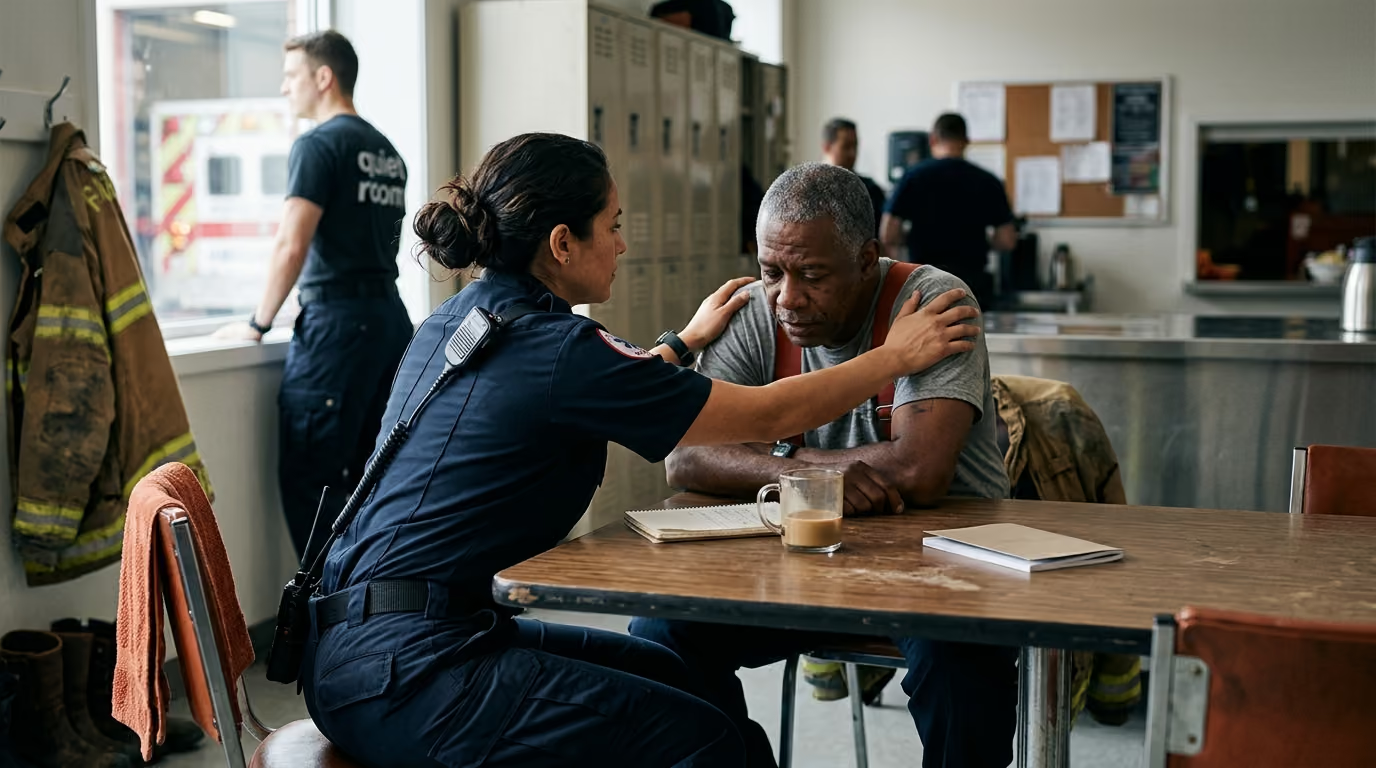

Field grounding focuses on functional readiness instead of passive relaxation, offering first responders evidence-based protocols to manage operational stress and transition home safely.





If you or a colleague are facing an immediate mental health crisis or having thoughts of self-harm, direct support is available right now. Call 911 for immediate operational danger. For free, confidential crisis support 24 hours a day, call or text 988, or press 1 to reach the Veterans Crisis Line. You can also text 838255. If personal safety is a concern at home or at the station, coordinate with a trusted peer or clinician to secure potential means safely.
Grounding is a set of deliberate, present-moment orientation skills designed to anchor your attention when stress, intrusive imagery, or physical tension threaten to pull you off task. Grounding is not a psychological cure, an emotional bypass, or a substitute for clinical trauma therapy. It is an operational regulation tool that stabilizes your nervous system during or after demanding calls. This comprehensive guide breaks down the clinical evidence behind orientation techniques, details low-profile methods for field operations, and provides a clear protocol for resetting after high-acuity shifts.
Grounding is the intentional redirection of awareness toward immediate physical sensations, environmental facts, and present-time reality. When a critical incident or cumulative operational stress spikes your arousal, your attention narrows or detaches entirely from the immediate environment. Grounding interrupts that automated stress reaction. It brings attention back to the room, the apparatus, or the task in front of you.
The primary objective of grounding on duty is not immediate relaxation or absolute comfort. The objective is functional orientation. Responders do not need to feel completely peaceful while managing a multi-vehicle collision, managing a structure fire, or working a pediatric cardiac arrest. They need to maintain situational awareness, make clear operational decisions, communicate without panic, and execute technical skills safely. Grounding provides enough physiological and cognitive stability to choose the next safe, effective action.
Techniques fall along a spectrum depending on the operational context. In-the-moment grounding involves rapid, discreet tactile or mental cues used during a call to maintain task focus. Post-call regulation focuses on clearing residual adrenaline and stabilizing baseline vitals during transport or equipment restocking. Recovery grounding involves structured habits practiced at the station or at home to support rest, nutrition, and sleep. Grounding serves as a tactical bridge that keeps you functional until you reach a safe window for deeper recovery.
Understanding what grounding is not is just as critical as knowing how to use it. Grounding does not erase memories, suppress natural human grief, or fix organizational burnout. It is an immediate stability tool. When used correctly, it keeps small stress spikes from cascading into operational errors or acute panic.
The occupational demands placed on emergency personnel create distinct physiological and psychological stress patterns. Responders routinely encounter human suffering, direct physical threats, erratic sleep cycles, and heavy physical loads. Credible research demonstrates that these operational realities produce measurable rates of post-traumatic stress, depressive symptoms, and general distress across emergency services.
Epidemiological research shows substantial variation in psychological distress across responder disciplines. A systematic meta-analysis of rescue workers estimated an overall post-traumatic stress disorder prevalence of 9.76 percent across more than 240,000 personnel. Research focused on emergency medical personnel identified post-traumatic stress rates around 11 percent, with depressive symptoms and general psychological distress reaching 15 percent and 27 percent respectively. Broader literature reviews report post-traumatic stress prevalence ranging from 7 percent to 37 percent depending on assignment history, cumulative exposure, and department resources. These wide ranges show that vulnerability varies across duty assignments rather than affecting every responder identically.
Clinical evidence for grounding stems from trauma-informed care frameworks established by organizations such as the Substance Abuse and Mental Health Services Administration (SAMHSA) and the Department of Veterans Affairs (VA). SAMHSA outlines grounding as a core somatic stabilization tool for managing acute hyperarousal and dissociation. The VA incorporates mental, physical, and soothing grounding into structured coping skill protocols for trauma-exposed veterans and emergency workers. These methods are supported by strong practice consensus and observational data within occupational stress programs.
Scientific evidence evaluates grounding as a self-regulation mechanism rather than a standalone curative treatment. Grounding helps down-regulate acute sympathetic nervous system overdrive and re-engages the prefrontal cortex, which governs executive function. It does not replace structured, trauma-focused psychotherapies for diagnosed post-traumatic stress disorder. The research indicates that grounding is most effective when learned during low-stress periods and applied proactively as an operational safety practice.
To apply grounding effectively, responders must understand the physiological shifts that occur during high-acuity calls. The nervous system operates across distinct arousal states. Under normal operating conditions, you function within a balanced zone known as the window of tolerance. In this state, your brain processes incoming information accurately, maintains peripheral awareness, and communicates clearly with crew members.
When a severe call occurs, the sympathetic branch of the autonomic nervous system accelerates. This state of hyperarousal releases catecholamines, accelerates heart rate, constricts breathing, and increases muscle tension. In an acute threat environment, these changes are adaptive because they prime your body for rapid physical action. Problems arise when hyperarousal exceeds operational utility, resulting in tunnel vision, auditory exclusion, racing thoughts, and erratic motor control.
Conversely, severe shock or cumulative exhaustion can trigger hypoarousal or dissociation. In this state, the parasympathetic system over-brakes, leading to emotional numbness, brain fog, feeling disconnected from your body, or a sensation that the scene is unreal. Responders experiencing hypoarousal might stare blankly, process radio traffic slowly, or struggle to perform routine equipment checks. Grounding works in both directions. It brings down hyperaroused panic and brings up dissociated numbness back into the functional window.
Short-term acute stress reactions are normal human responses after critical incidents. Intrusive thoughts, disrupted sleep, or vivid replays of a scene during the first few days do not mean you have sustained permanent psychological injury. The National Institute for Occupational Safety and Health (NIOSH) notes that these acute stress reactions often decrease naturally over time as the brain processes the incident. Grounding prevents acute distress from locking your nervous system into chronic dysregulation.
Maintaining readiness requires active physical regulation throughout long shifts. Using grounding techniques between calls helps prevent acute operational stress from solidifying into persistent fatigue. Pair these mental practices with structured autoregulation training strategies to ensure that your physical training supports nervous system recovery instead of draining your remaining reserves.
Clinical frameworks divide grounding into three distinct categories: mental, physical, and soothing. Each category targets a different sensory or cognitive pathway to pull attention away from internal distress and anchor it in external reality. Selecting the right category depends on your current environment, your crew dynamics, and whether you are dealing with hyperarousal or hypoarousal.
Mental grounding uses structured cognitive tasks, categorization, and neutral environmental facts to engage the prefrontal cortex. When traumatic imagery or panic loops dominate your thoughts, mental grounding forces the brain to allocate processing power to neutral, logical calculations. These techniques are invisible to bystanders, making them ideal for dispatch consoles, crowded hospital hallways, or vehicle cabs.
Physical grounding uses somatosensory inputs, pressure, temperature, and body mechanics to re-establish connection with physical reality. These techniques are effective for countering dissociation, numbness, or feelings of detachment from your physical body. Physical grounding provides strong, immediate sensory signals that reassure the brain of its physical safety in the present moment.
Soothing grounding uses realistic, non-catastrophic internal dialogue and personal reminders to reduce emotional distress. First responders often dismiss self-talk as useless motivational jargon, but tactical self-talk serves a functional operational purpose. It counters the catastrophizing narratives that drive panic and replaces them with realistic boundaries.
Soothing statements must always remain grounded in objective truth. Telling yourself that nothing bad happened after a pediatric fatality is dishonest and counterproductive. Instead, soothing grounding uses statements that acknowledge difficulty while affirming current safety and capability.
Applying grounding on duty requires a clear, repeatable process that operates under severe time constraints. When a rough call ends, responders rarely have thirty minutes of uninterrupted quiet to meditate
or journal. They need a fast, low-friction protocol that works while sitting in the front seat of an engine, standing in an emergency department bay, or walking back into quarters.
This five-stage framework takes less than sixty seconds to run and provides an immediate operational checkpoint before returning to service.
Recognize the early warning signs of dysregulation without self-criticism. Notice the clenched jaw, the racing pulse, the shallow upper-chest breathing, the irritability snapping at your partner, or the sudden urge to disconnect completely. Simply label the state: "My nervous system is running hot" or "I am pulling back and feeling detached."
Re-anchor your cognitive awareness to the objective facts of the present moment. Silently speak your operational location, the current time, and the immediate situation. State clearly: "I am in Medic 4 outside County Hospital. The scene is cleared. The patient transfer is complete. The time is 14:15 on Thursday."
Pick one discreet physical contact point to confirm your physical location. Press your back firmly into the vehicle seat. Feel the contact points behind your shoulder blades, lower back, and thighs. Unclench your jaw, drop your shoulders away from your ears, and release the tension in your hands.
Run a rapid three-point environmental check to interrupt internal replay loops. Identify three distinct objects in your visual field, two background sounds such as diesel engines or radio static, and one physical texture under your fingertips. This simple sensory scan brings processing bandwidth back to present sensory reality.
Evaluate whether your cognitive function has cleared enough to operate safely. Ask yourself one functional question: "What is the single next task required right now?" If the answer is restocking medical bags, logging fuel, or washing turnout gear, initiate that single task. If you remain severely impaired, communicate the need for a short reset to your crew.
Breathing techniques can support somatic grounding, but they must be applied with realistic caution. Many wellness programs advise taking massive, deep breaths during acute stress. However, when a responder is already hyperventilating or experiencing panic, forcing deep chest inhalations can increase dizziness, lower carbon dioxide levels, and trigger greater anxiety.
Use a controlled, unforced pattern instead:
If deliberate breathing increases lightheadedness, chest tightness, or anxiety, abandon the breathing exercise immediately. Return your attention to external physical grounding, such as pushing your boots into the floor or touching a cold surface. Breathing is an operational tool, not an absolute requirement.
Different duty settings require different tactical approaches. In an emergency communications center, dispatchers must remain seated while managing intense auditory input. Physical grounding for dispatchers relies on pressing the feet into floor pedals, gripping desk edges, or focusing on desktop objects between priority calls.
For patrol officers or suppression crews, situational awareness cannot be compromised. Never close your eyes, put in earbuds, or lower your physical guard while working near active roadways, uncontained fire grounds, or unsecured tactical environments. Practice open-eye grounding by observing scene perimeters, feeling equipment weight on your duty belt, and focusing on factual operational assignments.
The drive home and the front-door threshold represent vulnerable transition zones for emergency workers. During a shift, high arousal keeps you alert, focused, and capable of handling complex challenges. When you leave the station or station parking lot, the sudden drop in adrenaline can leave you feeling drained, irritable, hypervigilant, or emotionally flat. Without a clear decompression protocol, responders often carry operational residue directly into their family lives.
Establishing clean transition routines preserves relationships and supports long-term career longevity. The goal is to physically and mentally downshift from the responder persona before engaging with household demands.
Before turning the ignition key to leave the station parking lot, take two minutes to establish a mental boundary. Turn off the squad or station radio. Sit in the driver's seat, plant your feet, and exhale slowly. State to yourself: "The shift is finished. I am no longer on duty. My assignment now is returning home safely."
The physical act of removing your duty uniform provides a powerful sensory cue for your nervous system. Whenever possible, leave duty boots, tactical gear, and contaminated outer layers at the station. When you arrive home, immediately step into the shower. Use the temperature of the water and the routine of washing to signal to your body that the shift has concluded.
Exhaustion often mimics emotional distress. Dehydration, depleted glycogen, and excess caffeine create physical tremors, irritability, and brain fog that feel like persistent anxiety. Prioritize clean hydration and consume a balanced meal following a structured shift nutrition framework to stabilize blood sugar levels before attempting to sleep or interact with family.
Family members often notice stress before the responder does. Trying to act completely normal while internally fighting intrusive thoughts creates household tension. Use clear, low-demand boundaries without graphic details: "I had a demanding shift with several critical runs. I am safe, but my energy is low. I need forty-five minutes of quiet time to unwind before I can talk."
Sleep is the biological foundation of neurological recovery. After night shifts or extended tours, build an environment that facilitates rapid sleep onset. Implement a shift-specific sleep plan using blackout shades, cooling fans, and white noise. Keep work phones, department group chats, and incident logs outside the bedroom.
A common post-shift pitfall is using alcohol or sedatives to force decompression. While alcohol provides a short-term sedative effect, it fragments rapid eye movement sleep, elevates baseline resting heart rate, and impairs the brain's natural trauma-processing capacity. NIOSH guidelines strongly advise limiting alcohol use after critical incidents, as reliance on substances increases emotional volatility over time.
When a crew member experiences acute stress on scene or at quarters, the response from colleagues makes an immediate difference. Historically, emergency services relied on mandatory critical incident stress debriefing sessions that forced crew members to recount graphic details shortly after an event. Modern clinical evidence indicates that mandatory, forced emotional debriefing provides no clear reduction in post-traumatic stress and can inadvertently cause harm or prolong distress for some individuals.
Current occupational standards emphasize Psychological First Aid (PFA) principles established by the World Health Organization (WHO). Psychological First Aid is non-intrusive, practical, and voluntary. It focuses on meeting immediate physical needs, stabilizing orientation, and facilitating social connection without forcing psychological disclosure.
If a partner is hyperventilating, staring blankly, or exhibiting severe motor tremors following a difficult run, apply practical support:
Grounding is a supportive self-regulation skill, but it has distinct limitations and potential operational risks if misapplied. Knowing when not to ground, or recognizing when grounding is insufficient, is essential for responder safety.
Never perform grounding exercises that pull your attention away from active threats. If you are operating on a dynamic roadway, managing a structural collapse zone, or conducting building searches, your attention must remain fully outward. Do not close your eyes, focus on internal body scans, or engage in complex counting games while holding an active tool or monitoring security perimeters. Situational awareness always supersedes relaxation exercises.
Driving an emergency vehicle or commuting home while dissociated or severely panicked is hazardous. If you experience tunnel vision, cognitive blackout, or severe detachment behind the wheel, do not try to simply push through by grounding harder. Pull over safely to the shoulder or a parking area, put the vehicle in park, and apply tactile orientation. If you cannot regain clear focus, request transportation from a supervisor or peer.
Acute somatic stress reactions can mimic serious medical emergencies. Tachycardia, chest tightness, shortness of breath, dizziness, and profuse sweating can indicate panic, but they can also indicate acute coronary syndrome, heat illness, toxic smoke inhalation, or carbon monoxide exposure. Never assume that acute physical symptoms in yourself or a colleague are simply stress or anxiety. When in doubt, obtain an immediate medical evaluation and baseline vital signs.
Grounding does not cure post-traumatic stress disorder, severe clinical depression, substance dependency, or panic disorders. Using grounding as a chronic coping mechanism to avoid seeking clinical treatment is counterproductive. If you find that you must ground constantly throughout the day just to avoid panic, your nervous system is signaling that structured professional support is required.
First responders take pride in self-reliance, problem-solving, and managing crises independently. However, chronic exposure to critical incident stress can overwhelm individual coping strategies. Recognizing the indicators for specialized professional support is a hallmark of professional competence, not personal weakness.
NIOSH and clinical guidelines recommend seeking evaluation from a licensed mental health professional when stress symptoms persist for several weeks, worsen over time, or interfere with job performance and personal relationships. Consider seeking professional guidance if you notice:
When seeking care, look for licensed clinicians who specialize in first responder cultural competency and evidence-based trauma modalities. Approaches such as Eye Movement Desensitization and Reprocessing (EMDR), Cognitive Processing Therapy (CPT), and Prolonged Exposure (PE) have robust clinical evidence for resolving operational trauma. Employee Assistance Programs (EAP), department peer support networks, and first responder wellness foundations can connect you with culturally competent providers.
If you ever experience thoughts of self-harm, severe hopelessness, or feeling that your crew or family would be better off without you, take immediate action. Call or text 988 (press 1 for Veterans and emergency services personnel) or reach out directly to a trusted peer, supervisor, or medical provider. If immediate safety is an issue, work with a colleague or family member to safely secure personal weapons and medications until stable clinical support is established.
Yes, for some individuals, certain grounding techniques can temporarily increase discomfort. If a responder who is hyperventilating tries to force deep diaphragmatic breathing, it can create air hunger and heighten panic. Similarly, closing the eyes or focusing deeply on internal body sensations during acute trauma can amplify distressing somatic feelings. If an internal technique increases your distress, immediately switch to external, eyes-open physical grounding, such as naming objects in the room or pushing your boots into the deck.
Operational debriefings, such as after-action reviews or tailboard critiques, focus entirely on tactical performance, logistics, communications, equipment function, and safety protocols. They are essential for professional improvement and crew safety. Psychological debriefing involves structured, often mandatory group sessions that require personnel to reconstruct their emotional responses and graphic memories of an event. Clinical research indicates that forced psychological debriefings are not protective and can be counterproductive. Operational reviews should remain focused on technical and procedural facts.
Scene safety is your primary priority. If a crew member freezes during an active operation, use direct, short, procedural commands to redirect them: "Step back behind the apparatus, grab the halligan, and stand by the front door." Keep the instruction simple and physical. If they remain unresponsive or unsafe, remove them immediately from the hazard area to a secure location, assign another crew member to monitor them, and notify command of the personnel change.
Grounding is an operational skill that must be conditioned during calm baseline conditions. If you only try to learn grounding while managing an acute crisis, your stress response will make it difficult to remember the steps. Practice the five-stage protocol during routine daily activities: while waiting for the apparatus bay doors to open, during equipment inspections, or while waiting at a traffic light. Conditioning these neural pathways during low-stress periods ensures that the response is automatic when an intense call occurs.
Grounding is an operational stability tool that restores present-moment orientation and protects decision-making under acute stress. Consistent practice of low-profile physical, mental, and soothing techniques maintains immediate duty capability while protecting your long-term health throughout a demanding emergency response career.
Stay connected for research-led guidance on duty fitness, shift-work sleep, injury recovery, stress, nutrition and career longevity. Practical ideas for first responders who want to stay capable on the job, recover well and protect their health for the long run.



Read practical guidance on first responder fitness, recovery, sleep, nutrition and resilience for demanding work and a long, active career.
read the blog



