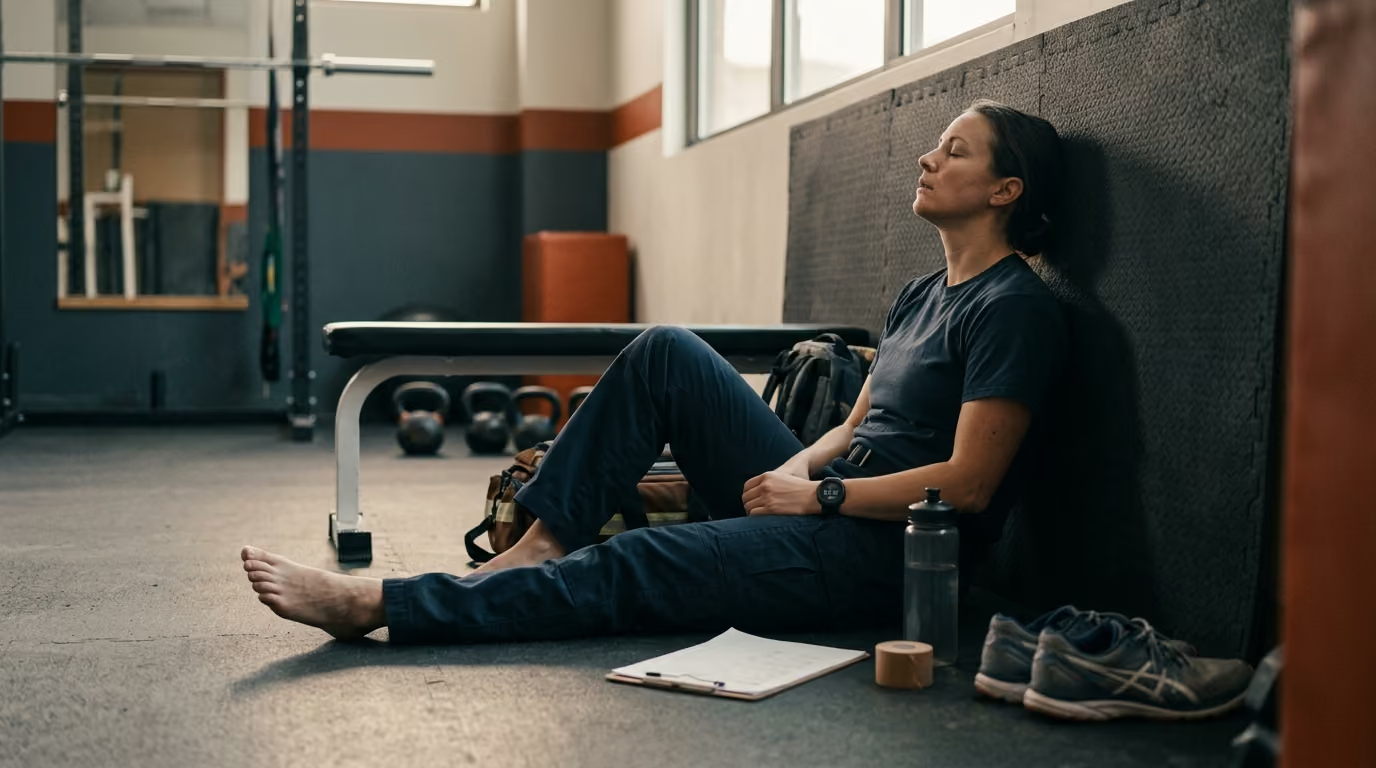

Forcing high-intensity training on poor sleep impairs recovery, but a systematic readiness framework lets you adjust exercise volume and manage fatigue.





You wake up to an early alarm after four hours of broken rest. Your scheduled workout calls for heavy barbell squats and high-intensity interval conditioning. Your muscles feel sluggish, your eyes burn, and your focus is fragmented. The common dilemma immediately surfaces: should you force yourself through the prescribed workout, or should you skip physical activity entirely and stay in bed?
Poor sleep does not require an all-or-nothing choice between pushing for personal records and doing nothing. An isolated bad night rarely destroys baseline muscular strength, but it does impair endurance capacity, motor coordination, cognitive vigilance, and technical stability. At the same time, perceived exertion climbs, making familiar workloads feel unusually heavy and stressful.
When sleep is compromised, training should be treated as an exercise in risk management rather than a test of grit. If you are free from illness, mentally alert, and coordinated, you can often train with modified volume, reduced intensity, and larger technical safety margins. If you are experiencing severe sleepiness, involuntary nodding off, or profound physical exhaustion, formal workouts should be postponed in favor of recovery. The goal is to preserve long-term capability without turning a routine training session into an injury hazard.
The scientific literature on sleep loss and athletic performance shows that physical capacity does not decline uniformly across all tasks. Systematic reviews demonstrate that acute sleep restriction impacts different energy systems, motor skills, and psychological states in distinct ways. Understanding these differences allows for targeted session adjustments rather than blunt cancellations.
Meta-analytic research on acute sleep loss indicates an average exercise performance reduction of approximately 7.56 percent across various disciplines. However, this average contains substantial variation depending on whether the task tests endurance, peak force, rapid decision-making, or complex coordination. Aerobic endurance performance consistently shows moderate impairment after sleep deprivation. Long cardiovascular sessions, sustained threshold efforts, and high-intensity intervals suffer because sleep loss reduces time to exhaustion and alters pacing strategy.
Maximal single-effort strength presents a different profile. Systematic reviews examining resistance exercise show that a single night of sleep deprivation often has little measurable effect on absolute muscular strength during simple movements. An athlete can frequently produce a normal maximal force output on a familiar lift after one poor night. The primary physiological degradation occurs during consecutive nights of partial sleep restriction. Cumulative sleep restriction significantly reduces force output in multi-joint compound exercises, slows movement velocity, and increases systemic strain.
Research examining sustained sleep restriction during resistance training highlights this separation between total workload and movement quality. In controlled studies, repeated short sleep slowed lower-body concentric barbell velocity by up to 15 percent and accelerated velocity loss within working sets. Athletes were often able to finish their prescribed repetitions, but they did so with higher perceived exertion, elevated cortisol exposure, and increased training distress. Completing the target volume is therefore a poor metric for session quality when sleep is compromised.
Motor control, reaction time, and vigilance degrade rapidly under acute and chronic sleep debt. When sleep is cut short, neural drive and fine motor coordination deteriorate before gross muscular force vanishes. This decline makes high-velocity movements, technical Olympic lifts, and complex plyometrics disproportionately risky. The central nervous system struggles to maintain precise joint alignment under rapid fatigue.
Perceived exertion increases reliably after sleep disruption. Meta-analyses demonstrate a standardized mean difference of 0.51 in ratings of perceived exertion following sleep loss. A submaximal load that normally feels moderate will register as a strenuous effort. This elevated internal cost means that attempting to match normal training targets on poor sleep extracts a higher physiological toll and delays subsequent recovery.
The relationship between sleep loss and injury risk is documented across both sports science and occupational research. In athletic cohorts, habitual sleep below seven or eight hours is associated with elevated injury rates. In occupational settings, workers obtaining fewer than five hours of sleep demonstrate significantly higher odds of injury compared to those sleeping seven to eight hours. Sleep debt degrades joint position sense, slows protective muscular reflexes, and impairs risk assessment.
Not all poor sleep presents the same physiological challenge. Lumping every disrupted night into a single category leads to inappropriate training choices. You must distinguish between acute loss, chronic restriction, fragmentation, and biological timing issues.
An isolated short night occurs when an unexpected disturbance cuts a single sleep period to four or five hours. The central nervous system retains reasonable functional reserve after one night of reduced sleep. Submaximal strength and basic movement patterns remain largely intact.
Accumulated sleep debt develops over three or more consecutive nights of partial sleep restriction. This sustained deficit drains physical energy, blunts hormonal recovery, and degrades neuromuscular efficiency. Multi-joint force production drops, lower-body movement velocity declines, and systemic inflammation markers rise. Modifying workouts becomes mandatory rather than optional when managing accumulated debt.
Sleep fragmentation occurs when total time in bed appears adequate, but frequent awakenings disrupt sleep architecture. Fragmented sleep reduces the proportion of restorative slow-wave sleep and rapid eye movement sleep. The body experiences repeated spikes in sympathetic nervous system activity rather than sustained autonomic recovery.
An individual may spend eight hours in bed yet wake up with the cognitive and physical markers of severe sleep deprivation. Assessing sleep quality and continuity is just as important as tracking total hours recorded on a clock.
Circadian misalignment happens when sleep is attempted at an unnatural biological time. This is standard for shift workers attempting daytime sleep following overnight duties. Even when daytime sleep duration reaches six hours, the sleep occurs against the natural circadian alerting signal.
Core body temperature, cortisol rhythms, and melatonin secretion remain misaligned with the waking routine. Training sessions scheduled after daytime sleep must account for lower baseline alertness and impaired core temperature regulation.
Fatigue is not a single, uniform state. The American Academy of Sleep Medicine defines fatigue as reduced mental or physical capability resulting from sleep loss, extended wakefulness, circadian factors, or workload. A practical training approach separates these domains:
These domains do not rise and fall together. A high dose of caffeine can temporarily suppress sleepiness while leaving motor control, reaction time, and physical recovery severely compromised.
Physical training cannot be programmed in an operational vacuum. For emergency personnel, industrial shift workers, and military operators, physical activity must coexist with irregular shifts, heavy thermal burdens, and unpredictable workloads. When duty demands collide with disrupted sleep, the physiological margin for error shrinks.
Occupational research confirms that night work and rotating shifts increase error rates and decrease task performance. Furthermore, extended duty periods carry an escalating risk profile. Studies reviewing shift work and extended hours demonstrate that accident risk at 12 hours of continuous work is approximately double the risk observed at eight hours. Adding an aggressive, high-risk gym session to the end of a grueling shift amplifies this baseline danger.
The physical load of the job itself consumes substantial recovery resources. Firefighters working in personal protective equipment, police officers wearing duty rigs, and paramedics performing repeated patient carries accumulate significant muscular strain. When daytime sleep is cut short between consecutive shifts, the musculoskeletal system has not repaired microtrauma from the previous operational period. Demanding high output from fatigued connective tissue under these conditions invites overuse injuries.
First responders frequently face unexpected calls that interrupt planned sleep windows. Developing a rigid workout schedule that assumes seven to nine hours of consolidated nightly sleep creates psychological frustration and physical burnout. Utilizing a structured training decision process allows personnel to adapt their physical preparation to daily operational realities. Training should build physical resilience for the job, not compete with the job for scarce physiological reserves.
Understanding the broader context of shift work and sleep management helps personnel protect long-term health. When duty periods demand high readiness despite poor sleep, training sessions must be calibrated to support operational safety. The priority shifts from chasing maximal athletic progression to maintaining stable physical readiness and preserving career longevity.
To make consistent, objective training decisions after poor sleep, use a repeatable evaluation framework. This five-step process removes emotional guesswork and prevents ego-driven overtraining.
Begin by establishing the exact nature of the sleep deficit. Review the following factors:
A single short sleep opportunity following several days of solid rest requires minor adjustments. Multiple nights of fragmented rest require major structural modifications.
Before considering any exercise session, screen for severe neurological and systemic fatigue symptoms. Rest or postpone training immediately if you experience:
Occupational safety analyses note that 24 hours of sustained wakefulness produces neurobehavioral impairments comparable to a 0.10 percent blood alcohol concentration. Training under severe sleep deprivation is a direct safety hazard.
Different training modalities carry vastly different penalties for technical failure or momentary lapses in attention. Categorize your planned workout into one of three risk tiers:
The greater your sleep deficit, the lower your session risk profile must be.
Do not decide whether to complete a full workout while sitting on the locker room bench. Use a standardized, 10-minute dynamic warm-up as a real-time readiness assessment. Monitor how your body and brain respond to low-level movement:
If your movement patterns feel clean and familiar warm-up weights move with normal speed, proceed with caution. If warm-up sets feel exceptionally heavy, balance is inconsistent, or movement mechanics degrade, immediately downgrade the session.
Based on your sleep history, safety screening, risk classification, and warm-up response, select one of four training tiers.
Apply the Green tier when sleep loss was minor, daytime alertness is normal, movement is crisp, and no systemic illness is present. You can execute your scheduled session as written. However, avoid attempting an unplanned maximal single or testing personal records on days following sub-optimal rest.
Apply the Yellow tier when you experienced a short or broken night of sleep, but remain alert, coordinated, and symptom-free. Modify the session to manage internal fatigue:
Apply the Orange tier when you are managing cumulative sleep debt, when baseline ratings of perceived exertion are elevated, or when a heavy shift lies ahead. The goal is to stimulate circulation and maintain movement habits without adding metabolic fatigue:
Apply the Red tier after total sleep deprivation, severe daytime drowsiness, episodes of dizziness, or during acute illness. Suspend formal training entirely. Direct all available time and energy toward hydration, wholesome nutrition, stress reduction, and obtaining restorative sleep.
Adjusting a workout after poor sleep requires specific programming modifications tailored to each physical discipline. Applying broad rules without understanding movement demands leads to poor execution.
When modifying resistance training, prioritize positional stability, control bar speed, and avoid muscular failure. Sustained sleep restriction impairs concentric barbell velocity and increases perceived exertion long before total repetition capacity drops.
Using minimum effective dose training approaches preserves muscular strength while protecting the central nervous system. Stable machine variations maintain mechanical tension on target muscles while removing the balance, spinal loading, and bracing demands of heavy free weights.
Endurance capacity drops significantly under sleep loss. Aerobic sessions should be adjusted to prevent excessive cardiovascular strain and extreme perceived effort.
Mobility work is often viewed as completely benign, but it can be counterproductive if executed incorrectly after poor sleep.
High-velocity athletic tasks require instantaneous motor unit recruitment, precise timing, and rapid eccentric force absorption. These attributes degrade first during sleep loss.
Reviewing illustrative operational models clarifies how these principles apply across varying schedules and duty constraints.
An officer obtains five hours of fragmented sleep due to late family obligations. They are scheduled for a heavy lower-body training day before an afternoon patrol shift.
A firefighter completes a 48-hour shift marked by repeated overnight dispatches, averaging under four hours of interrupted rest per night. They feel exhausted, irritable, and mentally sluggish upon relief.
A paramedic wakes up at 1300 after attempting daytime sleep following their first night shift. Total sleep duration was five and a half hours, marked by daytime traffic noise and light exposure.
When training must occur around sleep disruption, specific operational countermeasures can mitigate performance drops and support baseline safety.
Strategic napping provides rapid restorative benefits for cognitive function and physical alertness. Scientific guidelines separate naps into two primary categories:
Avoid taking long naps late in the biological day if they interfere with your primary sleep opportunity. Building a consistent schedule using a shift-specific sleep plan helps integrate napping into weekly routines.
Caffeine is a potent alertness countermeasure, but it must be managed carefully. It operates primarily by blocking adenosine receptors in the brain, masking fatigue rather than clearing underlying cellular waste products.
Sleep deprivation disrupts appetite-regulating hormones, increasing ghrelin and decreasing leptin. This shift drives cravings for refined sugars and processed fats.
Several widespread myths surrounding sleep and training lead athletes and first responders into chronic overtraining or complete physical stagnation.
Assuming that any sleep duration under seven hours makes training harmful is incorrect. The human body is remarkably resilient to acute, short-term sleep loss. Low-risk strength training and conversational aerobic exercise remain highly productive after an isolated bad night. Modifying the session is far superior to abandoning physical activity entirely.
Finishing all programmed repetitions does not mean the workout was successful. Research demonstrates that athletes can maintain volume while movement velocity drops, cortisol spikes, and perceived exertion increases substantially. The hidden cost is paid in prolonged recovery times, impaired immune function, and elevated injury risk during subsequent shifts.
Using grueling workouts to shock an exhausted body into alertness is counterproductive. High-intensity training generates significant central fatigue and sympathetic nervous system activation. Adding extreme metabolic stress to an already sleep-deprived body accelerates burnout and compromises endocrine function.
Prescribing an exact 10 percent load reduction for all athletes on poor sleep oversimplifies human physiology. Individual tolerance to sleep restriction varies based on training age, baseline aerobic fitness, genetics, and occupational stress. Use dynamic warm-up feedback, movement velocity, and repetitions in reserve to guide adjustments rather than relying on a rigid formula.
Sleep-deprived individuals often experience blunted self-awareness or feel driven by operational culture to underreport fatigue. A low reported rating of perceived exertion should never override visible balance errors, spinal flexion during lifts, or slow reaction times observed during a warm-up.
Training through mild sleep loss is an exercise in sensible adaptation, but clear safety limits must be established to protect long-term health.
Under no circumstances should you attempt heavy resistance training, maximal conditioning, or complex agility work when:
When severe sleepiness impairs basic cognitive processing, the gym environment becomes dangerous. Heavy free weights, moving cable equipment, and motorized treadmills present serious physical hazards when attention and balance fail.
Occasional sleep disruption is normal for active professionals and shift workers. However, chronic sleep failure warrants clinical evaluation by an appropriate licensed medical professional. Consider consulting a physician or board-certified sleep specialist if you regularly experience:
Modifying training programs can manage immediate physical risk, but it cannot treat an underlying clinical sleep disorder. Proper medical diagnosis and evidence-based treatment restore baseline physiological recovery and safeguard long-term health.
Adapting physical training to sleep quality is not a sign of weakness or compromised dedication. It is a fundamental strategy for maintaining operational capability, preventing preventable injuries, and sustaining physical performance across a multi-decade career.
Return to this framework whenever your operational schedule changes, during extended periods of high call volume, when recovering from travel or rotation shifts, or whenever chronic fatigue begins to degrade your movement quality and daily readiness.
Treating sleep-related training adjustments as an intelligent risk-management protocol ensures that every workout serves your long-term readiness. Prioritizing movement quality and safety over rigid compliance keeps you capable on duty and healthy for life after service.
Stay connected for research-led guidance on duty fitness, shift-work sleep, injury recovery, stress, nutrition and career longevity. Practical ideas for first responders who want to stay capable on the job, recover well and protect their health for the long run.



Read practical guidance on first responder fitness, recovery, sleep, nutrition and resilience for demanding work and a long, active career.
read the blog



