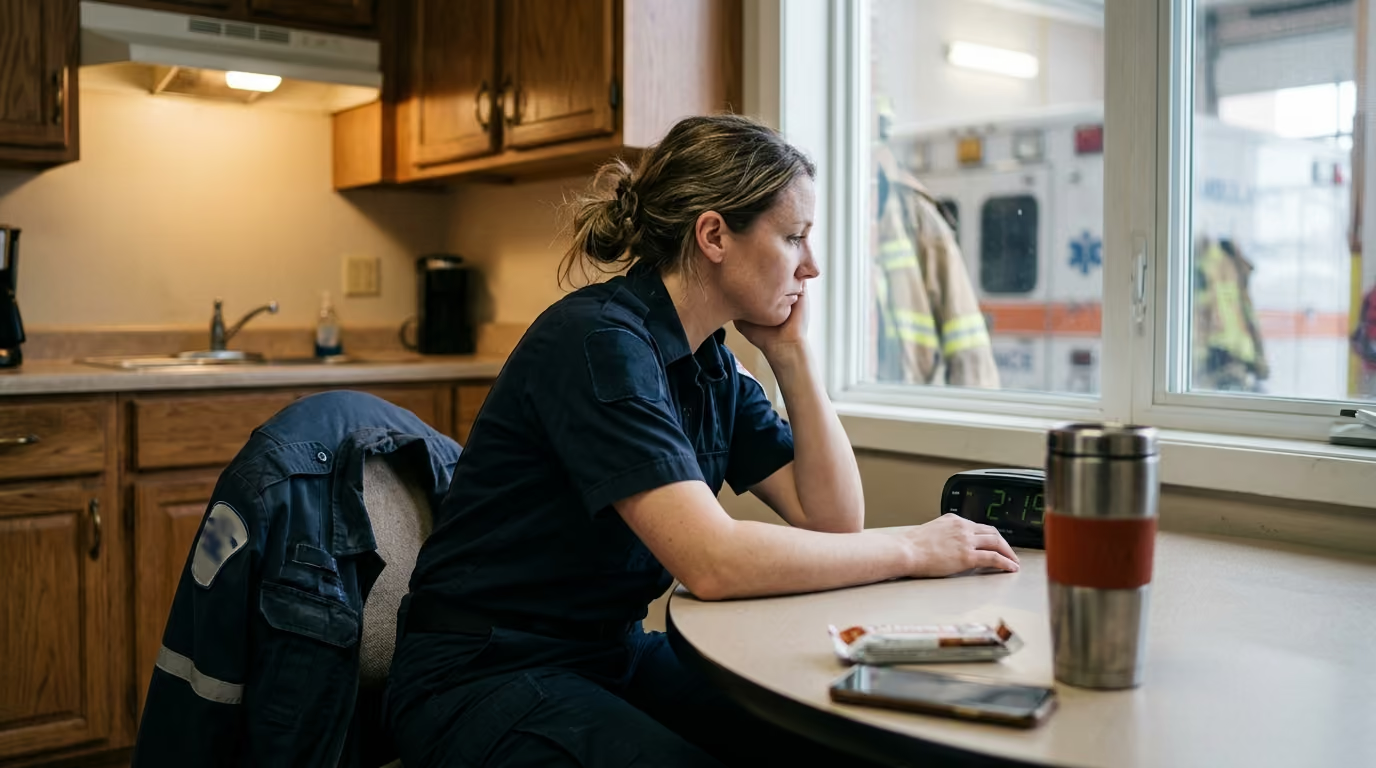

Resilient sleep patterns and sharp on-duty performance remain manageable during temporary shift changes through strategic biological cue management and structured recovery routines.





You receive a notice on Friday afternoon. For the next three weeks, your unit is moving from standard day shifts to a late-night detail for specialized training and community support. You need to adjust your waking hours, shift your meals, manage family commitments, and still show up alert enough to perform safety-critical duties.
Temporary schedule changes are often treated as simple time-management problems. Personnel attempt to power through unusual hours with extra caffeine, irregular naps, and sheer determination. In reality, short-term disruptions require a structured sleep-protection strategy. Without deliberate planning, even a brief schedule change can rapidly create acute sleep restriction, severe fatigue, and dangerous performance deficits.
Protecting your sleep during temporary schedule shifts requires establishing a strict minimum sleep floor, positioning light and nutrition strategically, managing on-shift fatigue risks, and executing a controlled recovery plan. Treating sleep as an operational priority protects your cognitive sharpness, reaction time, and long-term health during abnormal assignments.
A temporary schedule change does not make biological adaptation easier simply because it is short. The human circadian system regulates physical rhythms, core body temperature, alertness, and hormone production on an internal cycle of roughly twenty-four hours. When an assignment forces you to work during biological night or wake up hours earlier than normal, your internal clock remains aligned with your previous routine.
According to public health data from the Centers for Disease Control and Prevention and sleep medicine guidelines, adults between the ages of 18 and 60 require at least seven hours of quality sleep per 24-hour cycle. Yet data summarized by the National Institute for Occupational Safety and Health indicates that more than one-third of civilian workers report short sleep duration. Among night-shift personnel, this rate jumps to nearly 62 percent. Short-term schedule disruptions regularly place workers into severe sleep debt before they realize the extent of their impairment.
The evidence tracking occupational fatigue shows clear risks when shifts extend or flip unexpectedly. Data compiled by safety researchers shows that accident and error risks rise by approximately 15 percent on evening shifts and 28 percent on night shifts compared to standard day shifts. Furthermore, working a 12-hour shift carries a 28 percent higher risk of incident compared to an 8-hour shift. Research evaluating healthcare workers under extended shifts found that staff working 12 or more hours experienced more than triple the odds of making critical errors compared to those on 8.5-hour shifts.
These findings highlight that temporary schedule changes are not benign events. When an assignment alters your schedule for five days or four weeks, your baseline resilience drops if sleep is compromised. Recognizing the physiological mechanics of sleep loss allows you to take protective steps before fatigue leads to operational failure.
Emergency personnel operate under unique occupational demands that compound the difficulty of short-term schedule shifts. First responders cannot afford sluggish reaction times, diminished situational awareness, or delayed motor coordination. Whether driving an emergency vehicle under sirens, calculating medication dosages in an ambulance, or making tactical judgments under pressure, the consequences of fatigue are severe.
During extended academy periods or probation, recruits and instructors often face physical conditioning, high-stakes academic testing, and rigorous inspections. When these demands occur alongside early reporting times, trainees frequently sacrifice sleep to study, prepare uniforms, or commute. This creates an environment where individuals are physically exhausted and cognitively drained at the exact moment they need peak capability.
Temporary operational details, such as wildland deployments, major sporting events, dignitary protection, or civil disturbance assignments, introduce unpredictable shift lengths and irregular rest locations. Field assignments often mean sleeping in shared dormitories, base camps, or parked apparatus. These environments expose responders to ambient noise, erratic lighting, and uncomfortable thermal conditions.
Furthermore, emergency calls produce acute autonomic nervous system arousal. Responding to high-stress incidents triggers cortisol and adrenaline spikes that linger long after the call clears. If a temporary night shift ends with an intense call at 05:00, falling asleep at 07:00 becomes biologically challenging despite profound physical exhaustion. You can consult detailed fatigue guidelines and shift protocols to understand how organizational baselines help mitigate these recurring operational hazards.
A primary error in managing temporary schedules is confusing sleep opportunity with actual sleep obtained. Sleep opportunity represents the total window of time you make available for rest. Sleep obtained is the actual duration spent asleep after accounting for sleep latency, middle-of-the-night awakenings, and restless arousal.
Consider a temporary assignment where you finish duty at 18:00 and must report back at 06:00. On paper, you have a twelve-hour rest window. However, when you subtract a forty-five-minute commute, meal preparation, personal hygiene, household responsibilities, and decompression, your practical window shrinks dramatically. Occupational safety analyses suggest that workers often need at least eleven hours between shifts just to achieve a true seven-hour sleep block.
To calculate your actual sleep window, you must work backward from your required morning wake-up time. Take your target wake-up alarm and subtract your required sleep duration, which should ideally be seven to eight hours. Then subtract at least sixty minutes for winding down, changing clothes, and falling asleep.
If your calculated bedtime requires you to get into bed thirty minutes after arriving home, your schedule is structurally deficient. In such circumstances, you must proactively reduce off-duty tasks, prepare meals ahead of time, and negotiate household duties to protect your rest window.
To navigate any short-term schedule disruption successfully, responders can apply a practical four-stage system. This framework organizes your actions before the shift starts, during the assignment, while working, and as you return to your normal routine.
The protection phase begins several days before your temporary schedule starts. Your objective is to build a non-negotiable minimum sleep floor of at least seven hours within every 24-hour cycle.
First, treat your sleep block as an operational assignment. Just as you would not skip vehicle checks or safety briefings, you cannot treat sleep as discretionary time left over after other activities. Mark your sleep hours on your calendar and communicate them clearly to family members, roommates, and colleagues.
Second, complete administrative, household, and meal preparation tasks in advance. Cook meals in bulk, complete laundry, pay pending bills, and arrange family logistics before your temporary schedule begins. Offloading these demands prevents them from invading your sleep window when duty hours expand.
Third, optimize your sleep environment. Prepare your bedroom for deep rest by blocking external light with blackout curtains or high-quality eye masks. Lower the room temperature to between 60 and 67 degrees Fahrenheit, and use a white noise machine or earplugs to mask daytime traffic and neighborhood activity.
Positioning involves aligning environmental signals to help your body sleep and wake at unusual hours. Your circadian system relies on external cues, known as zeitgebers, to regulate alertness and sleepiness. The most powerful zeitgebers are light, nutrition, and physical activity.
When transitioning to an early morning schedule, seek bright light immediately upon waking. Natural sunlight or a 10,000-lux light box signals your brain to suppress melatonin production and advance your internal rhythm. Conversely, dim indoor lights two hours before bedtime to allow endogenous melatonin to rise.
When moving to a temporary night rotation, reverse this process. Shield your eyes from bright morning sunlight on your drive home using polarized sunglasses. Keep indoor lighting subdued as you prepare for daytime sleep. Reviewing the principles of building an individualized sleep plan provides practical methods for aligning these biological signals across various duty rotations.
Nutrition timing also anchors your biological clock. Avoid eating large, heavy meals within two to three hours of your main sleep period. High-fat and high-protein meals require significant digestive activity, raising core body temperature and causing sleep fragmentation. Opt for light, easily digestible snacks if you feel hungry before bed.
The performance phase focuses on maintaining cognitive readiness and mitigating fatigue during high-risk duty windows. Fatigue peaks during the circadian low, which typically occurs between 02:00 and 06:00, as well as during the mid-afternoon dip between 14:00 and 16:00.
Incorporate brief operational breaks when duty permits. Stand up, walk around, stretch, and perform short mobility drills to stimulate nervous system arousal. Maintain constant hydration, as mild dehydration accelerates subjective fatigue and degrades cognitive focus.
Use peer monitoring and active communication during high-consequence tasks. Check in with team members regarding alertness levels, double-check critical equipment, and verbally confirm operational procedures. If severe grogginess strikes, step away from dangerous machinery or driving tasks until alertness is restored.
The recovery phase governs how you exit a temporary assignment and return to your baseline schedule. Many responders make the error of attempting an abrupt schedule snap-back, staying awake for twenty-four consecutive hours to reset their clock immediately. This practice induces severe sleep deprivation and elevates injury risk.
Instead, execute a controlled transition. After your final night shift or extended tour, sleep for a protected block of three to four hours in the morning. Wake up at midday, get exposure to bright sunlight, move your body, and engage in light activity.
This anchor sleep clears substantial sleep debt while preserving sufficient sleep pressure to fall asleep again that evening at a normal hour. On your first day off, avoid scheduling strenuous workouts or stressful personal commitments. Treat that day as an essential recovery buffer.
Different temporary assignments present distinct physiological challenges. Applying the correct targeted approach prevents unnecessary circadian strain.
Early morning starts require advancing your circadian phase. If you normally wake at 07:00 and must report to the training academy at 05:00, an abrupt shift will cost you two hours of sleep each night.
Short night blocks, lasting from three to seven nights, require protecting daytime sleep without completely decoupling from your normal rhythm.
Major incidents, natural disasters, and wildland deployments often involve 14-to-16-hour work periods over several consecutive days.
Responders seeking more depth on managing long shifts can explore research on understanding circadian strain and shift length to see how duty duration compounds sleep debt.
Some specialized training courses or rotating details require jumping rapidly between day and night operations within the same week.
When applied strategically, caffeine, environmental light, and naps serve as effective fatigue countermeasures. However, they must be used with precision, as improper timing directly undermines your sleep recovery.
Caffeine works by blocking adenosine receptors in the central nervous system, temporarily masking the sensation of sleepiness. It does not eliminate underlying sleep debt or restore cellular energy balance. The half-life of caffeine is typically five to six hours, meaning that half of the compound remains active in your bloodstream long after consumption.
For a deeper look into fueling protocols across various shift rotations, read our guide on managing caffeine intake during night shifts.
Light is the primary synchronizer of the mammalian central biological clock located in the suprachiasmatic nucleus. Managing light exposure allows you to manipulate your alertness levels throughout a temporary assignment.
To promote wakefulness, expose yourself to high-intensity, blue-enriched light at the start of your shift. If working inside an operations center or classroom, maximize overhead illumination. When preparing for sleep, eliminate blue light by activating night modes on digital devices, lowering indoor lighting levels, and wearing blue-light-filtering glasses during your pre-bed routine.
Napping provides a valuable operational bridge when continuous sleep is shortened. However, nap duration dictates whether you wake up refreshed or functionally impaired.
A short power nap of fifteen to twenty minutes keeps you in light non-rapid eye movement sleep. This duration reduces homeostatic sleep pressure and restores vigilance without causing sleep inertia. Sleep inertia is the lingering grogginess, disorientation, and slow motor response that occurs when awakening from deep slow-wave sleep.
If you have a longer rest window, aim for a ninety-minute nap. Ninety minutes allows your brain to complete an entire sleep cycle, progressing from light sleep into deep slow-wave sleep and concluding with rapid eye movement sleep. Waking at the end of a complete cycle minimizes sleep inertia while providing substantive restorative benefit. Avoid intermediate nap durations of forty-five to sixty minutes, as waking from deep sleep causes heavy cognitive sluggishness.
Responders frequently fall into predictable behavioral traps when navigating short-term schedule changes. Avoiding these missteps preserves your recovery capacity.
When working temporary night rotations, personnel often attempt to switch entirely back to a daytime schedule on their days off to spend time with family or run errands. This constant oscillation keeps the circadian system in permanent disarray.
Instead of completely flipping your schedule, maintain a compromise routine on your days off. Sleep during a standardized midday block, such as 03:00 to 11:00, which accommodates both social interaction and circadian stability.
Attempting to reset your sleep cycle by staying awake for twenty-four hours after an overnight assignment is counterproductive. Prolonged wakefulness impairs judgment, suppresses immune function, and significantly elevates the risk of motor vehicle collisions. Use the controlled anchor sleep method rather than forced total wakefulness.
Adrenaline, excitement, and duty demands can easily mask severe fatigue. Many responders report feeling completely fine while demonstrating severely degraded reaction times and visual scanning ability. Rely on objective indicators, such as your total hours of sleep obtained over the previous forty-eight hours, rather than how alert you feel in the moment.
The commute home following a night shift or an extended duty period represents one of the most hazardous phases of any temporary assignment. Data from safety organizations indicates that drowsy driving crashes peak between 04:00 and 06:00, with an additional high-risk period between 14:00 and 16:00.
Research indicates that individuals obtaining less than five hours of sleep have four to five times the crash risk of those who sleep eight hours. If you feel your eyes drooping, your lane position wandering, or you experience head nodding, pull over immediately into a safe parking lot. Take a twenty-minute nap before continuing your commute, or arrange for alternative transportation.
Individual sleep hygiene techniques have absolute limits. No amount of mental toughness, cold air from rolled-down windows, or high-potency energy drinks can replace basic biological sleep. Recognizing operational boundaries is vital for preserving team safety and mission capability.
When personnel experience cumulative sleep debt, high-order cognitive processes deteriorate first. Complex decision-making, risk assessment, emotional regulation, and working memory show measurable decline before basic physical strength diminishes. If an assignment requires precision calculations, firearms handling, critical medical interventions, or high-speed driving, supervisors and team members must watch for subtle signs of cognitive failure.
Organizations and teams must establish clear safety thresholds during temporary assignments. When a responder experiences repeated micro-sleeps, exhibits profound mood alterations, or commits basic procedural omissions, they must be given a mandatory rest window. Continuing to work in a severely sleep-deprived state creates unacceptable liability for the individual, the agency, and the public. You can find broader operational insights in our shift work recovery resources collection.
While acute sleep disruption is expected during short-term schedule changes, sleep problems should resolve once you return to your standard routine. If sleep disturbances persist long after the temporary assignment ends, formal medical evaluation may be warranted.
Consider consulting a licensed physician or a board-certified sleep specialist if you encounter any of the following persistent issues:
A qualified medical provider can evaluate whether an underlying condition, such as Shift Work Disorder, Obstructive Sleep Apnea, or chronic insomnia, has developed. Early clinical intervention prevents acute shift-related sleep problems from transforming into chronic health disorders.
Temporary schedule changes are an inevitable reality of a long career in emergency services and high-demand operations. Protecting your sleep during these abnormal periods is not a luxury or a sign of weakness. It is a fundamental operational skill that preserves your cognitive performance, safety, and physical longevity.
By calculating your true sleep windows, manipulating environmental light, using caffeine and naps methodically, and executing disciplined recovery protocols, you safeguard your operational capability. Navigating schedule transitions with structured physiological discipline ensures you stay effective on duty while protecting your long-term health throughout your career.
Review this guide whenever you receive notification of an upcoming academy detail, a temporary shift rotation, an extended special event, or a field deployment. Keeping these practical steps accessible will allow you to set up your sleep plan before the assignment begins, ensuring you stay resilient through every operational change.
Protecting your sleep during demanding transitions preserves your capability today and ensures your long-term health for years to come.
Stay connected for research-led guidance on duty fitness, shift-work sleep, injury recovery, stress, nutrition and career longevity. Practical ideas for first responders who want to stay capable on the job, recover well and protect their health for the long run.



Read practical guidance on first responder fitness, recovery, sleep, nutrition and resilience for demanding work and a long, active career.
read the blog



