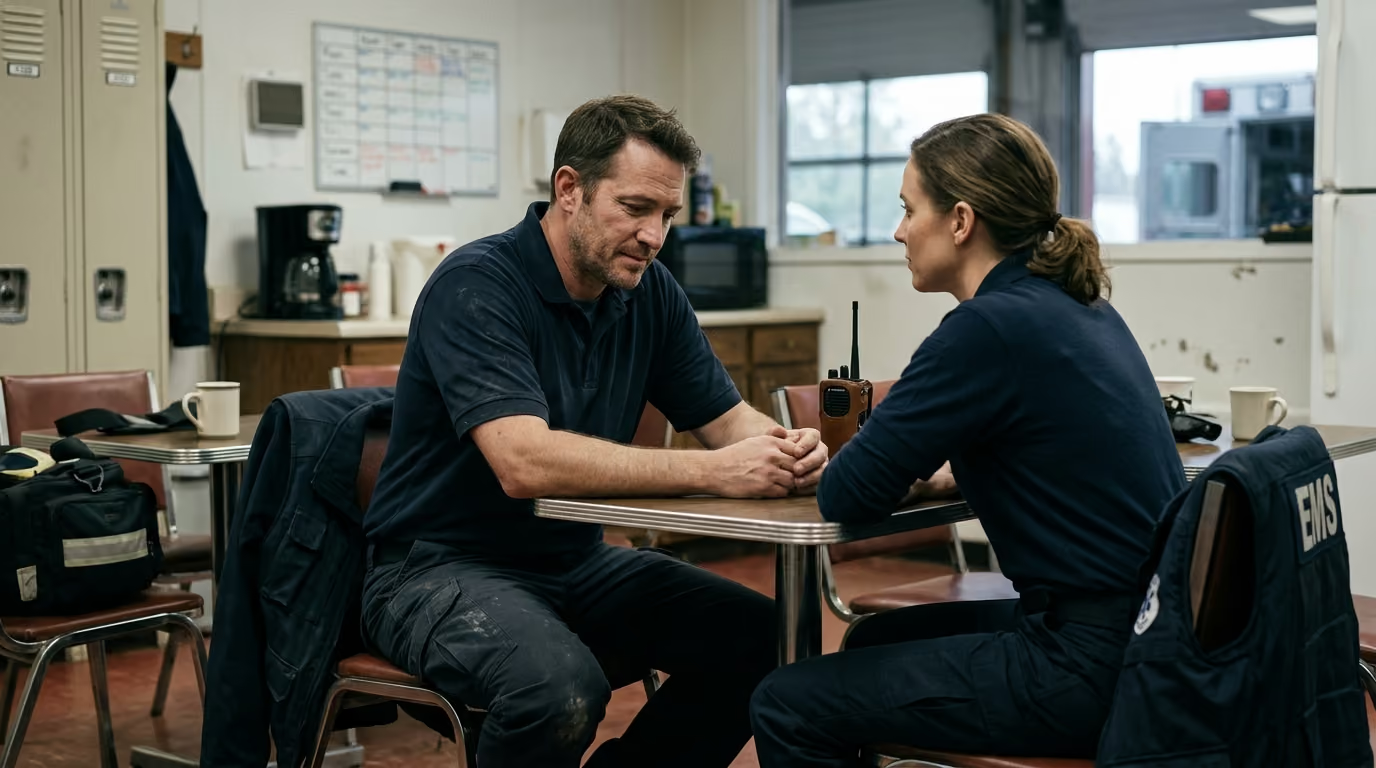

Three distinct conversation types and the practical LINK communication model help emergency response leaders support first responder welfare after critical incidents.





If you or someone you work with is in immediate crisis, call 911 for urgent danger. You can also call or text 988 to reach the Suicide & Crisis Lifeline, press 1 for the Veterans Crisis Line, or text 838255. When access to lethal tools or personal safety is an immediate concern, arrange safe storage or supervision alongside a clinician or trusted support person before continuing.
The most widespread belief in emergency service culture is that crew members must talk through a traumatic event immediately after it happens. Many agencies still operate under the assumption that forcing responders to recount harrowing calls in a group circle prevents post-traumatic stress. Decades of occupational research demonstrate that compulsory emotional debriefing does not prevent psychological injury and can sometimes make distress worse.
Post-incident communication works best as a practical support and triage process. Its purpose is to verify safety, address immediate physical needs, offer human connection, and create a clear path to follow-up care. A structured conversation respects personal boundaries, avoids unqualified armchair therapy, and ensures crew members receive the exact level of support they need.
One common mistake in emergency services is treating every post-call discussion as a generic debrief. When an agency merges technical critique with personal emotional disclosure, crew members often shut down. To communicate effectively, organizations must clearly distinguish between three distinct types of conversations.
An operational debrief or hot wash focuses strictly on tactics, safety protocols, communication systems, and equipment performance. It examines what happened during the incident, what went according to plan, what created operational risk, and what needs adjustment before the next response.
The National Institute for Occupational Safety and Health notes that structured post-event decompression sessions offer valuable opportunities for organizational learning and procedural refinement. An operational review should never require responders to disclose private feelings or describe the most distressing moments of a call in front of their supervisors and peers.
An informal welfare check is a brief, supportive contact between colleagues or from a direct supervisor to check on personal well-being. The focus is practical, relational, and grounded in normal peer support.
The goal of this interaction is simple. It verifies whether the person is physically safe, has a safe way home, understands what resources exist, and feels supported by their team. It does not attempt to diagnose mental health disorders, interpret physiological responses, or force a person to process trauma before they are ready.
A clinical conversation is a formal evaluation conducted by a licensed mental health professional, occupational health doctor, or trauma specialist. This level of care determines whether specific diagnostic criteria are met and delivers evidence-based therapy when necessary.
Informal peer conversations and supervisor check-ins must never be presented as substitutes for clinical assessment.
Peer supporters and field leaders serve as practical conduits to professional care rather than providers of amateur psychotherapy.
Emergency response work carries distinct occupational hazards that affect the brain and nervous system over time. Research shows substantial variation in how cumulative stress and critical incidents impact personnel across different branches of service.
The Substance Abuse and Mental Health Services Administration reports that approximately 30 percent of first responders develop behavioral health conditions, including depression and post-traumatic stress, compared to roughly 20 percent in the general population. Systematic reviews across first responder groups show estimated post-traumatic stress disorder rates ranging from 10 percent to 33 percent depending on the specific branch, exposure metric, and assessment tool used.
Data from the Centers for Disease Control and Prevention and NIOSH indicate that public safety telecommunicators experience significant strain, with studies identifying post-traumatic stress symptoms in 17 to 24 percent of dispatchers and depression symptoms in 24 percent. An Agency for Healthcare Research and Quality systematic review highlights that across emergency medical service workforces, general psychological distress is reported in roughly 27 percent of personnel, with depression and anxiety both cited near 15 percent.
While these statistics demonstrate the real burden of the job, the medical evidence is equally clear about what does not work. For years, single-session psychological debriefing models required groups to verbally recount traumatic events and express their immediate emotional reactions shortly after a call.
Clinical guidelines from the National Institute for Health and Care Excellence explicitly recommend against offering routine psychologically focused debriefing for the prevention or treatment of post-traumatic stress. Extensive trial reviews showed no clinically meaningful benefit and suggested that compulsory re-exposure to traumatic material soon after an event can interrupt natural coping processes.
The World Health Organization and the Department of Veterans Affairs instead endorse Psychological First Aid as the primary early framework. Psychological First Aid is an evidence-informed model designed to provide humane, supportive, and practical assistance without demanding a full trauma narrative. It is built around three core action principles: Look, Listen, and Link.
To make evidence-informed support practical in fire stations, police precincts, and ambulance bases, responders can apply the L-I-N-K framework. This model translates Psychological First Aid into direct, permission-based language that fits tight operational schedules.
Before initiating a conversation about an incident, assess whether the responder is physically safe and physiologically capable of engaging. High-intensity calls trigger massive sympathetic nervous system activation, flooding the body with adrenaline and cortisol.
Check basic physiological requirements first. Ask these practical questions:
If a crew member is disoriented, showing severe physical distress, or exhibiting uncontrolled panic, the immediate priority is medical evaluation and physical safety rather than a conversation about the call. Personnel can use quick grounding techniques between calls to help down-regulate the nervous system before attempting any detailed discussion.
Forced emotional disclosure creates resistance and can make psychological distress worse. A supportive conversation must always use permission-based language that puts the responder in control of what they share.
Open conversations using low-pressure phrasing:
Never command a responder to open up or use coercive phrases such as "You need to get this off your chest" or "Everyone has to share before we leave." If an individual prefers not to talk immediately after a call, respect that choice while keeping the door open for future contact.
Active listening means paying close attention to operational concerns, cognitive reactions, and subtle changes in baseline behavior without attempting to diagnose a condition.
Listen and watch for these indicators:
Your goal is not to categorize their symptoms into a formal psychological manual. Your objective is simply to determine whether this individual requires standard informal support, structured peer follow-up, or urgent professional intervention.
A single conversation immediately after a critical incident is rarely enough. The human stress response evolves over days and weeks as the brain processes what occurred. Closing a conversation with "Let me know if you need anything" places an unfair burden on a struggling responder.
Create an explicit, helper-led follow-up plan:
Organizations function best when personnel understand the exact criteria for escalating post-incident support. Using a tiered response pathway prevents minor stress responses from being over-pathologized while ensuring serious acute crises receive prompt professional care.
A Level 1 response applies when a responder is physically safe, oriented, capable of making rational decisions, and experiencing standard transient stress reactions. These reactions may include temporary mental fatigue, mild sleep disruption, brief intrusive thoughts about the call, or normal sorrow.
Level 1 actions involve:
A Level 2 response is required when distress persists, begins to worsen over several days, or noticeably disrupts basic off-duty functioning. NICE clinical guidelines emphasize active monitoring after trauma, providing targeted clinical assessment when recovery stalls rather than applying universal psychological debriefings.
Indicators for Level 2 support include:
When these patterns emerge, peer supporters or supervisors should actively facilitate a connection to a qualified mental health clinician, trauma-informed counselor, or employee assistance professional. Emphasize that seeking a specialized evaluation protects long-term career longevity and operational readiness.
A Level 3 situation involves an acute mental health crisis or safety emergency where a responder cannot safely care for themselves or poses a risk to others.
Immediate escalation triggers include:
In a Level 3 scenario, never leave the individual alone. Activate established departmental emergency protocols, contact crisis mental health specialists or emergency services, and restrict access to dangerous equipment or duty gear through a coordinated clinical safety plan.
Many supervisors and peers avoid asking direct questions about self-harm or suicide because they worry about planting ideas or making the situation worse. Extensive psychological research demonstrates that asking direct, compassionate questions about suicide does not increase risk. It creates a critical opening for an overwhelmed responder to accept life-saving support.
When you observe profound despair, severe agitation, or statements reflecting hopelessness, speak clearly and calmly without using evasive euphemisms.
Use direct language:
If the responder answers yes, treat the situation as an immediate medical priority. Keep your voice steady, listen without expressing shock or moral judgment, and do not attempt to debate their feelings.
Take these concrete actions immediately:
Never promise absolute secrecy to a colleague who discloses acute suicidal intent. A peer supporter or supervisor must never carry the burden of managing imminent life-safety risks in isolation.
Effective peer support programs depend entirely on trust, clear boundaries, and honest communication about confidentiality limits. The Federal Bureau of Investigation highlights that responder peer support functions best through active listening, compassionate validation, risk identification, and acting as a trusted liaison to professional services.
When boundaries blur, both the responder and the support person face serious occupational and legal risks.
A direct supervisor cannot function as an unrestricted, confidential counselor for a subordinate. Supervisors hold administrative, legal, and operational responsibilities, including performance evaluations, fitness-for-duty determinations, and potential disciplinary actions.
If a supervisor attempts to conduct an intimate wellness check while simultaneously investigating a potential operational error from the same call, the responder will reasonably feel conflicted. When an incident involves potential policy violations or ongoing administrative scrutiny, welfare support should be assigned to an independent peer support team member or external clinician.
Supervisors must explicitly state their role at the start of any conversation:
> "I am checking on you as your supervisor to make sure you have the operational and personal support you need. If we need to review the response logistics later, we will handle that separately. If you want a private conversation with someone outside the supervisory chain, I will connect you with our peer support team right now."
Guidelines from the International Association of Chiefs of Police highlight the necessity of defining confidentiality rules before any sensitive personal discussion begins. Promising total, unconditional confidentiality is unethical and legally dangerous.
Use an honest, transparent framing:
> "Everything we talk about stays between us, with three critical exceptions. If you tell me you plan to hurt yourself, plan to hurt someone else, or disclose child or elder abuse, I have a legal and moral duty to step in and get help. Beyond those safety limits, your privacy is protected."
Establishing these ground rules builds genuine credibility. It reassures the responder that you will not gossip around the station while being completely honest about your legal and safety obligations.
Post-incident recovery is rarely linear. A responder may perform flawlessly during a mass-casualty incident, joke with the crew back at quarters, and experience severe cognitive and physical fatigue several days later. The combination of extended shift lengths and sleep loss frequently compounds stress reactions, making delayed follow-up essential.
A robust communication protocol spans multiple points across the shift schedule rather than relying on a single post-call discussion.
During the first several hours after the call, focus on immediate physiological regulation and basic logistics.
Stress hormones begin to normalize during off-duty recovery, which is often when intrusive thoughts or emotional changes become noticeable.
The two-week point represents a critical clinical milestone. Most transient stress responses begin to resolve within ten to fourteen days as the brain integrates the event.
Over a thirty-year career, emergency personnel respond to hundreds of distressing incidents. The cumulative weight of routine calls often creates more systemic wear than a single high-profile critical incident.
Managing this chronic load requires understanding how cumulative duty fatigue degrades resilience across emergency services. Organizations should maintain continuous access to peer support networks, track cumulative exposure patterns, and invest in ongoing first responder mental health education to normalize proactive behavioral health checkups throughout an entire career.
Communication frameworks must hold up under complex station dynamics and real-world operational friction. The following case patterns illustrate how to apply these principles across challenging field situations.
A paramedic finishes a pediatric resuscitation that was unsuccessful. Back at the station, the paramedic cleans the equipment in complete silence and says, "I am totally fine, drop it," when approached.
This approach respects their immediate coping style while establishing a definitive safety follow-up.
A police officer responds to a fatal motor vehicle crash involving a close friend's vehicle. During the shift, the officer is calm, efficient, and completes all investigative reports without issue. Two weeks later, the officer becomes uncharacteristically hostile with dispatchers, shows up late for shift rotations, and smells of stale alcohol.
Following an incident where a firefighter was injured in a structure fire, a company officer wants to gather the entire shift around the kitchen table to make everyone share their deepest fears and emotions regarding the close call.
During a routine Level 1 check-in, a crew member breaks down and admits, "I cannot keep doing this. My family would be better off without me, and I have been thinking about using my service weapon to end things."
Peer support and structured communication models are essential operational tools, but they have clear limits. Peer conversations are designed for stabilization, practical problem-solving, and referral linkage. They are not clinical therapies.
Never attempt to manage persistent psychological symptoms through station conversations alone. Professional evaluation by a licensed mental health clinician specializing in public safety personnel is strongly recommended when:
Treating psychological health with the same professional rigor as physical injury ensures that emergency personnel do not have to carry the weight of the job in isolation. Proactive communication protects your crew, sustains operational capability, and supports long-term health across an entire emergency service career.
Sustainable career longevity in emergency services requires replacing forced emotional processing with practical, evidence-informed communication that protects responder safety and dignity.
Stay connected for research-led guidance on duty fitness, shift-work sleep, injury recovery, stress, nutrition and career longevity. Practical ideas for first responders who want to stay capable on the job, recover well and protect their health for the long run.



Read practical guidance on first responder fitness, recovery, sleep, nutrition and resilience for demanding work and a long, active career.
read the blog



