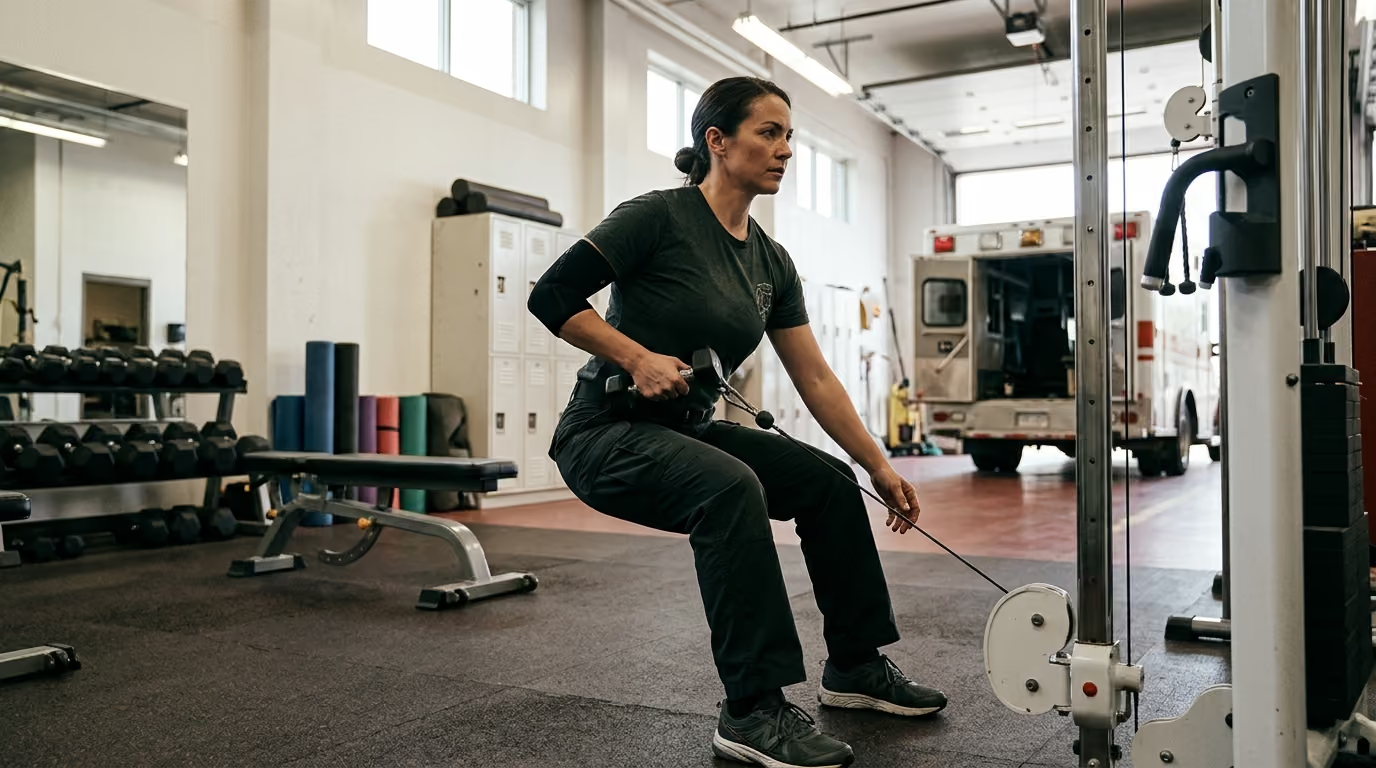

A sudden injury during active service requires strategic training modifications to preserve cardiovascular capacity and operational strength without risking further tissue damage.





Training around an injury is not the same as resting until all discomfort disappears. It is also not the reckless habit of pushing through sharp pain. Training around an injury means systematically modifying the external load, range of motion, and exercise selection to protect healing tissue while preserving every other physical quality possible. This guide examines the clinical and practical methods used to maintain aerobic capacity, absolute strength, power, and movement skill during rehabilitation without compromising duty readiness.
When an injury occurs, complete immobilization is rarely the best physiological choice for non-catastrophic tissue damage. Total rest leads to rapid detraining, reductions in cardiovascular output, neuromuscular inhibition, and loss of local tissue tolerance. By altering specific training variables, you can stimulate positive systemic adaptations, protect your psychological readiness, and return to full duty faster.
The sports medicine and physical therapy literature demonstrates that total rest often delays recovery for many musculoskeletal conditions. When an athlete or tactical operator stops all training, cardiovascular fitness drops quickly. Blood volume decreases within days, and muscle cross-sectional area declines within weeks. Research on detraining shows that maintaining exercise intensity while reducing total training volume helps preserve physiological adaptations.
Scientific consensus statements, including the Bern consensus on return to sport, highlight that rehabilitation is a continuum. Recovery moves from protecting the tissue to modified training, returning to participation, returning to duty, and finally regaining high-level performance. Load management is the primary driver of this progression. Tissues such as tendons, ligaments, bones, and skeletal muscles require progressive mechanical loading to remodel effectively.
Evidence on cross-training reveals that alternative modalities can preserve aerobic capacity during recovery from lower-body or upper-body injuries. Stationary cycling, deep-water running, rowing, and upper-body ergometry offer substantial cardiovascular stimulus without repeating the specific impact forces that cause pain. Cross-training does not maintain all task-specific adaptations equally. A running-based operational task still requires gradual re-exposure to impact, deceleration, and elastic recoil before full duty clearance.
Research on the acute-to-chronic workload relationship emphasizes that rapid spikes in physical demand increase reinjury risk. When an injured professional ceases all physical activity and then abruptly attempts full operational tasks, the sudden increase in external demand exceeds current tissue capacity. Maintaining baseline fitness through modified training prevents this severe mismatch between tissue capacity and operational workload.
Managing an injury as a first responder involves constraints that do not exist for standard gym-goers or competitive athletes. Firefighters, police officers, and paramedics cannot simply schedule their physical stress around a neat rehabilitation timeline. Emergency response requires sudden transitions from resting states to maximal physical exertion under unpredictable conditions.
Physical loads in the field cannot always be modified. A tactical officer cannot choose to carry a lighter ballistic vest because of a lumbar strain. A firefighter cannot negotiate the weight of an unconscious victim during an extraction because of patellar tendinopathy. Paramedics must lift heavy stretchers in awkward, confined spaces regardless of whether their shoulders are fully recovered.
Shift schedules, extended overtime, and interrupted sleep also alter the body's internal load. Sleep deprivation impairs tissue repair, reduces pain tolerance, and slows reaction times. A workout that is tolerable on eight hours of restful sleep may cause symptom flare-ups when performed after a busy twenty-four-hour shift. Understanding how to manage physical work under these conditions is critical, as detailed in our guide on training around shift work.
Responders also face the psychological pressure of duty readiness. Fear of letting down crew members often leads to concealing injuries and relying on compensation patterns. Over time, these movement compensations place excessive stress on adjacent joints. A structured approach to injury recovery allows responders to communicate their physical status clearly while maintaining high operational capability.
Modifying a training program requires a systematic decision framework rather than random exercise substitution. The objective is to identify the precise mechanical stressor provoking symptoms and replace it with a stimulus that maintains physical capacity.
Before modifying training, determine whether the condition is safe for self-directed loading. Traumatic events with rapid swelling, visible joint deformity, structural instability, inability to bear weight, or neurological symptoms require immediate clinical evaluation. Training through structural instability or acute fractures compromises long-term health and operational longevity.
Analyze the specific mechanics of the painful movement. Pain is rarely provoked by an entire muscle group in every position. It is usually triggered by specific variables such as:
Once the aggravating variable is isolated, select an exercise that retains the desired metabolic or muscular adaptation without triggering the symptom. If deep knee flexion under axial load causes pain, a box squat, step-up, or sled drag may provide an effective training stimulus with lower joint shear. If overhead pressing provokes anterior shoulder pain, an incline neutral-grip dumbbell press or landmine press allows upper-body pressing without impingement.
Fine-tune the chosen substitute by manipulating specific loading parameters. Modifying external variables allows you to challenge the neuromuscular system while keeping local tissue strain within a therapeutic window. Responders can learn to balance these adjustments using a shift-work training decision tree to match session intensity with daily physical readiness.
When an injury occurs, you do not need to discard your entire strength and conditioning program. You have multiple independent variables that can be manipulated to match current tissue capacity.
Volume is often the first variable to reduce. Many chronic tendon and overuse issues tolerate moderate loads quite well for a few repetitions, but become irritated when subjected to high repetition counts.
Reducing the total number of working sets per exercise lowers cumulative tissue stress while preserving neuromuscular drive. For example, reducing a main lift from four sets of eight repetitions to two sets of five allows the central nervous system to experience heavier loads without accumulating inflammatory friction.
Intensity can refer to percentage of one-repetition maximum, running speed, or proximity to muscular failure. In an injured state, working to complete technical failure increases the risk of compensatory movement.
Stopping sets two to three repetitions shy of failure preserves motor control and protects stabilizing muscles. For cardiovascular training, intensity can be maintained at high levels if the chosen modality avoids loading the injured structure directly.
Joint pain often occurs only at specific angles where cartilage wear, structural impingement, or passive tissue tension is highest. Restricting the movement to a pain-free range allows you to maintain strength in surrounding musculature.
High movement velocity places substantial demands on the elastic properties of tendons and muscles. Fast eccentrics, jumping, sprinting, and ballistic lifting dramatically increase peak tissue forces.
Slowing the movement down removes the rapid stretch-shortening cycle while maintaining mechanical tension. Using controlled three-second eccentric and two-second isometric pauses builds local muscular endurance and positional control without subjecting the joint to sudden deceleration forces.
A session that feels manageable in real time can cause delayed symptoms twenty-four hours later. If a joint or tendon remains stiff or irritable the next day, the total frequency of exposure must be reduced.
Spreading sessions across non-consecutive days gives collagen and bone structures adequate remodeling time. Extending rest periods between sets lowers metabolic fatigue, which prevents form breakdown and keeps stabilization muscles fresh.
Maintaining systemic fitness during localized injury requires dividing your training into distinct categories: direct tissue rehabilitation, maintenance of uninjured limbs, and non-impact cardiovascular conditioning. This comprehensive approach forms the foundation of injury prevention and physical recovery for operational personnel.
Cardiovascular fitness is critical for first responders who must sustain intense work in full gear. When running or high-impact conditioning is restricted, alternative modalities maintain cardiac output and muscular mitochondrial density:
To structure these sessions, consider two primary formats:
Steady-State Aerobic Maintenance:
Perform 30 to 45 minutes on a tolerated machine at a moderate, conversational pace. Heart rate should remain in a zone where breathing is elevated but controlled. Discontinue immediately if local joint symptoms develop.
High-Intensity Interval Conditioning:
Complete 6 to 8 intervals of 60 to 90 seconds at a high effort on an arm ergometer, stationary bike, or airdyne. Use a 1:2 or 1:3 work-to-rest ratio. This approach maintains anaerobic capacity without aggravating localized musculoskeletal injuries.
Isometric muscle actions involve force production without changes in joint angle. Isometrics are valuable in early-stage rehabilitation because they:
Perform isometric holds for 30 to 45 seconds at 60 to 70 percent of maximal voluntary contraction. Complete 4 to 5 sets with two minutes of rest between efforts.
When an injury affects one limb, the uninjured limb can and should continue training. Cross-education is a well-documented neurological phenomenon where strength training one limb induces modest strength gains and reduces atrophy in the opposite, immobilized limb.
Performing unilateral dumbbell presses, single-leg presses, or single-arm rows maintains central nervous system output. Unilateral work also challenges the trunk and pelvic stabilizers. Pay close attention to avoid compensatory twisting or bracing through the injured side during heavy single-limb sets.
Blood flow restriction training uses a specialized pneumatic cuff to partially restrict arterial inflow and fully occlude venous outflow in an extremity. This allows individuals to achieve muscle hypertrophy and strength gains using very light external loads (20 to 30 percent of 1RM).
BFR is valuable when healing tissues cannot tolerate heavy mechanical resistance. It simulates the metabolic stress of heavy lifting without exposing joints, ligaments, or tendons to high forces. BFR must be performed with calibrated equipment using personalized occlusion pressure, ideally under clinical supervision.
Contraindications to BFR include a history of deep vein thrombosis, active vascular compromise, severe hypertension, local infection, or pregnancy. It is an adjunct tool and does not eliminate the need to rebuild tissue load tolerance over time.
Pain is a complex biological signal. It does not always reflect active tissue damage, but it cannot be ignored during rehabilitation. Responders need an objective monitoring system to distinguish between safe loading and harmful overload.
A practical way to categorize pain during and after training is the traffic light model:
Green Zone (Safe to Proceed):
Yellow Zone (Modify and Monitor):
Red Zone (Stop and Reassess):
The physiological response of connective tissue is often delayed. How an injured joint feels the morning after a workout is a reliable indicator of whether the training load was appropriate.
Every morning, perform a quick self-check:
If the 24-hour response is negative, the previous day's load exceeded current capacity. Keep a simple training log to identify which exercise, volume, or intensity triggered the reaction.
When one muscle or joint is painful, the brain automatically alters motor patterns to shift load to other structures. While this protects the injured area in the short term, uncorrected compensation creates secondary overuse injuries across the kinetic chain.
Common compensation patterns include:
To prevent harmful compensation, perform exercises in front of a mirror or record sets on video. If you cannot perform a movement with symmetrical, technically sound form, regress the exercise rather than reinforcing a distorted motor pattern. Consistent self-monitoring is essential for long-term duty fitness.
Self-directed exercise modification has strict limits. Attempting to train around certain structural failures or medical emergencies can lead to permanent impairment. Responders must recognize clinical red flags that require immediate cessation of training and prompt medical assessment.
Stop training and seek emergency medical evaluation if you experience any of the following:
Training around an injury requires energy. Healing damaged tissue places an added metabolic and inflammatory demand on the body. Attempting to maintain excessive cross-training volume while dealing with occupational stress, sleep deprivation, and tissue healing can precipitate overtraining syndrome.
Watch for signs of systemic overload: elevated resting heart rate, persistent sleep disturbances, uncharacteristic mood irritability, and chronic fatigue. When duty demands spike, training volume must scale down to ensure adequate recovery resources remain for tissue repair. Understanding your daily physiological state through readiness autoregulation helps prevent accumulated fatigue from stalling your recovery.
Applying these modification principles requires adapting to the specific injury presentation. Below are practical modification plans for common occupational injuries seen in emergency services.
Tendinopathy in the anterior knee is common among firefighters and police officers who frequently climb stairs, carry external loads, and perform repetitive squatting.
Shoulder strain frequently affects emergency medical personnel and firefighters from overhead work, victim handling, and equipment handling.
Hamstring strains often occur during sudden operational sprints, rapid ascents, or slippery terrain recoveries.
Back strains are a leading cause of missed duty days across all first responder branches, often exacerbated by duty belts, prolonged vehicle sitting, and awkward patient transfers.
While structured exercise modification manages many minor strains, professional healthcare guidance is critical for complex or persistent injuries. Knowing when to transition from self-management to clinical care protects your career longevity.
Consult a licensed physical therapist, athletic trainer, or sports medicine physician when:
A skilled sports clinician will help you establish baseline capacity, identify underlying biomechanical restrictions, and construct an individualized rehabilitation progression that respects the physical realities of emergency service.
Preserving operational capability across a twenty-five or thirty-year career requires viewing injury management as a structured, deliberate skill rather than a frustrating disruption. Modifying your training around physical limitations protects your cardiovascular engine, maintains neuromuscular strength, and prevents the severe deconditioning that threatens career longevity.
Yes. Non-weight-bearing upper-body exercises, seated dumbbell work, chest-supported rows, and upper-body ergometry can all be performed safely. Ensure that moving weights around the gym does not require standing, carrying heavy loads, or placing impact on the injured lower extremity.
Stationary cycling preserves central cardiovascular adaptations, such as stroke volume, blood volume, and mitochondrial density. It does not, however, preserve the bone density, tendon stiffness, or eccentric muscle tolerance required for running. When cleared, you must rebuild running volume and impact tolerance gradually.
Muscle fatigue typically produces a diffuse, burning sensation during work and general muscular soreness within 24 to 48 hours. Tendon irritation often presents as localized, sharp, or stiff discomfort near the joint that is most pronounced when starting movement or the following morning upon waking.
Using non-steroidal anti-inflammatory drugs (NSAIDs) to mask pain while training is counterproductive. Masking pain blunts the body's natural feedback mechanism, increasing the risk of overloading compromised tissue. It may also interfere with long-term tendon and bone remodeling when used chronically.
Stay connected for research-led guidance on duty fitness, shift-work sleep, injury recovery, stress, nutrition and career longevity. Practical ideas for first responders who want to stay capable on the job, recover well and protect their health for the long run.



Read practical guidance on first responder fitness, recovery, sleep, nutrition and resilience for demanding work and a long, active career.
read the blog



