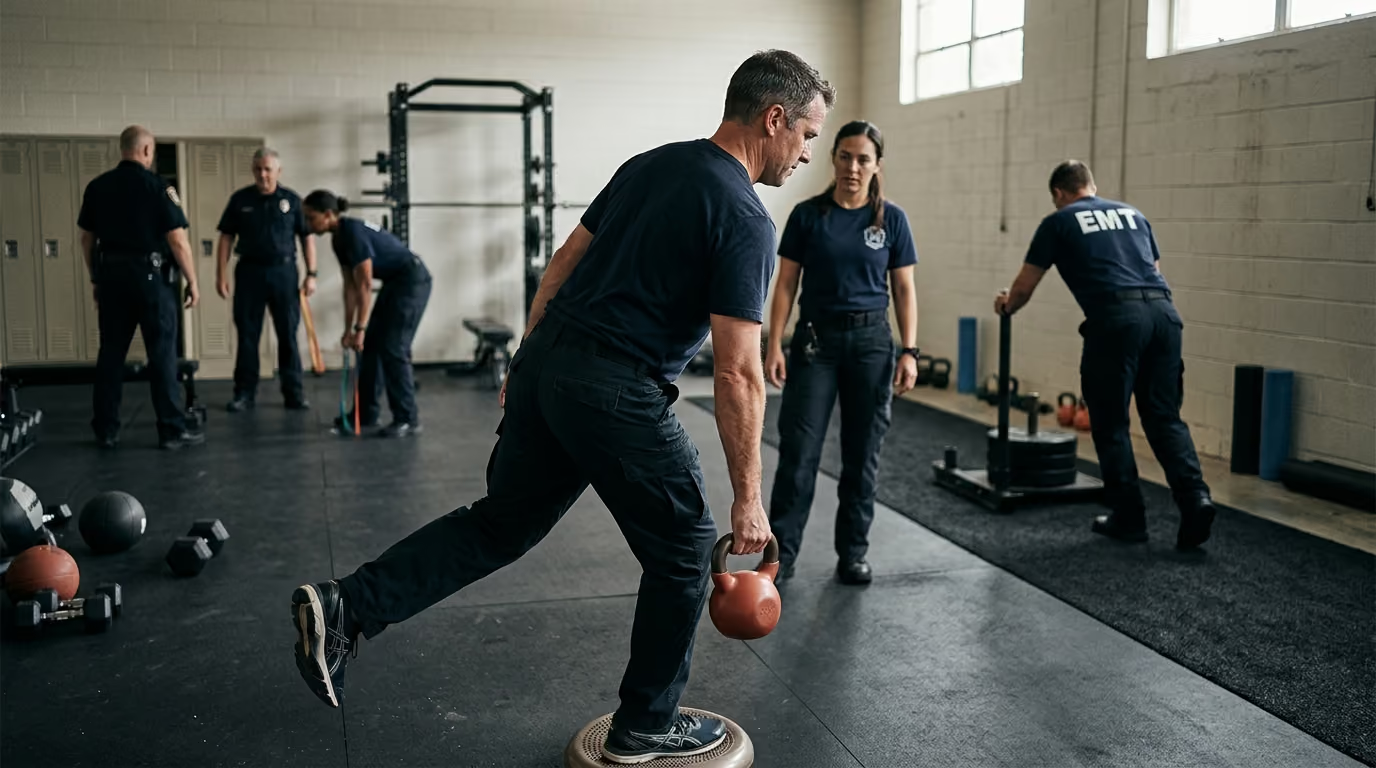

Injury-resilient training prepares first responders for unpredictable operational demands by building foundational strength, aerobic work capacity, and durable movement adaptability.





A call comes in at three in the morning after four hours of interrupted rest. You step out of the cab onto uneven gravel, hoist heavy hydraulic rescue tools, and work in an awkward rotational crouch for twenty minutes. Later that morning, your lower back feels rigid, your knees ache, and a nagging shoulder twinge returns.
Many emergency responders try to fix this by adding brutal conditioning circuits or chasing arbitrary maximum lifts. True physical resilience on duty does not come from punishing workouts or rigid exercise rules. It comes from systematically building tissue tolerance, managing total workload, and developing adaptable movement patterns that withstand chaotic operational environments.
Injury resilience is the physical capacity to absorb, tolerate, and recover from demanding physical work without lasting tissue breakdown. It differs fundamentally from injury prevention. No training program can eliminate occupational injuries when the job involves low visibility, unstable surfaces, heavy victim extractions, and thermal stress.
Physical readiness requires balancing maximal strength, power, movement control, and aerobic stamina. When you develop these qualities gradually, routine duty tasks require a smaller fraction of your maximum effort. This buffer protects your tissues when fatigue sets in.
Resilience is specific to the tasks you face. A responder might possess a double-bodyweight deadlift yet struggle with repeated stair climbs while wearing seventy pounds of protective gear. Another might run marathons but lack the trunk stability to lift a bariatric patient safely from a tight bathroom. Building genuine durability requires addressing all physical qualities rather than relying on a single fitness metric.
Sprains and strains represent the single largest category of work-related harm among emergency personnel. According to research from the Centers for Disease Control and Prevention, sprains and strains account for approximately 33 to 41 percent of all reported injuries across firefighting, emergency medical services, and law enforcement. The CDC reports injury rates of roughly 8.5 per 100 full-time workers in law enforcement and 7.4 per 100 in career firefighting services.
These figures reflect substantial physical strain across the emergency sector. However, injury surveillance systems carry distinct limitations. Volunteer personnel, part-time staff, and minor injuries treated outside formal occupational clinics are often underreported. Despite these gaps, the primary mechanism of injury remains consistent across research reviews: sudden physical overexertion during uncontrolled lifting, carrying, stepping, or dragging.
The relationship between physical fitness test performance and injury risk is nuanced. A systematic review evaluating emergency personnel found only limited evidence linking standard physical fitness test scores directly to reduced injury rates. The strongest consistent correlation appeared between higher aerobic capacity and lower overall injury risk.
This evidence teaches us to avoid simplistic assumptions. Passing an annual physical ability test does not make a responder immune to musculoskeletal trauma. High scores on a standardized physical battery show current output capacity during a controlled test. They do not measure joint durability across a 48-hour shift, resilience against sleep deprivation, or movement quality under extreme heat.
Musculoskeletal injury research demonstrates that interventions must address multiple variables simultaneously. Studies on firefighter injury patterns show that strength, movement variability, and aerobic conditioning work best when paired with sound operational ergonomics. Relying solely on gym performance without addressing duty habits or recovery leaves major vulnerabilities open.
Emergency response places unique demands on human physiology that standard athletic models fail to replicate. First responders do not have the luxury of structured warm-ups, predictable schedules, or controlled playing surfaces. Understanding these demands helps create training sessions that build genuine operational readiness.
Emergency tasks require rapid shifts between different energy systems. Systematic reviews examining the metabolic demands of firefighting show task oxygen consumption values ranging from 16.6 to 47 milliliters per kilogram per minute. Advancing a charged hoseline, forcing entry, and performing search operations rapidly drive heart rates near physiological maximums.
Research from occupational fitness studies suggests that an aerobic capacity of roughly 42.3 milliliters per kilogram per minute represents a standard operational baseline for demanding suppression duties. This aerobic baseline is not just for endurance. A robust cardiovascular system clears metabolic waste, stabilizes heart rate between strenuous tasks, and supports decision-making under stress.
Athletes lift balanced barbells along fixed paths on flat rubber flooring. Emergency personnel carry shifting loads across slick stairs, through narrow hallways, and over debris.
Common duty movements include:
These tasks combine heavy external loads with awkward joint angles. When you move an unconscious individual from a vehicle, you cannot always keep your spine in a textbook neutral position. Training must prepare the body to tolerate off-axis loading and non-neutral postures safely.
Protective gear adds a heavy physiological penalty. Turnout gear and body armor trap body heat, restrict joint range of motion, and increase the metabolic cost of basic walking. Working in elevated temperatures causes rapid dehydration, increased cardiovascular strain, and early muscular fatigue.
Shift work compounds this physical stress. Chronic sleep disruption impairs tissue repair, alters pain sensitivity, and degrades neuromuscular coordination. Performing heavy lifts in the gym while severely sleep-deprived can increase training injury risks. Responders need a system that balances training ambition with the biological reality of shift work.
Building a resilient body requires adhering to proven principles of physiological adaptation. Training should prepare your tissues for the worst moments on duty without causing excessive fatigue that compromises daily operational readiness.
Training must develop the movement patterns, energy systems, and force vectors required on duty. However, trying to make every gym session look like a job simulation is a mistake.
Swinging sledgehammers while wearing a breathing apparatus is an advanced drill, not a daily strength builder. True physical development follows a logical sequence:
General strength creates the capacity. Task-specific training teaches you to apply that capacity under field conditions. Prematurely combining heavy loads, high fatigue, and awkward postures in training raises injury risk without offering extra physical benefits.
Connective tissues adapt to physical stress at a much slower rate than muscular strength. Muscles gain strength in weeks, but tendons, ligaments, and bone matrices require months of consistent loading to thicken and adapt.
Sudden increases in running volume, heavy carries, or high-intensity intervals frequently trigger overuse injuries like patellar tendinopathy or plantar fasciitis. To build durable tissues, change only one training variable at a time:
If you introduce heavy farmer carries into your weekly routine, keep running volume and lower-body lifting volume steady. Give your connective tissues several weeks to adapt before increasing the weight, distance, or speed.
Maximal strength is the foundation of physical durability. When your absolute strength increases, every submaximal duty task requires a smaller percentage of your maximum capacity.
Consider two responders carrying a 180-pound person on a backboard. For a responder with a 400-pound deadlift, that shared load represents a minor physical effort. For a responder with a 200-pound deadlift, the same carry represents near-maximal strain. The stronger responder works with a massive safety buffer, maintaining stable posture and normal breathing much longer.
The American College of Sports Medicine recommends training with loads around 80 percent of one-repetition maximum for developing maximal strength, using 2 to 3 sets per exercise with adequate rest. While high-repetition circuits have their place, they cannot replace dedicated strength work. Heavy compound lifting builds bone density, strengthens connective tissue attachments, and creates structural durability.
Strength alone is insufficient if you cannot produce force quickly. Breaking down a reinforced door, catching your balance on ice, or initiating a rapid victim drag requires explosive power.
Power training should progress from low-impact drills to higher-velocity movements:
Always perform power exercises early in your workout when your nervous system is fresh. Power training under deep fatigue degrades movement quality and increases joint strain without improving explosive force production.
A deep aerobic base allows you to sustain physical work and recover quickly between intense calls. Aerobic conditioning is not limited to pounding the pavement for long runs. High-impact running can cause excessive joint wear for heavier responders wearing body armor during the week.
You can build high-level aerobic fitness through lower-impact methods:
Mix steady aerobic sessions with high-intensity interval training. Long, low-intensity sessions build mitochondrial density and cardiac stroke volume. Short, high-intensity intervals train your heart and muscles to clear lactate quickly during chaotic calls.
Traditional safety coaching often teaches rigid posture rules, such as keeping the spine perfectly vertical during every lift. Real-world emergency tasks make strict adherence to these rules impossible. You must regularly lift patients out of cramped vehicles, crawl under structural obstacles, and carry gear across uneven ground.
Instead of aiming for rigid, unyielding postures, focus on adaptable movement principles:
Your body adapts to the stresses placed upon it. By safely training your back and hips to handle varied angles in the gym, you prepare your spine for unavoidable awkward positions on shift.
An injury-resilient training program should be built around movement patterns rather than isolated muscle groups. Focus your workouts on seven primary patterns: squat, hinge, push, pull, carry, rotate or resist rotation, and locomotion.
Lower-body strength drives climbing, lifting, and lifting from the ground. Single-leg variations are essential for first responders because duty tasks require balance and force production on one leg at a time.
The hip hinge is the primary pattern for lifting objects from the floor and executing victim drags. It develops the posterior chain, including the hamstrings, glutes, and spinal erectors.
Pushing strength is required for forcing doors, moving debris, performing chest compressions, and controlling uncooperative subjects.
Emergency response is heavily pull-dominant. Hose advancement, equipment hauling, victim drags, and halligan work all demand strong lats, rhomboids, rear delts, and biceps.
Loaded carries bridge the gap between general gym strength and field readiness. They build whole-body tension, grip endurance, upper back thickness, and lateral hip stability.
The primary role of the trunk during duty tasks is transmitting force between the lower and upper body while preventing unwanted spinal twisting or buckling.
If you are looking to design a balanced routine around demanding work hours, check out our guide on structuring training sessions around irregular shift work.
Training hard is easy. Managing cumulative fatigue so you stay safe, healthy, and sharp on duty is the real challenge. Many responder injuries occur not from bad exercise technique, but from poor workload management.
To manage physical fatigue properly, you must monitor both external and internal training loads.
External load can stay exactly the same while internal strain skyrockets. A workout consisting of three sets of five deadlifts at 315 pounds might feel light and crisp on a sunny day after eight hours of sleep. The identical workout can place extreme strain on your nervous system after a brutal night shift with zero sleep.
Always adjust your training volume and intensity based on your internal state rather than blindly chasing external numbers.
The acute-to-chronic workload ratio compares your current week of training to your average weekly workload over the preceding four weeks. Early sports research suggested an optimal zone between 0.8 and 1.3, warning that spikes above 1.5 doubled injury risk.
Recent comprehensive reviews caution against using this ratio as an exact, standalone predictive tool. First responders face chaotic operational spikes that sports models cannot capture. A five-alarm commercial fire or an extended search-and-rescue operation creates an unavoidable, massive workload spike in a matter of hours.
The practical takeaway is straightforward: avoid voluntary training spikes. Do not suddenly double your running mileage, introduce heavy plyometrics, or attempt a maximal deadlift after weeks of low activity. Build your baseline volume slowly, and respect the heavy physical demands of unpredictable shifts.
When duty calls disrupt your recovery, rigid workout schedules become a liability. Responders need an autoregulated training approach that modifies session intensity based on daily readiness.
If you arrive at the station exhausted after running calls all night, swap your heavy barbell squats for moderate sled drags, bodyweight movements, and light aerobic work. You maintain your movement habit and promote tissue blood flow without overloading a fatigued nervous system.
For a deeper look at balancing recovery with duty fitness, read our resource on readiness autoregulation strategies for emergency personnel.
These sample progression pathways demonstrate how to build physical capability systematically based on your experience and current training status.
This pathway builds baseline movement competency, joint tolerance, and foundational aerobic conditioning over twelve weeks.
This maintenance and progression model supports peak operational readiness while accounting for regular shift work and accumulated physical wear.
To explore efficient programming models that maximize fitness returns in minimal time, read our guide on minimum effective dose training for first responders.
Avoiding common programming traps is just as valuable as picking the right exercises. Many dedicated responders stall their progress or trigger injuries by falling into these training mistakes.
There is a fundamental difference between testing your fitness and building it. Testing fitness means going to absolute muscular failure, redlining your heart rate, and grinding through breakdown. Building fitness means stimulating adaptations through controlled, submaximal sets with excellent form.
When you constantly push to exhaustion in the gym, your movement quality degrades and your recovery resources become drained. Save maximal efforts for rare, controlled assessments. Leave one to three clean repetitions in reserve on most strength sets to stimulate progress without crushing your nervous system.
High-intensity functional circuits are popular across emergency services. While metabolic circuits build mental grit and work capacity, relying on them as your only training method limits long-term progress.
High-repetition barbell lifts under extreme fatigue reinforce poor movement mechanics. They build muscular endurance, but they do not develop maximum strength, explosive power, or true aerobic base capacity. Build your physical foundation with dedicated strength sessions and separate aerobic work. Use high-intensity circuits sparingly as a conditioning tool.
Mobility is useful if joint restrictions prevent you from achieving functional positions. However, stretching already loose joints does not protect them from injury. Flexibility without strength creates unstable joints that are vulnerable to sprains under heavy operational loads.
Do not spend thirty minutes passively stretching tight hamstrings before a shift. Instead, perform active mobility drills followed by loaded strength work through a full range of motion. Strength at end-range builds stable, durable joints that resist strains during unexpected slips or awkward lifts.
Delayed onset muscle soreness indicates that your tissues experienced unfamiliar movements or high volumes of eccentric work. It is not an accurate indicator of an effective workout.
Excessive muscle soreness impairs your physical readiness on duty, alters your movement mechanics, and increases your risk of acute strains during emergency calls. If your workouts leave you struggling to climb into the apparatus cab or walk down station stairs, your training volume is too high. Aim for consistent, repeatable workouts that leave you feeling energized and capable.
Training modifications can resolve minor muscular fatigue and movement compensations. However, true injuries require clinical evaluation from qualified medical professionals. Knowing when to step back from training and seek licensed medical care protects your long-term health and your career.
Do not attempt to train through or self-treat the following symptoms:
If you experience mild, localized muscular tightness without red-flag symptoms, modify your training rather than stopping completely:
For persistent musculoskeletal discomfort or recurring movement restrictions, work with a licensed physical therapist or sports medicine physician who understands the physical demands of emergency response.
For additional recovery frameworks tailored to shift workers, explore our dedicated section on injury recovery strategies for first responders.
Revisit these principles whenever you experience an operational role change, transition to a new shift rotation, or return to duty following a layoff or minor setback. Use this framework whenever you notice nagging joint irritation, persistent fatigue, or an upcoming physical assessment.
Sustainable physical readiness is built through patience, progressive loading, and honest self-regulation. By prioritizing movement quality, respecting biological recovery, and managing your total workload, you build a body capable of handling the hardest calls and enjoying a healthy, active life after service.
Stay connected for research-led guidance on duty fitness, shift-work sleep, injury recovery, stress, nutrition and career longevity. Practical ideas for first responders who want to stay capable on the job, recover well and protect their health for the long run.



Read practical guidance on first responder fitness, recovery, sleep, nutrition and resilience for demanding work and a long, active career.
read the blog



