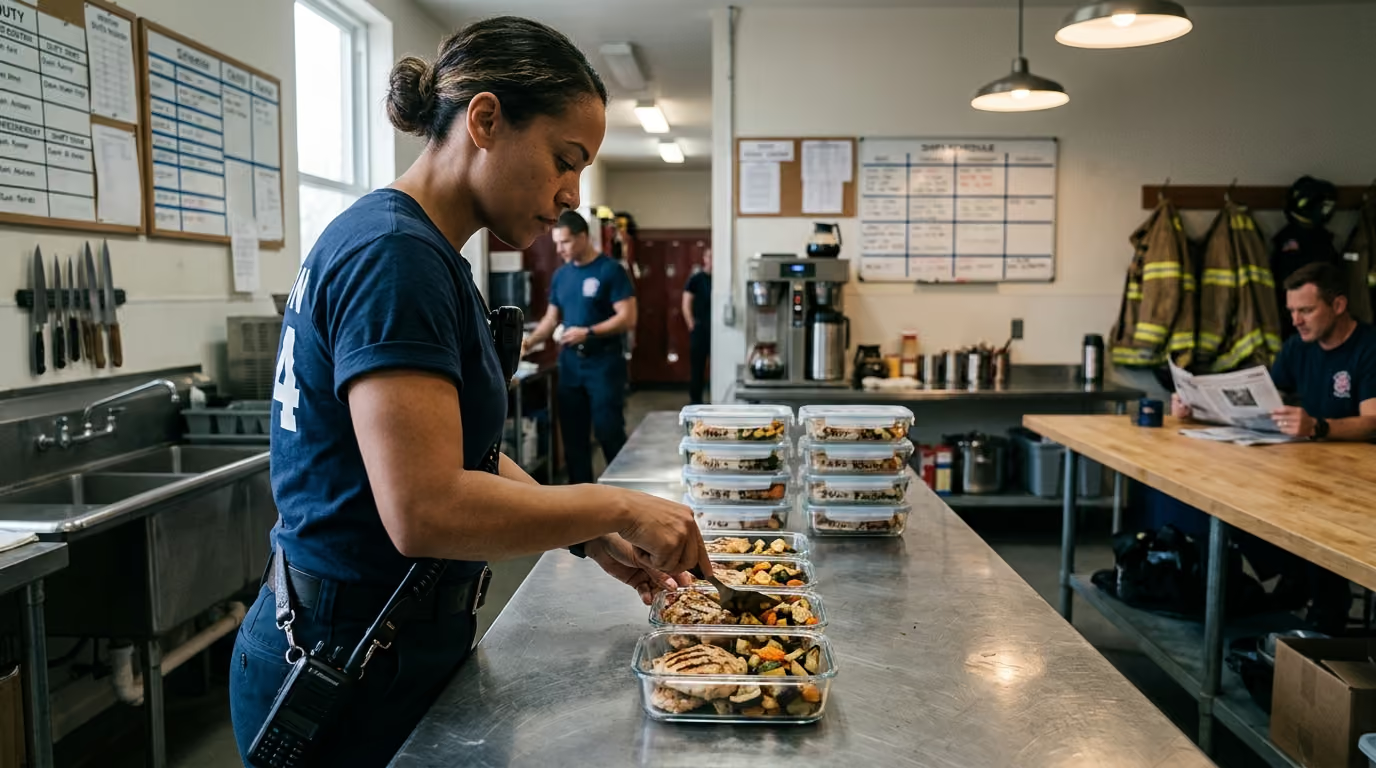

Back-to-back emergency calls often derail regular meal times, but a layered food preparation system ensures reliable nutrition across grueling shift schedules.





Most meal prep advice fails first responders because it assumes a predictable world. Conventional nutrition guides instruct people to cook balanced recipes on Sunday, portion them into five matching plastic containers, and eat them at noon in a quiet break room. For a paramedic running back-to-back calls, a firefighter facing extended scene times, or a police officer handling unpredictable queues, this advice is almost useless. When the tones drop mid-reheat, or when an entire shift passes without a protected break, the standard meal prep plan completely falls apart.
Planning for an emergency services schedule requires designing for disruption rather than hoping for an ideal window. The fundamental challenge on shift is interrupted access to food. A practical meal preparation strategy must focus on layered redundancy, food safety, and rapid portability. It must guarantee that energy, hydration, and recovery remain consistent even when every planned break disappears.
Peer-reviewed research and occupational health data show that irregular shift work creates specific nutritional vulnerabilities. Studies examining dietary patterns among career firefighters, paramedics, and emergency medical personnel demonstrate consistent trends in food choices, nutrient gaps, and metabolic stress.
A study evaluating nutrient intake among paramedics found notable patterns: excessive saturated fat consumption alongside inadequate intake of dietary fiber, B vitamins, and essential minerals such as potassium, iron, and folate. The authors identified a lack of time, irregular meal patterns, and ambulance-based deployment as primary drivers of these food choices.
Research evaluating career firefighters found that reported daily intake was frequently inadequate relative to reference values for total energy, fiber, carbohydrates, potassium, magnesium, zinc, and vitamins D, E, and K. Rather than suggesting every responder needs arbitrary supplementation, these findings highlight how the emergency services food environment makes nutrient-dense options hard to access consistently.
Work across night shifts also alters dietary composition. Research comparing 24-hour periods with and without night shifts in firefighters revealed that while total calorie intake remained similar, the proportion of calories obtained from simple sugars rose significantly during night work. Similarly, research in emergency medical services clinicians found that night-shift personnel consumed more total kilocalories and fat while logging fewer steps during shifts than their day-shift peers.
A longitudinal study following intern paramedics over their first two years of shift work observed a marked increase in energy derived from takeaway convenience foods, coinciding with an average body weight increase of 2.96 kg across the study timeframe. While observational data cannot prove that convenience food was the sole cause of weight change, it illustrates how time pressure and fatigue consistently push responders toward quick-service options.
The National Institute for Occupational Safety and Health provides clear guidance regarding meal patterns during night duty. NIOSH recommends maintaining a regular daytime meal structure as closely as possible and distributing total intake across three balanced meals over 24 hours. When feasible, NIOSH advises reducing food intake between midnight and 6:00 a.m. to protect metabolic function, while acknowledging that unpredictable operational demands sometimes require night-shift fueling.
NIOSH guidance suggests focusing on nutrient-dense options during shifts, including vegetables, fresh salads, vegetable-based soups, fruit, whole-grain sandwiches, yogurt, eggs, cheese, nuts, and green tea. The agency advises against consuming sugar-dense products and refined carbohydrates when sustained alertness is required. NIOSH also cautions against heavy, greasy, or spicy meals, supports the strategic, light use of caffeine during shifts, and recommends eating a small, light breakfast prior to daytime sleep if hunger disrupts rest.
The International Society of Sports Nutrition tactical athlete position stand highlights the physical demands placed on first responders and military personnel. The ISSN recommends that personnel consume approximately 5 to 7 mL of fluid per kilogram of body mass roughly four hours prior to strenuous duty, keep fluid loss below 2% of body weight during operations, and replace roughly 450 to 675 mL of fluid for every 0.45 kg of body weight lost during arduous incidents.
General reference values from the National Academies establish adequate daily water intake at approximately 2.7 liters for adult females and 3.7 liters for adult males, across all beverages and food. For firefighters and field medics, baseline hydration must be maintained throughout the shift rather than crammed right before an alarm.
Electrolyte replacement becomes essential during operations lasting over two hours, or during periods of intense heat and humidity. Research examining firefighter heat exposure across repeated circuits showed that fluid consumption often drops when conditions feel manageable, emphasizing that hydration must be scheduled deliberately rather than driven solely by thirst.
First responder nutrition cannot be separated from the unique physical environment of the job. Understanding these operational realities explains why standard diet plans fail and informs how effective food systems must be built.
Paramedics and EMTs operate out of moving ambulances with zero control over call volume. A dispatch can occur while a crew is waiting in a grocery line, heating food in a microwave, or sitting down at a station table. Once mobile, the vehicle acts as a temporary office, eating space, and equipment hub. Food that requires clean utensils, complex assembly, or long microwave times simply gets abandoned.
Fire crews frequently handle prolonged scene times involving heavy physical exertion, gear encapsulation, and thermal strain. A structure fire or complex technical rescue may keep crews engaged for hours past a normal eating window. Law enforcement personnel face unpredictable calls, extended patrol periods, and scene security details that require constant vigilance, preventing relaxed sit-down meals.
Structural firefighting turnouts, body armor, and tactical gear severely restrict the body's natural cooling mechanisms. Sweating under heavy protective equipment leads to rapid fluid and electrolyte depletion. Physical work under these conditions accelerates glycogen depletion and creates profound post-call fatigue. When personnel finish a major incident, extreme physical exhaustion impairs executive function, making complex cooking choices unrealistic.
Shift work alters gastrointestinal motility, digestive enzyme production, and glucose regulation. Eating heavy meals when the gut is biologically primed for rest often causes gastrointestinal distress, acid reflux, and sluggishness. Conversely, going twelve or fourteen hours without fuel during a chaotic night shift spikes cortisol, triggers severe sugar cravings, and increases reliance on high-dose energy drinks. To explore the broader mechanisms of circadian strain, review our analysis on shift-related fatigue and circadian timing.
Rather than relying on a single packed lunch, a resilient shift nutrition plan uses a layered redundancy model. Each layer serves a distinct operational purpose, ensuring that missing one eating opportunity does not leave you empty-handed.
Base meals represent your standard food intake. These are balanced, home-prepared meals designed to be eaten when you have access to a station kitchen, a microwave, and 15 to 20 minutes of protected time. These meals provide substantial nutrition, balancing complete proteins, complex carbohydrates, vegetables, and healthy fats.
The disruption layer contains meals and snacks that can be consumed in five to ten minutes without heating or delicate handling. If you are posted in an apparatus or sitting in a vehicle between calls, this food can be eaten with one hand or with minimal clean-up. Items in this tier must taste acceptable cold and must not spoil quickly if exposed to ambient temperatures for short periods.
The reserve layer consists of non-perishable, shelf-stable items stored in your duty bag, station locker, or apparatus cab, alongside single-portion meals kept in the station freezer. This layer protects against unexpected mandatory overtime, multi-alarm calls, or late transports that extend well beyond shift change. If your primary lunch cooler is empty, the reserve layer prevents a descent into vending machine grazing.
The recovery layer resides at home. When you finish a grueling 12-hour or 24-hour shift, decision fatigue and physical exhaustion peak. If cooking requires substantial effort, you are far more likely to hit a drive-through on the commute or fall asleep on an empty stomach, only to wake up dehydrated and starving hours later. The recovery layer provides zero-effort, easily digestible meals waiting in your home refrigerator or freezer.
The safety layer underpins all other tiers. It consists of reliable cold-chain transport, strict temperature management, shallow container cooling, labeling, and clear discard timelines. Without safety protocols, meal prep becomes a vector for foodborne illness that compromises operational readiness.
Preparing five identical meals every week quickly leads to meal fatigue. When you get tired of eating the same chicken and broccoli bowl by day three, you are far more likely to abandon your prep for local takeout. Component cooking solves this problem by preparing versatile modular ingredients that combine into varied meals throughout the week.
Every operational meal should follow a simple foundational architecture:
$$\text{Meal Architecture} = \text{Protein} + \text{Carbohydrate} + \text{Produce} + \text{Fats/Flavor} + \text{Fluid}$$
This structure aligns with the Dietary Guidelines for Americans, which emphasize lean proteins, whole grains, varied produce, and healthy oils, while providing practical flexibility.
Instead of cooking a single massive recipe, prepare two distinct modular batches per preparation cycle. This approach provides variety while keeping cooking time under 90 minutes.
Freezing meals provides a durable reserve, but improper freezing ruins food quality. Foods with high moisture content or delicate cell structures break down when frozen, turning mushy upon thawing.
Field personnel need grab-and-go options that deliver complete nutrition in tight timeframes without creating a mess inside the vehicle.
These meals require zero heating, use minimal utensils, and can be eaten during brief staging windows or between calls:
When heading out for a shift, pack your food into two distinct bags rather than jamming everything into a single station cooler:
For further strategies on structuring your day-to-day eating windows around changing duty assignments, see our guide on practical meal strategies for emergency shifts.
Station pantries and communal kitchens present both opportunities and hazards. Without clear organization, station pantries fill with high-sugar snacks, ultra-processed baked goods, and expired leftovers. A resilient station system establishes an organized operational pantry.
Crews can collectively maintain a baseline dry-goods inventory designed for quick assembly:
To prevent food waste and reduce clutter, station storage must follow a First-In, First-Out protocol. When restocking groceries or personal meal containers, place newer items behind older containers. Conduct a weekly clearing of unlabeled leftovers, expired items, and freezer-burned packages. Clearly mark containers with the preparer's name and the date cooked.
Foodborne illness ruins operational capability. First responders work in uncontrolled environments where meals sit in warm cabs, apparatus bays, or unmonitored station refrigerators. Adhering to established food safety standards is essential.
According to United States Department of Agriculture and Food and Drug Administration guidelines, perishable food must be kept outside the danger zone, which spans between 40°F and 140°F. In this temperature band, bacteria multiply rapidly.
Cooling large batches of food improperly is a primary cause of foodborne illness. Placing a deep, five-quart pot of hot stew directly into a refrigerator traps heat in the center, keeping the core in the danger zone for hours.
Even well-intentioned responders encounter common roadblocks. Avoiding these practical pitfalls keeps your nutrition system dependable over long rotations.
Using high-dose energy drinks and endless coffee to push through shift fatigue suppresses appetite temporarily while elevating heart rate and blood pressure. Stimulant overuse masks genuine caloric and hydration deficits, leading to severe energy crashes and disrupted recovery sleep later. Use moderate caffeine strategically during early shift hours, and fuel demanding physical work with balanced carbohydrates and fluids. For practical guidance on managing your intake, read our breakdown on tactical caffeine use during night operations.
While dietary fiber is vital for long-term health and cardiovascular protection, eating very high-fiber, gas-producing meals right before high-intensity structural firefighting or heavy tactical movements can cause severe abdominal cramping. Consume high-fiber produce and legumes during quiet base periods or post-shift recovery. For rapid fuel before strenuous calls, choose easily digestible, lower-fiber carbohydrates such as white rice, bananas, applesauce, or sourdough bread.
Packing delicate casseroles, soups that spill easily, or meals that require ten minutes in a microwave creates immediate failure points. If your station microwave is broken, the line for the kitchen is three people deep, or you get dispatched mid-reheat, you go hungry. Every packed lunch kit must include items that taste good cold and require zero appliances.
Consuming massive, high-fat meals late at night or right before a daytime sleep episode impairs sleep quality and causes gastrointestinal reflux. Digesting high quantities of saturated fat requires significant metabolic effort, which elevates core body temperature and disrupts deep, restorative sleep stages. When fueling close to a sleep window, prioritize light, protein-centered snacks with moderate carbohydrates, such as cottage cheese with fruit or a small bowl of oatmeal with protein powder.
Meal preparation systems provide the structure needed to maintain operational energy, but they cannot cure chronic underlying pathology. First responders facing persistent symptoms must recognize when self-directed nutrition strategies need clinical evaluation.
Consult a licensed registered dietitian, physician, or occupational health specialist when dealing with:
Maintaining physical readiness throughout an emergency services career requires respecting operational boundaries. Never attempt to work, operate emergency vehicles, or enter hazardous environments when acute illness, severe dehydration, or profound physical exhaustion compromise personal safety or team readiness. To explore systematic ways to adjust physical training volume around accumulated duty stress, read our framework on managing readiness and training fatigue.
A dependable meal preparation system eliminates daily friction, protects your metabolic health, and delivers the steady fuel you need to perform reliably across a long and demanding career.
Stay connected for research-led guidance on duty fitness, shift-work sleep, injury recovery, stress, nutrition and career longevity. Practical ideas for first responders who want to stay capable on the job, recover well and protect their health for the long run.



Read practical guidance on first responder fitness, recovery, sleep, nutrition and resilience for demanding work and a long, active career.
read the blog



