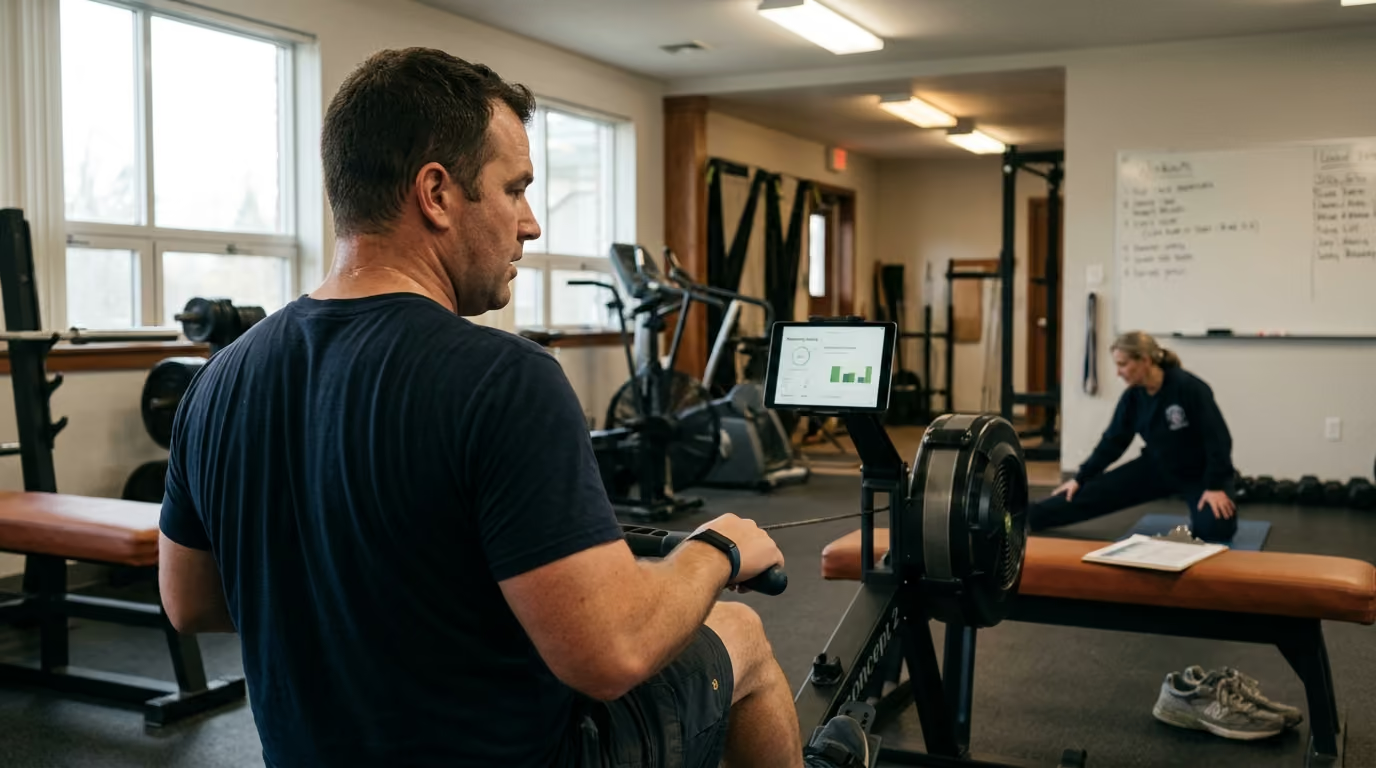

Exhausting night shifts paired with heavy training can spike injury risks, but this five-domain readiness system helps first responders track recovery and modify physical workloads.





Many emergency personnel search online for ways to know if they are overtrained or about to get hurt. They want to know whether a heavy shift, broken sleep, and a tight shoulder mean they should skip a workout or push through. The reality is that no single device score or formula can predict an injury.
A reliable readiness system does not rely on expensive gadgets or complicated calculations. You can track your recovery and injury risk by recording five simple indicators every day: pain behavior, sleep quality, muscle soreness, perceived readiness, and total workload. By watching how these factors trend together over time, you can make smart adjustments to your physical training and protect your career longevity.
A practical monitoring system answers three operational questions each day. First, can you safely complete your planned physical training or duty tasks today? Second, does your recent pattern of stress and rest indicate rising fatigue or injury risk? Third, what specific adjustments should you make to your volume, intensity, exercise selection, or rest periods?
To build an effective system, you must separate concepts that are often confused. Readiness refers to your current capacity to execute a specific task safely and effectively. Recovery is the biological process of restoring your physiological, psychological, and neuromuscular systems back to baseline.
Training load represents the total work performed combined with the biological cost of that effort. Fatigue is a temporary reduction in physical or cognitive capacity caused by previous exertion. Injury risk is an evolving probability shaped by multiple overlapping factors, not an inevitable outcome. Finally, pain is an individual sensory signal that requires context and trend analysis rather than an immediate assumption of tissue damage.
First responders need a system that evaluates both gym readiness and operational capability. A firefighter may feel physically fresh in the gym but remain unsafe on a fireground due to severe sleep debt. A paramedic might possess normal cardiovascular stamina while experiencing acute back irritation that makes patient transfers hazardous. Monitoring readiness requires looking at the entire person within their operational environment.
When you track patterns rather than isolated numbers, you gain actionable clarity. You stop guessing whether a bad night of sleep ruins your week. You begin to see how consecutive shifts, heavy lifting, and lingering joint aches interact. This understanding allows you to adjust training before minor aches turn into disabling injuries.
Research across sports science and occupational health demonstrates that physical breakdown rarely stems from a single factor. The International Olympic Committee consensus on load and injury emphasizes that tissue failure occurs through complex interactions. Workload, prior injury history, sleep quality, psychological stress, environmental extremes, and baseline physical capacity all influence physical resilience.
Workload monitoring often uses internal and external measurements. External load measures the physical work performed, such as miles run, flights of stairs climbed, or pounds lifted. Internal load measures the physiological and perceptual strain experienced by the individual, such as heart rate or rate of perceived exertion. Research confirms that subjective internal load metrics, when collected consistently, reflect biological strain with high accuracy.
The acute to chronic workload ratio is a widely discussed framework in athletic performance. This model compares the work completed over the past seven days against the rolling average of the previous four weeks. Early research suggested that keeping this ratio between 0.8 and 1.3 kept injury likelihood lower, while ratios above 1.5 doubled injury risk.
Modern sports science notes that this ratio is not a magical diagnostic threshold. It cannot guarantee safety or pinpoint the exact moment a tendon or muscle will tear. Instead, the ratio serves as a practical baseline check. It highlights when your short-term physical demands outpace your historical preparation, prompting a necessary conversation about recovery.
Workload monotony also plays a critical role in physical strain. When individuals perform demanding physical work day after day without easier recovery sessions, the lack of variation elevates fatigue. Research demonstrates that high weekly volume paired with high monotony creates elevated physiological strain. First responders face this dynamic frequently when busy shift rotations overlap with rigid training schedules.
Sleep research adds another critical layer to this picture. Chronic sleep restriction under seven hours per night over consecutive weeks is linked to higher rates of musculoskeletal injury in physically active groups. However, systematic reviews also caution that a single isolated night of poor sleep does not automatically cause an injury. The broader context of accumulated sleep debt, duty fatigue, and physical preparation determines your true physical status.
Emergency service work introduces unpredictable variables that standard athletic models ignore. First responders do not have structured off-seasons, scheduled rest days, or predictable sleep windows. An emergency call can demand immediate, maximal physical effort at three in the morning in freezing cold or extreme heat.
Public safety research confirms the heavy toll of occupational fatigue. In emergency medical services, fatigued workers have nearly double the odds of suffering an on-duty injury. They also face more than double the odds of committing medical errors and more than three times the odds of safety compromising behaviors. For firefighters, research reviews show that roughly half of surveyed personnel report poor sleep quality, with nearly a third screening positive for sleep disorders.
Physical demands in emergency response are characterized by awkward postures, heavy personal protective equipment, and rapid transitions from inactivity to maximum output. Firefighters carry structural gear, breathing apparatus, hoses, and tools while navigating unstable structures. Police officers wear heavy duty belts and body armor that place continuous compressive stress on the lumbar spine and pelvis during extended vehicle patrols. Paramedics repeatedly lift and maneuver bariatric patients in tight, unergonomic domestic spaces.
These occupational exposures directly affect how you should use injury prevention and physical recovery strategies. A routine gym workout that is manageable on an off day can become dangerous after a twelve-hour shift spent performing heavy extrications. Environmental heat exposure during live fire operations or summer tactical calls creates dehydration and central nervous system fatigue that linger for days.
The mental stress of critical incidents also drains physical reserves. High psychological stress increases systemic muscle tension, impairs sleep architecture, and slows tissue repair. Understanding how shift rotations and circadian disruption drive fatigue helps personnel realize that fatigue is a systemic reality rather than a personal weakness.
A practical monitoring system must account for these operational loads alongside formal gym sessions. If you only record the barbell sets completed in the station gym, you miss more than half of the physical equation. A comprehensive approach captures total occupational exposure to protect both duty readiness and long-term joint health.
An effective readiness system organizes operational and personal data into five manageable domains. You do not need software or digital subscriptions to track these variables. A simple notebook, digital document, or basic spreadsheet is entirely sufficient.
Symptom logging goes beyond recording an isolated pain score. You must document the location, quality, and behavior of the sensation across time. Track whether the discomfort occurs at rest, during specific movements, immediately post-activity, or the following morning.
Important symptom variables to note include:
Tracking how symptoms behave the next morning provides critical information about tissue tolerance. If a workout produces mild shoulder discomfort that vanishes by evening and leaves no morning stiffness, the tissue tolerated the stress. If a workout causes deep aching that worsens the next morning and restricts movement, the mechanical load exceeded current tissue capacity.
Recovery tracking assesses whether your body has the raw materials needed to adapt and repair. Shift schedules make perfect recovery difficult, making consistent tracking of recovery resources essential.
Log these core recovery factors:
Sleep opportunity must be distinguished from actual sleep obtained. Spending eight hours in bed with four distinct call interruptions produces a completely different recovery state than six hours of uninterrupted sleep. Documenting sleep disruptions provides objective context for days when physical output feels sluggish.
Workload monitoring captures both planned physical training and operational duty demands. Tracking work volume ensures you spot sudden spikes in physical stress before they cause overuse injuries.
Categorize your daily load across these areas:
By logging both duty demands and exercise sessions, you create a complete picture of total physical stress. This comprehensive view prevents the common mistake of adding heavy gym volume on top of an exhausting shift cycle.
Subjective questionnaires frequently detect rising fatigue and overreaching before objective performance numbers decline. A fast morning check-in using a standard one to five scale provides valuable operational data.
Score these four subjective markers daily:
Consistency in how you define these ratings is vital. A rating of two for muscle soreness should always mean generalized, noticeable soreness that alters initial movement warm-ups. Keep the scale simple so completing the check-in takes less than sixty seconds each morning.
Readiness testing should never exhaust the individual. You should avoid daily maximum strength tests or all-out sprints, as they generate unnecessary fatigue and carry elevated injury risks. Instead, utilize repeatable submaximal tests that evaluate movement efficiency.
Effective submaximal performance checks include:
When tracking submaximal performance, look at the relationship between input effort and output performance. If climbing three flights of stairs with a forty-pound pack usually registers as an effort level of three, but today feels like an effort level of seven, your recovery is incomplete. This simple observation signals a need for training modification.
The most practical and validated tool for calculating workload without technology is the session rating of perceived exertion method. This system requires only two numbers: total session duration in minutes and your overall session rating on a modified zero to ten scale.
The mathematical formula is straightforward: multiply session length in minutes by the session difficulty rating. For example, a forty-five-minute weight room workout rated at an effort level of six yields 270 arbitrary load units. A challenging twenty-minute high-intensity interval session rated at an effort level of eight generates 160 arbitrary units.
Scientific research validates session-RPE across diverse athletic and occupational groups. Studies demonstrate that this calculated value correlates closely with objective physiological markers, including heart rate reserve, blood lactate concentrations, and hormonal stress responses. It captures the true internal stress of resistance training, conditioning, and manual labor equally well.
To maintain scoring accuracy, use standardized operational anchors for your zero to ten scale:
Score the entire session roughly fifteen to thirty minutes after completion. This delay prevents the final difficult exercise from distorting your rating of the overall workout. Rate the average physical and mental demand of the entire time block rather than the single hardest repetition.
You can apply this exact scoring method to emergency duty events. An extended structural fire response lasting 180 minutes with intermittent heavy work rated at an effort level of seven produces an occupational load of 1,260 units. Recording this operational load explains why your physical energy may remain suppressed for several days following a major call.
Tracking daily load units allows you to calculate weekly workload trends. By comparing your current week of training against the rolling average of your previous four weeks, you can identify rapid workload spikes. If your historical average is 1,800 units per week, jumping suddenly to 3,200 units represents a major acute spike that requires careful recovery management.
Monitoring daily variation also helps you avoid excessive monotony. If every single day generates 400 to 500 load units with zero lighter recovery days, your physiological strain increases rapidly. Structuring your schedule with clear high-load and low-load days improves tissue adaptation and supports physical readiness across demanding shift patterns.
Pain is an informative biological signal, not an automatic command to stop all physical movement. First responders often make one of two critical mistakes: they either catastrophize minor sensations and cease all activity, or they ignore genuine warning signs and train through worsening joint pain. A structured pain-monitoring framework establishes clear operating boundaries.
Clinical rehabilitation research provides valuable models for managing activity with existing discomfort. In structured tendon rehabilitation protocols, exercising with mild discomfort up to an intensity of five on a ten-point scale is often acceptable, provided the pain remains stable and returns to baseline within twenty-four hours. You must evaluate how the joint or muscle behaves during the movement, immediately post-workout, and the following morning.
To manage daily activity safely, implement a three-tier traffic light system:
The green zone indicates normal, manageable training responses. Pain is absent or presents as a mild, familiar ache rated between zero and three on a ten-point scale. The sensation remains completely stable during exercise and does not alter your joint alignment, lifting mechanics, or gait.
By the following morning, green zone discomfort has fully returned to its normal resting baseline. Joint mobility remains unrestricted, and local muscle stiffness resolves quickly after a brief warm-up. You can proceed with planned physical training, skill practice, and duty tasks without modifying your program.
The yellow zone reflects elevated tissue irritation that requires immediate adjustment. Pain reaches a moderate intensity of four or five during exercise, or the sensation progressively intensifies with each successive set. The discomfort causes subtle, subconscious compensations in your movement patterns, such as shifting weight away from a painful hip or favoring one shoulder during pressing.
The defining characteristic of yellow zone pain is its post-activity behavior. The joint or muscle feels noticeably stiffer, more irritable, or throbs later that evening and remains aggravated the next morning. Yellow zone symptoms indicate that the recent physical load exceeded current tissue tolerance.
When yellow zone indicators appear, take immediate corrective action:
The red zone represents acute tissue damage, severe joint failure, or medical red flags that demand immediate cessation of physical activity. Pain is severe, rated at a six or higher, and spikes sharply during basic movement. The joint may exhibit mechanical locking, catching, noticeable swelling, or a sensation of instability and giving way.
Red zone indicators include any neurological symptoms, such as progressive muscle weakness, numbness in the extremities, or burning radiating pain down an arm or leg. Traumatic onset, gross deformity, or inability to bear weight also fall strictly into the red zone. Red zone symptoms require immediate physical rest and prompt evaluation by a licensed healthcare professional.
Distinguishing between delayed-onset muscle soreness and structural injury is an essential skill. Normal muscle soreness is diffuse, widespread across muscle bellies, and typically bilateral after symmetrical training. It develops twelve to twenty-four hours after unfamiliar training, peaks within two days, and improves with gentle movement.
Structural tendon, joint, or bone irritation presents with a very different clinical pattern. It is sharply localized to a specific tendon insertion, joint line, or bony landmark, and is frequently unilateral. The discomfort worsens progressively with repeated loading, fails to resolve with simple rest days, and leaves the affected structure stiff and irritable every morning. Recognizing this difference prevents personnel from ignoring genuine tendon pathology under the mistaken belief that it is simple muscle soreness.
A successful readiness system does not make decisions based on a single isolated variable. A low sleep score, a high session load, or a localized ache only provides partial information. Accurate decision-making requires analyzing clusters of data over time and comparing current inputs against your established personal baseline.
To analyze your log effectively, apply three core interpretation rules:
A specific metric only has meaning when compared against your normal individual range. One responder may routinely function well on six hours of sleep with a resting soreness rating of two, while another responder experiences marked performance declines under the same conditions. Spend three to four weeks collecting baseline data during normal duty cycles before applying strict decision rules.
A single negative metric rarely requires a complete cancellation of training. However, when multiple indicators decline simultaneously, your injury risk and operational fatigue rise substantially. A cluster combining poor sleep, elevated muscle soreness, suppressed morning readiness, higher-than-normal perceived exertion, and joint stiffness warrants an immediate reduction in training intensity.
One isolated difficult day usually reflects an unusual shift or temporary life stressor. Your body possesses robust adaptive mechanisms to handle brief physical challenges. However, when negative metrics persist for three to five consecutive days, accumulated systemic fatigue is present. Persistent declines require proactive schedule adjustments to prevent overreaching, illness, or physical breakdown.
Examining practical operational scenarios illustrates how multi-variable decision logic works in daily emergency response life:
A firefighter completes two standard gym sessions early in the week. On Thursday, the crew operates at a commercial structure fire for four hours, involving repeated stair climbs in full protective equipment, forced entry, and heavy hose management. The responder plans a heavy lower-body squat workout for Friday morning.
A paramedic experiences two consecutive night shifts with high call volumes, obtaining less than four hours of broken sleep each night. On the first morning off, the responder feels motivated to hit the gym, reporting zero joint pain and no focal muscle soreness.
A police officer introduces Bulgarian split squats into their strength routine after several months of avoidance. The following morning, the officer reports bilateral quadriceps and gluteal soreness rated at four out of five, with physical readiness scored at three out of five.
An emergency medical technician notices mild discomfort in the right patellar tendon during stair descents while carrying equipment. The pain is initially rated at two out of ten. Over two weeks, the pain rises to five out of ten during shift work and feels stiff and irritable every morning during the first ten minutes of walking.
A young rescue specialist logs four hours of sleep following a busy night shift, reports severe hamstring tightness from previous training, but records a perceived readiness score of five out of five due to high personal motivation and high caffeine intake. A standard submaximal step test reveals an elevated heart rate that is twenty beats per minute higher than normal baseline for the same work rate.
A firefighter returns to full duty following a four-week absence due to an off-duty illness. The responder feels completely healthy, reports zero pain, and attempts to resume their previous strength training weights and conditioning paces immediately.
A daily readiness tracking system is a valuable decision-support framework, but it has defined operational boundaries. It is designed to track adaptation, manage training volume, and detect early overreaching patterns. It is not a diagnostic medical device, an orthopedic screening tool, or an excuse to bypass established safety protocols.
Never allow a spreadsheet or daily readiness score to override basic clinical common sense. If an individual sustains an acute traumatic event, experiences a joint that gives way under load, or notices rapid soft tissue swelling, do not consult a workload log. Immediate physical protection, joint offloading, and formal medical assessment take immediate precedence.
Certain physiological and clinical symptoms represent absolute contraindications to training and duty:
Readiness monitoring must never be used to pressure fatigued personnel into performing hazardous, safety-critical tasks. If a first responder exhibits severe cognitive impairment from extreme sleep debt, high readiness scores on a gym log are irrelevant. Operational safety policies regarding vehicle operation, structural firefighting, tactical entry, and medical delivery always supersede personal training logs.
Furthermore, monitoring systems are vulnerable to user reporting bias. Personnel who fear being viewed as unfit or who worry about administrative scrutiny may deliberately underreport pain and overreport readiness. Agencies and crews must establish a professional culture that treats recovery tracking as an operational safety tool rather than a disciplinary measure.
Self-monitoring frameworks allow first responders to handle minor training adjustments independently. However, recognizing when an issue exceeds self-management boundaries and requires licensed professional care is essential for career longevity. Knowing when and where to escalate ensures minor musculoskeletal problems do not turn into career-ending disabilities.
Consult a licensed physical therapist, athletic trainer, or sports medicine physician under the following conditions:
Seek evaluation from a primary care physician, occupational health provider, or sleep specialist for systemic issues:
When engaging with healthcare providers, bring your daily monitoring logs with you. Presenting two months of documented sleep, workload, symptom behavior, and next-morning joint responses provides clinicians with invaluable diagnostic data. Clear trend logs help medical providers make precise diagnoses and design rehabilitation programs tailored to your occupational demands. You can review our detailed guides on structured duty fitness and rehabilitation principles to support your long-term physical durability.
Building physical durability across an emergency services career requires managing physical stress intelligently over decades. A practical readiness monitoring system gives you the clarity to push hard when your body is prepared and the wisdom to pull back when duty fatigue accumulates.
By paying attention to multi-variable patterns rather than chasing isolated numbers, you protect your body from preventable breakdown. Sustainable duty capability is not built through reckless grind or blind persistence. It is forged by combining disciplined physical training with honest, consistent recovery monitoring across every stage of your career.
Apply this practical checklist to establish your readiness system this week:
Stay connected for research-led guidance on duty fitness, shift-work sleep, injury recovery, stress, nutrition and career longevity. Practical ideas for first responders who want to stay capable on the job, recover well and protect their health for the long run.



Read practical guidance on first responder fitness, recovery, sleep, nutrition and resilience for demanding work and a long, active career.
read the blog



