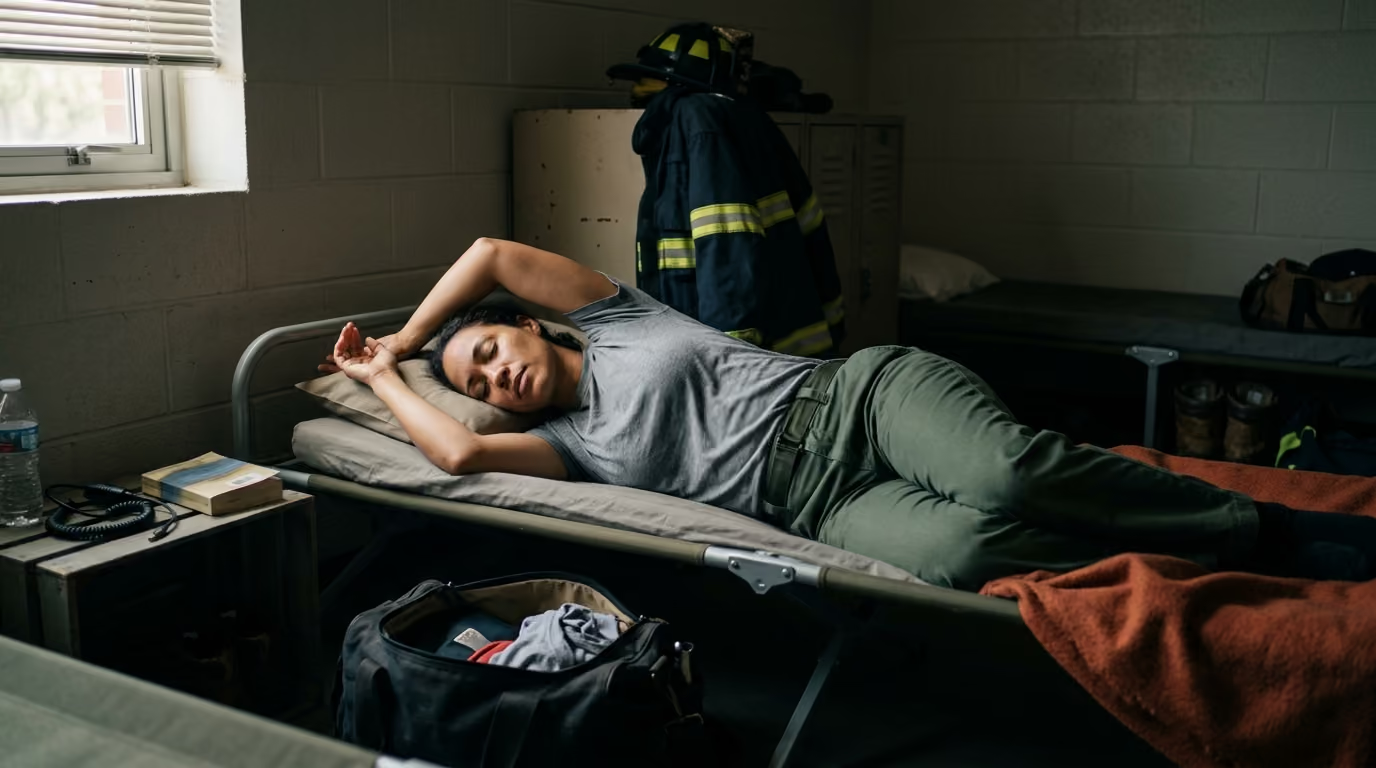

Napping seems simple, but strategic timing and duration are essential for first responders to recover without disrupting vital nighttime sleep.





You sit down in your recliner at four in the afternoon intending to rest your eyes for ten minutes. Two hours later, you wake up disoriented, with a dry mouth and a heavy fog clouding your thinking. When bedtime arrives at eleven, you stare at the ceiling for hours, fully awake because your body has forgotten how to sleep in one continuous block.
For active and retired first responders, sleep rarely behaves like a simple light switch. Decades of responding to tones, working twenty-four-hour shifts, and running calls through the early morning hours alter how the brain manages rest. When you transition off shift work or enter retirement, napping often becomes an accidental trap rather than a recovery tool.
A nap is neither purely good nor purely bad for your physiology. It is an operational tool whose outcome depends entirely on timing, duration, and your current sleep debt. When used correctly, a short nap restores alertness without stealing sleep from the coming night. When used poorly, it keeps you trapped in a cycle of broken nights and exhausted afternoons.
To use daytime sleep effectively, you must understand the two internal biological engines that control rest. These two forces work together in a healthy sleep cycle, but shift work frequently forces them out of alignment.
The first force is homeostatic sleep pressure. From the moment you wake up, a chemical called adenosine builds up in your brain. The longer you stay awake, the heavier this pressure becomes, creating a powerful physical drive to sleep. When you sleep, your brain clears this accumulated adenosine.
The second force is the circadian alerting signal. Driven by the central clock in your brain, this rhythm runs on an approximate twenty-four-hour cycle. It sends alerting signals during the day to keep you awake, and quiets down at night to allow rest. Natural troughs in this alerting signal occur twice daily, once in the mid-afternoon between 1:00 p.m. and 5:00 p.m. and once in the early morning between 1:00 a.m. and 5:00 a.m.
When you take an unplanned nap, you rapidly clear adenosine. If you do this late in the day, you drain your sleep pressure right before you need it most. Even if your body is exhausted, you cannot fall asleep at night because the physical drive has been erased.
Leaving the emergency services removes the unpredictable tones, but it does not instantly reset your biology. Research on retired shift workers shows that years of irregular schedules leave lasting changes in how core body temperature and circadian rhythms interact. Your body remains conditioned to expect physical danger, cognitive demand, and sudden awakenings at irregular hours.
During your career, fragmented sleep was an adaptive survival strategy. You learned to catch thirty minutes on a bunk, an hour in an ambulance bay, or two hours after a morning debrief. In retirement, that same fragmentation becomes a liability. Your internal clock continues to anticipate interruptions, preventing you from establishing a consolidated seven-to-eight-hour block of nighttime rest.
Understanding circadian strain and responder sleep debt helps make sense of this lingering pattern. The goal during career transition is not to force an instant fix. The goal is to move deliberately from survival-oriented sleep management toward a stable, predictable rest pattern.
The length of a nap determines which sleep stages your brain enters. Waking up from the wrong sleep stage can leave you more impaired than if you had not slept at all.
Brief naps provide the cleanest recovery stimulus for daytime alertness. When you limit a nap to twenty minutes, your brain remains in lighter sleep stages. You obtain a reduction in subjective fatigue and an increase in cognitive speed without entering deep slow-wave sleep.
Consensus guidelines for shift-working populations identify fifteen- to twenty-minute naps as the ideal standard for boosting alertness. A simulated shift-work trial demonstrated that a ten-minute nap produced immediate improvements in cognitive performance with virtually no post-wake grogginess. Conversely, extending that sleep opportunity to thirty minutes created measurable grogginess upon waking.
For most transitioning responders, twenty minutes is the safest default duration. It takes the edge off severe daytime sleepiness while leaving your evening sleep pressure intact. You get the benefits of neurological rest without signaling to your body that the main sleep period has begun.
The thirty- to sixty-minute window is an unpredictable middle ground. During this timeframe, your brain frequently transitions into slow-wave, deep sleep. Slow-wave sleep is vital for tissue repair and physical recovery, but awakening directly from it triggers severe grogginess.
A review hosted by occupational health researchers notes that waking from a fifty-minute nap frequently interrupts slow-wave sleep. When you force an awakening during deep sleep, your brain requires substantial time to regain basic executive function. This creates a state known as sleep inertia, where reaction times, decision-making, and emotional control remain impaired for up to an hour.
If you choose a moderate nap, you must plan for this post-wake fog. Never schedule a forty-five-minute nap immediately before driving, training, or handling complex tasks. Unless you have the time to sit quietly while the grogginess clears, this duration often creates more problems than it solves.
A long nap allows your brain to complete an entire sleep cycle. A typical human sleep cycle lasts between ninety and one hundred and ten minutes, moving from light sleep into deep slow-wave rest, passing into rapid eye movement sleep, and returning to light sleep.
When you carry substantial sleep debt from consecutive night shifts or extended emergencies, a ninety-minute nap provides meaningful physiological recovery. Research examining post-shift performance found that a two-hour sleep opportunity produced superior improvements in alertness, mood, and cognitive function compared to shorter rest periods.
The trade-off with a ninety-minute nap is its heavy impact on nighttime sleep pressure. A long daytime sleep episode satisfies a large portion of your daily sleep requirement. If you take a ninety-minute nap during the late afternoon, you will almost certainly experience sleep-onset insomnia that night.
The time of day you choose to nap is just as important as how long you sleep. A nap taken at the wrong hour disrupts your internal clock and fragments your evening rest.
For active crews working overnights, on-duty napping is a vital safety countermeasure. Studies evaluating emergency personnel confirm that naps scheduled between midnight and 4:00 a.m. produce significant improvements in vigilance, memory recall, and driving safety.
A systematic review demonstrated that scheduled night-shift naps reduce overall lapses in attention and improve reaction speed across the early morning hours. When personnel nap near 2:00 a.m. they place the rest period directly inside the deepest circadian dip. This strategic timing blunts the dangerous fatigue that spikes just before dawn.
Active responders must separate tactical on-duty rest from off-duty recovery habits. On-shift napping exists to keep you safe during nocturnal operations. Once you leave the shift schedule, continuing to sleep in the middle of the night destroys your ability to build a continuous daytime routine.
Coming off a final overnight shift presents an immediate recovery challenge. You face a choice between sleeping all day or pushing through to the evening. The most effective approach for resetting your clock is a structured post-shift bridge nap.
A bridge nap is a controlled sleep period of ninety minutes to three hours taken immediately upon arriving home in the morning. This provides enough sleep to clear acute exhaustion and reduce dangerous sleep debt. The key is waking up by early afternoon at the latest, allowing several hours of wakefulness to rebuild sleep pressure before bedtime.
If you allow this morning sleep to stretch into the late afternoon, your body treats it as your primary sleep period. You will wake up at 4:00 p.m. remain wide awake until dawn, and preserve the shift-work cycle on your days off.
For retired first responders and personnel on extended leaves, the early afternoon is the ideal window for daytime sleep. Between 1:00 p.m. and 3:00 p.m. your circadian alerting signal naturally dips. This biological drop matches the post-lunch dip in alertness, making it easy to fall asleep quickly.
Taking a fifteen- to twenty-minute nap during this window works with your biology rather than against it. You gain a refreshing reduction in mental fatigue while leaving at least seven to eight hours of continuous wakefulness before your intended bedtime. Public health guidelines from the National Heart, Lung, and Blood Institute recommend placing necessary daytime rest in this early afternoon window.
Any nap taken after 3:00 p.m. poses a substantial risk to your nighttime sleep architecture. Sleeping between 4:00 p.m. and 7:00 p.m. strips away accumulated adenosine just as your circadian alerting signal begins its evening decline.
When you wake from a late-afternoon nap, you feel deceptively energized for a few hours. When you get into bed at your target bedtime, your brain lacks the biochemical drive needed to initiate sleep. You roll over, check the clock, grow frustrated, and delay sleep onset by hours, ensuring that you wake up exhausted the next morning.
When daytime rest is mismanaged, it creates a self-reinforcing pattern of poor sleep quality, chronic daytime fatigue, and worsening nighttime insomnia.
The most common trap for former shift workers is the nap-insomnia cycle. It begins with an unplanned or excessively long nap taken to cope with morning exhaustion. That nap delays bedtime, leading to a fragmented, tossing-and-turning night.
The following morning, you wake up unrested and struggle to maintain focus. By mid-afternoon, the accumulated exhaustion feels unbearable, forcing you into another long nap. This pattern repeats daily, transforming what began as temporary shift-work fatigue into chronic behavioral insomnia.
Breaking this cycle requires enduring temporary daytime sleepiness. You must shorten or eliminate the afternoon nap, maintain your target wake time, and protect the evening sleep drive until a consolidated nighttime pattern is re-established.
Many first responders believe that naps do not work for them because they always wake up feeling irritable, heavy, and exhausted. In most cases, this is not evidence of failure. It is simply sleep inertia.
Sleep inertia is a temporary neurophysiological state characterized by slowed synaptic transmission and reduced cerebral blood flow upon waking. Research indicates that sleep inertia routinely lasts fifteen to thirty minutes, but in cases of severe sleep deprivation, it can persist for two hours.
If you evaluate how you feel the exact moment the alarm goes off, you will always feel worse than before you slept. You must allow a twenty- to thirty-minute buffer before judging whether the nap helped your mental clarity and physical energy.
The occupational demands of emergency service create psychological and physiological adaptations that persist long after you turn in your badge or gear.
Emergency service conditions the nervous system to move from deep sleep to maximum physiological arousal in seconds. A sudden noise, an opening door, or an unexpected vibration instantly triggers an adrenaline surge. In active service, this keeps you alive and operational. In retirement, it produces chronic sleep fragmentation.
Former responders often find themselves waking up every ninety minutes, scanning the room, checking door locks, or looking at their phones. When this occurs, taking random daytime naps to compensate reinforces the idea that sleep only happens in short, fragile bursts. You must deliberately train your body to tolerate continuous rest in a secure environment.
Working extended shifts changes your metabolic and thermal rhythms. Research evaluating emergency crews working twenty-four-hour rotations confirms that prolonged shifts induce persistent alterations in circadian markers. A firefighter working forty-eight-hour shifts reports significantly higher rates of on-duty daytime sleepiness than those on shorter rotations.
When you retire after decades on these schedules, your internal systems do not reset overnight. You may experience strong hunger cues at 2:00 a.m. or feel completely alert at midnight. Establishing deliberate sleep and meal schedules helps realign these internal peripheral clocks with normal daylight hours.
Exploring resources within shift work sleep and recovery can provide additional context on how chronic schedules alter long-term metabolic health.
Not all sleep fragmentation stems from shift work schedules. First responders carry high cumulative exposures to critical incidents, traumatic injuries, and prolonged stress. Studies examining public safety populations show high rates of insomnia and sleep disturbance among individuals experiencing post-traumatic stress.
When sleep disruption involves severe nightmares, panic awakenings, or an inability to feel safe in bed, adjusting your nap habits will not solve the problem alone. Napping in these situations often becomes a way to avoid the vulnerability of sleeping at night. These symptoms require evidence-based, trauma-informed clinical care alongside basic sleep hygiene.
Transitioning off shift work requires a systematic protocol rather than random adjustments. Follow this step-by-step framework to rebuild a consolidated nighttime sleep pattern.
Before changing anything, track your actual sleep behavior for two weeks. Log your inputs accurately without trying to force perfection.
This baseline data reveals whether your daytime naps are helping your recovery or actively maintaining your nighttime sleep troubles.
The most critical step in stabilizing your sleep biology is setting a permanent wake time. Choose a wake time that fits your current life and stick to it seven days a week, regardless of when you fell asleep.
Getting out of bed at the same time every morning sets your circadian clock via morning light exposure. It ensures that homeostatic sleep pressure begins building at the exact same hour every single day. If you have a poor night of rest, do not sleep in for three hours. Wake up at your anchor time, get into the light, and use a brief afternoon nap to bridge the gap.
Never fall asleep during the day by accident. Every nap should have an intentional operational purpose.
If you cannot define the purpose of the nap, stay awake, engage in light physical movement, get into sunlight, and protect your evening sleep pressure.
When modifying your sleep routine, change only one factor at a time and maintain it for at least five days.
If you change your wake time, eliminate caffeine, and cut your naps all on the same day, you will not know which change improved your sleep quality. Methodical adjustments allow you to find what works best for your physiology.
Review your sleep patterns weekly rather than judging success by a single night. A good nap strategy should lead to measurable improvements across key indicators.
If your nighttime sleep remains broken after three weeks of consistent wake times and short early naps, daytime sleep is not the primary issue. You may need to address an underlying sleep disorder.
The following scenarios illustrate common napping challenges faced by former emergency personnel and provide structured methods for addressing them.
The Scenario: A retired firefighter wakes up at 5:30 a.m. works in the yard all day, and sits down in a recliner after an early dinner. They fall asleep from 5:00 p.m. to 6:30 p.m. wake up groggy, and then find themselves unable to sleep when they go to bed at 11:00 p.m.
The Fix: This late-afternoon crash completely empties the homeostatic sleep drive. The individual must set an alarm to avoid falling asleep in the evening. They should introduce a planned twenty-minute nap at 1:30 p.m. engage in light physical activity after dinner, and maintain a dark, cool sleep environment for an earlier bedtime near 10:00 p.m.
The Scenario: A former paramedic sleeps from 2:00 a.m. to 6:00 a.m. takes a nap from 11:00 a.m. to 1:00 p.m. and takes another nap from 6:00 p.m. to 7:30 p.m. They report that they have slept this way for twenty years and cannot adapt to a single continuous block.
The Fix: This pattern preserves the broken rhythm of an ambulance bay. The individual should establish a firm 7:00 a.m. wake anchor. They must eliminate the 6:00 p.m. nap immediately and restrict the midday rest to a single twenty-minute window at 1:00 p.m. gradually consolidating the primary sleep drive into the nighttime hours.
For more details on restructuring broken schedules, review our guide on building a sleep plan for night shifts and extended tours.
The Scenario: A police officer takes a forty-five-minute nap before an overtime detail, wakes up with a throbbing headache and heavy brain fog, and remains irritable and slow for the first two hours of the assignment.
The Fix: The officer woke up directly from slow-wave sleep while carrying high sleep debt. They must change the nap duration. Either reduce the sleep opportunity to twenty minutes to stay within light sleep, or extend the rest period to a full ninety minutes while scheduling a twenty-minute buffer to clear sleep inertia before reporting for duty.
The Scenario: A responder coming off an exhausting twenty-four-hour shift feels their eyes closing while driving home on the highway. They roll down the windows, blast the radio, and try to push through the thirty-mile commute.
The Fix: Trying to fight physical sleepiness with cold air and loud music is a dangerous gamble. The driver must pull over into a secure, well-lit parking lot, lock the doors, and take a fifteen-minute safety nap. After waking, they must walk around the vehicle for several minutes to clear sleep inertia before resuming the drive.
Daytime napping is a management strategy, not a medical cure. Relying on constant naps to get through the day often masks serious, treatable medical conditions that are common among emergency personnel.
First responders experience significantly higher rates of sleep disorders than the general public. Systematic reviews and meta-analyses show that approximately thirty percent of emergency service workers meet the criteria for Shift Work Disorder, nearly thirty percent have Obstructive Sleep Apnea, and twenty-eight percent suffer from chronic insomnia.
In large-scale screening studies of firefighters, over thirty-seven percent screened positive for at least one clinical sleep disorder. The vast majority of these individuals were undiagnosed and untreated. If you stop breathing dozens of times per hour due to sleep apnea, your brain never achieves deep, restorative rest, forcing you to use daytime naps just to stay awake.
To learn more about baseline physiological recovery and occupational exhaustion, read the CDC report on first responder fatigue baselines.
There are specific situations where taking a nap creates immediate operational and personal safety risks.
Adjusting your nap habits can solve behavioral sleep issues, but it cannot fix underlying physiological disorders or psychological trauma. You should seek a formal medical evaluation from a qualified sleep specialist or physician if you experience any of the following symptoms:
A board-certified sleep physician can arrange an overnight sleep study to evaluate you for sleep apnea, periodic limb movement disorder, or chronic circadian misalignment. If your sleep challenges involve post-traumatic stress, occupational trauma, or severe anxiety, working with a licensed mental health clinician specializing in first responder care is essential.
You can explore broader recovery concepts and long-term wellness strategies in our injury and recovery resource center and our dedicated shift work and sleep editorial hub.
Napping is a valuable recovery tool when used with clear intention, controlled duration, and strict attention to your daily rhythm. By protecting your evening sleep pressure and establishing a consistent morning wake anchor, you can rebuild the deep, consolidated rest necessary for long-term health and sustainable performance beyond your service years.
Review this guide whenever you change shift rotations, enter retirement, find yourself relying on unplanned afternoon sleep, or notice that your nighttime sleep has become fragmented and unrefreshing.
Sustainable career longevity depends on mastering your recovery tools today so your body can support a healthy, active life for decades to come.
Stay connected for research-led guidance on duty fitness, shift-work sleep, injury recovery, stress, nutrition and career longevity. Practical ideas for first responders who want to stay capable on the job, recover well and protect their health for the long run.



Read practical guidance on first responder fitness, recovery, sleep, nutrition and resilience for demanding work and a long, active career.
read the blog



