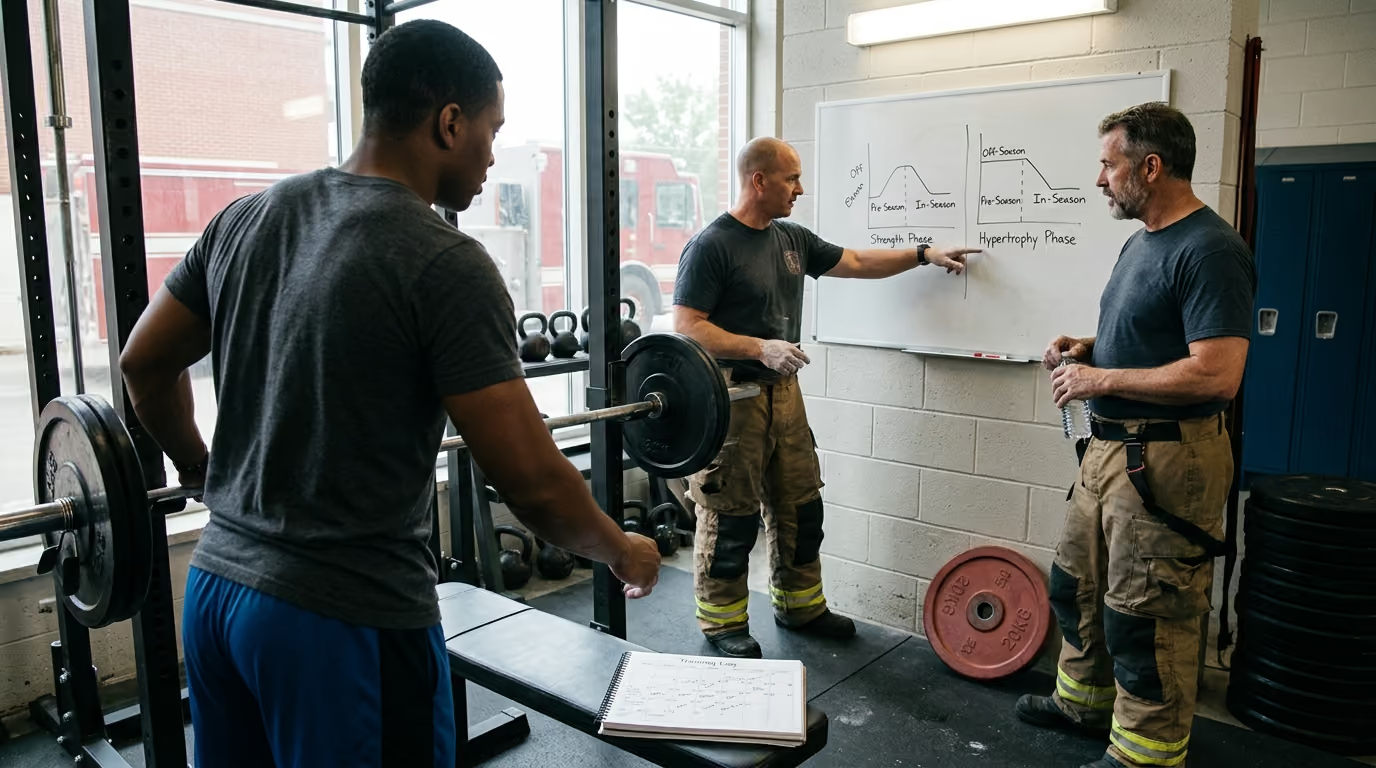

Traditional periodization assumes predictable athletic schedules, but tactical readiness requires flexible hybrid models that adapt to shift work and unpredictable operational stress.





Most athletic training plans assume that the calendar is a stable baseline. In conventional sport programming, coaches schedule high-stress training blocks months in advance because they know when the athlete will sleep, eat, and compete. For first responders, this baseline assumption is fundamentally flawed. An emergency call at three in the morning, an extended technical rescue, or sudden mandatory overtime can instantly wipe out the physiological recovery required for a planned heavy lifting session.
Trying to force a rigid athletic progression onto an unpredictable shift schedule creates chronic fatigue, poor adaptation, and higher injury rates. Real capability on duty requires a different view of periodization. Training models must balance physiological development with schedule volatility, ensuring operational readiness regardless of what happened during the previous shift.
A practical training plan for tactical athletes does not rely on a single theoretical model. Research confirms that no single periodization structure holds a universal advantage for building strength or muscle size. Instead, the most sustainable approach is an adaptable hybrid framework. This method uses long-term target phases, rotates session stress throughout the week, adjusts daily volume based on readiness, and relies on short, focused sessions during demanding work rotations.
Periodization is the systematic manipulation of training variables across time to maximize adaptation while managing fatigue. These variables include volume, external load, movement velocity, rest intervals, exercise selection, and weekly frequency. In competitive sports, periodization directs an athlete toward a specific competitive peak. In emergency services, peak performance must be maintained continuously across a multi-decade career.
The core problem in tactical fitness is the gap between planned stress and total stress. A spreadsheet accounts only for sets and repetitions completed in the gym. It cannot measure the physiological cost of carrying sixty pounds of gear up six flights of stairs, performing chest compressions in a cramped hallway, or managing acute psychological stress during an armed confrontation.
A meta-analysis of sixteen studies comprising 510 participants evaluated differences between traditional linear models and undulating models. The researchers found no statistically significant difference between linear and undulating periodization for upper-body or lower-body maximal strength. Both structures produced robust strength adaptations when training volume and effort were equated.
A separate systematic review examining muscular hypertrophy arrived at a parallel conclusion. The standardized mean difference between linear and undulating models was 0.02, showing no meaningful difference in muscle growth between the two approaches. The theoretical advantage that undulating models possess for raw strength expression does not consistently translate to superior gains in muscular power, endurance, or muscle size across broad populations.
These findings show that first responders do not need to hunt for a perfect physiological model. Because different structures produce similar adaptations under controlled conditions, responders should choose frameworks based on recovery flexibility, schedule compatibility, and occupational relevance. The right model is the one that survives the realities of shift work.
For a broader perspective on structured physical preparedness, explore our comprehensive index of first responder strength and conditioning guides designed for operational longevity.
Understanding how traditional training frameworks function allows emergency personnel to select the right tool for their operational circumstances. Each periodization model possesses distinct structural traits, benefits, and failure points when exposed to shift work.
Traditional linear periodization organizes training into sequential phases that systematically increase load while reducing total volume. A typical cycle begins with high-volume, low-intensity general physical preparation, transitions into moderate-volume hypertrophy and strength work, and concludes with high-intensity maximal strength or peaking blocks.
This structure offers clarity and predictable progression. It is simple to document, easy to implement across large groups, and establishes clear training milestones. For recruits in an academy setting with predictable schedules, linear progression provides an excellent baseline for tissue tolerance and movement mechanics.
The primary limitation of linear periodization is structural rigidity. It assumes that physical readiness improves predictably from one week to the next. When a firefighter or police officer encounters several disrupted night shifts, the rigid jump in external load can lead to form breakdown, accumulated joint stress, or missed training days.
Block periodization divides the training calendar into targeted multi-week periods called mesocycles. Each block concentrates on a narrow set of physical qualities, such as maximal strength, power development, or anaerobic capacity, while putting other qualities on maintenance.
This concentrated focus prevents the physiological interference that can occur when an athlete tries to improve every physical quality at once. For tactical personnel who must correct a specific operational deficit, such as grip endurance or stair-climbing power, a concentrated block provides a clear path forward.
The main risk of standard block training is the decay of non-targeted qualities. Emergency response requires the simultaneous expression of multiple capacities. If a paramedic focuses entirely on maximal strength for eight weeks while ignoring aerobic endurance, operational capability will suffer. First responders must use rolling or overlapping blocks that retain job-critical baseline capacities year-round.
Undulating periodization alternates training volume and intensity on a frequent schedule, either daily or weekly. Daily undulating models rotate through distinct session targets, such as a heavy strength session on Monday, an aerobic capacity session on Wednesday, and a high-velocity power session on Friday.
This frequent variation provides practical schedule flexibility. A responder who arrives at the station feeling fatigued after a difficult commute or disrupted sleep can swap a heavy strength session for an aerobic recovery session without breaking the weekly structure. It spreads structural stress across different joint angles and energy systems.
The main challenge of undulating plans is tracking long-term progression. Without careful logging, frequent variations in loads and rep ranges can degenerate into random, disorganized workouts. Undulating plans require clear parameters so that variation serves a distinct purpose rather than causing confusion.
Autoregulation adjusts daily training volume and load based on the individual's real-time readiness rather than predetermined percentages. Common methods include Rating of Perceived Exertion, Repetitions in Reserve, movement velocity tracking, and structured warm-up performance tests.
This approach acknowledges that biological readiness changes daily. A 300-pound deadlift might represent an easy training effort after eight hours of sleep, but it becomes a maximal, high-risk effort after a chaotic night shift. Autoregulation allows the lifter to select loads that match their actual capacity on that day.
Autoregulation fails when it lacks objective boundaries. It requires honest self-assessment and technical discipline. Responders who struggle with internal pacing may consistently overshoot their capacity when motivated, or under-train when slightly tired. To be effective, autoregulated systems require clear load caps and minimum work thresholds.
To better understand how to adjust daily exertion against occupational fatigue, read our detailed guide on autoregulation strategies for emergency service personnel.
Minimum effective dose resistance training uses the lowest training volume capable of producing or maintaining strength, muscular size, and functional capacity. It prioritizes brief, high-density sessions using multi-joint compound exercises performed with controlled, high-effort execution.
A systematic review on minimum effective training doses revealed that performing a single set one to three times per week produced significant one-repetition-maximum strength gains. For resistance-trained men, one set of 6 to 12 repetitions at 70 to 85 percent of one-rep maximum, completed two or three times weekly for 8 to 12 weeks, produced meaningful squat and bench press improvements.
A related review on minimalist training found that untrained individuals could improve baseline strength using just one session per week with fewer than three sets at loads below 50 percent of their maximum. While these minimal volumes produce suboptimal adaptations compared to full-volume athletic programs, they provide an exceptional floor for retaining functional strength.
The risk is treating a minimal dose as the optimal dose for high-level performance. While a single hard set preserves strength during periods of severe operational stress, it is insufficient for maximizing work capacity, muscle hypertrophy, or structural resilience. It functions best as an operational safety net rather than a permanent ceiling.
To review the scientific parameters behind condensed workouts, see our breakdown of minimum effective dose programming for first responders.
Designing effective training plans requires a clear assessment of operational demands. Law enforcement officers face unpredictable environments requiring sudden bursts of muscular strength, explosive power, anaerobic capacity, and sustained aerobic output. Police duty combines long periods of sedentary patrol with sudden, high-stakes physical confrontations while wearing heavy gear.
Firefighting tasks demand a diverse physical profile. A comprehensive systematic review of 32 firefighter occupational studies analyzed tasks including stair climbs, equipment carries, ladder raises, victim drags, and forcible entry. When examining performance across these events, physical qualities ranked in order of importance:
Occupational literature recommends that structural firefighters maintain an aerobic capacity of roughly 42 milliliters per kilogram per minute, which equals approximately 12 metabolic equivalents. This cardiovascular base must coexist with substantial muscular strength, grip endurance, and anaerobic capacity to support safe fireground operations.
These physical requirements must be built alongside significant occupational disruptions. A systematic review on occupational fatigue in emergency responders linked poor sleep quality to measurable declines in cognitive performance, reduced vigilance, and higher injury rates. Sleep deprivation directly degrades reaction time, movement mechanics, and hormonal recovery.
A single 24-hour shift can vary from a restful night to twelve hours of continuous technical operations. A training framework cannot rely on fixed calendar days. It must adapt to actual duty exposure rather than scheduled duty hours.
If you manage fluctuating work rotations, study our guide on structuring workouts around emergency shift schedules for practical recovery strategies.
To balance physiological development with operational chaos, emergency personnel should adopt a layered hybrid training system. This framework combines long-term directional planning with immediate, daily execution choices.
Long-term planning spans three to twelve months, defining seasonal priorities without locking in daily workouts. A typical annual plan includes periods of general physical preparation, targeted strength accumulation, high-velocity power development, and operational maintenance.
This macro-structure ensures that training maintains a clear purpose. It prevents responders from drifting into aimless, unmeasured workouts while allowing enough flexibility to adjust for operational demands.
Divide the year into three- to six-week rolling blocks. Each block emphasizes one primary physical quality while maintaining other essential capacities using low-volume maintenance work.
Structure weekly sessions so that high-stress workouts do not compound the fatigue of demanding shifts. Rather than repeating identical workouts, vary the training stimulus across the week.
A practical four-day split includes:
If a difficult shift interrupts the week, Session B or a condensed version of Session A can be completed to maintain consistency without overloading the nervous system.
Use a simple, three-tier readiness system to guide daily loading choices. This system adjusts training volume and intensity based on sleep quality, physical fatigue, and operational stress.
Every responder needs a pre-planned 15- to 20-minute fallback workout for high-stress operational weeks. Having a designated minimum routine removes the mental friction of deciding what to do when exhausted.
A standard minimum dose fallback session:
This compact routine maintains neuromuscular readiness, preserves joint health, and maintains the training habit without compounding systemic fatigue.
Applying periodization models to specific operational environments shows how these principles function during real shifts.
Firefighters facing rotating shifts must handle broken sleep, unpredictable calls, and the physical demands of fireground operations.
The most effective approach combines daily undulating periodization with strict daily autoregulation:
This structure places the highest training loads during confirmed recovery windows rather than tying workouts to fixed days of the week.
A police officer with eight to twelve weeks to prepare for a specialized selection test has a specific performance goal and a relatively stable timeline.
A twelve-week structured physical training intervention in specialized police officers demonstrated notable fitness improvements. Participants achieved a 1.7 mL/kg/min increase in VO₂max, an 8.1-kilogram increase in grip strength, and a 2.7-strike improvement on operational reaction tests.
The ideal structure uses block periodization supported by daily autoregulation:
Autoregulation remains essential during this cycle to adjust for sudden shift extensions or tactical deployments.
Emergency medical personnel often face high call volumes, long periods of sitting, and repetitive patient-handling tasks, frequently while working extended overtime.
The optimal strategy relies on a minimum effective dose model with movement-pattern rotation:
This setup prevents the complete disruption of training habits while protecting the spine and shoulders from overuse injuries.
Tactical team members must maintain strength, sprint speed, and marksmanship without knowing when an operational callout will occur.
The best framework uses rolling emphasis blocks with concurrent maintenance:
This approach keeps physical capabilities sharp while preserving the energy required for dynamic operational missions.
Tactical athletes frequently fall into programming errors that compromise performance and career longevity. Recognizing these pitfalls helps responders build more sustainable training habits.
Many responders assume that advanced athletic programs are better than simple ones. In reality, published evidence shows no universal strength or hypertrophy advantage when comparing linear and undulating models. A simple, consistent routine that fits your work schedule will outperform a complex program that falls apart during a busy shift rotation.
Autoregulation does not mean walking into the gym without a plan and doing whatever feels good. A sound program requires clear movement patterns, defined rep ranges, planned progressions, and established volume limits. Autoregulation simply adjusts daily load and volume within a structured system.
Minimal-dose training is a practical tool for maintaining strength and motor skills during challenging work periods. However, relying indefinitely on minimal volume will limit muscle growth, cardiovascular capacity, and work capacity. Use minimal dosing as a safety net during busy periods, not as your permanent training ceiling.
Occupational tasks are irregular, unbalanced, and often mechanically inefficient. Carrying heavy equipment down narrow stairs builds fatigue, but it does not replace structured movement through a full range of motion. Treating physical work as a workout often leads to movement compensations and chronic joint irritation.
Finishing every workout lying on the floor in a pool of sweat does not mean you built usable operational fitness. Chronic, unmanaged fatigue degrades movement mechanics, blunts hormonal recovery, and impairs reaction time on duty. First responders must manage fatigue in the gym so they remain ready to perform on shift.
To protect your physical durability over the course of your career, review our operational resources on injury prevention and career longevity strategies.
Periodization frameworks manage normal muscular and cardiovascular fatigue. They are not designed to self-treat acute injuries, chronic medical issues, or systemic overtraining.
First responders must distinguish between normal training soreness and warning signs that require medical attention:
When any of these red flags appear, stop training and consult a licensed healthcare professional, physical therapist, or occupational physician. A periodization model should support your career longevity, not become a pathway to a preventable injury.
For broader strategies on career sustainability, explore our dedicated archive of duty fitness and performance articles.
Building operational capability requires accepting the unpredictable nature of emergency service work. Long-term durability is not achieved through rigid adherence to a sports calendar, but through adaptable programming that responds to the demands of shift work.
By combining the structural clarity of rolling blocks, the stress management of undulating plans, and the day-to-day flexibility of autoregulation, first responders can build sustainable, resilient strength across an entire career.
True duty readiness is not measured by a single personal record, but by the ability to perform consistently on duty while preserving health and mobility for life after service.
Stay connected for research-led guidance on duty fitness, shift-work sleep, injury recovery, stress, nutrition and career longevity. Practical ideas for first responders who want to stay capable on the job, recover well and protect their health for the long run.



Read practical guidance on first responder fitness, recovery, sleep, nutrition and resilience for demanding work and a long, active career.
read the blog



