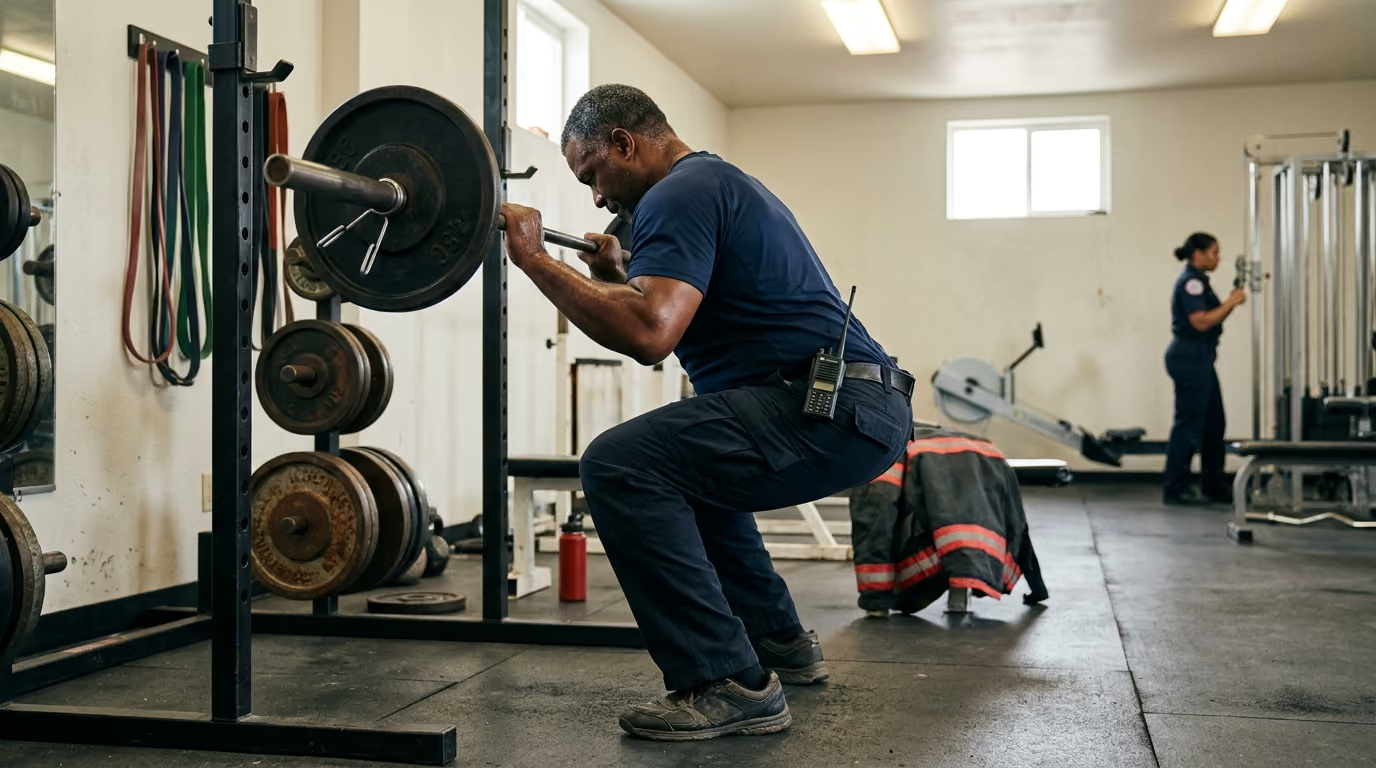

Full operational readiness returns safely when first responders follow a phased reconditioning plan tailored to the physiological demands of emergency service work.





Most first responders believe that the hardest part of returning to duty after time off is rebuilding cardiovascular endurance or peak muscular strength. That assumption is backwards. Cardiorespiratory test scores often rebound within weeks, while tendons, joint structures, movement efficiency, and work repeatability take significantly longer to adapt.
Rushing back into full duty or intense workouts based purely on aerobic motivation frequently leads to secondary injury, persistent joint pain, or early burnout.
Reconditioning requires a staged, criterion-based process. This guide provides a practical blueprint for emergency personnel returning after injury, illness, operational leave, or retirement. It outlines how physical capacities decline during inactivity and how to restore them safely without compromising long-term capability.
Rebuilding duty readiness after time away requires restoring tissue tolerance and aerobic capacity before testing maximal strength or performing high-intensity work. Detraining affects plasma volume, stroke volume, and neuromuscular coordination within weeks, while tendons and metabolic efficiency lag behind during the return.
Begin with low-intensity, multi-joint movement and conversational aerobic conditioning to rebuild a functional base. Progress one variable at a time, prioritizing session duration and movement quality over speed, heavy loads, or dense work intervals.
Use a 24-hour symptom response rule to gauge recovery between training sessions. Full operational clearance should depend on repeatable task capacity under moderate fatigue rather than a single isolated gym test.
Detraining is the partial or complete loss of anatomical, physiological, and performance adaptations caused by stopping or substantially reducing physical activity. The process is not uniform across every biological system. Different physical qualities decline on distinct timelines, influenced by training history, age, injury status, sleep, nutrition, and residual daily movement.
Total cessation of training triggers rapid cardiovascular changes. Research demonstrates that short-term detraining reduces maximal oxygen uptake (VO2max) largely due to sharp declines in blood volume and plasma volume. Maximal stroke volume decreases, which forces the heart to beat faster at any given submaximal workload to maintain cardiac output.
First responders returning to activity notice this shift immediately. Familiar stair climbs or brisk walks produce higher heart rates, earlier breathlessness, and longer recovery intervals between physical tasks.
Even two weeks of detraining can reduce maximal oxygen uptake and cardiopulmonary capacity in trained runners while local muscle endurance remains relatively stable. The rapid loss of plasma volume alters thermoregulation, making personnel more susceptible to heat stress when wearing protective gear.
Strength declines happen more slowly than cardiovascular losses, but neuromuscular efficiency deteriorates quickly. Early losses in strength stem from reduced neural drive, altered motor unit recruitment, and diminished confidence in loaded movement patterns.
Two weeks of detraining has been shown to reduce isokinetic knee-extensor strength in trained male runners, even while knee-flexor strength remained preserved. Prolonged inactivity accelerates muscle atrophy and reduces the muscle cross-sectional area, particularly in fast-twitch fibers required for explosive duty tasks like forcible entry or patient drags.
Joints and connective tissues experience reduced mechanical loading during time off. Tendons lose stiffness, cartilage thins slightly, and the capacity to handle rapid eccentric forces declines.
When a responder returns to intense physical work, the cardiovascular system and primary muscles may tolerate the effort, but healing tendons and ligaments can easily become overloaded.
Regaining physical capacity takes longer than losing it, and different physical markers recover at different rates. A 2024 case study examining a lifelong master triathlete showed that 12 weeks of progressive retraining restored VO2max following 12 weeks of detraining.
Running economy and lean muscle mass remained below baseline despite the full recovery of aerobic test scores.
This finding demonstrates why standard fitness tests can create a false sense of security. A firefighter or police officer might pass an aerobic treadmill assessment or standard fitness test while their movement economy, tissue tolerance, and lean mass remain compromised. Restoring baseline test scores does not mean that every underlying physiological quality has fully adapted.
General return-to-fitness programs assume a predictable schedule, consistent sleep, and low baseline stress. Emergency service work provides none of these luxuries. Shift work, extended tours, circadian misalignment, and unpredictable call volume directly affect how the body responds to physical training.
First responders do not recover in a controlled, clinical environment. An emergency medical technician or police officer returning on modified duty often contends with night shifts, prolonged sitting in vehicles, and broken sleep.
High sympathetic nervous system arousal from emergency responses elevates resting cortisol and slows soft tissue repair. Training programs must account for this baseline strain by incorporating flexible programming strategies.
Understanding why individual willpower fails to overcome cumulative duty fatigue helps personnel avoid the trap of pushing through severe exhaustion. Reconditioning sessions should supply a restorative training stimulus without digging deeper into an already depleted recovery reserve.
Rebuilding fitness for emergency personnel must eventually address external load and thermal strain. Firefighters carry between 45 and 75 pounds of turnout gear, self-contained breathing apparatus (SCBA), and tools. Tactical officers wear ballistic vests, duty belts, and helmets that restrict thoracic expansion and increase the metabolic cost of movement.
Protective equipment traps metabolic heat, which accelerates cardiovascular strain and elevates heart rate at lower physical workloads. A gym-based reconditioning plan that uses only light athletic wear fails to prepare the body for the thermoregulatory and biomechanical demands of full operational duty.
Reconditioning must progress systematically from unweighted movements to loaded, gear-specific simulations. Integrating duty-focused strength and fitness resources ensures that physical adaptations align with the specific biomechanical realities of the job.
Athletes prepare for scheduled competitions with defined rest periods. First responders face unpredictable calls that require immediate, un-warmed exertion across challenging environments.
A paramedic may need to lift a bariatric patient from a tight hallway after hours of low activity. A firefighter may face a sustained structural fire requiring repeated bouts of heavy work in zero visibility.
Reconditioning programs must therefore develop repeatable capacity and broad movement literacy rather than narrow, single-effort maximums. Responders need sufficient physical reserve so that occupational demands operate at a manageable percentage of their total capacity.
Rebuilding duty readiness requires a structured progression through distinct phases. Moving from one phase to the next should depend on meeting objective functional criteria rather than following arbitrary calendar dates.
Before starting any physical program, identify the underlying reason for the time away and confirm medical clearance.
Evaluate the following baseline factors:
Responders hospitalized with severe respiratory infections, cardiac events, or complex surgeries require formal clearance from a physician. If red flags such as chest pressure, fainting, unexplained breathlessness, or progressive neurological symptoms appear, halt training immediately and seek clinical evaluation.
The primary goal of Phase 1 is re-establishing consistent movement habits and testing tissue tolerance without provoking excessive inflammation.
Training characteristics during Phase 1:
The focus in this stage is movement quality and joint confidence. A session should leave the responder feeling refreshed and capable of performing daily tasks without next-day flare-ups.
Phase 2 builds systemic work capacity, foundational strength, and cardiovascular baseline volume.
Core components of Phase 2:
During this stage, personnel establish a reliable training rhythm. Responders learn to balance physical sessions alongside work shifts, utilizing structured training strategies around shift work to preserve energy for duty assignments.
Phase 3 introduces progressive overload to expand muscular strength, local muscular endurance, and aerobic power.
Progression strategies for Phase 3:
Progress resistance training by altering only one variable at a time. If external load is increased, keep sets, repetitions, and rest intervals stable. Avoid simultaneous spikes in volume and intensity.
Phase 4 bridges general gym fitness and specific emergency service demands.
Operational tasks in Phase 4:
Work should progress from predictable, isolated drills to complex, multi-task circuits. The goal is to verify that the responder can complete occupational tasks with safe biomechanics even when tired.
Phase 5 confirms that the individual possesses the physical reserve, movement economy, and recovery capacity required for unrestricted duty.
Readiness benchmarks for Phase 5:
Once full duty resumes, transition the training program from aggressive reconditioning to sustainable maintenance.
Aerobic fitness is the foundation of emergency response capability. A robust aerobic system supports prolonged search-and-rescue operations and accelerates recovery between high-intensity bouts of exertion. It also speeds metabolic clearance during rest periods on shift.
Responders do not need expensive laboratory metabolic testing to pace their aerobic reconditioning. Simple, field-validated markers provide reliable guidance.
The Talk Test is one of the most practical tools for establishing baseline aerobic intensity. If a responder can speak in full, comfortable sentences while walking or cycling, they are working within Zone 1 or Zone 2.
If speech becomes broken and limited to short phrases, exercise intensity has crossed into moderate-to-high domains. Early reconditioning should consist almost entirely of conversational-pace work.
Rating of Perceived Exertion (RPE) on a 1-to-10 scale offers another reliable metric. Keep early aerobic sessions between RPE 3 and RPE 5 (light to somewhat hard). Heart-rate recovery, the drop in beats per minute during the first two minutes after stopping exercise, serves as an objective marker of improving autonomic function and cardiovascular fitness.
Progress aerobic conditioning systematically through four distinct stages:
Returning to physical activity after viral or respiratory infections requires conservative management. Clinical sports medicine guidelines suggest starting post-infection activity at approximately 25% of pre-illness volume.
Maintain this light, conversational intensity for at least seven consecutive days without symptom recurrence before advancing.
If returning after respiratory illness, establish 7 to 14 days of comfortable, symptom-free walking before attempting jogging or running. If symptoms such as excessive fatigue, elevated resting heart rate, dizziness, or chest tightness occur, reduce training load immediately and seek medical assessment.
Muscular strength protects joints from occupational wear and tear. However, attempting to lift previous personal records too early places unconditioned connective tissues at risk of strain or tendinopathy.
A critical distinction in reconditioning is the difference between strength expression and strength readiness. Strength expression is the ability to produce high mechanical force during a single, fresh attempt in the gym.
Strength readiness is the capacity of muscles, tendons, and the nervous system to produce and absorb force repeatedly under occupational fatigue without joint irritation.
First responders frequently retain the neural capability to lift heavy loads, but their connective tissues lack the structural tolerance for repeated loading. Early strength training must prioritize movement control, tendon adaptation, and repetition quality over maximal barbell load.
Structure resistance sessions around six primary movement categories:
Adults should engage in muscle-strengthening activities at least two days per week. When rebuilding fitness, apply the concept of Repetitions in Reserve (RIR). Complete every set with two to three repetitions remaining before technical failure (RIR 2 to 3).
This approach provides a potent stimulus for muscle hypertrophy and strength while minimizing systemic neuromuscular fatigue and muscle damage.
Utilizing minimum effective dose training principles allows responders to stimulate strength adaptations with lower volume. This preserves physical energy for unpredictable shift requirements.
Begin with two sets per exercise and progress to three sets after two consistent weeks. Increase external load by modest increments (2.5 to 5 pounds for upper-body movements, 5 to 10 pounds for lower-body movements) only when all sets can be completed with perfect technique and zero joint irritation.
Reconditioning rarely follows a straight line. Having objective rules for adjusting training loads prevents minor aches from turning into chronic injuries.
The 24-hour rule is a practical clinical tool for managing training load. How a joint or healing tissue feels during a workout is often misleading due to elevated body temperature, endorphin release, and adrenaline.
The true indicator of tissue tolerance is the physical response over the subsequent 24 hours.
Evaluate three specific windows:
If joint pain, swelling, or localized stiffness is elevated 24 hours later, the previous session exceeded current tissue tolerance. Reduce volume, load, or movement range during the next session until baseline comfort is restored.
Use a simple traffic light model before each training session to determine whether to advance, maintain, or reduce physical stress:
Reconditioning paths vary depending on the underlying reason for time away from duty. Tailoring the approach to specific scenarios ensures safer outcomes.
Post-surgical reconditioning must adhere strictly to orthopedic surgeon protocols, tissue healing constraints, and range-of-motion limits. Tendon repairs, ligament reconstructions, and joint arthroscopies have non-negotiable biological healing timelines that cannot be rushed through conditioning.
Progress from non-weight-bearing exercises to closed-chain bilateral movements before introducing dynamic unilateral training.
Maintain cardiovascular fitness using uninjured limbs on stationary equipment. For example, a responder recovering from a knee injury can use an upper-body ergometer (arm crank) or single-leg cycling to preserve central aerobic capacity while protecting the healing joint.
Illness-related layoffs often produce substantial deconditioning alongside autonomic nervous system dysregulation. Rushing into high-intensity interval training or heavy strength work can trigger extreme fatigue, post-exertional symptom exacerbation, or prolonged setbacks.
Emphasize low-intensity aerobic walking and gentle mobility for the first two weeks. Monitor resting heart rate and blood pressure responses. Avoid training in hot environments until baseline exercise tolerance is fully established.
Increase daily physical duration gradually, ensuring that daily life tasks cause zero lingering exhaustion before adding structured gym sessions.
Physical reconditioning following critical incident stress, severe burnout, or mental health leave requires a low-friction approach. High-intensity training adds systemic physiological stress to an already overburdened nervous system.
Use exercise primarily as a tool for grounding, mood regulation, and physical vitality rather than an aggressive test of physical will. Keep early workouts short (20 to 30 minutes), predictable, and enjoyable.
Prioritize consistent sleep, outdoor movement in natural light, and supportive group training environments over rigid performance targets.
Aging changes tendon elasticity, reduces basal muscle protein synthesis, and prolongs recovery times between hard workouts. Retired personnel or senior responders returning after years of inactivity must build volume very conservatively.
Progression for older adults should focus on preserving functional independence, balance, multi-planar hip stability, and lean muscle mass. Incorporate longer warm-ups with dedicated joint preparation drills.
Retired responders pursuing lifelong physical capability can explore resources on career longevity and life after service to structure sustainable fitness habits that support long-term joint health.
Self-directed reconditioning is appropriate for uncomplicated deconditioning, but specific clinical presentations require professional medical evaluation. Recognizing safety boundaries prevents serious medical events and chronic physical setbacks.
If any of the following symptoms emerge during or after physical training, halt exercise immediately and seek emergency medical care:
Navigating complex reconditioning often benefits from specialized clinical guidance.
Consider consulting qualified licensed professionals under the following circumstances:
Professional guidance provides objective external assessments, helping personnel distinguish between normal training discomfort and potential tissue damage.
Rebuilding physical fitness after time off is an investment in career longevity and operational safety. Treating reconditioning as a methodical, criterion-based process protects your body, restores reliable duty capability, and supports long-term health throughout your career and into retirement.
Stay connected for research-led guidance on duty fitness, shift-work sleep, injury recovery, stress, nutrition and career longevity. Practical ideas for first responders who want to stay capable on the job, recover well and protect their health for the long run.



Read practical guidance on first responder fitness, recovery, sleep, nutrition and resilience for demanding work and a long, active career.
read the blog



