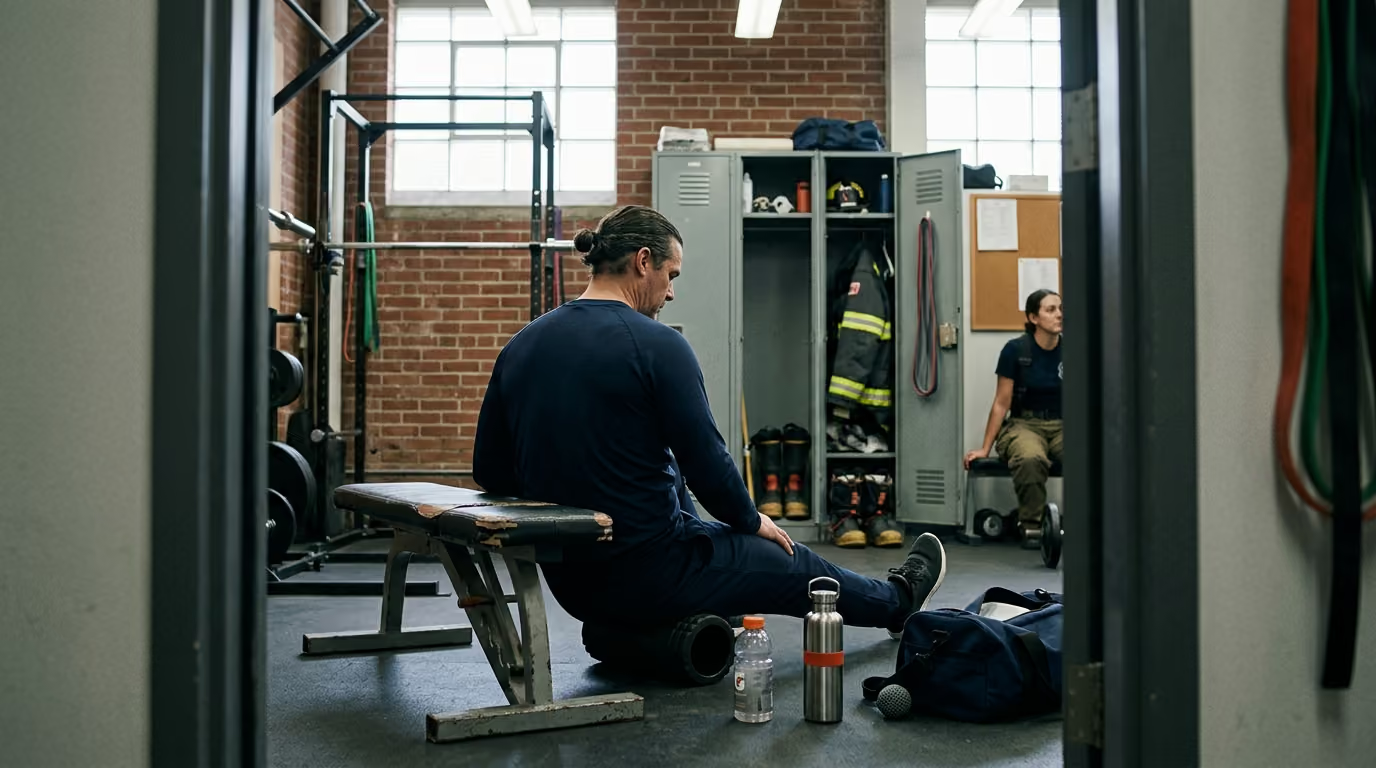

Recovery tools provide temporary symptom relief rather than true tissue healing, giving emergency personnel valuable short-term readiness when applied with proper physiological expectations.





You finish a twenty-four hour shift with stiff lower back muscles, tight calves from standing in heavy turnout gear, and an aching shoulder from a difficult patient carry. You walk into the station gym, pick up a vibrating massage gun or drop onto a hard foam roller, and press hard into the sore spots. It feels like you are grinding away muscle damage and speeding up recovery before your next tour.
The reality of soft-tissue recovery is more complex. Passive tools can change how stiff or sore you feel, but they do not rebuild damaged muscle fibers or replace foundational rest. Knowing what these tools actually do helps you make practical choices that protect your physical readiness over a thirty-year career.
Recovery tools offer short-term symptom relief, temporary increases in range of motion, and a reduced perception of soreness. They do not accelerate cellular tissue repair, break up structural scar tissue, or replace sleep and nutrition.
Foam rolling and percussion massage guns temporarily alter pain signaling and decrease muscle tone, making you feel more mobile for several hours. Cold-water immersion reduces soreness after hot or high-volume operational shifts, but routine use after lifting can reduce long-term strength and muscle growth adaptations. Compression garments provide mild comfort and reduce the feeling of limb heaviness after prolonged standing, yet their objective performance benefits remain inconsistent.
Passive recovery devices are optional comfort aids. They should never be used to mask severe injuries, nerve symptoms, or serious medical conditions.
To evaluate any tool, you must separate how you feel from what your tissues are experiencing. Conflating comfort with biological recovery leads to premature return to heavy lifting or dangerous tactical tasks.
Recovery represents the restoration of underlying biological, metabolic, and psychological capacity following physical strain. It involves muscle protein synthesis, glycogen replenishment, reduction of systemic inflammation, and the restoration of central nervous system function.
Readiness means being capable of performing an operational task right now. A paramedic can use a percussive massage gun to temporarily reduce shoulder stiffness before moving a heavy stretcher. That intervention improves acute readiness by modulating sensory receptors in the joint capsule and muscle belly. It does not mean the underlying muscle tissue has healed from the previous day of training.
A recovery device can alter your nervous system's perception of tightness without modifying the underlying structural tissue. Research indicates that when a foam roller increases joint range of motion, it does so primarily by increasing stretch tolerance and down-regulating resting muscle tone.
Tissue healing follows biological timelines driven by blood flow, cellular signaling, and mechanical load management. If you mistake reduced soreness for complete tissue repair, you risk overloading vulnerable structures during emergency operations.
An acute effect is a temporary change lasting anywhere from twenty minutes to several hours. A chronic adaptation is a durable structural change, such as increased tendon stiffness, muscle cross-sectional area, or mitochondrial density.
Most commercial recovery tools produce acute effects. They create sensory changes that help you move through an operational shift with greater comfort. They do not produce long-term structural changes on their own.
Standard recovery advice assumes a predictable schedule. Civilian athletes typically train, eat at designated times, use recovery tools, and sleep eight uninterrupted hours in a dark room.
First responders operate under chaotic operational demands that directly impact physical recovery systems.
A firefighter or police officer might spend six hours seated in a patrol vehicle, followed immediately by an all-out physical sprint or heavy extraction. This creates sudden spikes in musculoskeletal stress without an adequate warm-up period.
Turnout gear, ballistic vests, breathing apparatus, and duty belts add twenty to fifty pounds of external load. This sustained external weight places continuous compression on the spine, hips, and shoulders. In this environment, tools that relieve subjective stiffness can provide functional comfort during a long shift.
Shift work disrupts the normal hormonal pulses that drive tissue repair. Growth hormone secretion and muscle protein remodeling occur largely during deep slow-wave sleep. When alarms interrupt sleep throughout the night, normal biological recovery slows down.
No vibrating tool or cold bath can replace the cellular repair that occurs during restorative sleep. If you rely on passive recovery devices while ignoring shift sleep hygiene, fatigue will continue to accumulate.
Structural firefighting and tactical operations expose personnel to severe environmental heat and heavy metabolic strain. Core body temperature can rise significantly, leading to substantial fluid and electrolyte losses.
In these situations, cooling interventions serve a protective physiological role rather than just a comfort role. Conversely, using hot saunas or hot tubs immediately after a dehydrating, heat-heavy shift adds cardiovascular stress that impairs recovery.
Foam rolling involves using body weight to roll muscle groups across a dense foam cylinder. It is one of the most widely researched self-care tools available for physical preparation.
A comprehensive systematic review and meta-analysis of thirty-two studies demonstrated that foam rolling produces a large, immediate increase in range of motion. The pooled effect size was significant, showing consistent short-term improvements across various muscle groups. The research confirms that foam rolling reduces the perception of delayed-onset muscle soreness without reducing immediate muscular power or sprint performance.
Research also shows that rolling lower-limb muscles for up to seventy-two hours after strenuous exercise helps attenuate losses in range of motion. However, long-term studies show that foam rolling does not produce permanent structural lengthening of muscle tissue or fascia. The evidence does not support claims that foam rolling breaks up scar tissue or manually strips out fascial adhesions.
The benefits of foam rolling stem primarily from neurological and vascular responses rather than mechanical remodeling:
Foam rolling is best used as a preparatory tool or a low-stress post-shift down-regulation method.
The most common error is applying extreme, agonizing pressure. Pain triggers a protective sympathetic nervous system response, causing muscles to tense up rather than relax. You should be able to breathe comfortably throughout the movement.
Another mistake is rolling directly over acute structural injuries or bony prominences. Never roll directly over the cervical spine, the front of the neck, open wounds, fresh bruises, or acutely sprained joints. Do not use a foam roller as a diagnostic tool to see how bad an injury is.
Handheld percussion devices deliver rapid, repetitive mechanical pulses into soft tissue through various plastic, foam, or metal attachments. They have become ubiquitous in firehouse dayrooms and station locker rooms.
The clinical evidence for percussive massage guns is limited and mixed compared to foam rolling. Systematic reviews evaluating percussive therapy indicate that while these devices can improve short-term range of motion and subjective recovery, they have lower-level evidence supporting their use.
Controlled research examining five minutes of percussive therapy immediately after strenuous calf exercise found no significant improvements in subsequent athletic performance or objective recovery markers. In fact, participants in that study experienced a slight increase in perceived muscle soreness immediately and four hours after use. The researchers cautioned against using intense percussion immediately after damaging lower-body exercise.
Percussion therapy does not improve muscular strength, balance, agility, or explosive power. It serves primarily as a sensory distractor that can temporarily alter how tight or sore an area feels.
If you choose to use a percussion device, treat it as a gentle comfort tool rather than an aggressive deep-tissue treatment:
Percussion massage guns deliver substantial kinetic energy into the body. Using them improperly can cause tissue bruising, nerve irritation, or vascular complications.
Never use a percussion device over:
Compression garments include graduated socks, calf sleeves, tights, shirts, and intermittent pneumatic compression boots. They apply external pressure to the limbs to support venous return and reduce extravascular space.
A systematic review and meta-analysis found moderate beneficial effects for compression garments in reducing delayed-onset muscle soreness, accelerating the recovery of muscular strength, and lowering creatine kinase concentrations after exercise. The pooled effect sizes ranged from moderate benefits for muscle soreness to slight benefits for power recovery.
However, broader reviews provide a more balanced perspective. When evaluating objective physical performance, the findings remain equivocal. Compression garments do not reliably improve subsequent endurance performance, oxygen consumption, or metabolic waste clearance. The evidence supporting their use for next-day athletic performance is graded as low to very low certainty.
Compression garments appear to work largely by providing mechanical support, reducing muscle oscillation during movement, and offering a psychological sense of stability and warmth.
Compression wear can be a practical, passive aid for emergency personnel who experience lower-limb fatigue from prolonged standing or long vehicle shifts.
Compression garments alter peripheral hemodynamics and are contraindicated in several medical conditions.
Do not use compression garments if you have diagnosed peripheral arterial disease, peripheral neuropathy, active skin infections, fragile skin, or congestive heart failure. Most importantly, if you develop sudden, unilateral swelling, pain, warmth, or redness in one calf, do not apply compression. These symptoms indicate a potential deep vein thrombosis that requires immediate emergency medical evaluation.
Cold-water immersion involves submerging the body in water cooled to ten to fifteen degrees Celsius for ten to fifteen minutes. Whole-body cryotherapy uses chilled air or nitrogen gas chambers for brief exposures of two to four minutes.
Cold exposure causes rapid cutaneous vasoconstriction, shunting blood from peripheral tissues toward the core. This reduces local tissue temperature, slows nerve conduction velocity, decreases metabolic rate, and reduces local edema formation.
When you exit the cold environment, reactive vasodilation occurs, increasing fresh blood flow to the extremities. The primary benefit of cold therapy is a pronounced reduction in perceived soreness and a temporary blunting of acute inflammation.
Cold therapy presents a fundamental physiological trade-off that every first responder should understand. While cold immersion reduces acute muscle soreness and accelerates short-term readiness, routine use interferes with structural training adaptations.
Systematic reviews demonstrate that regular cold-water immersion performed immediately after resistance training dampens the cellular signaling pathways responsible for muscle hypertrophy and strength gains. Cold blunts the activation of satellite cells, reduces ribosomal biogenesis, and down-regulates anabolic signaling cascades.
If you are lifting weights to build the physical strength and muscular mass needed for emergency duties, jumping into an ice bath after every workout will blunt your long-term progress.
Cold immersion should be used strategically rather than automatically:
Cold-water immersion is not a safe treatment for unresolved exertional heat illness. If a colleague shows signs of heat stroke, such as confusion, altered mental status, irrational behavior, or collapse, initiate emergency medical care and aggressive active cooling immediately.
Furthermore, if a responder experiences extreme muscle pain, profound muscle weakness, and tea-colored or dark urine following heavy exertion in the heat, do not use cold baths as a home remedy. These are hallmark signs of exertional rhabdomyolysis, a medical emergency that requires immediate intravenous hydration and hospital management.
Heat therapies include dry Finnish saunas, infrared saunas, steam rooms, and hot-water immersion. These modalities increase tissue temperature, induce systemic vasodilation, elevate heart rate, and stimulate sweating.
Heat exposure increases peripheral blood flow, improves connective tissue compliance, and stimulates the release of heat shock proteins that protect cellular structures from oxidative stress. Regular, planned heat sessions can stimulate plasma volume expansion, enhance thermoregulatory efficiency, and improve sweat rate mechanics.
These adaptations are highly beneficial for firefighters and tactical personnel who must operate in hot environments while wearing protective clothing.
Despite the long-term benefits of heat acclimation, the evidence supporting post-exercise heat as an acute recovery tool is uncertain. Scientific reviews show conflicting results, with studies demonstrating positive, neutral, and negative effects on subsequent physical performance.
Heat places substantial demands on the cardiovascular and fluid-regulation systems. Sitting in a sauna raises your heart rate to moderate exercise levels and causes additional fluid loss through sweat. If you are already dehydrated, glycogen-depleted, and cardiovascularly fatigued from a long shift, a sauna session adds physiological stress rather than promoting recovery.
Passive recovery tools represent the very top of the recovery pyramid. They provide marginal benefits that only matter when foundational physiological requirements are satisfied. Relying on massage guns while neglecting basic recovery habits is an ineffective long-term strategy.
Sleep is the single most potent recovery mechanism available to the human body. During deep non-rapid eye movement sleep, the brain clears metabolic waste products, blood pressure drops, and anabolic hormones support tissue remodeling.
When shift work disrupts your sleep schedule, focus your efforts on building a shift-specific sleep plan. Protect your off-duty sleep windows with blackout curtains, white noise machines, and consistent wind-down routines. No recovery device can compensate for chronic sleep debt.
Your body requires amino acids to rebuild damaged muscle tissue, carbohydrates to replenish depleted muscle glycogen, and water to maintain circulating blood volume.
Using a structured shift nutrition framework ensures you consume adequate protein throughout your tour. Hydrate consistently with water and electrolytes rather than relying solely on high doses of caffeine to push through physical fatigue.
Light, low-intensity movement is often more restorative than remaining completely stationary. Gentle active recovery increases systemic blood flow, delivers nutrients to healing tissues, and helps reduce the perception of muscle stiffness without creating additional cellular damage.
Spend twenty to thirty minutes performing easy walking, light stationary cycling, or gentle mobility drills on off-duty days. Keep the intensity low enough that you can easily maintain a nasal breathing pattern throughout the session.
The human body adapts specifically to the physical demands placed upon it. Durable resilience comes from progressive strength and conditioning programs that prepare your bones, tendons, and muscles for the physical demands of emergency service.
Using practical injury prevention and physical recovery strategies helps you manage cumulative physical stress across weeks and months. Learn the principles of autoregulating your physical training loads so you can scale down gym volume when operational demands spike, preserving your physical health over a multi-decade career.
When deciding whether to use a recovery tool, follow this five-step decision process. It ensures you select the least risky intervention suited to your immediate operational goals.
Before reaching for any tool, ask yourself if the sensation is normal post-exercise soreness or an actual injury. Normal delayed-onset muscle soreness is diffuse, bilateral, and peaks twenty-four to forty-eight hours after unfamiliar physical activity.
If the pain is sharp, located directly over a joint, accompanied by visible swelling or bruising, or associated with neurological symptoms, stop. Do not apply aggressive mechanical pressure or extreme temperatures to an unassessed injury.
Identify what outcome you need right now:
Always select the gentlest intervention that achieves your desired outcome. You do not need extreme pain or freezing temperatures to experience a recovery benefit. Use tools at moderate, tolerable levels that promote relaxation rather than systemic distress.
Consider when you next need to be physically ready:
Never assume that because a muscle feels less sore, your physical capacity has fully returned. Before returning to heavy lifting or demanding tactical work, test your movement with controlled bodyweight squats, lunges, and overhead reaches. If you experience weakness, instability, or sharp pain, modify your activity.
These realistic examples illustrate how to apply this decision framework to common operational situations.
A firefighter completes an intense leg training session on a shift day. The following morning, both quadriceps feel stiff and sore, but there is no focal joint pain, swelling, or dark urine.
Recommended action: Perform five minutes of light foam rolling across the quadriceps and calves, followed by a ten-minute easy walk. Focus on eating balanced meals and getting adequate sleep. Do not use an ice bath if the goal is building leg strength and muscle mass.
A paramedic spends twelve hours working on a large incident scene, standing on concrete in heavy boots. That evening, one calf becomes noticeably swollen, warm to the touch, red, and painful to walk on.
Recommended action: Do not use a foam roller, massage gun, or compression sleeve on the leg. These unilateral symptoms are classic clinical indicators of a potential deep vein thrombosis or soft-tissue infection. Seek an immediate medical evaluation at an emergency department or urgent care facility.
A police officer completes a physically demanding foot pursuit and struggle on a Friday night shift, resulting in generalized physical fatigue. The officer must work another full patrol shift on Saturday evening.
Recommended action: The priority is acute readiness and symptom reduction. A brief ten-minute cold-water immersion session or the use of compression garments can help reduce perceived soreness and fatigue. Prioritize a quiet, dark sleep environment during the day, and eat easily digestible meals containing protein and carbohydrates.
An emergency medical technician feels a sharp pop and sudden weakness in the right shoulder while lifting a heavy bariatric patient on a stair chair. The shoulder aches constantly, and the EMT cannot raise the arm overhead without severe pain.
Recommended action: Do not attempt to work through the pain with a percussion massage gun or lacrosse ball. Sharp pain accompanied by functional weakness indicates a potential rotator cuff tear or labral injury. Report the injury through department protocols and schedule an assessment with a licensed physical therapist or orthopedic physician.
Self-care tools have clear boundaries. Using recovery devices to manage serious medical conditions delays necessary medical treatment and can worsen underlying tissue damage.
Rhabdomyolysis is the rapid breakdown of damaged skeletal muscle tissue, releasing myoglobin and intracellular electrolytes into the bloodstream. This can cause severe kidney damage, acute renal failure, and cardiac arrhythmias.
Rhabdomyolysis is a major occupational risk for first responders who combine extreme physical exertion, heat stress, dehydration, and viral illnesses. If you experience severe, incapacitating muscle pain, profound weakness, noticeable muscle swelling, and dark, cola-colored urine, seek emergency medical care immediately. Do not attempt to manage these symptoms with rest, massage, or cold baths.
Deep vein thrombosis occurs when a blood clot forms in a deep vein, usually in the lower leg or thigh. First responders face elevated risks due to prolonged seated travel in apparatus, dehydration, systemic inflammation, and occupational injuries.
If a clot dislodges, it can travel to the lungs, causing a life-threatening pulmonary embolism. If you develop new, unilateral calf or thigh swelling, localized warmth, redness, or tenderness, do not massage or compress the leg. Seek immediate medical evaluation.
While mild muscle soreness is a normal consequence of physical training and emergency duty, structural injuries require licensed clinical evaluation.
Consult a physician, physical therapist, or athletic trainer if you experience:
Sustainable operational capability is built on genuine physiological adaptation, not sensory tricks. Passive recovery tools can provide comfort and short-term mobility when used appropriately, but long-term career longevity depends on foundational sleep, structured nutrition, progressive physical conditioning, and respecting biological tissue healing.
Revisit this resource at the start of a new training cycle, when changing shift schedules, or when evaluating new recovery equipment for your station gym.
Sustainable capability comes from respecting foundational recovery physiology while using passive tools selectively for comfort and short-term operational readiness.
Stay connected for research-led guidance on duty fitness, shift-work sleep, injury recovery, stress, nutrition and career longevity. Practical ideas for first responders who want to stay capable on the job, recover well and protect their health for the long run.



Read practical guidance on first responder fitness, recovery, sleep, nutrition and resilience for demanding work and a long, active career.
read the blog



