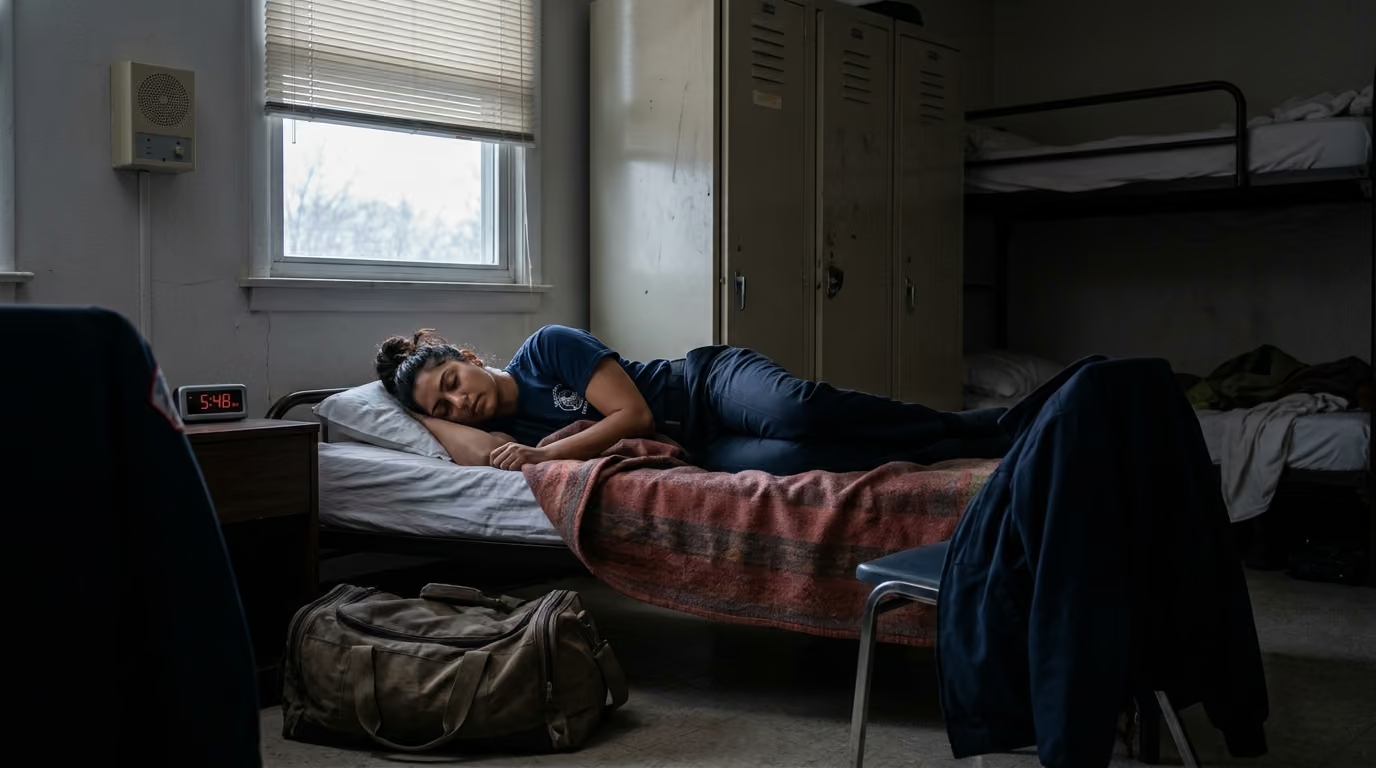

Waking to midnight station tones disrupts critical sleep cycles, accelerating cumulative fatigue, emotional exhaustion, and long-term mental health challenges for first responders.





If you or a colleague are experiencing an immediate mental health crisis, immediate support is available. Call 911 for immediate danger, dial 988 to reach the Suicide & Crisis Lifeline (press 1 for the Veterans Crisis Line), or text 838255. If you have concerns about personal safety or access to lethal tools at home, work with a trusted clinician, family member, or peer to secure those items offsite until stability returns.
Many first responders search online for answers when sudden irritability, emotional numbness, or short tempers begin damaging their home life and crew relationships. The core question is whether these changes represent a permanent mental health disorder or the biological strain of broken sleep and irregular rosters.
This guide delivers a clear analysis of how shift work alters mood regulation, stress tolerance, and personal relationships. It outlines the evidence, provides practical self-monitoring frameworks, and explains when occupational fatigue requires specialized clinical support.
Shift work alters the human body by creating a mismatch between biological sleep timing, operational demands, and social recovery windows. First responders frequently operate when the central nervous system is primed for rest. They must then attempt recovery when ambient heat, household noise, and internal circadian rhythms promote wakefulness.
Understanding this operational friction requires clear distinctions between related physiological states.
Sleep restriction occurs when operational demands cut the available rest window below individual physiological need. A paramedic who gets four hours of rest between extended tours experiences acute restriction.
Cumulative sleep debt develops when these deficits repeat across days or weeks. The brain tracks lost rest across time. As this debt mounts, cognitive speed drops, working memory decays, and emotional bandwidth narrows.
Recovery from cumulative debt requires multiple consolidated sleep cycles. It cannot be erased through an extra hour of rest on a single off-duty morning.
Sleep quality describes the continuity and depth of a rest period. A firefighter may spend eight hours in a station bunk, but alarms, tone activations, and sirens fragment sleep architecture. This prevents the brain from sustaining deep slow-wave sleep and rapid eye movement stages.
Excessive daytime sleepiness is the biological drive to fall asleep during periods of low stimulation. In emergency services, this appears during report writing, apparatus checks, or highway transit. It reflects severe central nervous system fatigue rather than boredom or poor motivation.
Shift work disorder is a distinct circadian rhythm sleep disorder recognized by medical diagnostic systems. It occurs when work schedules consistently overlap the natural biological sleep phase.
The condition features persistent insomnia during allocated sleep windows, severe sleepiness during wake shifts, and functional impairment. A responder can experience severe operational fatigue without meeting the clinical threshold for shift work disorder. Similarly, an individual can have shift work disorder without having a primary psychiatric illness.
Resilience is the physiological and psychological capacity to adapt to stress, perform duties safely, and return to baseline. It is not an innate trait that makes a person invulnerable to exhaustion.
Resilience depends heavily on structural and biological foundations. Protected rest periods, predictable schedules, adequate nutrition, and supportive leadership provide the foundation for mental stamina.
When operational systems strip away regular sleep, even the most dedicated personnel experience cognitive decay and emotional reactivity. True resilience involves recognizing physiological limits and using systematic recovery practices to sustain long-term capability.
The connection between irregular rosters and altered mood is biological. Sleep loss disrupts communication between the prefrontal cortex and the amygdala. The prefrontal cortex manages executive function, impulse control, and rational appraisal. The amygdala processes threat detection and immediate emotional responses.
When a responder is well rested, the prefrontal cortex moderates amygdala reactivity. Sleep deprivation weakens this top-down neurological control. The amygdala becomes hyper-reactive to minor stressors, while the prefrontal cortex struggles to regulate emotional output.
Irritability is often the first visible symptom of cumulative sleep debt. A responder may execute a complex technical extrication without error, yet snap at a junior partner over minor equipment placement.
This drop in emotional bandwidth occurs because regulating social responses consumes high amounts of glucose and neural energy. When sleep is restricted, the brain rations its remaining cognitive resources for immediate operational survival.
Patience, humor, and empathy are temporarily sidelined. The responder becomes blunt, easily frustrated by normal administrative delays, and less capable of tolerating operational ambiguity.
Chronic sleep disruption shifts the autonomic nervous system into persistent sympathetic dominance. Heart rate variability drops, while baseline cortisol and adrenaline levels remain elevated.
This changes how an individual experiences ordinary daily friction. Instead of a measured response, minor inconveniences trigger an immediate surge in blood pressure and muscular tension.
The recovery timeline also lengthens. A well-rested responder returns to autonomic baseline shortly after a minor confrontation. A sleep-deprived responder may remain agitated for hours, carrying residual physical tension into subsequent calls or back home. You can learn more about managing acute physiological activation in our guide on resetting acute stress between calls.
Research across public safety sectors shows a strong relationship between disrupted sleep and psychological health. A comprehensive Canadian study of public safety personnel found that 56% of participants reported symptoms consistent with clinical insomnia. Furthermore, 49% screened positive for symptoms of at least one mental health condition, with post-traumatic stress injuries being the most common category.
The study revealed that public safety personnel who screened positive for insomnia were three to six times more likely to report symptoms of a mental health disorder. Among Australian paramedics, research indicates that insomnia explained a substantial proportion of the variance in depression and anxiety scores.
Excessive daytime sleepiness also carries measurable risks. A study evaluating 458 career firefighters demonstrated that personnel with excessive daytime sleepiness had double the rate of depression compared to well-rested peers.
These studies demonstrate strong statistical associations rather than direct linear causation. Observational research cannot completely isolate shift work from trauma exposure, organizational conflict, or personal health histories. However, the data confirms that sleep health is central to psychological stability across emergency services.
Sleep is the biological mechanism through which the human brain processes emotional memories. During rapid eye movement sleep, the brain reactivates traumatic or stressful experiences within a neurochemically calm environment. This process strips the visceral emotional charge from the factual memory.
When shift work fragments rapid eye movement sleep, this emotional integration fails. Memories of graphic calls, severe pediatric incidents, or personal near-misses remain raw and intrusive.
This failure can lead to conditioned bedtime anxiety. Responders may develop a subconscious fear of sleep, anticipating nightmares, intrusive imagery, or sudden alarm tones. This bedtime hyperarousal prevents sleep onset, locking the individual into an escalating cycle of exhaustion and psychological distress.
Emergency service work is not uniform. The physiological and psychological strain of shift work manifests differently depending on operational assignments, roster patterns, and environmental hazards.
Understanding how shift duration and schedule patterns drive fatigue is critical for long-term health. Our detailed analysis of circadian timing and shift duration examines these biological mechanisms across operational settings.
Firefighters often work 24-hour or 48-hour rotations. While these schedules provide extended blocks of off-duty days, they present severe acute challenges. Station bunkrooms expose personnel to recurrent acoustic shocks from tones and radio traffic.
Physical demands compound this sleep fragmentation. Operating in heavy structural turnout gear during night calls drives acute dehydration and thermal strain.
When firefighters return to the station at 04:00, their elevated core body temperature and sympathetic arousal prevent rapid return to deep sleep. The subsequent commute home occurs during a natural circadian low, creating high motor vehicle accident risks.
Paramedics and emergency medical technicians face relentless call volumes with minimal station recovery time. In urban systems, crews spend entire 12-hour or 14-hour night shifts inside ambulances without access to quiet rest areas.
This continuous operational tempo disrupts metabolic health and meal timing. Nighttime eating combined with circadian disruption increases gastrointestinal distress and insulin resistance.
Paramedics also face sustained emotional labor during calls involving psychiatric crises, family grief, and severe physical trauma. The combination of high cognitive demands, zero down-time, and circadian disruption makes paramedics highly vulnerable to early burnout and chronic sleep debt.
Police officers frequently work rotating shifts that alternate between days, afternoons, and nights. These rapid schedule shifts prevent the circadian system from adapting to any single schedule. Officers live in a state of permanent circadian desynchrony.
Law enforcement duties also require continuous tactical hypervigilance. Officers must maintain constant environmental awareness while carrying heavy duty belts and ballistic armor.
When an officer transitions from high-threat street encounters to a quiet bedroom, the central nervous system cannot instantly turn off this survival state. Officers often lie awake for hours, replaying shift events while their bodies remain locked in sympathetic arousal.
Dispatchers and communications officers experience high cognitive fatigue with minimal physical release. They process frantic callers, manage officer safety, and coordinate multi-agency responses during critical incidents.
Canadian research shows that communications personnel report significantly higher rates of sleep disturbance than many field-based personnel. Dispatchers work long overnight tours under artificial lighting with restricted physical mobility.
They experience high secondary traumatic stress through auditory channels without seeing the physical resolution of the call. This unique operational strain creates high rates of chronic insomnia and psychological exhaustion.
Corrections officers operate within secure institutional environments characterized by understaffing, mandatory overtime, and constant threat potential. Officers spend long shifts in sensory-depriving, high-noise environments where personal safety requires total vigilance.
Mandatory 16-hour double shifts are common in many jurisdictions. This leaves barely eight hours between tours for commuting, eating, and personal care.
This structural restriction makes restorative sleep mathematically impossible. As a result, corrections personnel show some of the highest rates of physical exhaustion, cardiovascular disease, and depression across the public safety sector.
The psychological strain of shift work rarely stays at the station or precinct. It enters the home, altering communication patterns, emotional availability, and domestic stability.
A tired responder often views the home as a sanctuary where no further demands should be made. Conversely, family members view the responder's return as the moment when shared household labor, parenting, and emotional connection should resume.
When emotional bandwidth is drained by consecutive night shifts, responders naturally withdraw to conserve energy. They become quiet, slow to respond to questions, and emotionally flat.
Partners and children often misinterpret this biological fatigue as personal rejection, anger, or indifference. Research examining firefighters and their spouses shows that shift-related job stress correlates with lower marital satisfaction.
Exhaustion increases negative couple interactions, including blaming, defensiveness, and withdrawal. The fatigued responder lacks the cognitive margin required to navigate minor domestic disagreements calmly, turning ordinary household discussions into arguments.
Transitioning from emergency operations to family life requires intentional biological and psychological boundaries. Walking directly through the front door after an intense shift without a transition plan often leads to relational friction.
Structured decompression routines allow the nervous system to shift down from operational vigilance before domestic interactions begin.
First responders excel at assessing patient stability, fire behavior, and tactical threats, but often struggle to assess their own physiological state. Chronic fatigue impairs self-awareness.
A responder who is severely compromised by sleep debt often believes they are performing safely. Structured self-monitoring provides objective data to guide personal recovery choices and operational decisions.
A traffic light framework categorizes fatigue levels and establishes non-negotiable safety actions. It removes guesswork and helps personnel identify when fatigue becomes dangerous.
The commute home after a night shift represents one of the most dangerous phases of emergency service work. Circadian fatigue peaks in the early morning hours, coinciding with the post-shift drive.
Micro-sleeps can occur without warning. A micro-sleep is a brief brain intrusion lasting from one to ten seconds where the person becomes unresponsive to visual and auditory cues.
If you notice lane drifting, delayed braking responses, or inability to recall the last two miles of travel, you have entered the red safety zone. Pull into a secure, well-lit parking area immediately.
Set a phone alarm for twenty minutes and take a short nap. This brief rest temporarily restores alertness enough to complete the drive safely.
Long-term protection requires systemic solutions. Using carpools, public transit, station resting rooms, or arranging a ride after intense shifts prevents motor vehicle collisions.
Managing shift work requires practical, research-backed recovery strategies that fit demanding operational schedules. These methods do not eliminate the biological cost of night work, but they help reduce cumulative fatigue and protect mental stability.
If you are developing a systematic approach to irregular rosters, our resource on building a shift-specific sleep plan provides comprehensive operational protocols.
Daytime sleep after an overnight tour is naturally fragile. The body's core temperature is rising, and environmental disruptions peak during daytime hours. Responders must actively insulate their sleep environment.
Napping is a valuable operational tool for mitigating sleep debt. However, naps must be timed carefully to avoid severe sleep inertia. Sleep inertia is the grogginess and disorientation that occurs upon waking from deep slow-wave sleep.
Never take 45-minute to 60-minute naps when immediate operational alertness is required. Waking during the deepest phase of slow-wave sleep leaves you disoriented, physically weak, and cognitively impaired for up to thirty minutes.
Light is the primary environmental signal that sets the central circadian clock in the brain. Strategic light timing helps align alertness with operational duties.
During night shifts, maintain bright, cool-spectrum lighting in work areas, report-writing rooms, and station bays to promote alertness. When the shift ends, reverse this exposure.
Put on dark sunglasses before walking out of the station into morning sunlight. Keep them on throughout the commute home. This blocks bright morning light from hitting the retina, preventing the brain from shutting down daytime melatonin release.
For a complete breakdown of how light timing influences health, review our analysis on managing nighttime light exposure.
Caffeine is an effective performance aid when used with discipline. It works by blocking adenosine receptors in the central nervous system, temporarily masking feelings of fatigue.
However, caffeine has an average half-life of five to seven hours. Its quarter-life can extend past twelve hours depending on individual liver metabolism.
Establish a strict caffeine cut-off five to six hours before your planned sleep time. Consuming energy drinks or espresso late in a shift prevents deep sleep, even if you fall asleep without difficulty.
For complete tactical protocols on balancing stimulants and rest, read our guide on caffeine strategies for night duty.
Many first responders turn to alcohol after demanding night tours or distressing calls to calm hyperarousal and speed up sleep onset. While alcohol acts as a central nervous system depressant that induces sedation, it ruins sleep quality.
Alcohol fragments sleep architecture, suppresses rapid eye movement phases, and increases sleep apnea episodes by relaxing upper airway muscles. As the liver metabolizes alcohol during the sleep period, a rebound sympathetic surge occurs.
This causes early awakenings, night sweats, and morning anxiety. Over time, using alcohol to force sleep creates tolerance, liver strain, and worsening insomnia.
Individual sleep strategies cannot fix systemic workforce problems. Chronic understaffing, mandatory overtime, poorly designed shift rotations, and lack of break policies quickly overwhelm personal recovery efforts.
Fatigue management must be treated as an organizational safety responsibility rather than an individual worker flaw.
Public safety agencies should implement formal fatigue risk management systems. These systems treat sleep deprivation with the same operational discipline applied to vehicle safety or biohazard exposure.
First responders rely on buddy checks for equipment, air consumption, and scene safety. That same concept applies directly to cognitive fatigue.
Crew members should actively monitor each other for warning signs of severe exhaustion:
When these signs appear, crew members should step in. Reassign the exhausted individual away from high-hazard tasks, share driving responsibilities, or advocate for an immediate rest rotation.
Understanding the difference between normal occupational fatigue and conditions requiring clinical care is vital. Exhaustion after three hard night shifts is an expected physiological response.
However, when exhaustion persists across weeks of leave, impairs daily functioning, or generates severe despair, professional assessment is necessary.
Obstructive sleep apnea is widespread across emergency services. Research indicates that 28.9% to 30% of first responders screen positive for sleep apnea.
Structural features common in first responders, such as large neck circumferences, elevated body mass, and chronic upper airway inflammation from smoke and particle exposure, increase this risk.
Responders who snore heavily, wake gasping for air, experience dry mouth upon waking, or suffer from morning headaches should seek clinical evaluation. Untreated sleep apnea starves the brain of oxygen throughout the night, causing severe daytime sleepiness and cardiovascular damage.
Continuous positive airway pressure therapy provides immediate improvements in sleep architecture, mood, and cognitive performance.
When insomnia becomes chronic, standard sleep advice is rarely enough. Cognitive Behavioral Therapy for Insomnia is the gold-standard, evidence-based non-pharmacological treatment for persistent sleep disorders.
This structured clinical protocol identifies and reshapes the behaviors and conditioned anxieties that keep the nervous system awake at bedtime. Clinicians adapt these protocols for first responders, tailoring stimulus control and sleep restriction models around irregular roster patterns.
For responders navigating cumulative sleep and stress challenges, exploring our comprehensive shift work, sleep, and recovery resources provides further evidence-informed guidance.
If sleep issues stem from intrusive scene memories, hypervigilance, or graphic nightmares, focus on trauma recovery. Evidence-based therapies such as Eye Movement Desensitization and Reprocessing, Cognitive Processing Therapy, or Prolonged Exposure help resolve underlying post-traumatic stress.
Medical providers may also consider specialized medications to manage severe nightmares and nocturnal hyperarousal. Resolving the trauma removes the nighttime alarm response, allowing natural sleep cycles to resume.
Rebuilding mental resilience and repairing sleep health requires steady, consistent adjustments rather than overnight overhauls. Choose two or three specific interventions from this checklist to put into practice this week:
Sustaining a long, capable career in emergency services requires respecting your biological limits and managing recovery with operational discipline. Protecting your sleep is not a sign of weakness; it is the foundation of mental resilience, operational safety, and personal health.
Stay connected for research-led guidance on duty fitness, shift-work sleep, injury recovery, stress, nutrition and career longevity. Practical ideas for first responders who want to stay capable on the job, recover well and protect their health for the long run.



Read practical guidance on first responder fitness, recovery, sleep, nutrition and resilience for demanding work and a long, active career.
read the blog



