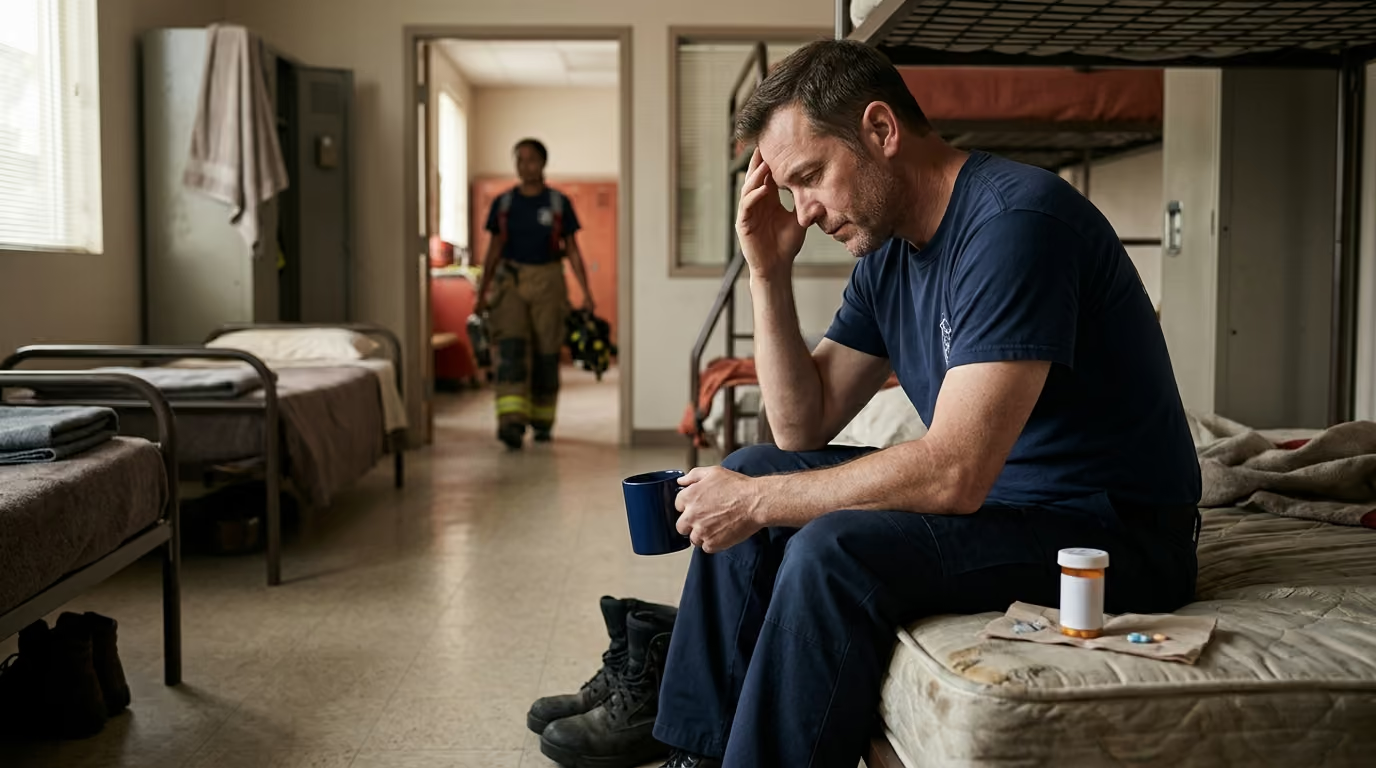

Coming off an exhausting emergency shift often leaves personnel struggling to rest, making it essential to choose safe, effective sleep aids that ensure genuine recovery.





If you are in immediate danger, call 911. For 24/7 support, call or text 988 and press 1 for the Veterans Crisis Line, or text 838255.
Taking a pill to force sleep after a brutal shift feels like an obvious solution, but chemical sedation is not the same as restorative recovery. Knocking out the central nervous system does not clear accumulated sleep debt or reset a disrupted circadian rhythm. For emergency personnel, using the wrong sleep aid at the wrong time can create next-day grogginess, slow down critical reaction times, and increase the risk of accidents during emergency responses.
A sleep aid is not a cure for an unmanageable schedule. It is a targeted risk-management tool that carries specific physiological trade-offs. Choosing whether to use behavioral protocols, supplements, over-the-counter options, or prescription medications requires understanding how these tools affect daytime alertness, physical coordination, and long-term health.
Sleep is an active biological process driven by two distinct mechanisms: sleep pressure and circadian timing. Sleep pressure builds steadily during waking hours through the accumulation of adenosine in the brain. Circadian timing is regulated by the central clock in the hypothalamus, which responds to light and darkness to signal when the body should be awake or asleep.
When a first responder works through the night, sleep pressure is high, but the circadian drive for wakefulness begins to rise as the sun comes up. Sedative medications and over-the-counter sleep products can depress the central nervous system to induce unconsciousness. However, this forced sedation does not automatically generate the natural progression of light sleep, deep slow-wave sleep, and rapid eye movement sleep.
The American Academy of Sleep Medicine distinguishes between interventions that alter circadian phase, those that address sleep pressure, and those that merely mask symptoms through sedation. A compound may help someone lose consciousness quickly while leaving core sleep architecture fragmented. This fragmentation limits physiological recovery, tissue repair, and cognitive restoration.
Next-day impairment remains one of the greatest risks of pharmacologic sleep aids. The Food and Drug Administration has warned that residual medication levels in the bloodstream can impair driving and attention-dependent tasks long after a person wakes up. For emergency personnel, impaired vigilance or delayed braking response can be hazardous. True recovery requires strategies that support the body's natural sleep processes rather than simply shutting down awareness.
First responders work under conditions that directly conflict with human biology. Emergency calls, rotating rosters, 24-hour shifts, and mandatory overtime regularly disrupt baseline sleep opportunities. Research published in occupational sleep literature indicates that approximately 31% of first responders screen positive for shift work disorder. In addition, an estimated 30% suffer from obstructive sleep apnea, 28% have chronic insomnia, and 28% experience excessive daytime sleepiness.
These distinct issues require different interventions. Shift work disorder is a circadian rhythm sleep-wake disorder where the work schedule conflicts with the internal biological clock. Insomnia disorder involves persistent difficulty falling asleep, staying asleep, or waking too early despite having an adequate opportunity to rest. Obstructive sleep apnea is a mechanical and physiological airway collapse during sleep that causes oxygen desaturation and frequent micro-arousals.
Confusing these conditions leads to ineffective or dangerous self-treatment. Taking a sedating antihistamine or a prescription hypnotic will not clear an obstructed airway in someone with sleep apnea. In fact, sedatives can relax the upper airway muscles and worsen nighttime oxygen drops. Similarly, using sedatives to manage circadian misalignment does not adjust the underlying biological clock.
Understanding your specific operational pattern is essential for identifying the right approach. Learn more about how shift lengths influence biological recovery by reviewing our guide on fatigue and circadian timing across shift rotations. Addressing sleep difficulties requires separating schedule constraints from underlying sleep disorders.
Clinical practice guidelines from the American Academy of Sleep Medicine identify Cognitive Behavioral Therapy for Insomnia, known as CBT-I, as the first-line standard of care for chronic insomnia. CBT-I addresses the psychological and behavioral patterns that perpetuate poor sleep rather than temporarily masking symptoms with medication.
CBT-I combines several structured components:
Stimulus control requires using the bed only for sleep and recovery. If you are unable to fall asleep within roughly twenty minutes, leave the bedroom. Move to a dimly lit area, engage in a quiet activity, and return to bed only when physical sleepiness returns. This prevents the brain from associating the bed with frustration, clock-watching, and operational stress.
Relaxation techniques provide practical tools to down-regulate the nervous system after intense calls. Slow diaphragmatic breathing, progressive muscle relaxation, and guided mental routines lower heart rate and reduce circulating stress hormones. The National Institute for Occupational Safety and Health recommends structured relaxation practices to support sleep onset when transitioning off duty.
Environmental controls are equally essential for daytime sleep. Daylight suppresses natural melatonin production and signals the brain to wake up. Night-shift personnel should use blackout curtains, high-grade eye masks, and earplugs to create a dark, quiet environment. NIOSH guidelines emphasize maintaining a cool bedroom temperature, as the body must drop its core temperature to initiate and maintain deep sleep.
Strategic napping offers another evidence-based behavioral intervention. NIOSH and sleep medicine specialists recommend short naps of 15 to 30 minutes during designated rest breaks to temporarily reduce fatigue. Longer naps of approximately 90 minutes before starting a night shift allow for a full sleep cycle, helping to reduce the overall sleep debt accumulated across a tour. Explore our comprehensive shift-specific sleep planning resource to structure these rest windows around your schedule.
Light is the primary external cue governing the human circadian clock. Managing light exposure allows shift workers to shift their circadian phase, facilitate daytime sleep, and maintain alertness during night operations. Mismanaged light exposure can make falling asleep after a shift difficult.
When completing a night shift, exposure to bright morning sunlight signals the brain to suppress melatonin and raise core body temperature. This biological response promotes wakefulness just as the responder needs to sleep. The American Academy of Sleep Medicine recommends wearing dark sunglasses during the morning commute home to block alerting blue light wavelengths.
Once inside the home, keep indoor lighting dim while unwinding. Avoid exposure to smartphones, tablets, television screens, and overhead LED fixtures, which emit blue-enriched light that stimulates retinal ganglion cells. Protecting the final hour before bed from bright light helps preserve the biological readiness for sleep.
During night shifts, strategic bright light exposure can help maintain alertness. NIOSH materials note that bright light in station areas or dispatch centers during the first half of a night shift helps align alertness with operational demands. However, light management requires consistent timing. Random or poorly timed light exposure can shift the circadian clock in the wrong direction, worsening sleep problems on subsequent days.
Schedule design remains a critical institutional factor that individual habits cannot fully replace. NIOSH recommendations emphasize that agencies should provide at least 10 consecutive hours off duty between shifts to allow for commuting, meals, and 7 to 8 hours of sleep. When structural schedules are compressed, environmental and light strategies become even more vital. Learn how agency leaders can evaluate these factors by reading our analysis on fatigue leadership and measuring operational readiness.
Many first responders turn to over-the-counter products and dietary supplements because they are accessible without a prescription. However, non-prescription status does not mean a substance is free from side effects, interactions, or morning impairment.
Melatonin is a chronobiotic hormone produced naturally by the pineal gland, not a traditional sedative. Its primary function is signaling circadian night to the body. The American Academy of Sleep Medicine conditionally supports the use of appropriately timed melatonin for shift workers who experience sleep disturbance following night duty.
Melatonin is most useful when taken close to the intended daytime sleep window after a night shift, or during schedule transitions between day and night tours. Because it alters circadian timing, taking melatonin at the wrong biological time can cause unwanted phase shifts. High doses can cause morning grogginess, vivid dreams, and headache. The National Center for Complementary and Integrative Health notes that long-term safety data for chronic melatonin supplementation remain limited.
Many commercial over-the-counter sleep aids rely on first-generation sedating antihistamines, such as diphenhydramine or doxylamine. While these compounds cause drowsiness by crossing the blood-brain barrier and blocking histamine receptors, they carry substantial disadvantages for emergency personnel.
First-generation antihistamines possess long half-lives and strong anticholinergic properties. Common side effects include dry mouth, urinary retention, constipation, blurred vision, and next-day cognitive slowing. The FDA warns that sedating antihistamines can significantly impair coordination and driving ability long after waking. Tolerance to their sedating effects develops rapidly, often leading users to increase doses without gaining additional sleep benefits.
Common botanical sleep remedies include valerian root, chamomile, lavender, and kava. NCCIH reviews indicate that evidence supporting the effectiveness of valerian root, chamomile, and related botanicals for chronic insomnia remains weak and inconsistent.
Kava carries documented risks of severe liver injury and should be avoided. Other supplements, such as L-tryptophan, have historical associations with severe adverse reactions like eosinophilia-myalgia syndrome when manufacturing impurities occur. Dietary supplements are not subjected to the same pre-market purity and potency regulations as prescription medications. Products may contain variable amounts of active ingredients or unlisted compounds that interact poorly with other substances.
While caffeine is an alertness aid rather than a sleep aid, managing its consumption is critical for protecting sleep onset. Caffeine works by temporarily blocking adenosine receptors in the brain, masking the sensation of sleep pressure. NIOSH guidance advises avoiding caffeine for at least five hours before the intended sleep period, and longer for individuals who metabolize caffeine slowly. For actionable fueling strategies that protect post-shift rest, read our guide on managing caffeine and energy during night duty.
When behavioral interventions, environmental modifications, and circadian strategies are insufficient, prescription medications may be considered under clinical supervision. The American Academy of Sleep Medicine states that prescription pharmacotherapy for chronic insomnia is primarily indicated when CBT-I is unavailable, has yielded incomplete results, or is temporarily needed alongside behavioral therapy.
Every prescription sleep medication carries specific trade-offs regarding duration of action, next-day impairment, dependency risk, and operational readiness.
Z-drugs, including zolpidem, eszopiclone, and zaleplon, act selectively on the GABA-A receptor complex to initiate or maintain sleep. These medications have shorter half-lives than traditional benzodiazepines, but they carry significant safety warnings.
The FDA has issued boxed warnings for z-drugs due to the risk of complex sleep behaviors. These behaviors include sleepwalking, sleep-driving, preparing food, or making phone calls while not fully awake, which have resulted in serious injuries and fatalities. Furthermore, the FDA requires lower recommended starting doses, particularly for women, due to sustained morning blood levels that impair driving ability and psychomotor coordination. A first responder called in early for duty after taking a z-drug faces heightened operational risks.
Traditional benzodiazepines, such as temazepam, lorazepam, and clonazepam, enhance GABA activity broadly across the central nervous system. While effective at producing sedation, they significantly alter sleep architecture by suppressing slow-wave deep sleep and rapid eye movement sleep.
Benzodiazepines carry high risks of tolerance, physiological dependence, severe withdrawal, and rebound insomnia upon discontinuation. The Department of Veterans Affairs and Department of Defense clinical practice guidelines strongly advise against the use of benzodiazepines for chronic insomnia and PTSD-related sleep disruption. Combining benzodiazepines with alcohol or opioids creates
lethal risks of severe respiratory depression. They are largely incompatible with the unpredictable emergency call-backs inherent to public safety work.
Dual orexin receptor antagonists, known as DORAs, include medications such as suvorexant, lemborexant, and daridorexant. Rather than forcing general sedation across the brain, DORAs work by blocking the binding of orexins, which are neuropeptides that drive and maintain wakefulness.
By turning down wake signaling, DORAs allow the brain's natural sleep pathways to take over. Potential side effects include next-day daytime somnolence, abnormal dreams, sleep paralysis, and worsening depression in vulnerable individuals. Responders using DORAs must maintain a full seven- to eight-hour sleep window before driving or reporting for duty.
Low-dose doxepin is an FDA-approved histamine H1 receptor antagonist used to treat sleep-maintenance insomnia, where patients repeatedly wake during the second half of the night. At very low doses, it does not produce significant anticholinergic effects or daytime grogginess.
Other sedating antidepressants, such as trazodone and mirtazapine, are frequently prescribed off-label for insomnia. While they avoid the abuse potential associated with controlled substances, they can cause orthostatic hypotension, daytime sedation, weight changes, and dry mouth. Off-label prescribing of sedating antidepressants is not automatically safer than FDA-approved insomnia medications and requires close clinical oversight.
First responders exposed to repeated operational trauma may develop chronic hyperarousal and traumatic nightmares that disrupt sleep. Prazosin is an alpha-1 adrenergic receptor antagonist originally developed for hypertension that is used to treat trauma-related nightmares.
The VA/DoD PTSD clinical practice guidelines suggest prazosin as a targeted treatment for nightmares associated with PTSD. By dampening excessive central noradrenergic signaling during sleep, prazosin can reduce nightmare frequency and nighttime distress. However, it is not a general hypnotic or broad PTSD treatment. Because prazosin lowers blood pressure, it can cause orthostatic dizziness, lightheadedness, and fainting, particularly when getting out of bed rapidly to answer an alarm.
In some cases, physicians manage shift work disorder by prescribing wake-promoting agents such as modafinil or armodafinil. These medications stimulate central dopamine and orexin pathways to sustain daytime alertness during night shifts.
Wake-promoting agents do not replace biological sleep, nor do they clear accumulated cellular sleep debt. They are symptomatic management tools that improve wakefulness while a responder is working. Side effects can include headaches, nervousness, nausea, insomnia during planned rest windows, and cardiovascular strain. They should never be used to mask severe, chronic sleep deprivation or justify dangerous work schedules.
To explore the broader physiological impacts of night shifts, browse our dedicated Shift Work and Sleep category.
Taking sleep aids without a thorough medical evaluation can mask serious, treatable underlying medical and psychological conditions. A qualified physician should complete a comprehensive clinical screening before recommending any pharmacologic sleep intervention.
Using alcohol to fall asleep is a common, destructive coping mechanism in shift work cultures. While alcohol acts as a central nervous system depressant that induces quick unconsciousness, it severely disrupts sleep architecture during the second half of the night. It suppresses REM sleep, worsens sleep apnea by relaxing airway muscles, causes frequent awakenings, and leads to rapid tolerance. Combining alcohol with sedating sleep aids or prescription hypnotics is exceptionally dangerous.
Post-traumatic stress and operational hyperarousal frequently manifest as persistent sleep disruption. VA/DoD sleep guidelines emphasize that trauma-informed CBT-I should remain the foundational treatment for PTSD-associated insomnia. Clinicians must identify whether sleep difficulty is driven by circadian misalignment, psychological hyperarousal, upper airway collapse, or environmental disturbance before escalating to sedatives.
Applying sleep science to emergency operations requires realistic risk management. The following operational scenarios demonstrate how evidence-based sleep strategies should be applied in real-world conditions.
A firefighter finishes a busy 24-hour shift at 07:00. She attempts to unwind during a 45-minute drive home in bright morning sun, takes an over-the-counter antihistamine upon arriving, and struggles to stay asleep in a warm room.
The primary issues here are biological circadian alerting from morning sunlight, unmanaged environmental heat, and residual antihistamine side effects. The appropriate intervention involves wearing dark sunglasses during the morning commute home, creating a cool and pitch-black bedroom, and eliminating the antihistamine. If sleep onset remains difficult, a low, appropriately timed dose of melatonin can be discussed with a physician to signal circadian night.
A police officer working rotating night tours takes a prescription z-drug at 08:30 to force daytime rest. At 14:00, he is called in early for an emergency tactical deployment. He feels awake but experiences slowed reaction times during emergency vehicle operation.
The available sleep window was too short for the medication to clear the bloodstream, resulting in residual cognitive and psychomotor impairment. First responders taking prescription sleep aids must maintain an uncompromised, protected sleep window of at least seven to eight hours. If a full rest window cannot be guaranteed, prescription hypnotics should be avoided. Clear communication with department leadership regarding off-duty rest periods is essential to prevent impaired operational deployments.
A paramedic who works long shifts reports nodding off at stoplights and struggling to stay awake between emergency calls. He takes over-the-counter sleep aids each night, believing his fatigue is caused entirely by shift work. His partner reports that he snores loudly and occasionally stops breathing during station naps.
Using sedatives in this scenario is hazardous. The clinical presentation strongly suggests obstructive sleep apnea, which affects nearly one-third of the first responder population. Sedating medications will not restore daytime alertness and will worsen airway obstruction. The immediate priority is an occupational sleep evaluation and polysomnography to establish appropriate airway therapy, such as continuous positive airway pressure (CPAP).
An emergency room nurse combines daytime energy drinks with nighttime combinations of antihistamines, melatonin, valerian root, and alcohol across a four-day block of shifts. She reports worsening brain fog, severe morning dry mouth, and increasing difficulty falling asleep.
Polypharmacy creates unpredictable drug interactions, liver strain, and severe rebound insomnia. The strategy must focus on a structured reset: eliminating alcohol, stopping sedating antihistamines, establishing a strict caffeine cut-off five hours before bedtime, and anchoring the sleep routine with behavioral down-regulation and dark, quiet bedroom conditions.
Persistent sleep disturbance is a medical issue that warrants professional evaluation. First responders often worry that disclosing sleep problems or mental health strain will jeopardize their operational status, fitness-for-duty clearance, or professional standing. However, untreated sleep disorders carry far greater risks to career longevity, physical health, and personal safety.
You should consult a licensed healthcare professional, occupational medicine specialist, or board-certified sleep physician if you experience:
Professional care allows for targeted diagnostics, including home sleep apnea testing, formal in-lab polysomnography, and access to specialized behavioral clinicians trained in CBT-I for shift workers. A physician can help you safely taper off impairing over-the-counter sedatives, review prescription options, and establish an effective, non-impairing sleep management plan.
Sustainable performance across an emergency-services career requires treating sleep as a core operational discipline. Relying on heavy chemical sedation to survive broken schedules degrades cognitive sharpness, damages cardiovascular and metabolic health, and increases the danger of on-duty accidents.
True readiness is built by protecting off-duty recovery, implementing strict behavioral and environmental sleep foundations, managing circadian light cues, and addressing underlying sleep disorders with qualified medical professionals.
Protecting your sleep through evidence-based recovery strategies ensures you stay alert on duty, safeguard your partners, and maintain your physical health long into retirement.
Stay connected for research-led guidance on duty fitness, shift-work sleep, injury recovery, stress, nutrition and career longevity. Practical ideas for first responders who want to stay capable on the job, recover well and protect their health for the long run.



Read practical guidance on first responder fitness, recovery, sleep, nutrition and resilience for demanding work and a long, active career.
read the blog



