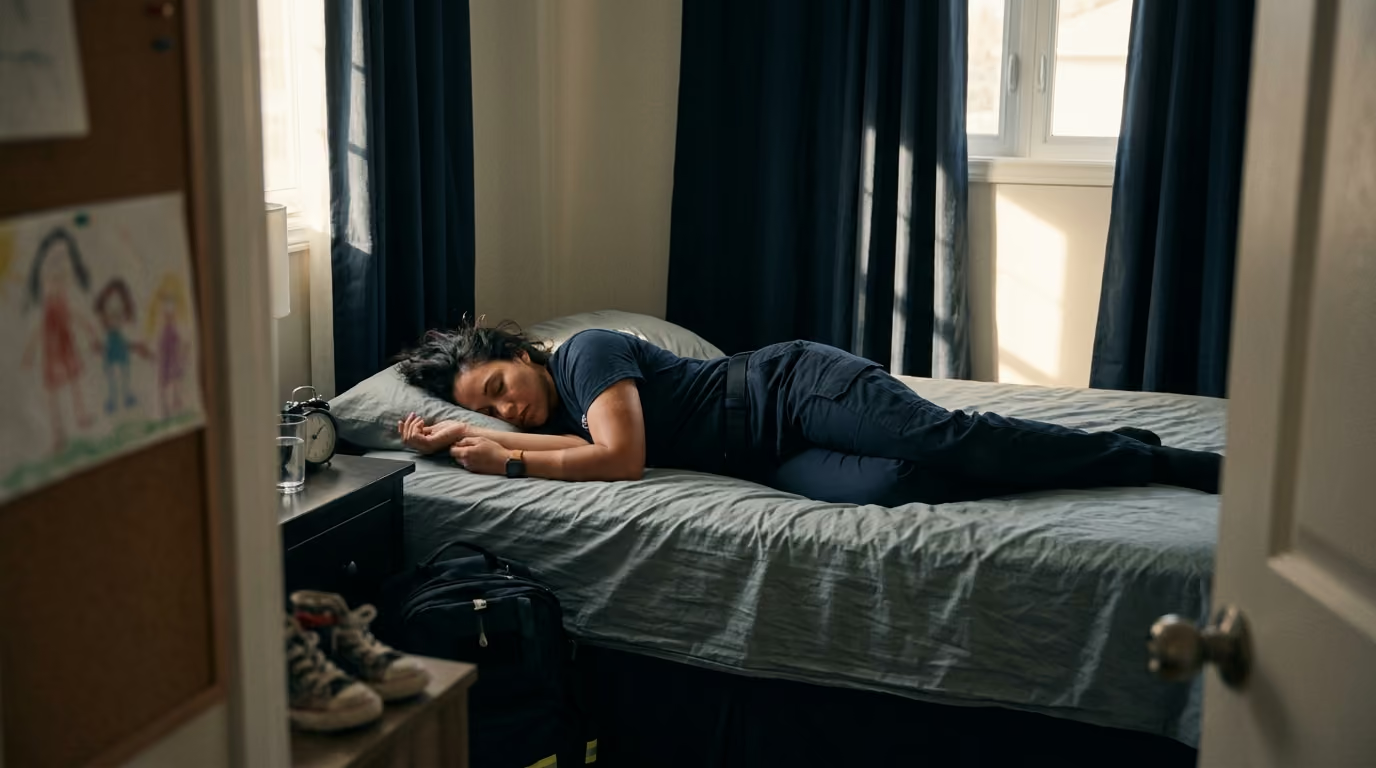

Responder fatigue is often blamed on long shifts alone, but true recovery depends on coordinated household sleep windows, structured family communication, and practical child routines.





Sleep management for shift-working emergency personnel is not an individual routine of willpower and herbal tea. It is a complex household logistics problem. When emergency calls, night tours, mandatory holdovers, and fluctuating rotations collide with the daily realities of partners, children, pets, and shared living spaces, standard advice fails.
Protecting daytime recovery while maintaining a supportive family life requires practical coordination, shared agreements, and systematic boundary setting. The goal is to build sustainable capability for the job while protecting the physical health of the responder and the relational health of the home.
To resolve sleep disruption in a shift-working household, families must treat recovery as a shared operational system rather than an individual discipline problem. Protecting rest requires clear agreements on protected sleep windows, unambiguous handoffs for childcare and domestic tasks, and environmental controls for light and noise. When households replace daily negotiations with predefined protocols, responders recover faster and partners carry less emotional strain.
The scientific literature shows that non-standard schedules disrupt human biology and strain family structures. The National Institute for Occupational Safety and Health defines shift work broadly as any work schedule falling outside conventional daytime hours between 7:00 a.m. and 6:00 p.m. Research indicates that shift work is consistently linked with reduced total sleep time, circadian misalignment, and heightened social strain.
Large-scale reviews highlight the prevalence of these challenges across public safety populations. A systematic review and meta-analysis examining firefighters estimated a pooled prevalence of 30.49 percent for clinical sleep disorders and 51.43 percent for poor overall sleep quality. In emergency medical services, pooled prevalence estimates report that approximately 31 percent of personnel screen positive for shift work disorder, 30 percent for obstructive sleep apnea, and 28 percent for chronic insomnia. These figures represent screening estimates across varied populations, but they reflect a heavy occupational burden.
(Data compiled from NIOSH, AASM, and occupational health meta-analyses)
The strain extends directly to the household. Research reviewing the well-being of emergency responder families indicates that chronic sleep loss impairs interpersonal communication and decreases emotional availability. Occupational stress and short sleep durations correlate with higher parenting stress, lower parenting satisfaction, and increased feelings of loneliness among non-responder spouses. When a parent works unpredictable hours, the instability affects dependents. Studies on parental schedule instability show measurable associations between erratic work hours and reduced sleep duration, higher sleep variability, and daytime sleepiness in children.
Furthermore, schedule design features like quick returns, defined as rest periods of fewer than 11 hours between consecutive shifts, amplify these problems. A 2025 study demonstrated that frequent quick returns directly degrade sleep quality, which subsequently increases work-family conflict. When off-duty recovery windows shrink, the pressure on domestic logistics rises sharply.
First responder schedules differ fundamentally from predictable overnight factory shifts. A permanent night worker can establish a fixed daytime sleeping routine. In contrast, emergency personnel deal with rotating tours, extended 24-hour shifts, mandatory overtime, and unpredictable call volumes. Understanding how shift rotations and extended tours drive cumulative fatigue is essential for developing a functional household recovery plan.
A critical concept in occupational physiology is the gap between sleep opportunity and sleep obtained. Sleep opportunity is the total off-duty window provided by the agency. Sleep obtained is the actual consolidated sleep achieved after accounting for commuting, personal hygiene, meal preparation, childcare handoffs, and neighborhood noise.
NIOSH recommends a minimum of 10 consecutive hours of off-duty time between shifts to allow workers the opportunity to achieve 7 to 8 hours of real sleep. When a responder receives an 8-hour turnaround, the usable sleep opportunity is often reduced to 4 or 5 hours. Household demands during this window quickly erode the remaining sleep time.
Even on shifts that permit rest, such as 24-hour fire or EMS rotations, station sleep is rarely restorative. Emergency tones, radio chatter, and station mobilizations cause severe sleep fragmentation. The brain is repeatedly forced from deep sleep into rapid sympathetic nervous system activation.
When responders arrive home after a high-volume tour, their physiology remains primed for action. The brain does not instantly switch from high-threat vigilance to restful relaxation simply because the front door closes. Without a planned decompression window, daytime sleep remains light, restless, and vulnerable to every domestic sound.
Unplanned holdovers destroy household scheduling. When an officer is held over for late arrests or an EMS crew is dispatched right before shift change, the entire domestic timeline breaks. The partner at home is left managing school drop-offs or child care without notice.
These events turn ordinary domestic responsibilities into points of friction. If the household has no contingency plan, the returning responder feels guilty for sleeping, while the partner feels abandoned with the domestic workload.
To prevent resentment and sleep deprivation, families must replace informal requests with a structured protected sleep block. Rather than asking the family to keep the house quiet, the responder and partner define explicit operational rules for daytime recovery.
A complete sleep protection plan contains five specific elements that remove ambiguity for everyone in the home:
Implementing this operational approach aligns with custom sleep plans built for shift schedules, transforming recovery from an accidental luxury into an agreed-upon household standard.
When schedules collapse due to late calls or emergency call-backs, obtaining a full 7-hour block is impossible. In these scenarios, the household shifts to a minimum viable recovery protocol. This approach identifies the baseline rest needed to maintain physical safety and basic cognitive functioning.
The minimum viable recovery package includes one consolidated core block of 3 to 4 hours of protected sleep, a balanced meal, adequate hydration, and a 20-minute low-stimulation decompression window. Strategic napping can support this structure. NIOSH guidance notes that short naps of 15 to 30 minutes improve short-term alertness, while longer naps of roughly 90 minutes complete a full sleep cycle. Naps should supplement rather than replace the primary sleep block.
A recovery system that protects the responder while exhausting the partner is unsustainable. If the partner carries all domestic duties, childcare, and morning routines without receiving their own protected rest, resentment builds quickly. Sustainable family operations require shared sleep equity.
Fatigue reduces emotional regulation and cognitive flexibility. Complex discussions about finances, relationship conflicts, or major domestic choices should never occur when one or both partners are severely sleep deprived. A simple traffic-light status system communicates readiness instantly:
Replacing emotionally charged accusations with logistical questions protects relationship stability. When fatigue sets in, brief operational statements work best:
Couples must agree to separate fatigue-driven irritability from relationship health. A useful rule for emergency responder families is to avoid drawing permanent conclusions about a relationship during the most sleep-deprived days of a shift cycle.
Children thrive on predictability, but shift work creates an irregular home environment. When children do not understand why a parent is sleeping during the day or irritable in the evening, they may personalize the behavior. Age-appropriate systems bridge this gap.
Infants present the hardest recovery challenge for shift-working households. Responsive caregiving cannot be turned off, and both parents face significant sleep disruption.
Couples must alternate protected sleep blocks rather than expecting one person to absorb all nighttime awakenings. For example, the non-shift partner handles infant care during the night before the responder's shift, while the responder covers an early morning block to allow the partner consolidated rest.
Fatigued parents must never co-sleep on couches, recliners, or unsafe surfaces with infants. Pediatric safety guidelines must guide all sleeping arrangements, particularly when adults are heavily sleep deprived.
Young children often struggle with abstract rules like "be quiet because daddy worked last night." Visual tools make boundaries tangible:
Teenagers often have busy schedules involving sports, social commitments, and late nights. Household agreements should clarify transportation responsibilities and establish quiet hours for loud electronics or kitchen use near the sleeping area.
Returning home after traumatic or difficult calls requires a deliberate decompression transition. Responders should follow a structured sequence before stepping into intense family interactions:
This decompression sequence prevents emotional numbness or hypervigilance from spilling into interactions with children or partners.
Managing the physical sleep environment is critical when trying to sleep while the rest of the household is awake. Circadian biology naturally promotes daytime alertness. To counter this, the physical sleep space must simulate nighttime conditions as closely as possible.
Bright light suppresses melatonin production and signals the brain's central clock to promote wakefulness. Responders coming off night shifts should consider wearing dark sunglasses during the morning commute to minimize morning light exposure before bed.
Within the bedroom, high-grade blackout curtains or custom shades should seal all window light. Gaps around curtain edges can be taped or secured to prevent light leaks. High-quality contoured sleep masks provide a reliable backup, especially in shared or temporary rooms. Small electronics with bright LED status lights should be covered with dark tape or removed entirely.
Domestic noise is a primary driver of daytime sleep fragmentation. Standard earplugs help, but they can sometimes prevent a responder from hearing personal emergency alarms.
A practical solution involves placing a continuous white noise machine or box fan directly between the bed and the bedroom door. This creates an acoustic barrier that softens sudden household sounds, footsteps, and kitchen clatter.
Doorbells should be physically disconnected or set to silent mode during sleep windows. Delivery drivers should receive standing digital instructions to leave packages at the door without knocking or ringing.
Human body temperature naturally drops during sleep, and warm environments cause frequent night-time awakenings. NIOSH and the American Academy of Sleep Medicine recommend maintaining a cool, dark, and quiet bedroom, with many sleep specialists suggesting an ambient temperature around 68 degrees Fahrenheit.
In shared bedrooms where partners have different temperature preferences, dual-zone bedding, separate light blankets, or breathable natural fabrics resolve conflicts. If a partner's morning preparation disturbs the sleeping responder, shifting daytime recovery to a dedicated guest room, basement bedroom, or partitioned space during critical sleep blocks can protect rest for both individuals.
Household pets are a frequent, overlooked cause of sleep disruption. Dogs barking at delivery drivers or cats scratching at bedroom doors can disrupt daytime sleep.
Families should establish clear pet protocols during sleep windows. This includes morning feeding and vigorous exercise before the responder's sleep block, using timed automated feeders, or keeping pets restricted to living areas away from the bedroom hallway. The non-sleeping partner or family members should assume responsibility for pet management during protected hours.
No environmental adjustment or family agreement can eliminate the biological hazards of chronic sleep loss. Severe sleep deprivation impairs reaction time, emotional regulation, cognitive processing, and physical health. Responders and their families must recognize when sleep debt shifts from an inconvenience into a critical safety risk.
Driving while severely fatigued carries risks comparable to driving under the influence of alcohol. Responders coming off prolonged shifts or consecutive night tours should never transport children or family members when experiencing heavy eyelids, lane drifting, or microsleeps.
If a responder feels dangerously sleepy during the morning commute, they must use a short 20-minute power nap in a safe parking area before continuing home. Family logistics must always yield to basic transportation safety.
First responders frequently fall into cycles of heavy stimulant use to stay awake followed by sedatives or alcohol to force sleep. NIOSH notes that caffeine has a half-life of 5 to 6 hours or longer, meaning a late-shift coffee can disrupt daytime sleep architecture hours later. For sustainable energy strategies, review guidelines on managing caffeine and energy across duty cycles.
Alcohol is particularly damaging to recovery. While alcohol induces drowsiness and speeds up sleep onset, it disrupts sleep architecture, suppresses restorative REM stages, and leads to early awakenings. Relying on alcohol for post-shift relaxation worsens chronic fatigue and increases household friction.
Nutrition timing also plays a key role in physiological recovery. Adopting circadian-aligned eating windows during shift work helps stabilize blood glucose levels and prevents gastrointestinal discomfort from interfering with daytime rest.
Not all sleep problems can be resolved through family scheduling and blackout curtains. First responders experience high rates of clinical sleep disorders that require formal medical diagnosis and treatment.
Shift work disorder is a formal circadian sleep-wake condition characterized by chronic insomnia, excessive sleepiness, or both, directly related to a work schedule that overlaps the normal sleep window. Under American Academy of Sleep Medicine standards, symptoms must persist for at least three months to meet diagnostic criteria.
Medical assessment typically involves maintaining a detailed sleep diary and wearing an actigraphy monitor for at least 14 days across work and non-work periods. Clinical management may involve behavioral therapies, targeted light therapy protocols, or specialized medical interventions supervised by a physician.
Obstructive sleep apnea is widespread among emergency personnel and frequently goes undiagnosed. Responders who snore loudly, wake up gasping, experience dry mouth, or remain exhausted despite spending ample time in bed should undergo formal polysomnography.
Treating underlying sleep apnea or chronic clinical insomnia removes the biological barriers to recovery. Families must recognize when poor rest is driven by an underlying medical disorder rather than household disruptions, seeking care through occupational health professionals or board-certified sleep specialists.
Dual-shift households require precise calendar coordination. Use a shared digital schedule that maps shift times and protected sleep windows at least two weeks in advance. Establish clear handoff protocols for children or home tasks, and utilize alternate sleeping spaces so the partner leaving for early duty does not disrupt the responder finishing a night rotation.
When unexpected holdovers occur, send a standardized update text to your partner immediately to confirm the schedule change. Activate your backup childcare or transportation plan, and scale down non-essential household plans for the evening. Upon arriving home, complete a minimum viable recovery block of 3 to 4 hours of protected sleep before attempting any domestic tasks.
Separate sleeping arrangements during heavy shift blocks can be highly effective. If a partner is a light sleeper or wakes early for work, using a dedicated guest room or quiet sleeping area protects rest for both individuals. Frame this arrangement as an operational recovery tool that preserves energy and patience for family time on off-duty days.
Establish a 20-minute physical and mental decompression bridge. Change out of uniform at the station or immediately upon entering the home, take a warm shower, drink a glass of water, and spend 15 minutes in a quiet room without digital screens. This brief buffer allows your nervous system to down-regulate, making interactions with your partner and children calmer and more positive.
A resilient first responder career depends on high-quality physiological recovery, and sustainable recovery requires an informed, supported household. By treating sleep as a shared logistical system built on clear communication, environmental boundaries, and mutual rest equity, responders and their families can safeguard their operational capability, health, and long-term connection.
Stay connected for research-led guidance on duty fitness, shift-work sleep, injury recovery, stress, nutrition and career longevity. Practical ideas for first responders who want to stay capable on the job, recover well and protect their health for the long run.



Read practical guidance on first responder fitness, recovery, sleep, nutrition and resilience for demanding work and a long, active career.
read the blog



