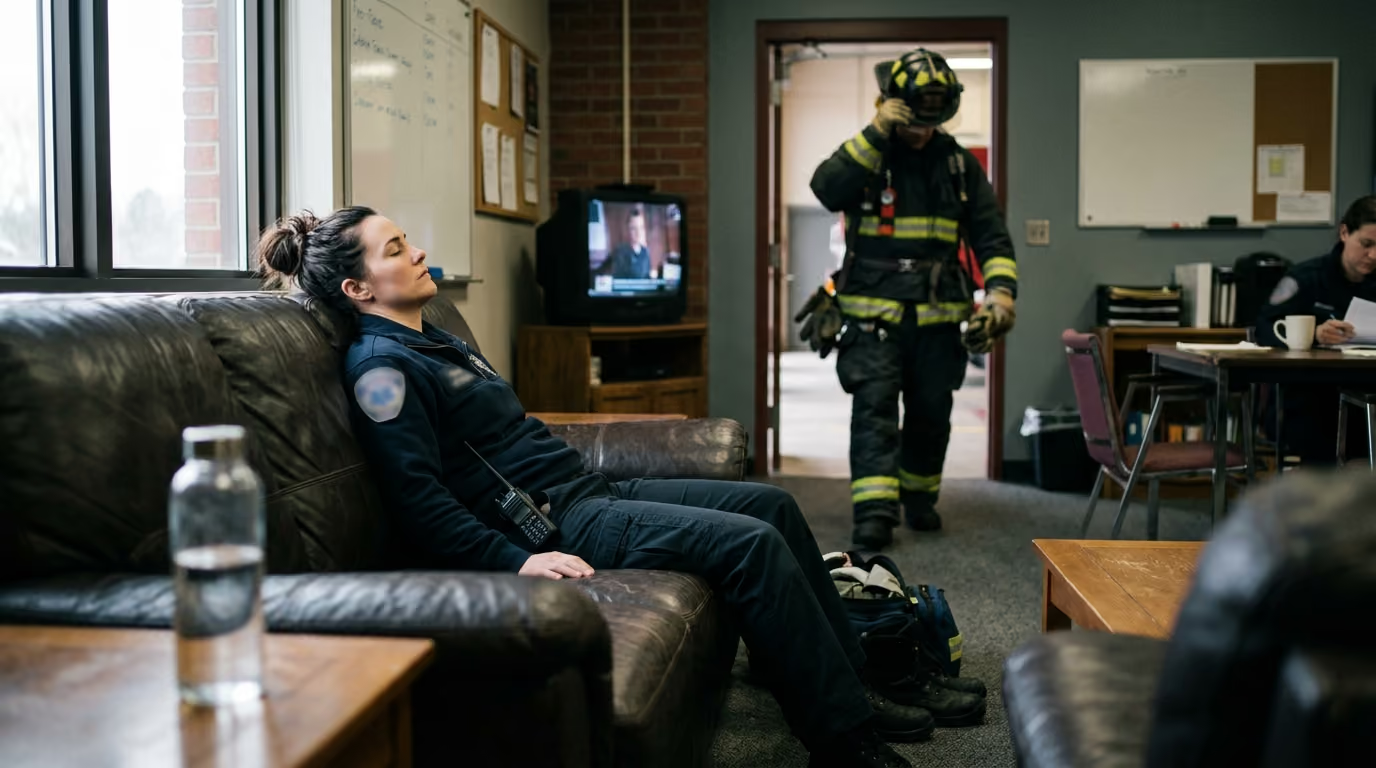

Evidence-based strategies for emergency personnel help mitigate shift-work fatigue, manage broken sleep cycles, and maintain operational readiness across demanding duty schedules.





If you are in immediate danger, call 911. For 24/7 support, call or text 988 and press 1 for the Veterans Crisis Line, or text 838255.
Most public-safety organizations treat fatigue as an individual endurance problem that a cup of coffee or a long weekend can solve. That assumption is biologically flawed. Recovery is not a passive consequence of being off the clock. A twelve-hour patrol shift, a twenty-four-hour fire rotation, a chaotic ambulance tour, and a dispatch shift generate fundamentally different biological debts.
Nominal shift length tells only a fraction of the story. True physiological strain depends on call frequency, circadian timing, physical loading, emotional activation, and how severely sleep is broken. Understanding how recovery demands differ across emergency-service disciplines allows crews and leadership to build systems that protect cognitive performance, physical capability, and long-term health.
Fatigue in emergency services is a direct hazard to operational safety. It degrades reaction time, situational awareness, emotional regulation, and decision-making under stress. Equating fatigue with a lack of personal resilience creates dangerous blind spots across every branch of public safety.
True recovery requires more than just sleep duration. It demands a balance between sleep opportunity, sleep continuity, circadian alignment, and autonomic decompression. When emergency personnel work through biological low points or endure repeated alarm disruptions, performance declines even if total hours off duty appear adequate on paper.
Managing this reality means distinguishing between sleepiness, physical exhaustion, and cumulative burnout. Personnel frequently underestimate their own impairment because adrenaline and high workloads temporarily mask sleep pressure. Sustainable readiness requires recognizing these physiological limits before critical errors occur on duty or behind the wheel.
The research across emergency occupations shows clear patterns of sleep restriction, disrupted rest, and high rates of sleep disorders. While specific schedules vary by jurisdiction, the physiological strain of shift work remains consistent across different operational environments.
Data from the public safety sector indicates that poor sleep quality affects more than half of surveyed responders across multiple disciplines. In law enforcement, large-scale screening data shows that roughly 40.4 percent of participating officers screen positive for at least one sleep disorder. Obstructive sleep apnea was identified in 33.6 percent of those screened, while moderate-to-severe insomnia affected 6.5 percent, and shift-work disorder accounted for 5.4 percent. Officers who screened positive for a sleep disorder had a significantly higher rate of self-reported fatigue-related errors, safety violations, and near-crashes.
Studies focusing on prehospital personnel reveal similar challenges. Systematic reviews of paramedic data estimate that poor sleep quality affects roughly 71 percent of clinicians, while approximately 30 percent report excessive daytime sleepiness. In operational EMS studies, more than half of surveyed providers meet criteria for acute or severe physical and mental fatigue. Research has tied this fatigue directly to elevated risks of occupational injury, medication errors, and protocol deviations.
Fire service research shows comparable sleep disruption. Studies examining career firefighters working rotating schedules report poor sleep quality in 59 percent to 73 percent of respondents across different shift configurations, including 24/48, 48/96, and Kelly systems. Research also links station alarm patterns directly to light sleep, sleep fragmentation, and pronounced sleep inertia upon waking.
Emergency communications personnel experience distinct cognitive and circadian strains. While field-responder physical burdens are absent, dispatchers manage prolonged seated vigilance, rapid call transitions, and high emotional tension under artificial lighting. Federal occupational safety guidelines emphasize that sustained cognitive load without relief degrades working memory and information processing just as severely as physical exhaustion.
Nominal shift hours do not dictate the physiological recovery required after a tour. A practical way to evaluate fatigue risk is examining the interaction between workload intensity, circadian disadvantage, sleep fragmentation, and recovery opportunity. When operational demands outpace recovery controls, cumulative fatigue inevitably builds.
Workload intensity includes the raw physical, mental, and emotional energy demanded by calls. A quiet rural shift involves far less autonomic strain than an urban tour with continuous trauma calls or structural fire suppression. High-stakes decision-making, physical patient extrication, interpersonal conflict management, and threat assessment all draw heavily on neurological reserves. When personnel sustain intense focus for hours, central nervous system fatigue accumulates rapidly.
The human body operates on an internal circadian clock that promotes alertness during daylight and rest during the biological night. Night shifts force personnel to perform complex tasks during the circadian trough, which typically hits hardest between 02:00 and 06:00. Working during this window impairs psychomotor speed and increases the likelihood of microsleeps. Daytime sleep following a night shift is consistently shorter and more fragmented because light, core body temperature, and environmental noise oppose consolidated rest. Understanding circadian timing and shift duration is critical for structuring viable rotations.
Total sleep time does not equal restorative sleep. Sleep fragmentation occurs when rest is repeatedly interrupted by tones, radios, emergency vehicle movements, or high physiological arousal. Each awakening resets the sleep cycle, preventing personnel from sustaining deep slow-wave sleep and rapid eye movement stages. Even if a responder logs seven non-consecutive hours in bed, fragmented sleep leaves significant cognitive deficits and morning sluggishness.
Recovery opportunity represents protected time free from work demands, commuting, and administrative tasks. The National Institute for Occupational Safety and Health recommends at least 10 consecutive hours of off-duty time per day to make 7 to 8 hours of actual sleep possible. However, mandatory overtime, extended court appearances, long commutes, secondary employment, and family responsibilities often erode this window. Without adequate continuous time off between shift blocks, acute fatigue transitions directly into chronic sleep debt.
Firefighters face a unique operational profile that blends periods of station maintenance and training with unpredictable spikes of maximal physical exertion. The primary physiological hurdle in the fire service is rarely a continuous 24-hour physical grind. Instead, the challenge lies in fragmented sleep, sudden sympathetic nervous system surges, and severe sleep inertia during night runs.
Station alerting systems are designed to wake crews instantly, triggering an immediate spike in heart rate, blood pressure, and adrenaline. Waking from deep slow-wave sleep in response to an alarm produces a state known as sleep inertia. During the first 10 to 20 minutes after waking, cognitive processing, motor coordination, and spatial reasoning are substantially degraded.
Firefighters must navigate apparatus bays, don heavy protective ensembles, drive emergency vehicles, and size up dangerous firegrounds while working through this groggy phase. Repeated nocturnal alarms keep the autonomic nervous system locked in a hyper-aroused state, making it difficult to fall back asleep after returning to quarters.
Debates over optimal shift configurations, such as comparing 24/48 to 48/96 rotations, dominate modern fire department discussions. Evaluating these schedules reveals that no calendar configuration completely eliminates the biological penalty of overnight calls.
In some departments, transitioning to a 48/96 schedule provides longer consolidated blocks of time off at home, which can support personal recovery if off-duty days are managed well. However, if a crew experiences high run volumes across consecutive nights, fatigue compounds exponentially during the second 24 hours. A 48-hour shift at a busy urban station can leave personnel dangerously impaired by the final morning, illustrating that call volume dictates schedule safety far more than the shift calendar itself.
Firefighters must structure their on-duty and off-duty routines around sleep continuity and autonomic down-regulation. Key priorities include:
Navigating these physiological demands requires structured approaches to duty fatigue and physical readiness across extended careers.
Police officers face continuous cognitive vigilance, unpredictable threat encounters, and complex shift rotations. Unlike station-based personnel who may have opportunities to rest between calls, patrol officers remain in vehicles or on foot throughout their entire tour.
Patrol officers must sustain high situational awareness while driving, monitoring radio traffic, observing pedestrian behavior, and assessing potential threats. During late-night and early-morning shifts, this cognitive demand clashes directly with the body's natural circadian low.
Extended periods of monotonous driving punctuated by sudden high-stress encounters create severe performance swings. Between 03:00 and 05:00, psychomotor vigilance drops significantly, increasing the probability of roadway crashes, missed visual cues, and delayed reaction times during high-risk interactions.
A major driver of chronic sleep debt in law enforcement is schedule fragmentation from off-duty obligations. An officer finishing a night shift at 07:00 may be mandated to appear in court at 09:30, destroying any chance of consolidated morning sleep.
Overtime shifts, off-duty security details, and mandatory range training further compress recovery windows. When officers attempt to sleep during the afternoon, natural circadian wake signals and domestic noise often cut sleep duration down to 4 or 5 broken hours.
High-intensity calls, including vehicle pursuits, physical altercations, or weapons-involved encounters, flood the body with catecholamines and cortisol. When a shift concludes shortly after a critical incident, an officer's nervous system remains in high alert.
Attempting to sleep immediately after writing reports on a traumatic or intense call is biologically difficult. Without intentional decompression routines, officers frequently rely on alcohol or sleep aids, both of which degrade sleep architecture and prevent true physical restoration.
Law enforcement agencies and individual officers must establish guardrails to protect basic sleep hygiene and mental clarity:
Paramedics and Emergency Medical Technicians experience a demanding mix of physical lifting, precise pharmacological decision-making, and unpredictable dispatch cycles. EMS crews frequently operate with minimal downtime, moving directly from one call to the next throughout an entire 12-hour or 24-hour period.
Unlike services with dedicated station down-time, urban and suburban EMS systems often maintain continuous unit utilization. Crews spend extensive hours driving in traffic, navigating tight stairwells with heavy equipment, and managing combative or critically ill patients.
Hospital offload delays, commonly known as wall time, further complicate shift predictability. When crews spend hours waiting to transfer patient care in crowded emergency departments, duty tours stretch well past scheduled end times. This unpredictable shift elongation destroys planned sleep opportunities and fuels persistent sleep deficits.
Prehospital providers frequently report feeling capable of working safely even when objective physiological testing demonstrates severe impairment. Research evaluating EMS personnel shows that subjective fatigue ratings do not reliably correlate with objective measures of psychomotor speed.
Caffeine, energy drinks, and the sudden rush of a pediatric or cardiac arrest call provide temporary alertness. However, this masking effect fades quickly during documentation, complex medication dose calculations, or the long drive back from a distant medical facility.
The combination of sleep loss and physical strain creates a high risk of musculoskeletal injury in EMS. Lifting bariatric patients, carrying heavy monitor-defibrillators, and performing chest compressions in the back of a moving ambulance require core stability and motor control.
When crews are sleep-deprived, neuromuscular coordination degrades, leading to improper lifting mechanics and acute back injuries. Physical recovery must address muscular tissue repair alongside central nervous system restoration. Reviewing dedicated shift work sleep and recovery resources helps clinicians match physical loads to actual recovery capacity.
Protecting patient safety and clinician health in prehospital care requires targeted operational adjustments:
Telecommunicators, dispatchers, and call-takers are the critical operational hub of the public safety network. While they do not face physical firegrounds or roadside hazards, their cognitive and emotional load is exceptionally high. Their fatigue profile stems from sustained mental vigilance, sensory overload, and continuous seated posture under artificial conditions.
Emergency communications personnel spend 8 to 12 hours processing intense auditory streams through headsets while monitoring 4 to 8 computer monitors simultaneously. They must filter background noise, transcribe chaotic caller information, track field unit locations, and make split-second dispatch decisions.
This continuous sensory processing places an immense demand on working memory and selective attention. Over the course of a shift, sensory fatigue diminishes the ability to extract critical details from panicked callers or notice subtle changes in field radio transmissions.
Dispatchers work in a physically restrictive environment with limited opportunities for movement. Prolonged sitting combined with high sympathetic stress impairs vascular circulation, promotes metabolic dysfunction, and contributes to musculoskeletal neck and shoulder tension.
Severe staffing shortages across many communications centers compound the problem by limiting break opportunities. When a telecommunicator cannot step away from the console for hours at a time, cognitive fatigue accumulates without any recovery release valve.
Telecommunicators experience intense psychological stress without the visual closure that field responders occasionally receive. Listening to violent crimes in progress, severe medical crises, and life-threatening emergencies over the phone triggers acute emotional strain.
Dispatchers must rapidly calm distressed callers while managing their own physiological stress responses, only to disconnect and immediately answer the next ringing line. This emotional labor makes post-shift psychological detachment difficult, leading to persistent insomnia and fragmented daytime sleep.
Dispatch environments require operational interventions tailored to cognitive and sensory restoration:
Fatigue management cannot rest solely on the shoulders of individual responders, nor can it be resolved entirely by top-down administrative policies. A successful fatigue mitigation strategy requires coordinated action across individual habits, crew-level teamwork, and organizational systems.
Responders must treat sleep as an essential component of physical readiness and operational survival. Personal habits should focus on protecting the sleep environment and managing circadian inputs.
Crews operating in high-risk environments must watch out for one another. Peer observation provides an essential safety net when individual self-awareness is impaired by sleep debt.
Agency leadership holds the structural responsibility for setting schedules and working conditions that make recovery possible. Administrative policies should treat fatigue as a systemic risk.
Fatigue mitigation strategies have distinct limits. Tactical naps, caffeine management, and dark bedrooms cannot compensate for extreme overtime, dangerous staffing shortages, or untreated clinical sleep disorders. Responders and supervisors must understand when operational limits have been breached.
Operating while severely sleep-deprived carries risks equivalent to alcohol intoxication. Personnel should be removed from safety-sensitive duties immediately if any of the following conditions occur:
Under no circumstances should an exhausted responder be encouraged or permitted to drive an emergency vehicle, operate heavy machinery, or handle firearms when these red flags are present.
Shift work frequently unmasks or exacerbates underlying medical conditions. When chronic exhaustion persists despite adequate time in bed, professional medical evaluation is essential.
Responders should consult a qualified healthcare provider or sleep specialist if they experience persistent loud snoring, choking or gasping during sleep, severe difficulty falling asleep on off-duty days, or uncontrollable daytime sleepiness while engaged in conversation or driving. Obstructive sleep apnea, chronic insomnia, and shift-work disorder are highly prevalent in public safety, but they are treatable medical conditions. Proper diagnosis and clinical intervention can restore health, protect careers, and save lives.
Personnel experiencing severe mental health distress, intrusive traumatic memories, or overwhelming emotional exhaustion alongside sleep loss should reach out for specialized professional support. If you or a colleague are facing an immediate mental health crisis, contact emergency services at 911, or call or text the Suicide & Crisis Lifeline at 988 (press 1 for the Veterans Crisis Line), or text 838255. Ensuring that firearms and high-risk medications are secured safely with the help of a trusted peer or family member is an essential protective step during acute crises.
For broader background on managing non-traditional duty rotations and health preservation, explore comprehensive shift work and sleep strategies.
Sustainable operational capability and long-term responder health depend on treating sleep as a non-negotiable safety requirement across every public-safety discipline.
Stay connected for research-led guidance on duty fitness, shift-work sleep, injury recovery, stress, nutrition and career longevity. Practical ideas for first responders who want to stay capable on the job, recover well and protect their health for the long run.



Read practical guidance on first responder fitness, recovery, sleep, nutrition and resilience for demanding work and a long, active career.
read the blog



