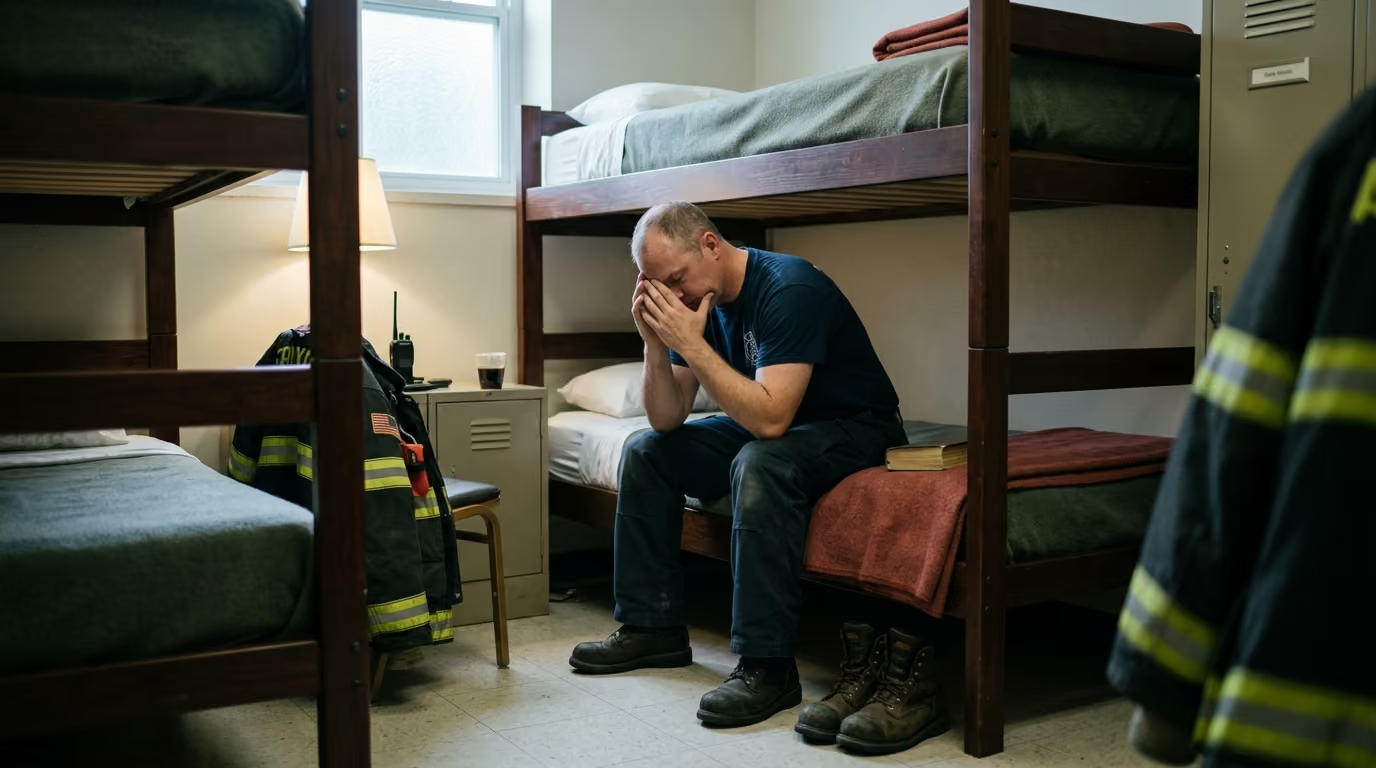

Emergency first responders experience elevated rates of sleep disorders, making structured operational screening and clinical assessment essential for long-term health and safety.





The tones drop at three in the morning. You pull your boots on, run the call, clear the hospital or the fireground, and return to the station as the sun comes up. By the time shift change arrives, you are physically exhausted, yet when your head hits the pillow at home, your heart is racing and sleep will not come. Or perhaps you fall asleep instantly, only to wake up gasping an hour later with a dry mouth and a pounding headache.
For emergency personnel, disrupted rest is frequently treated as an unavoidable part of the job. Chronic exhaustion, daytime drowsiness, and restless nights are often brushed aside as basic occupational hazards. Yet there is a critical boundary between acute duty fatigue and a diagnosable, treatable sleep disorder.
Sleep disorders in emergency personnel are medical conditions, not personal shortcomings or inevitable career consequences. Conditions such as obstructive sleep apnea, chronic insomnia, shift work disorder, and restless legs syndrome actively degrade cognitive processing, physical reaction time, and long-term cardiovascular health. Recognizing the specific patterns of these disorders is the first step toward getting an accurate clinical assessment and protecting your safety on the road and on scene.
Research examining emergency service personnel demonstrates high rates of undiagnosed and untreated sleep disorders. In a large-scale national study evaluating nearly 7,000 career firefighters, 37.2 percent screened positive for at least one sleep disorder. Among those who screened positive, the risk profile changed dramatically. Firefighters screening positive for a sleep disorder had approximately double the odds of a motor-vehicle crash, showing an adjusted odds ratio of 2.00. They also had substantially higher odds of falling asleep at the wheel, with an odds ratio of 2.41 compared to those who screened negative.
A comprehensive meta-analysis focused on first responders who provide emergency medical care reinforced these concerns. The pooled data revealed elevated prevalence rates across several major sleep conditions:
These figures represent pooled estimates across diverse operational populations with varying shift systems and assessment methods. Even with natural variations across departments, the broader trend is consistent across the research literature. Sleep-related medical conditions are far more prevalent in emergency services than in the general civilian workforce.
The research also documents strong links between untreated sleep disorders and severe long-term medical conditions. In emergency responders, sleep-disordered breathing and chronic sleep loss are statistically associated with hypertension, cardiovascular disease, type 2 diabetes, gastroesophageal reflux disease, and metabolic dysfunction. Untreated sleep pathology is strongly tied to clinical depression, anxiety disorders, occupational burnout, and post-traumatic stress symptoms.
When sleep architecture is chronically fragmented, the central nervous system loses its primary window for neurobiological recovery. Cardiovascular strain remains elevated around the clock, increasing systemic inflammation and elevating baseline cortisol levels. Recognizing that sleep problems reflect biological strain rather than lack of discipline is essential for career longevity.
Standard health advice often assumes an uninterrupted eight-hour sleep window every night in a quiet, dark bedroom. This assumption does not reflect the operational reality of emergency service workers. First responders manage first responder fatigue and circadian disruption across rotating shifts, twenty-four-hour rotations, mandatory overtime, and irregular call volumes.
To evaluate sleep health accurately in emergency personnel, performance researchers use a comprehensive operational framework:
Sleep risk equals sleep opportunity, plus circadian timing, plus sleep quality, plus medical or psychiatric contributors, plus job demands, plus safety exposure.
This equation clarifies why treating every complaint as simple sleep deprivation fails. Sleep opportunity represents the actual hours available for rest between shifts, commutes, and family duties. Circadian timing reflects whether that rest window aligns with the body's internal biological clock. Sleep quality accounts for environmental disruptions like station tones, physical pain, acid reflux, or airway collapse.
Job demands include high-acuity calls, thermal stress, heavy gear, prolonged sitting in patrol units, and unpredictable adrenaline surges. Safety exposure involves driving heavy apparatus, making split-second tactical decisions, or managing critical pediatric medications. When these variables collide, ordinary fatigue can quickly turn into severe functional impairment.
Emergency responders must navigate the biological tension between homeostatic sleep pressure and the circadian alerting system. Homeostatic pressure builds steadily the longer a person remains awake, creating an intense physical drive to sleep. The circadian pacemaker, located in the suprachiasmatic nucleus of the brain, drives alertness during the biological day and promotes sleep during the biological night.
When you finish a night shift, your homeostatic sleep drive is exceptionally high. However, morning sunlight, ambient noise, rising core body temperature, and daytime cortisol secretions signal the brain to wake up. This circadian conflict explains why a responder can feel completely drained while driving home, yet lie wide awake in bed an hour later.
Understanding this distinction helps responders differentiate between related states:
A responder can be deeply fatigued without being sleepy, or critically sleepy while attempting to focus through sheer effort.
Sleep disorders in emergency personnel generally fall into several distinct clinical categories. Each condition features unique signs, operational risks, and diagnostic pathways.
Insomnia involves chronic difficulty initiating sleep, difficulty maintaining sleep, or waking earlier than desired despite having adequate time and opportunity for rest. In the general adult population, chronic insomnia disorder affects roughly 6 to 23 percent of individuals according to clinical practice guidelines from the Department of Veterans Affairs and Department of Defense. Among shift-working emergency responders, insomnia symptoms are reported at substantially higher rates.
Insomnia presents across several distinct patterns in emergency services:
The primary symptoms of insomnia extend into daytime functioning. Personnel experience persistent irritability, difficulty concentrating, memory lapses, reduced emotional control, and a constant dread of bedtime. Many responders fall into the trap of using alcohol, sedating over-the-counter antihistamines, or unprescribed medications to force sleep. While these substances may induce sedation, they degrade sleep architecture, suppress rapid eye movement sleep, and worsen daytime sleepiness.
Screening for insomnia typically uses validated tools such as the Insomnia Severity Index or the Athens Insomnia Scale. A positive score indicates a need for comprehensive clinical evaluation. The frontline, evidence-based standard of care for chronic insomnia is Cognitive Behavioral Therapy for Insomnia. This structured behavioral approach retrains sleep drive and breaks negative associations without relying on long-term sedative medications.
Obstructive sleep apnea is a serious respiratory disorder characterized by repetitive partial or complete collapse of the upper airway during sleep. These obstructive events cause blood oxygen levels to drop, prompting brief micro-arousals that jar the brain out of deep, restorative sleep stages. Responders rarely remember these micro-arousals and often have no conscious awareness of their fragmented sleep architecture.
Common symptoms and physical indicators of obstructive sleep apnea include:
A major barrier to diagnosing sleep apnea in first responders is the persistent stereotype that the condition only affects older, sedentary individuals carrying excess body weight. Highly conditioned tactical athletes, firefighters, and law enforcement officers develop sleep apnea regularly. Increased neck circumference from muscular development, upper-airway soft tissue structure, craniofacial anatomy, family genetics, and chronic nasal inflammation from smoke exposure all contribute to airway collapse.
Furthermore, many responders do not report daytime sleepiness because they normalize chronic exhaustion or experience sleep apnea primarily as morning brain fog, mood changes, or high blood pressure. Standard screening often begins with the STOP questionnaire. This tool assesses loud snoring, daytime tiredness, observed breathing pauses, and high blood pressure. Answering yes to two or more categories indicates an elevated clinical risk.
Confirmation of sleep apnea requires objective diagnostic testing overseen by a sleep medicine physician. The American Academy of Sleep Medicine recommends either in-lab polysomnography or an accredited home sleep apnea test for adults with elevated clinical risk. In-lab testing remains the preferred standard for safety-critical workers with complex medical histories, severe insomnia, or significant cardiovascular disease.
Continuous Positive Airway Pressure therapy remains the primary treatment for moderate to severe sleep apnea. By pneumatically splinting the airway open with pressurized air, therapy eliminates desaturations, stabilizes heart rate variations during sleep, and restores deep sleep architecture.
Shift work disorder is a distinct circadian rhythm sleep-wake disorder defined by persistent, recurring sleep disturbances and excessive sleepiness directly linked to a work schedule that overlaps the biological sleep window. For a formal clinical diagnosis, symptoms must typically persist for at least three months, interfere with social or occupational performance, and be documented through sleep diaries or actigraphy monitoring across at least 14 days of work and free time.
Circadian disruptions manifest through identifiable operational patterns:
The physiological root of shift work disorder is the misalignment between the body's master circadian clock and the external working schedule. When light exposure, meal timing, and physical activity occur at biological night, the digestive system, vascular network, and endocrine system operate out of phase. Developing a structured, shift-specific sleep plan is essential for stabilizing circadian rhythms across challenging duty cycles.
Managing shift work disorder involves coordinating light exposure, sleep hygiene, and recovery schedules. Useful interventions include:
Restless legs syndrome is a neurological sensorimotor disorder characterized by an irresistible urge to move the legs, typically accompanied by uncomfortable or painful sensations. These sensations are often described as creeping, crawling, pulling, aching, itching, or electric shocks deep within the lower extremities.
The diagnostic criteria for restless legs syndrome follow a consistent clinical pattern:
In firefighter screening cohorts, restless legs syndrome has been identified in roughly 3.4 percent of personnel, with emergency medical meta-analyses showing rates around 2 percent. While these percentages appear modest, the disorder severely disrupts sleep onset. Responders who must repeatedly get out of bed to pace the floor struggle to accumulate meaningful sleep time before duty calls.
Restless legs syndrome is frequently confused with general post-workout muscle soreness, orthopedic strain from structural gear, or simple anxiety. Clinical workups for restless legs syndrome should include comprehensive laboratory evaluations of serum ferritin and iron saturation levels, as iron deficiency in the brain plays a central role in dopamine pathway dysfunction. Clinicians will also review daily medications, as common over-the-counter antihistamines, anti-nausea drugs, and certain antidepressants can trigger or worsen symptoms.
Excessive daytime sleepiness is the inability to maintain wakefulness and alertness during normal waking hours, resulting in unintended lapses into sleep or overt drowsiness. It is a functional symptom that warrants serious clinical investigation rather than a characterization of low motivation. In emergency medical first responders, excessive daytime sleepiness affects an estimated 28 percent of personnel.
Operational signs of excessive daytime sleepiness include:
Clinicians evaluate sleepiness using validated self-report instruments like the Epworth Sleepiness Scale. The Epworth scale measures a person's likelihood of dozing off across eight everyday scenarios, such as sitting quietly, watching television, or stopping in traffic. A score of 10 or higher out of 24 indicates clinically significant excessive daytime sleepiness and warrants a medical workup.
Excessive daytime sleepiness can stem from insufficient sleep duration, untreated obstructive sleep apnea, shift work disorder, or sedating prescription medications. In rare instances, it may indicate a central disorder of hypersomnolence, such as narcolepsy or idiopathic hypersomnia, which requires formal sleep laboratory evaluation including a Multiple Sleep Latency Test.
Identifying sleep disorders early requires a systematic approach to screening that moves personnel from vague symptoms to clinical care. The following five-step framework provides a structured pathway for emergency workers, peer support teams, and occupational health clinics.
Begin by auditing the exact duty schedule over a typical four-to-six-week block. Document the shift length, the direction of rotations, the presence of 24-hour or 48-hour tours, mandatory overtime callbacks, and average commute times.
Compare the available sleep opportunity with the actual amount of sleep accumulated. Identify whether sleep loss occurs only during specific rotations or persists across off-duty recovery blocks.
Pinpoint the dominant sleep symptoms rather than settling for a generic complaint of fatigue. Determine whether the primary problem involves:
Screening tools provide objective data points to bring to a medical provider:
Screen immediately for high-risk safety red flags that require urgent medical and administrative intervention:
Screening questionnaires highlight risk, but they do not establish a formal medical diagnosis. Positive scores on the STOP questionnaire or Epworth scale should prompt a formal referral to a licensed sleep physician.
Depending on the clinical presentation, the physician will order an overnight in-lab polysomnography or an accredited home sleep apnea test. If insomnia is the primary issue, referral to a behavioral sleep medicine specialist for CBT-I is the recommended clinical pathway.
Real-world sleep disruption in emergency services rarely presents in clean, isolated textbook descriptions. The following five illustrative clinical models show how various sleep conditions appear in operational environments.
A 34-year-old paramedic works three consecutive twelve-hour night shifts each week. After completing the final night tour, they struggle to sleep more than two hours during the day.
They lie in bed feeling wired, with their thoughts racing about incomplete patient charts and household tasks. To stay awake during the next shift cycle, they consume multiple energy drinks, creating an erratic stimulant cycle. On off-duty days, they sleep normally at night, but dread the return to night duty.
A 42-year-old career firefighter with an athletic build and a 17.5-inch neck circumference reports feeling completely exhausted despite sleeping eight hours at home. Their spouse reports heavy, loud snoring, punctuated by periods where the firefighter stops breathing entirely before gasping loudly.
The firefighter wakes up with a dry mouth and a mild headache several mornings a week. They recently received a diagnosis of Stage 1 hypertension from their department physician.
A 28-year-old EMT reports severe difficulty falling asleep at night on off-duty days. They describe an intense, crawling sensation deep in their calves that occurs only when lying down in bed or sitting in the ambulance for extended periods.
The sensation forces them to get out of bed and walk around the room to find temporary relief. They previously assumed the issue was simple leg cramping from carrying stretchers and gear.
A 46-year-old communications officer working rotating twelve-hour shifts reports repeatedly drifting off during the morning commute home. They have experienced two near-miss incidents where their vehicle drifted onto the shoulder of the highway.
They also find themselves nodding off during quiet periods on duty and rely on continuous coffee consumption to stay alert at the console. Their Epworth Sleepiness Scale score is 16.
A 38-year-old lieutenant with fifteen years of structural fire service develops severe sleep maintenance problems following a fatal commercial fire. They wake up abruptly every night at 02:00 drenched in sweat with a surging heart rate and intense hypervigilance.
Over the past eighteen months, they have gained twenty pounds, begun snoring loudly, and started drinking three alcoholic beverages every evening to fall asleep.
Managing sleep health within emergency services requires practical, sustainable actions tailored to demanding operational lives. You cannot change call volume or emergency dispatches, but you can control your sleep hygiene, daytime recovery habits, and medical advocacy.
Create a dedicated recovery space that protects sleep quality, whether at home or in the station bunk room:
How you fuel and wind down directly shapes your sleep architecture:
Integrate structured recovery into your regular schedule through targeted shift work sleep and recovery strategies:
Cultural myths and misunderstandings in public safety agencies frequently delay medical evaluation and keep personnel from getting proper care.
A widespread misconception is that being chronically exhausted and sleeping poorly is simply an unavoidable part of wearing the uniform. While shift work creates biological strain, sleep disorders like sleep apnea, chronic insomnia, and restless legs syndrome are treatable medical conditions. Accepting debilitating symptoms as an inevitable career penalty leads to poor performance, elevated health risks, and shortened retirements.
Many first responders believe that high physical fitness, lifting heavy weights, and passing annual physical agility tests makes them immune to obstructive sleep apnea. Airway collapse is driven by neck circumference, upper-airway soft tissue geometry, craniofacial structure, age, and genetics. Athletic personnel develop significant sleep-disordered breathing every day, and assuming fitness prevents apnea delays life-saving interventions.
Personnel often assume that sleep apnea always produces loud, violent snoring and obvious daytime sleepiness. Some individuals with severe sleep apnea do not snore loudly or feel consciously sleepy. Instead, their condition presents as treatment-resistant hypertension, morning brain fog, moodiness, acid reflux, or waking up frequently to urinate. Relying solely on obvious sleepiness leads to missed diagnoses.
Questionnaires like the STOP framework, Epworth Sleepiness Scale, and Insomnia Severity Index are risk-stratification tools. They identify individuals who require comprehensive clinical evaluation. A low score on a brief screening form does not guarantee the absence of a sleep disorder, nor does a high score replace formal objective testing like polysomnography.
Many responders believe that sleeping twelve to fourteen hours on off-duty days completely erases the sleep debt accumulated during a 48-hour or 72-hour shift cycle. While extended sleep on free days reduces short-term homeostatic sleep pressure, it does not reverse the vascular strain, metabolic disruption, or systemic inflammation caused by chronic sleep fragmentation. Extended recovery sleeping can also shift your circadian rhythms further out of phase, making the transition back to shift work harder.
Caffeine temporarily blocks adenosine receptors in the brain, masking the sensation of sleepiness without reducing actual homeostatic sleep pressure. Stimulants cannot restore reaction time, executive decision-making, or fine motor coordination degraded by sleep debt. Over-relying on high-dose caffeine and energy drinks increases baseline heart rate, spikes blood pressure, and interferes with the next sleep opportunity.
Home sleep apnea tests are useful tools for diagnosing moderate to severe obstructive sleep apnea in uncomplicated patients. However, they measure fewer biological channels than full in-lab polysomnography and can produce false negatives. If an emergency responder continues to experience loud snoring, daytime sleepiness, and unrefreshing sleep despite a negative home sleep study, they should seek a comprehensive in-lab polysomnography evaluation overseen by a board-certified sleep specialist.
Getting an accurate diagnosis and treatment requires understanding how to navigate both the clinical healthcare system and your department's occupational policies.
When presenting to a physician for a sleep assessment, clear preparation improves diagnostic accuracy:
Departments and administrative leaders carry an organizational responsibility to create environments where sleep health is supported rather than stigmatized. Agencies can protect operational readiness and member safety through practical initiatives:
Screening programs should never be designed to remove responders from duty punitively. Instead, the goal is to identify treatable conditions early, provide access to evidence-based medical therapies, and keep personnel healthy, sharp, and safe throughout their careers.
While optimizing sleep hygiene, room darkness, and stimulant timing will improve baseline sleep, behavioral adjustments alone cannot resolve primary medical sleep disorders. You should seek an evaluation from a licensed healthcare provider or board-certified sleep specialist if you notice any of the following patterns:
A medical evaluation by a qualified specialist provides access to targeted, evidence-based care. Diagnosing and treating underlying conditions protects your cardiovascular health, stabilizes your nervous system, and helps ensure you return home safely at the end of every shift.
Revisit this resource whenever you transition to a new shift rotation, experience a noticeable change in your daytime alertness, notice a rise in your blood pressure, or receive feedback from a partner regarding loud snoring or breathing pauses.
Addressing sleep disorders early protects your operational safety on scene and supports your health across a long, fulfilling career.
Stay connected for research-led guidance on duty fitness, shift-work sleep, injury recovery, stress, nutrition and career longevity. Practical ideas for first responders who want to stay capable on the job, recover well and protect their health for the long run.



Read practical guidance on first responder fitness, recovery, sleep, nutrition and resilience for demanding work and a long, active career.
read the blog



