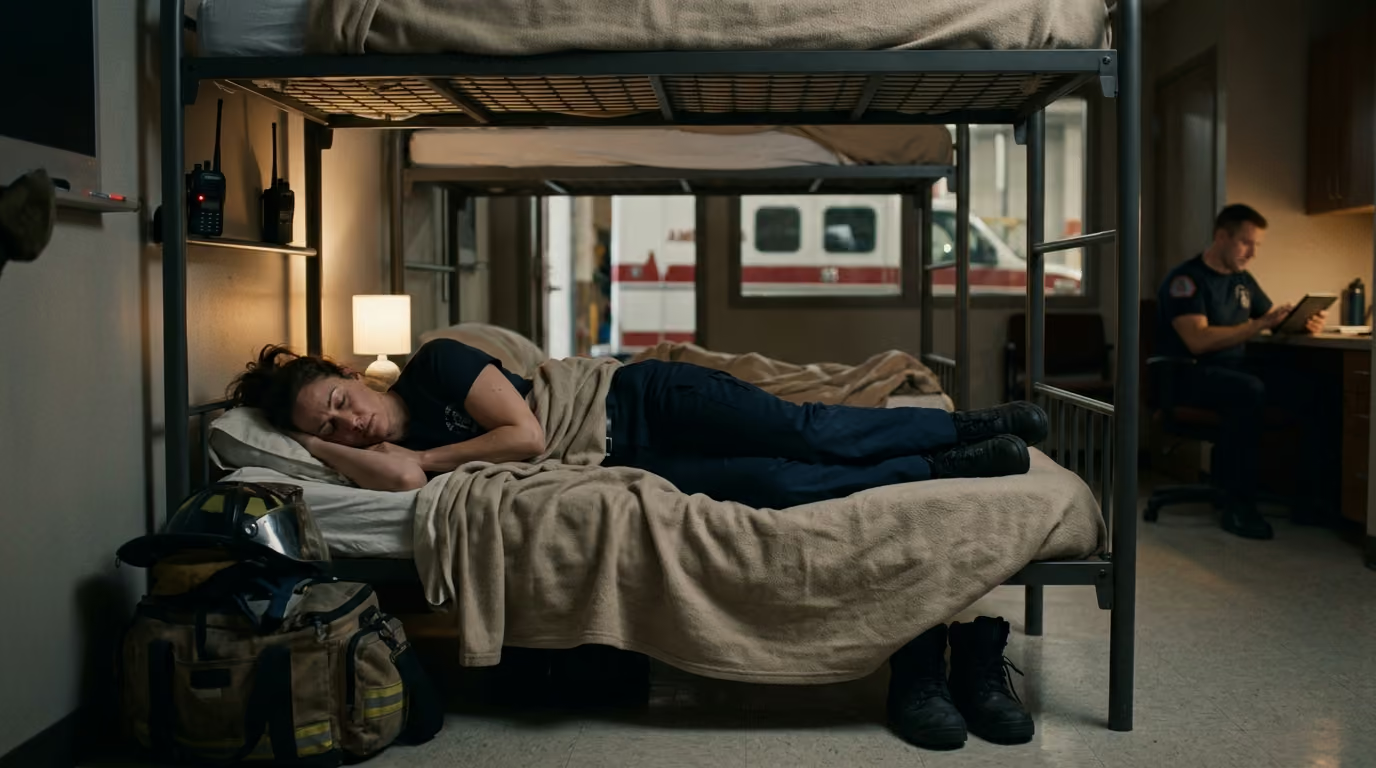

Waking up repeatedly to harsh tones and station noise degrades crew safety, but practical environmental controls for lighting, acoustics, and ventilation restore vital rest.





How do you get restorative sleep in a noisy firehouse or on a shared ambulance shift? Many first responders search for ways to sleep through station noise, bright apparatus bays, and unpredictable dispatch tones without compromising response times. This guide provides a definitive, research-led breakdown of the environmental factors affecting station sleep, alongside field-tested engineering and administrative controls.
Sleep in emergency service environments is rarely a personal discipline issue. It is an environmental and operational challenge created by the clash of biology, facility design, and emergency dispatches. Responders often experience fragmented rest where physical presence in a bed does not equal physiological recovery.
To evaluate station sleep accurately, agencies and crews must separate several distinct operational concepts:
A responder can have seven hours of nominal sleep opportunity on paper but achieve less than four hours of fragmented sleep. When emergency alerts, apparatus bay noise, and poor thermal regulation repeatedly break the sleep cycle, the body cannot progress through critical slow-wave and REM stages. Protecting sleep in shared quarters requires managing the physical environment rather than simply telling responders to sleep harder.
The operational environment of firehouses and emergency medical service stations directly impacts sleep quality and cognitive readiness. Research demonstrates that emergency worker fatigue is consistently linked to poor sleep continuity during shifts. A systematic review published in the National Library of Medicine highlights that emergency service personnel face chronically disrupted sleep that impairs alertness, physical safety, and long-term health.
Large-scale surveys confirm that sleep problems in emergency services are widespread rather than isolated incidents. A multi-agency study of 547 emergency medical personnel found an average Pittsburgh Sleep Quality Index score of 6.9, well above the clinical threshold for poor sleep. Within that group, 55 percent met the criteria for occupational fatigue. Fatigued responders showed 1.9 times higher odds of injury, 2.2 times higher odds of medical errors, and 3.6 times higher odds of safety-compromising behaviors.
Fire service research reveals matching patterns across different facilities and shift configurations. An evaluation of 472 firefighters found that 44.1 percent reported poor sleep quality. Firefighters reporting noisy sleeping environments had 1.7 times higher adjusted odds of poor sleep quality. Excessive lighting was also strongly associated with poor sleep continuity in unadjusted analyses.
A 2026 cross-sectional investigation comparing firefighter sleep at home versus station quarters identified substantially worse sleep duration and efficiency on duty. Interestingly, transitioning from open bunk halls to individual partitioned dormitories did not automatically improve subjective sleep quality. While physical partitions provide visual separation, they do not resolve dispatch tones, poor thermal airflow, apparatus noise, or operational stress. Environmental controls must address acoustic, optical, and cultural factors together.
Uncontrolled noise remains the primary physical barrier to continuous station rest. Emergency facilities generate distinct sound signatures that penetrate sleeping areas at all hours. Managing this acoustic burden requires understanding how the brain processes background sounds compared to sharp operational alerts.
Station noise falls into five main categories across a standard operational shift:
The World Health Organization recommends maintaining bedroom noise below 30 dBA for healthy sleep, with individual indoor noise spikes capped at 45 dBA. In contrast, occupational safety standards from the National Institute for Occupational Safety and Health establish an 85 dBA exposure limit for hearing conservation. A room can be entirely safe for hearing conservation yet severely disruptive to sleep architecture. Station quarters frequently register sound spikes of 60 to 75 dBA from internal movement alone.
Controlling sound requires layered structural, administrative, and individual solutions. Structural fixes include installing acoustic drop seals on dormitory doors, isolating sleeping quarters from apparatus bays, and adding vibration dampers to mechanical plant equipment. Administrative rules protect sleep by establishing quiet hours for non-emergency tasks like engine tests or facility cleaning. Personal measures such as white-noise machines or filtered earplugs help mask background sounds, provided they do not block designated emergency alarm frequencies. You can explore structured approaches within custom shift sleep plans designed for station living.
Light functions as both a visual necessity for response operations and the primary regulator of human circadian rhythms. Light entering the eye suppresses melatonin production, signaling the brain to promote wakefulness. When responders encounter bright overhead lighting during night calls or daytime recovery periods, circadian alignment suffers.
Emergency facilities often suffer from poor lighting design that interferes with rest cycles. Common issues include bright corridor lighting leaking under dormitory doors, illuminated exit signs mounted near beds, and sudden transitions to maximum brightness during night alarms. Apparatus bay floodlights and illuminated device screens further degrade sleep depth. These factors make it difficult to return to sleep quickly after a night response.
Stations benefit from dividing floor plans into distinct lighting zones rather than using uniform brightness throughout the building:
Responders recovering between calls or sleeping during the day should maintain strict light discipline. Using high-grade blackout window shades or contoured eye masks blocks ambient sunlight effectively. When returning from a run, keeping overhead dorm lights off and using low-level task lights prevents unnecessary autonomic arousal. Responders looking to balance energy across unusual hours can review caffeine timing during night shifts to avoid compounding light-related sleep disruption.
Core body temperature drops naturally during the initial stages of sleep, facilitating deep slow-wave rest. Sleeping environments that are too warm or humid inhibit this drop, causing frequent awakenings and reduced sleep depth. In shared quarters, thermal comfort is a frequent source of friction due to varying personal preferences.
The American Academy of Sleep Medicine suggests an ambient bedroom temperature near 68 degrees Fahrenheit (20 degrees Celsius) as an optimal starting baseline. Shared facilities often struggle to maintain this standard across multiple sleeping areas. Inadequate airflow, solar heat gain, and high-occupancy dorms create warm pockets that undermine sleep continuity.
HVAC systems in fire and rescue stations must meet rigorous environmental demands:
In shared dorms without individual room thermostats, crews should rely on layered bedding strategies. Breathable mattress covers, natural-fiber sheets, and personal blankets allow each responder to regulate temperature without altering the central thermostat. Quiet, low-velocity personal fans can improve local air movement without generating disruptive noise for adjacent bunks. Thermostat settings should follow agreed crew policies rather than unilateral adjustments during protected rest periods.
Emergency alerting systems present an operational paradox. They must wake personnel fast enough to meet strict turnout standards, but abrupt high-decibel alarms trigger extreme heart rate spikes and sleep inertia. Repeated alarm shocks place sustained stress on the cardiovascular and nervous systems.
Legacy fire stations often route loud, unzoned tones across every speaker in the building for every call. Modern station design uses zoned dispatch architecture to isolate alerts. Zoned systems route audio and visual alerts only to the specific unit or crew assigned to the incoming dispatch. This protects the rest of the company from unnecessary awakenings during busy nights.
Ramped tones offer an additional engineering improvement over traditional bells and sirens. These systems start at low volume and increase gradually over several seconds, paired with progressive amber lighting. This alerts the crew effectively while mitigating extreme cardiovascular surges. Visual pagers, wearable vibrating alerts, and discrete bed shakers can supplement audio tones for targeted dispatching.
The post-call return to quarters is an overlooked phase of sleep protection. Returning from an intense run leaves responders physically exhausted but physiologically wired. Crews should establish a standardized decompression routine:
The social environment of a station impacts sleep as heavily as the physical architecture. Shared dormitories require strict interpersonal norms to prevent avoidable awakenings. Snoring, mismatched shift patterns, varied chronotypes, and casual late-night noise quickly destroy sleep quality across an entire crew.
Research confirms that private partitioned cubicles do not solve sleep issues if operational discipline is absent. A station sleep policy should be clearly defined and respected by all ranks. Unwritten expectations often fail when new personnel or relief crews rotate through the facility.
Effective station sleep etiquette should address several operational areas:
Crew leadership plays a key role in setting the tone for sleep preservation. Station officers should treat sleep as an essential component of operational readiness rather than an indicator of low motivation. Crew members must be able to report environmental failures, broken hardware, or sleep disruptions without facing peer stigma. Clear communication around shared rest supports long-term operational health and capability.
Emergency medical crews, transport units, and wildland strike teams frequently rest in vehicles, hospital staging lots, or temporary field quarters. Ambulances and support vehicles are poorly suited for sustained sleep due to spatial constraints, mechanical vibration, and safety liabilities. Crews must distinguish between planned field recovery and uncontrolled nodding off behind the wheel.
Vehicle environments present unique physiological and safety barriers to effective rest:
When operational policies permit brief standby rest, crews should prioritize designated, safe physical locations over idling in parking lots. Base stations, community post locations, and hospital EMS lounges offer superior acoustic, thermal, and sanitary conditions compared to a vehicle cab.
If rest must occur in a vehicle during extended staging, the driver must shift into park in a secure, well-lit location away from moving traffic. Crews should shade cabin windows to block glare, turn off auxiliary screens, and verify that primary dispatch radios remain clear and audible. Brief 15 to 20 minute tactical naps can restore functional alertness without producing severe sleep inertia. Longer sleep episodes should be deferred to proper beds in approved facilities.
Agencies should manage sleep disruption systematically through a Fatigue Risk Management System (FRMS) rather than leaving recovery solely to individual willpower. An effective FRMS treats the sleeping environment as a core engineering safety control. The National Institute for Occupational Safety and Health provides clear frameworks for managing work hours and recovery during high-demand public safety operations.
A station-level environmental audit identifies hidden sleep hazards before they lead to accidents or health issues. Audits should follow a structured four-phase process:
Collect objective baseline data across two weeks of operational shifts. Measure sound levels in sleeping rooms during daytime and nighttime hours using calibrated sound meters. Track ambient temperatures, humidity fluctuations, and light leakage around doors and windows. Have crew members complete daily sleep logs recording sleep opportunity, actual sleep obtained, and the number of dispatch awakenings. Sleep logs often capture shift-work disruption more accurately than commercial wearable devices.
Group identified problems by their severity, operational impact, and ease of remediation. High-priority items include loud non-emergency public address alerts, failing door dampeners, and broken HVAC thermostats. Capital items, such as wall acoustic insulation or bay relocation, should be organized for long-term facility planning.
Implement solutions using the standard hierarchy of controls:
Audit the facility three to six months after implementing changes. Review whether total sleep obtained and longest uninterrupted sleep periods have improved. Verify that zoned alerting systems continue to notify responding units reliably without missed dispatches. Use ongoing crew feedback to fine-tune environmental controls over time. You can learn more about systemic approaches through our shift work sleep strategies collection.
Upgrading station sleep environments involves balancing personal comfort against operational readiness. Safety and turnout times must remain uncompromised when implementing acoustic or visual controls. Responders and leadership must recognize clear boundaries when modifying sleeping quarters.
Earplugs, sound machines, and eye masks present practical trade-offs during active shifts:
Personal sleep tools should be tested thoroughly during non-critical duty periods to verify that alarms remain easily audible. If a responder is excessively fatigued, leadership should adjust shift assignments or utilize relief personnel rather than pushing through unsafe conditions. Broader leadership obligations regarding crew rest are detailed in our operational fatigue analysis.
Station modifications improve the sleep environment, but they cannot resolve underlying medical or psychological sleep disorders. Emergency service personnel experience disproportionately high rates of sleep apnea, chronic insomnia, and shift work sleep disorder. Recognizing when sleep problems require medical evaluation is vital for career longevity.
Responders should seek evaluation from a licensed physician or sleep medicine specialist when experiencing specific clinical signs:
A formal clinical evaluation can identify treatable conditions like sleep apnea or restless legs syndrome. Evidence-based therapies, including Cognitive Behavioral Therapy for Insomnia (CBT-I), provide effective tools for recalibrating hyperactive nervous systems without sedative medications. Treating medical sleep conditions protects cardiovascular health, metabolic function, and cognitive resilience across a long emergency services career.
Protecting sleep in emergency service facilities is not a luxury; it is a fundamental pillar of operational safety and career longevity. Designing station environments that control noise, block disruptive light, and streamline alarm notifications safeguards the physical and cognitive health of frontline personnel.
You can apply these practical steps this week to improve your rest environment and recovery quality:
Stay connected for research-led guidance on duty fitness, shift-work sleep, injury recovery, stress, nutrition and career longevity. Practical ideas for first responders who want to stay capable on the job, recover well and protect their health for the long run.



Read practical guidance on first responder fitness, recovery, sleep, nutrition and resilience for demanding work and a long, active career.
read the blog



