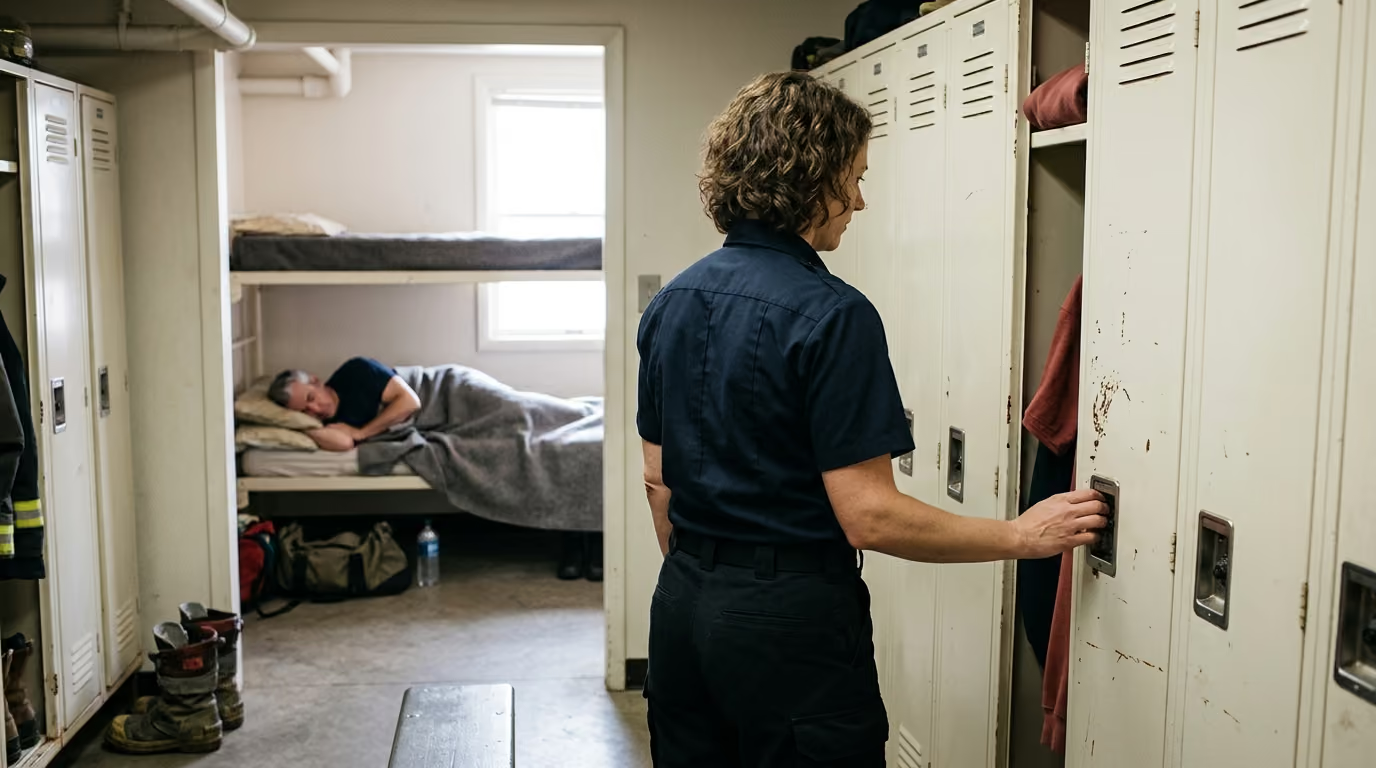

Complete biological recovery after grueling multi-day shifts becomes achievable when workers accurately calculate real sleep opportunity instead of scheduled off-duty hours.





You finish a 24-hour tour or a string of 12-hour night shifts, step into your car, and wonder why you feel completely exhausted despite spending eight hours off your feet. You likely typed some variation of "why am I still tired after sleeping on shift" or "how to calculate real sleep recovery" into a search bar. This guide provides a definitive, research-based framework to assess your true sleep opportunity, evaluate schedule safety, and protect your performance across extended duty patterns.
A schedule should never be evaluated solely by its rostered duration. The critical physiological factor is whether your roster reliably provides enough protected, biologically usable sleep opportunity before, during, and after duty. A schedule can be inconvenient without being unsafe. Another schedule can look manageable on paper yet steadily degrade cognitive processing, physical reaction time, and cardiovascular health.
Understanding the difference requires looking past the shift clock and measuring what happens to your brain and body during rest intervals.
Evaluating fatigue requires clear terminology. Conflating time away from work with physiological recovery leads to flawed assumptions about operational readiness.
Work duration is the continuous time an individual is officially assigned to duty. In emergency services and acute healthcare, work durations range from standard 8-hour blocks to 12-, 24-, and 48-hour rotations.
Rest opportunity refers strictly to the scheduled time free from assigned operational tasks. If a paramedic clocks out at 07:00 and clocks in again at 19:00, the rest opportunity is 12 hours. However, rest opportunity is not sleep.
Sleep opportunity represents the realistic window available for an individual to sleep. It includes time spent attempting to fall asleep, but it excludes unavoidable non-sleep activities.
To determine true sleep opportunity, apply a straightforward formula:
Sleep Opportunity = Scheduled Off-Duty Interval − Unavoidable Non-Sleep Demands
Non-sleep demands include:
Sleep obtained is the exact biological time spent in light, deep, and rapid-eye-movement sleep. This number is almost always lower than the sleep opportunity. An individual with a 12-hour off-duty break often has only 7 hours of sleep opportunity, yielding roughly 5.5 to 6 hours of actual sleep.
Sleep quality reflects the structural integrity of your sleep cycles. It includes sleep continuity, sleep efficiency, the absence of micro-arousals, and the distribution of slow-wave sleep.
Recovery opportunity represents the comprehensive post-duty window required to eliminate sleep debt, restore circadian stability, and normalize cognitive processing. Being off duty does not mean you are recovered. If an off-duty window is interrupted or misaligned with circadian biology, systemic fatigue continues to accumulate.
Occupational research from agencies like NIOSH, the American Academy of Sleep Medicine, and the Federal Aviation Administration provides clear insight into how various shift lengths affect human physiology.
A 12-hour shift pattern is common across emergency medical services, police patrols, and nursing. The American Academy of Sleep Medicine notes that evidence comparing 8-hour and 12-hour night shifts does not show one pattern as universally superior. The safety of a 12-hour roster depends on operational context, workload, and rest intervals.
A 12-hour schedule creates substantial fatigue risks when combined with:
NIOSH safe-work guidance recommends scheduling at least two consecutive full rest days after three consecutive 12-hour shifts. When workers complete four or five consecutive 12-hour tours, cumulative sleep debt builds rapidly, even if the worker attempts daytime naps.
Schedules spanning 14 to 18 hours introduce a steep escalation in fatigue. As continuous wakefulness exceeds 16 hours, psychomotor vigilance, attention to detail, and operational working memory drop substantially.
In controlled studies of emergency physicians, cognitive evaluations showed noticeable degradation after extended duty. Cognitive performance remained stable after a 14-hour night shift compared to a baseline rested state. However, after a 24-hour shift, three out of four primary cognitive assessment categories showed measurable impairment.
Systematic reviews in emergency medical services confirm this trend. Shifts under 24 hours consistently show more favorable safety outcomes, lower acute fatigue ratings, and superior sleep quality compared to shifts lasting 24 hours or longer.
The American Academy of Sleep Medicine and the Sleep Research Society advise against 24-hour continuous duty shifts without structured, protected sleep opportunities.
Field research highlights a persistent paradox in 24-hour rotations. A 2025 occupational study found that workers on 24-hour shifts obtained more total minutes of sleep while on duty than workers on shorter shifts. Yet, these same 24-hour personnel experienced the highest levels of subjective fatigue, profound sleepiness, and concentration breakdowns, particularly between 03:00 and 04:00.
The presence of on-duty sleep does not automatically prevent fatigue. Sleep obtained in a firehouse bunkroom or station dorm is frequently shallow, interrupted by dispatch tones, and disrupted by adrenaline spikes.
A 2026 study monitoring emergency physicians with wearable sensors documented significant differences between shift sleep and domestic sleep:
Studies examining hospital residents working 24- to 30-hour shifts found that personnel averaged only 2.3 hours of sleep per extended duty period. Response times slowed consistently during a single shift, and cognitive performance degraded across successive rotations. Acute sleep loss interacted nonlinearly with chronic sleep deficiency, producing compounding performance impairments.
Evaluating a 48-hour schedule requires separating two operational environments.
A continuous 48-hour deployment without protected sleep is an extreme physiological hazard. In contrast, a structured 48-on/96-off schedule provides a 48-hour operational window paired with four consecutive days off duty.
Research on 48/96 rosters shows mixed, context-dependent outcomes:
However, the 48/96 pattern carries serious drawbacks if call volume is high. When emergency call volume prevents night sleep, a 48-hour tour creates two consecutive nights of severe sleep fragmentation. Research from the International Association of Fire Fighters indicates that firefighters working 48-hour rosters frequently show higher rates of excessive daytime sleepiness while on duty than those on 24-hour schedules.
Call volume, station design, and dispatch frequency dictate whether a 48/96 schedule supports recovery or accelerates physical burnout.
Human alertness does not decline along a simple linear slope. It is governed by two interacting forces: homeostatic sleep pressure and the circadian alerting system.
Homeostatic sleep drive accumulates steadily during every hour of continuous wakefulness. Adenosine builds up in the basal forebrain, increasing the physiological demand for slow-wave sleep.
Simultaneously, the suprachiasmatic nucleus regulates an internal circadian rhythm. It sends alerting signals that peak in the late afternoon and drop sharply in the early morning hours.
When you work overnight, these two systems align against you. High homeostatic sleep pressure coincides directly with the lowest point of circadian alertness.
The primary Window of Circadian Low (WOCL) occurs between 02:00 and 06:00. During this four-hour period, core body temperature drops to its minimum, melatonin production remains high, and neurobehavioral performance declines. A secondary, smaller circadian dip occurs between 15:00 and 17:00.
Working inside the WOCL carries distinct physiological consequences:
Personnel working inside the WOCL frequently believe they are functioning normally while objective metrics demonstrate major cognitive deficits. If a long duty period forces an individual to make safety-critical decisions between 03:00 and 05:00, the risk of operational error peaks.
Understanding how circadian timing and shift length interact helps crews build smarter staffing policies.
The human circadian system makes sleeping during daylight hours difficult. When a first responder attempts to sleep at 09:00 following a night shift, the circadian system promotes wakefulness. Core body temperature rises, and cortisol levels climb.
Even in a quiet, dark bedroom, daytime sleep is generally 1.5 to 2 hours shorter than nocturnal sleep. It contains lower proportions of slow-wave sleep and rapid-eye-movement sleep. This basic circadian reality means that daytime sleep opportunities must be carefully managed to yield restorative benefits.
Total sleep time does not tell the whole story. Sleep continuity is equally essential for cognitive and physical restoration.
A normal human sleep cycle lasts approximately 90 to 110 minutes, cycling through distinct stages:
To achieve restorative recovery, an individual must cycle smoothly through these phases multiple times per rest episode.
Sleep fragmentation occurs when alarms, pager tones, station announcements, or radio traffic wake a sleeping responder. Even if the individual returns to bed quickly, the physiological cost is high.
When an alarm sounds during Stage N3 deep sleep:
Six one-hour sleep blocks do not equal a continuous six-hour sleep episode. Fragmented sleep reduces the total percentage of slow-wave and REM sleep, accelerating cognitive fatigue and emotional irritability.
Sleep inertia is the groggy, disoriented state experienced immediately upon waking, especially from Stage N3 slow-wave sleep.
During sleep inertia:
If a crew member is awoken by an emergency tone and immediately operates a vehicle or administers medication, sleep inertia poses a serious hazard. Operational protocols should account for this delay by using checklists, structured communication, and vehicle safety cross-checks.
General sleep advice often assumes an uninterrupted 8-hour schedule. For emergency personnel, the demands of the job change baseline physiology and disrupt rest opportunities.
First responders face physical and sensory stressors that degrade both on-duty and off-duty rest:
To manage these disruptions, teams can build a targeted, shift-specific sleep plan that reflects their actual roster.
Returning from a severe collision, structure fire, or high-risk arrest leaves the sympathetic nervous system active. Epinephrine, norepinephrine, and cortisol remain elevated long after clearing the scene.
A responder cannot step off an apparatus, lay down in a bunkroom, and immediately enter restorative slow-wave sleep. If the sleep opportunity window is short, sympathetic hyperarousal can consume the entire available rest period. Station leadership must recognize that assigning administrative tasks or training immediately after intense calls eliminates remaining sleep opportunities.
Guidance from NIOSH reports on public safety fatigue underscores that off-duty time must be genuinely protected to prevent chronic exhaustion.
Evaluating whether a roster is manageable or chronically hazardous requires tracking real numbers. Use this five-step audit to calculate your personal sleep opportunity budget across any roster.
Measure the exact time between the end of one operational period and the start of the next.
Example: You clock out from a 12-hour night shift at 07:00 and are scheduled to return at 19:00. Your gross rest window is 12.0 hours.
Subtract unavoidable baseline activities:
Calculation: 12.0 hours − 4.75 hours = 7.25 hours of theoretical sleep opportunity.
Determine how much of that theoretical window is protected from calls, phone notifications, noise, and household light. If family responsibilities or appointments interrupt this block, subtract that time directly.
Calculation: 7.25 hours − 0.5 hours (daytime household noise) = 6.75 hours of actual sleep opportunity.
Account for sleep-onset latency and daytime awakenings. Most shift workers require 20 to 40 minutes to fall asleep during the day and wake up 2 to 4 times due to environmental interruptions or circadian signals.
Calculation: 6.75 hours − 0.5 hours (sleep latency) − 0.75 hours (waking episodes) = 5.5 hours of actual sleep obtained.
Review where this sleep occurred. In this example, the 5.5 hours occurred entirely during daylight hours. This sleep carries lower restorative value than 5.5 hours of nocturnal sleep.
If this cycle repeats across four consecutive shifts, the individual accumulates roughly 8 to 10 hours of physiological sleep debt in less than a week.
Compare your personal audit against these common operational patterns:
A worker completes three consecutive 12-hour night shifts. Gross off-duty time is 12 hours, but true sleep obtained averages 5.2 hours per day.
Verdict: Moderately hazardous. Without at least two full rest days to resolve the accumulated debt, this pattern causes chronic fatigue and slow reaction times.
A crew member works a 24-hour shift at a rural station, obtaining 6.0 hours of sleep broken into two 3-hour blocks, followed by 48 hours off duty.
Verdict: Sustainable. Total sleep opportunity is preserved, sleep fragmentation is low, and the 48-hour recovery window is sufficient to clear minor acute fatigue.
An urban medic works 24 hours, runs 16 calls, and obtains 1.5 hours of total rest broken into 15-minute fragments during the WOCL, followed by 24 hours off duty.
Verdict: Highly hazardous. The sleep obtained is insufficient, fragmentation is severe, and the 24-hour recovery window cannot resolve the acute sleep debt before the next shift.
A firefighter works 48 hours, averages 5.5 hours of sleep each night with moderate interruptions, and receives 96 consecutive hours off duty.
Verdict: Manageable, provided on-shift nights are not fully disrupted. The 96-hour recovery window allows for complete circadian and physiological recovery if off-duty rest is protected.
To review more operational recovery strategies, read our overview on first responder sleep and recovery.
When schedule structure is fixed by departmental policy, you must use evidence-based countermeasures to protect your sleep opportunity and maintain operational alertness.
Naps serve distinct operational functions depending on when they are taken.
Always allow at least 15 minutes between waking from an operational nap and performing safety-critical tasks.
Daytime and bunkroom sleep environments must be carefully controlled:
Light is the primary environmental cue regulating human circadian rhythms.
Caffeine is an effective alertness tool, but poor timing disrupts subsequent sleep opportunity.
For detailed guidelines on stimulant management, review our resource on structured caffeine strategies for night duty.
Every responder has physiological limits. Operating past these thresholds increases the likelihood of acute medical errors, driving collisions, and serious health complications.
Do not ignore these clear warning signs of excessive sleep debt:
The drive home after a long shift is often the most dangerous part of the duty cycle. Extended wakefulness of 24 hours produces psychomotor impairment comparable to a blood alcohol concentration of 0.10%, well above legal driving limits.
If you catch yourself drifting, experiencing heavy eyelids, or missing exits:
Never rely on open windows, loud music, or sheer willpower to stay awake behind the wheel.
When sleep disruption continues despite careful scheduling and proper sleep hygiene, medical factors may be involved.
Shift Work Disorder (SWD) is a recognized circadian rhythm sleep disorder. It is characterized by persistent insomnia during available sleep windows, excessive sleepiness during duty periods, and functional impairment lasting for at least one month in shift workers.
Other underlying sleep disorders are common in emergency personnel:
If you consistently feel unrefreshed after spending 8 hours in bed, snore heavily, or wake up gasping for air, seek a formal evaluation from a board-certified sleep specialist. Medical interventions, including targeted cognitive behavioral therapy for insomnia (CBT-I) or positive airway pressure (PAP) therapy, can restore sleep architecture.
Managing sleep opportunity is not just about getting through tomorrow's shift. Chronic sleep restriction contributes directly to long-term occupational risks, including cardiovascular disease, metabolic syndrome, immune suppression, and clinical mood disorders.
Protecting your sleep opportunity is an active operational discipline. By auditing your schedule, cutting out non-essential demands, and defending your rest windows, you protect your safety, your crew, and your long-term health.
Apply these steps this week to audit and protect your sleep opportunity:
Stay connected for research-led guidance on duty fitness, shift-work sleep, injury recovery, stress, nutrition and career longevity. Practical ideas for first responders who want to stay capable on the job, recover well and protect their health for the long run.



Read practical guidance on first responder fitness, recovery, sleep, nutrition and resilience for demanding work and a long, active career.
read the blog



