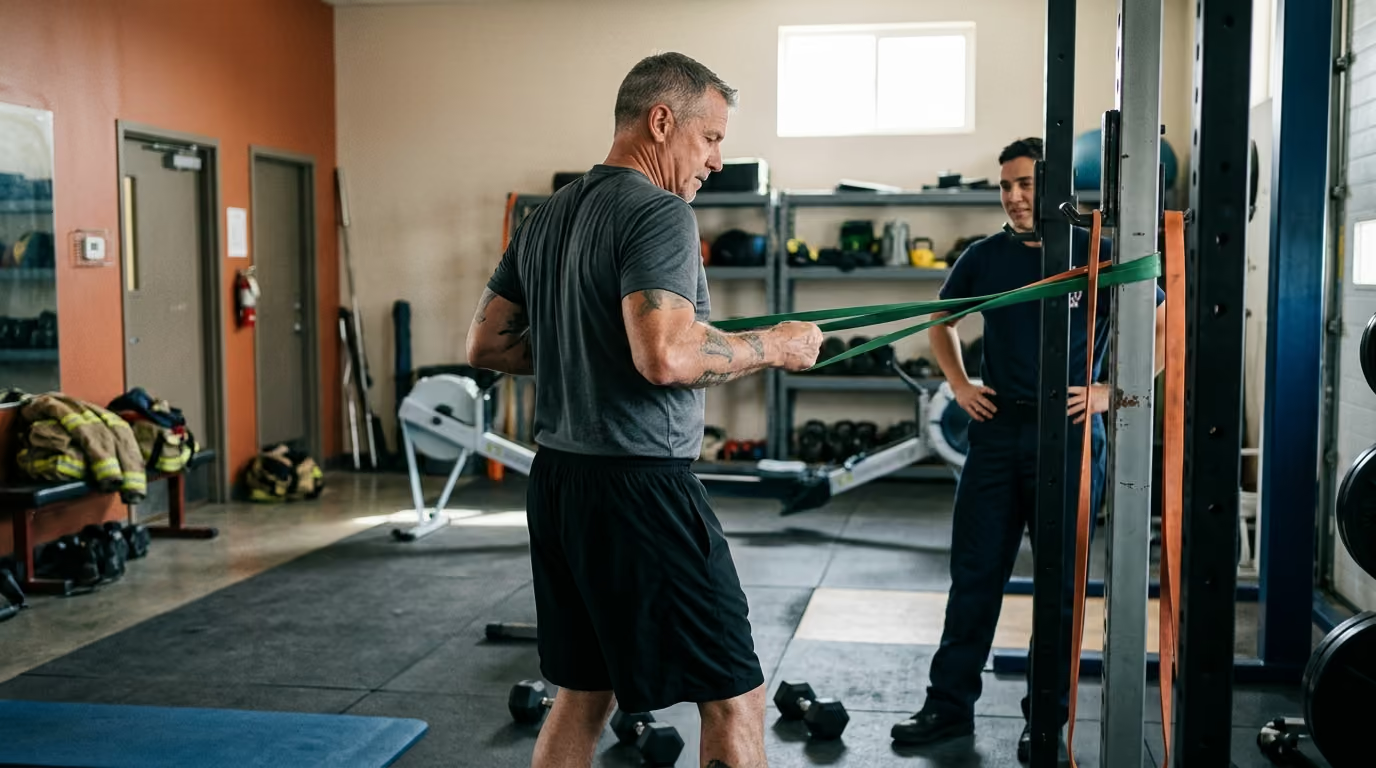

Lifelong joint health and lasting physical capability after first responder retirement require structured movement assessments, balance work, and progressive training strategies.





If you have searched for how to maintain physical capability after leaving emergency service, you have likely encountered generic advice that assumes you spent your career sitting at a desk. Decades in firefighting, law enforcement, or emergency medical services leave a distinct physical footprint. You may carry old joint injuries, accumulated spinal loading, altered sleep history, and uneven movement patterns from heavy equipment.
The practical answer to staying capable in retirement is straightforward. You must shift your training objective from surviving acute duty demands to building long-term functional reserve. This requires a balanced weekly routine of progressive resistance training, low-impact aerobic conditioning, dynamic balance work, and targeted mobility. Rather than training like an active recruit or stopping altogether, you build enough physical capacity to exceed the demands of your daily life and recreation.
Retirement changes the primary objective of your physical preparation. On duty, your training existed to meet unpredictable operational demands such as forced entry, patient extrication, rapid sprints, and structural firefighting. In retirement, training exists to preserve independence, protect joint health, reduce avoidable injury risk, and support recreation.
A practical way to understand this transition is the relationship between capacity and demand. Capacity represents what your body can safely tolerate across muscular strength, cardiorespiratory endurance, balance, joint range of motion, and tissue tolerance. Demand is the physical cost of a chosen task, such as carrying a heavy pack, working on a home repair, paddling a canoe, or descending a steep trail.
When demand exceeds current capacity, injury risk rises rapidly. This risk becomes particularly high when a physical challenge is sudden, unfamiliar, or paired with inadequate recovery. Retirement removes the mandatory physical exposures of shift work, which means your baseline capacity will steadily decline unless you deliberately stimulate it through structured exercise.
Research on emergency personnel shows that physical wear accumulates significantly across a full career. Firefighters aged 55 and older experience elevated rates of musculoskeletal disorders compared with younger colleagues and workers in other industries. Decades of wearing heavy protective gear, lifting patients in awkward positions, jumping from apparatus, and enduring broken sleep take a cumulative toll on joints and connective tissues.
Physical capability is not about physical appearance or chasing past academy fitness scores. A capable retired responder maintains what exercise physiologists call functional reserve. Functional reserve is the buffer between your maximum physical capacity and the effort required for ordinary tasks.
If walking up a flight of stairs requires 90 percent of your maximum cardiovascular capacity, you have almost no reserve left if you trip, carry luggage, or encounter uneven ground. If that same flight of stairs requires only 30 percent of your capacity, you have a deep reserve to absorb physical stress without strain. Building this reserve requires looking at your health history honestly and establishing an accurate physical baseline. You can explore broader strategies for career longevity and life after service to structure this transition effectively.
Starting a post-retirement physical program without assessing your baseline often leads to reinjury or rapid burnout. Many retired responders rely on an internal memory of what their bodies could do five or ten years ago. This assumption creates a dangerous mismatch between perceived fitness and current tissue tolerance.
A baseline assessment begins with a clear review of your health and medical history. You should document previous fractures, surgeries, concussions, chronic tendon issues, and joint replacements. Take inventory of diagnosed cardiovascular, metabolic, or respiratory conditions. Note any medications that influence heart rate, blood pressure, balance, or bone density.
The American College of Sports Medicine outlines a clear preparticipation screening framework. This model focuses on your current physical activity level, known cardiovascular, metabolic, or renal disease, and the presence of any symptoms suggestive of disease. If you experience chest pain, unusual shortness of breath, dizziness, fainting, or sudden joint swelling, you must obtain medical evaluation before increasing exercise intensity.
Asymptomatic individuals who have been moderately active can generally begin light to moderate exercise without formal medical clearance. However, if you have been completely inactive since leaving duty or plan to jump immediately into vigorous training, a medical check is a wise safeguard.
You can assess your functional movement through simple, low-risk observations at home:
The next step is conducting a personal capacity audit based on your desired activities. State your goals with specific physical metrics. Instead of saying you want to hike again, define the goal as hiking six miles with 1,000 feet of elevation gain while carrying a 15-pound daypack. Breaking your goals down into specific movements, energy systems, and joint demands clarifies exactly what your training needs to build.
Maintaining physical capability after emergency service requires a structured weekly routine. You must distinguish general physical activity from deliberate training. General physical activity includes gardening, walking the dog, performing yard maintenance, and doing household chores. While valuable for general health, daily movement alone does not provide the progressive overload needed to preserve bone density, muscle mass, and power.
Public health guidance from the Centers for Disease Control and Prevention recommends that older adults accumulate at least 150 minutes of moderate-intensity aerobic activity each week. The CDC also recommends muscle-strengthening activities on two or more days weekly, along with balance training. The World Health Organization recommends varied multicomponent physical activity emphasizing functional balance and strength training on three or more days per week to enhance functional capacity and prevent falls.
A sustainable weekly schedule for a retired responder balances these components across manageable training blocks:
Resistance training forms the foundation of functional reserve. As the body ages, muscle mass and bone mineral density decline naturally, a process that accelerates without progressive loading. Your strength routine does not need to resemble competitive powerlifting or intense tactical circuits. Instead, focus on multi-joint patterns that support life and recreation.
Structure your strength work around fundamental movement patterns:
Progress these exercises systematically. Begin by mastering the movement pattern with bodyweight or light resistance bands. Once you can complete sets with consistent technique, increase repetitions or time under tension. Add external resistance only when movement quality remains clean across all sets.
Retired responders often benefit from using a minimum effective dose training approach to build strength without triggering excessive joint inflammation.
Power development is another critical, yet often neglected, component of post-retirement fitness. Muscular power is the ability to produce force quickly. Power declines faster than raw strength as we age, which directly impacts your ability to step quickly to catch yourself during a stumble or push off the ground when rising from a chair.
Safe power training does not require high-impact jumping or Olympic lifting. You can develop power through controlled, high-intent movements:
Cardiorespiratory conditioning provides the aerobic base necessary for sustained outdoor recreation and daily stamina. Use the talk test to monitor your aerobic intensity without relying entirely on electronic devices.
During easy aerobic work, you should be able to maintain a full conversation without gasping. At moderate intensity, you can speak in complete sentences, but your breathing is noticeably elevated. At vigorous intensity, you can only speak in short, broken phrases.
If you have been inactive, start with easy, low-impact aerobic bouts lasting 10 to 15 minutes. Walking on level ground, stationary cycling, swimming, and rowing are excellent options for building aerobic volume without hammering older joints. Progress by increasing the duration of your sessions before you consider adding speed, elevation, or vigorous intervals.
Falls are a leading cause of loss of independence as people age, but they are not an inevitable part of growing older. Systemic reviews published by the World Health Organization show that exercise interventions reduce the rate of falls by approximately 23 percent. Programs that involve at least three hours of weekly multicomponent exercise, including balance and functional movements, show fall rate reductions of up to 42 percent.
Balance is a complex skill that relies on your visual system, your vestibular system in the inner ear, and proprioceptive receptors in your joints and feet. First responders often spend decades wearing rigid, heavy boots that reduce sensory feedback from the feet and ankles. Balance training wakes up these neural pathways and rebuilds stability.
Incorporate balance drills into your warm-ups or between strength sets:
Joint capacity and mobility must be approached as usable, active range of motion rather than passive stretching. Stretching a cold muscle does very little to improve your functional stability or protect an arthritic joint. You need active joint control throughout the entire range of motion you intend to use.
Key mobility targets for retired responders include:
For retired responders living with knee osteoarthritis, the American Academy of Orthopaedic Surgeons recommends self-management, lower-limb strengthening, neuromuscular training, and low-impact aerobic exercise. Inactivity causes cartilage and joint structures to stiffen, which worsens pain over time. Low-impact cycling, water exercise, and controlled strength training promote synovial fluid circulation, which nourishes the joint and reduces stiffness.
Differentiate normal post-exercise sensations from concerning joint pain. Mild muscle soreness or general physical fatigue that resolves within 24 to 48 hours is a normal training adaptation. Sharp, stabbing pain, progressive joint swelling, joint locking, or pain that keeps you awake at night indicates an excessive load that requires modification.
Many first responders retire with ambitious outdoor plans. You may want to hunt, fish remote streams, mountain bike, ski, paddle, or travel extensively. Problems arise when retirees jump directly into demanding activities without gradually building the necessary tissue tolerance.
A graded exposure framework allows you to prepare your body systematically for demanding recreation, reducing the risk of acute injury or joint flare-ups.
Start by breaking your desired activity down into exact physical variables. Avoid broad descriptions like "getting ready for hunting season."
Define the exact demands:
Before exposing your body to the full event, establish basic physical prerequisites in a controlled training environment. You should demonstrate pain-free sit-to-stands, stable single-leg balancing, and at least four weeks of consistent, moderate aerobic exercise without joint flares.
Ensure you can perform basic loaded carries and continuous step-ups in the gym before attempting steep outdoor trails. Establishing these prerequisites ensures your tendons, ligaments, and cardiovascular system have a basic foundation of load tolerance.
When progressing your training toward your recreational goal, adjust only one major variable at a time. If you increase your hiking distance from four miles to six miles, keep your pack weight light and stick to familiar, level terrain.
If you decide to add a 15-pound pack, drop your total distance back to three miles. If you choose to hike on steep, rocky trails, reduce both your speed and your pack weight. Changing distance, elevation, load, and terrain simultaneously makes it impossible to pinpoint what caused a joint flare-up if pain occurs.
Use the 24-hour response rule to gauge whether your training volume is appropriate. Evaluate how your joints and muscles feel during the activity, two to four hours later, and the following morning.
If you experience noticeable joint swelling, sharp pain, severe morning stiffness, or an altered walking gait the next day, you exceeded your current tissue capacity. Do not push through these symptoms. Reduce the volume, distance, or load on your next session and rebuild more gradually. Learning to check your daily physical readiness and autoregulation provides an objective baseline for these decisions.
Most outdoor injuries occur toward the end of an activity when physical and cognitive fatigue cause technique to break down. Once you have built a strong baseline, introduce controlled fatigue into your preparation.
Perform a moderate aerobic session and immediately practice step-downs or balance drills while your legs are slightly tired. Carry a light pack on the stair climber at the end of a workout rather than the beginning. Rehearsing these movement patterns under mild fatigue prepares your nervous system to maintain stability when you are miles away from the trailhead.
Different emergency service roles leave specific physical adaptations and wear patterns. Understanding your occupational legacy helps you choose exercises that address your specific structural needs.
Years of wearing 50 or more pounds of turnout gear and breathing apparatus place substantial compressive stress on the spine, hips, knees, and feet. Firefighters frequently develop stiff ankles, chronic low back irritation, and reduced tolerance for heat.
Training priorities for retired structural firefighters include restoring ankle dorsiflexion, strengthening the calves and intrinsic foot muscles, unloading the lumbar spine with supported rows and belt squats, and carefully monitoring hydration during warm-weather exercise.
Police officers spend thousands of hours seated in vehicles wearing a duty belt and protective vest, punctuated by sudden physical sprints or struggles. This environment fosters severe hip flexor tightness, gluteal amnesia, forward head posture, and asymmetrical low back strain from the duty belt pressing against the seat.
Training priorities for retired police officers include restoring hip extension through glute bridges and split squats, thoracic extension work, unilateral leg training, and trunk rotational stability to correct lateral imbalances.
Paramedics and EMTs endure repeated asymmetric lifting, bending, and kneeling in confined spaces such as narrow hallways, bathrooms, and vehicle interiors. This work often leads to chronic shoulder impingement, disc injuries, and knee wear.
Training priorities for retired medical personnel include building horizontal pulling strength, training hip-hinge mechanics to spare the back, strengthening the rotator cuff, and using symmetrical loaded carries to retrain core stability.
Wildland personnel accumulate massive volumes of hiking under load across steep, uneven terrain, often in smokey, hot environments. This legacy creates durable aerobic engines but can leave behind worn knees, chronic Achilles tendon issues, and systemic oxidative stress.
Training priorities for retired wildland responders include low-impact aerobic cross-training like cycling or rowing to rest lower leg tendons, eccentric quadriceps strengthening for downhill control, and dedicated balance practice on unstable surfaces.
The transition to retirement also involves a major drop in incidental physical activity. While on duty, you accumulated thousands of daily steps, climbed stairs, lifted gear, and moved constantly. When you retire, that automatic physical output disappears.
Many retired responders assume they are still active because they identify as fit individuals, yet their daily step counts may drop below 4,000 steps. Replacing this lost occupational movement requires deliberate daily walking habits alongside your formal training sessions. You can learn how to modify your weekly output through a structured decision framework to ensure you maintain steady volume without burning out.
To illustrate how these principles apply to specific situations, consider these common practical scenarios.
A 58-year-old retired firefighter has been off duty for six months. He walks regularly but has not lifted weights since leaving the station. His goal is to complete an eight-mile mountain hike with his family in three months.
Rather than jumping directly onto mountain trails with a full pack, he establishes a structured preparation plan:
A 62-year-old retired patrol officer wants to remain active and play with his grandchildren, but he has moderate knee osteoarthritis from an old meniscus tear. Running and downhill walking trigger sharp joint swelling.
His sustainable management strategy focuses on low-impact capacity:
Retired first responders frequently encounter predictable mindset traps that derail their physical longevity. Recognizing these misconceptions early prevents avoidable setbacks.
Assuming that past fitness equals current capability is a common error. Your body adapts only to the stresses it has encountered in the last several weeks and months.
Your cardiovascular system and connective tissues do not retain immunity to injury simply because you passed an academy physical or fitness test ten years ago. Treat your body as it presents today, not as it performed at age thirty.
Walking is an outstanding baseline activity that supports cardiovascular health and mental well-being. However, walking alone does not provide sufficient stimulus to preserve upper-body strength, core rotational stability, bone density, or fast-twitch muscle fibers.
You must pair your daily walking with deliberate resistance training and balance exercises to maintain complete physical capability.
In emergency services, pushing through exhaustion and physical discomfort is often necessary to complete a call. Applying this mindset to post-retirement exercise is destructive.
Guidance from the National Institute on Aging emphasizes that while mild muscular fatigue and light soreness are normal, exercise should never cause joint pain. Pushing through sharp or worsening joint pain accelerates tissue damage and leads to prolonged periods of forced inactivity.
Some older adults avoid resistance training entirely out of fear that lifting weights will damage their joints or cause a stroke. Research consistently shows that properly dosed, progressive resistance training is safe and highly protective for older adults.
You do not need to lift maximal weights to gain benefits. Training with moderate loads for 8 to 12 controlled repetitions builds strength and tendon resilience safely.
Smartwatches and fitness trackers provide interesting data, but they should never override your subjective physical feedback. Heart rate readings on wrist wearables can be skewed by sweat, ambient temperature, skin perfusion, or cardiac medications such as beta-blockers.
Pay closer attention to your rate of perceived exertion, your breathing rate, your joint comfort, and your movement quality than to a single digital score.
While structured exercise is safe for the vast majority of retired emergency personnel, you must know when to pause training and consult a healthcare professional. Years of shift work, chronic operational stress, and irregular nutrition elevate baseline cardiovascular risk.
Stop exercising and seek prompt medical evaluation if you experience:
Specific chronic conditions also require thoughtful modifications rather than complete rest:
Working with a licensed physical therapist or clinical exercise physiologist can help you design a safe program tailored to your medical history. A skilled professional can evaluate your movement mechanics, identify hidden deficits, and build safe progressions around existing joint replacements or spinal fusions.
Maintaining your capability in retirement does not require complex routines or extreme effort. It requires steady consistency, smart progression, and respect for your body's recovery limits.
Use this practical checklist to guide your training starting this week:
Staying physically capable after leaving emergency service is about protecting your functional independence and enjoying the retirement you earned. By consistently investing in your strength, aerobic base, balance, and joint capacity, you create the functional reserve needed to handle whatever challenges come next.
Stay connected for research-led guidance on duty fitness, shift-work sleep, injury recovery, stress, nutrition and career longevity. Practical ideas for first responders who want to stay capable on the job, recover well and protect their health for the long run.



Read practical guidance on first responder fitness, recovery, sleep, nutrition and resilience for demanding work and a long, active career.
read the blog



