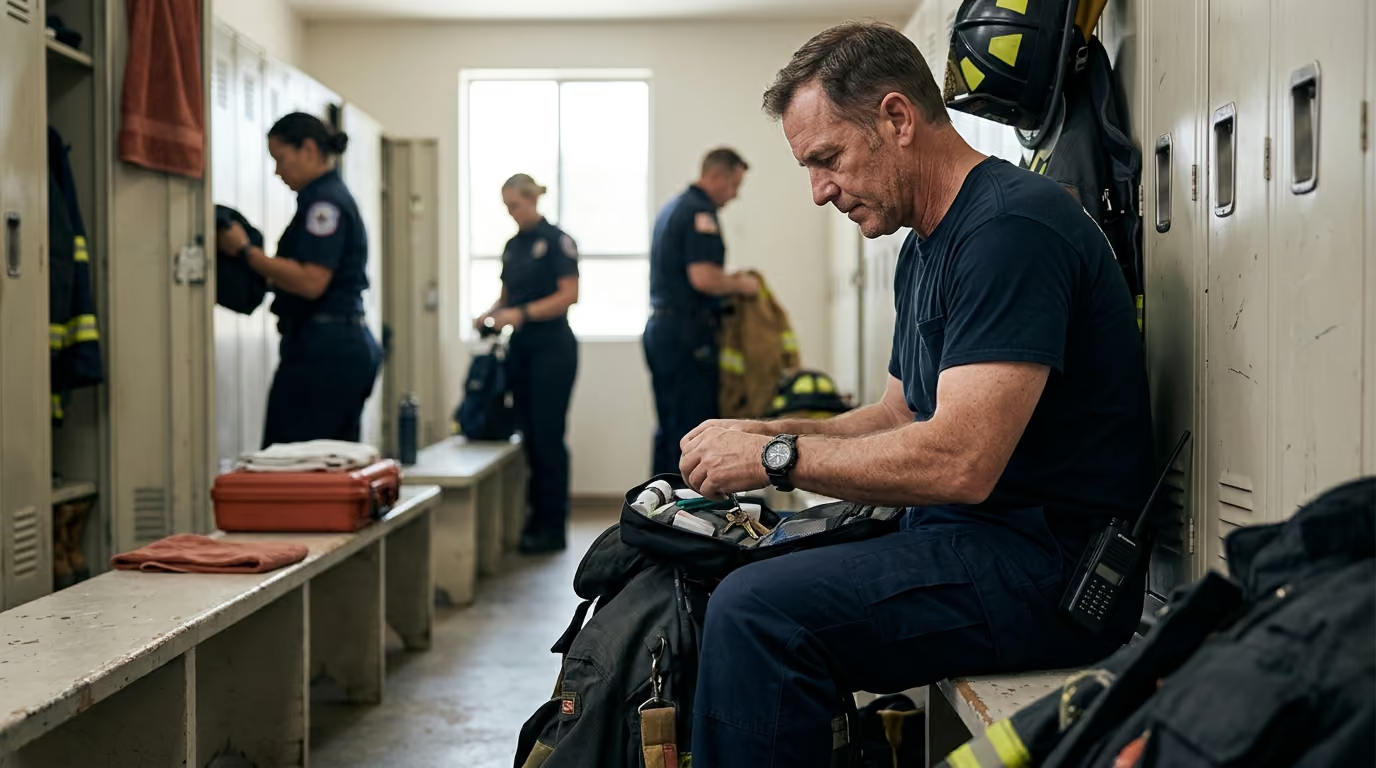

Many first responders view testosterone therapy as a quick fix for operational fatigue, but clinical treatment requires rigorous diagnostic testing and careful medical supervision.





If you are in immediate danger, call 911. For 24/7 support, call or text 988 and press 1 for the Veterans Crisis Line, or text 838255.
Testosterone replacement therapy is a medical treatment designed to restore physiological hormone levels in men with clinically diagnosed testosterone deficiency. It is not a general performance supplement, a cure for shift work exhaustion, or a shortcut for body composition. Understanding what this therapy can and cannot do allows emergency personnel to make informed health decisions without falling for commercial marketing or gym locker room myths.
For first responders, evaluating hormone health requires a careful look at occupational stress, circadian disruption, and rigorous clinical data. This guide covers the physiological mechanisms, diagnostic standards, evidence-based outcomes, safety risks, and operational trade-offs of testosterone therapy.
Testosterone replacement therapy, commonly known as TRT, is the clinical administration of exogenous testosterone to treat male hypogonadism. Hypogonadism is a distinct medical condition defined by the Endocrine Society as the combination of persistent symptoms of androgen deficiency alongside unequivocally low serum testosterone concentrations.
TRT is not an occupational performance enhancer. It is not an anti-aging cure, an energy booster for chronic sleep deprivation, or an alternative to sound nutrition and training. Medically supervised therapy aims strictly for physiological replacement. This means bringing hormone levels back into a normal biological range for a healthy adult male.
Using exogenous testosterone outside of a confirmed medical diagnosis pushes hormone levels into supraphysiologic ranges. That practice falls under anabolic steroid use, which carries substantial cardiovascular, hepatic, and psychological risks. Legitimate therapy requires diagnostic confirmation, precise dosing, and regular blood monitoring under the supervision of a licensed medical clinician.
For emergency service personnel, separating medical replacement from commercial optimization marketing is critical. Firefighters, police officers, and paramedics face high rates of physical wear, mental stress, and sleep fragmentation. These operational strains frequently produce symptoms that mimic hormone deficiency, making thorough clinical evaluation necessary before considering medical therapy.
Clinical research on testosterone replacement therapy provides clear evidence for some health outcomes, while showing mixed or limited results for others. Medical guidelines from the Endocrine Society and the American Urological Association establish that therapy should only be prescribed when low blood levels match clear clinical symptoms.
The strongest and most consistent evidence for testosterone therapy is in male sexual health. Large clinical trials, including the National Institutes of Health Testosterone Trials, found clear improvements in sexual desire, spontaneous erections, and sexual activity in men with confirmed deficiency. The American Urological Association evidence reviews report a consistent positive effect on sexual activity compared to placebo.
Testosterone therapy is not a universal solution for erectile dysfunction. Erectile performance depends heavily on vascular health, autonomic nervous system balance, and psychological factors. Men with vascular disease or high operational stress may require targeted therapies such as phosphodiesterase-5 inhibitors, cardiovascular risk reduction, or psychological support alongside or instead of hormone replacement.
Research consistently demonstrates that restoring testosterone to normal physiological levels increases lean body mass and decreases fat mass. In men with true hypogonadism, clinical studies show modest increases in selected measures of upper and lower body strength.
These physiological changes do not automatically translate to improved emergency field performance. Prescribed hormone therapy does not replace structured physical preparation, adequate protein intake, or dedicated recovery. Clinical trials have not shown that TRT improves reaction time, occupational decision-making, or complex rescue capabilities on the fireground or during tactical operations.
The evidence supporting testosterone therapy for mood, vitality, and cognition is modest and mixed. Systematic reviews of randomized controlled trials show small, variable improvements in self-reported energy levels and depressive scores in men with confirmed deficiency. However, clinical studies evaluating memory, executive function, and spatial cognition have failed to show consistent benefits.
Emergency responders experiencing emotional exhaustion, irritability, brain fog, or low motivation must recognize that these symptoms often stem from occupational sources. Chronic sleep debt, cumulative shift stress, post-traumatic stress, and occupational burnout produce identical symptoms. Prescribing hormone therapy for unaddressed psychological or occupational fatigue often leads to disappointing outcomes.
Clinical trials have confirmed that testosterone replacement increases volumetric bone density and estimated bone strength in hypogonadal men. However, current evidence has not definitively proven that therapy reduces typical osteoporotic fractures, and some analyses show that trauma-related fractures remain unchanged. Responders with severe bone mineral loss require a dedicated metabolic bone evaluation.
Testosterone also stimulates erythropoiesis, the production of red blood cells. In the Testosterone Trials, replacement therapy successfully corrected unexplained anemia in hypogonadal men. While this stimulatory effect benefits patients with true deficiency-related anemia, it also represents a major safety consideration, as excessive red blood cell production can thicken the blood.
Shift work, irregular sleep patterns, and physical occupational stress directly influence the endocrine system. The body produces the vast majority of its daily testosterone during deep, uninterrupted sleep. When circadian rhythms are disrupted by rotating tours or night shifts, normal endocrine production drops significantly.
Blood testosterone levels follow a circadian rhythm in healthy men, peaking in the early morning hours and declining toward the evening. In first responders working overnight shifts or irregular rotations, this daily rhythm is often disrupted. A blood draw taken after an overnight shift or a period of acute sleep deprivation will frequently show a temporary, artificial drop in testosterone levels.
This temporary reduction is known as functional hypogonadism or physiological suppression. The hypothalamic-pituitary-gonadal axis remains physically intact, but brain signaling to the testes is suppressed by sleep debt, high cortisol, nutritional deficits, or acute physical exhaustion. Treating functional suppression with lifelong hormone replacement bypasses the root cause without fixing the underlying occupational strain.
Evaluating circadian fatigue and sleep debt is essential before concluding that a responder has primary or permanent secondary hypogonadism. Establishing a baseline requires stabilizing the sleep schedule as much as the shift rotation allows. Clinicians must account for whether the blood sample was collected following the responder's primary sleep period.
Accurate diagnosis of testosterone deficiency requires a structured, multi-step medical evaluation. A single low laboratory value is never sufficient to establish a diagnosis or justify a lifelong prescription. Both the Endocrine Society and the American Urological Association provide strict diagnostic criteria to avoid misdiagnosis and inappropriate treatment.
The American Urological Association establishes a total testosterone level below 300 ng/dL as the standard biochemical threshold for deficiency. However, guidelines mandate that clinicians confirm this finding with at least two separate early-morning blood draws on different days. Both tests should be performed while fasting and following a normal sleep period whenever possible.
Total testosterone measures all hormone circulating in the bloodstream, including fractions bound to sex hormone-binding globulin (SHBG) and albumin. Free testosterone measures the small, unbound fraction available to cellular receptors. When total testosterone sits in a borderline range, between 250 and 350 ng/dL, measuring free testosterone using an equilibrium dialysis assay or a validated calculation provides necessary clarity.
Once biochemical deficiency is confirmed, the clinician must determine whether the failure originates in the testes or the brain. Primary hypogonadism occurs when the testes fail to produce adequate testosterone despite strong
pituitary stimulation. This is characterized by low testosterone paired with elevated luteinizing hormone (LH) and follicle-stimulating hormone (FSH).
Secondary hypogonadism occurs when the hypothalamus or pituitary gland fails to send adequate signals to the testes. In these cases, LH and FSH levels are inappropriately low or normal relative to the low testosterone concentration. Determining this distinction requires checking specific pituitary hormones, including serum prolactin, as well as screening for head trauma, metabolic dysfunction, or chronic medication use.
Before deciding on medical replacement, clinicians must evaluate and address reversible lifestyle and medical contributors. Common reversible drivers of low testosterone include:
Addressing these root issues frequently restores natural hormone production without the need for exogenous replacement. When reversible causes are corrected, many first responders see their serum testosterone return to healthy baseline ranges.
Initiating testosterone replacement therapy carries clear medical trade-offs and potential contraindications. Clinicians must conduct a thorough health screen to verify that the patient can safely receive therapy without worsening existing medical conditions.
The Endocrine Society and the American Urological Association outline specific conditions where starting testosterone therapy is unsafe:
One of the most significant and under-discussed side effects of testosterone therapy is the suppression of natural spermatogenesis. When exogenous testosterone enters the bloodstream, the pituitary gland interprets the high circulating level as a signal to halt production of LH and FSH.
Without LH and FSH signaling, the testes stop producing natural intratesticular testosterone, which is required for sperm maturation. Within several months of starting therapy, sperm production drops dramatically, often resulting in severe oligospermia or complete azoospermia (zero sperm count). Testicular volume also decreases noticeably over time.
For younger emergency personnel planning to start or expand a family, standard TRT is contraindicated by urological guidelines. Recovery of natural sperm production after stopping therapy is not guaranteed and can take anywhere from six months to over two years. First responders wishing to preserve fertility who require medical management should work with a urologist to consider alternatives such as human chorionic gonadotropin (hCG) or selective estrogen receptor modulators (SERMs), which stimulate the body's natural hormone pathway.
Choosing a delivery method requires balancing pharmacokinetic stability against the practical realities of emergency service schedules, protective gear, and home life. Each administration route presents distinct advantages and drawbacks for shift workers.
Injectable testosterone (such as testosterone cypionate or enanthate) is typically administered intramuscularly or subcutaneously on a weekly or bi-weekly schedule.
Injections eliminate the risk of transferring the medication to family members or co-workers. However, infrequent dosing schedules (such as large injections every two to three weeks) produce sharp hormonal peaks followed by low troughs. These fluctuations can cause noticeable swings in energy, mood, and sleep quality toward the end of an injection cycle. Splitting the weekly dose into more frequent, smaller subcutaneous or intramuscular injections often stabilizes these variations.
Injectable formulations also carry a higher statistical risk of stimulating excess red blood cell production compared to transdermal options. Responders using injections require diligent hematocrit monitoring.
Topical gels are applied daily to the shoulders, upper arms, or abdomen, providing relatively steady serum testosterone concentrations that mimic the body's natural daily release.
The primary challenge for first responders is application timing and absorption. Transdermal gels require clean, dry skin and take several hours to fully absorb. Heavy sweating under structural firefighting gear, tactical vests, or during physical rescue operations can wash the medication away before it enters the bloodstream. Furthermore, emergency personnel must exercise extreme caution to prevent accidental skin-to-skin transfer of the gel to spouses or young children, which can cause significant hormonal side effects in non-users.
Transdermal patches deliver a continuous dose through an adhesive backing. While convenient, patches frequently cause contact dermatitis and struggle to adhere during prolonged physical exertion, heavy perspiration, or training drills.
Long-acting injectable formulations (such as testosterone undecanoate) provide steady hormone levels over several months following an initial loading protocol. The main drawback is a lack of flexibility: if an adverse reaction, severe erythrocytosis, or a cardiac event occurs, the medication cannot be quickly cleared from the body.
Starting testosterone replacement therapy requires a commitment to ongoing clinical and laboratory monitoring. Regular follow-up ensures that hormone levels remain in a safe physiological range and detects potential side effects early.
Erythrocytosis, an abnormal increase in red blood cell concentration, is the most common laboratory complication of testosterone therapy. Testosterone directly stimulates bone marrow production of red blood cells. When hematocrit levels climb, the blood becomes more viscous, placing added strain on the vascular system.
In major clinical trials such as the TRAVERSE study, significant hematocrit elevations occurred in 17 percent of patients receiving testosterone compared to only 3.3 percent in the placebo group. Medical guidelines set a hard safety threshold: if hematocrit reaches or exceeds 54 percent, therapy must be stopped or the dose significantly reduced.
For emergency responders, erythrocytosis requires heightened attention. Responders who have undiagnosed obstructive sleep apnea, smoke, or live at high altitudes face an elevated baseline risk of thick blood. If hematocrit climbs past 54 percent, clinicians must evaluate for nocturnal airway hypoxia before resuming therapy at a lower dosage.
Cardiovascular health is a primary concern for first responders, given the high physical stress of emergency operations. The multi-year TRAVERSE trial, which evaluated over 5,000 men with hypogonadism and elevated cardiovascular risk, demonstrated that TRT did not increase the primary composite rate of major adverse cardiovascular events compared to placebo.
However, the trial identified secondary safety signals that warrant careful consideration. Men receiving testosterone had higher observed rates of atrial fibrillation, acute kidney injury, and pulmonary embolism (0.9% in the testosterone group versus 0.5% in the placebo group).
Additionally, the Food and Drug Administration requires label warnings regarding potential increases in blood pressure. Because first responders routinely operate under intense physical and sympathetic stress, resting blood pressure must be tracked at every clinical visit.
Testosterone therapy does not cause prostate cancer. However, prostate cancer cells are androgen-dependent, meaning exogenous testosterone can accelerate the growth of an existing, occult malignancy.
Clinicians must establish a baseline prostate-specific antigen (PSA) level and perform a digital rectal examination when clinically indicated before prescribing therapy. Follow-up PSA testing should occur at three months, six months, and annually thereafter. Any confirmed increase in PSA greater than 1.4 ng/mL within a year, or an absolute PSA above 4.0 ng/dL, warrants immediate urological referral.
A critical guideline from the American Urological Association is the rule of treatment cessation. If a first responder achieves normal physiological testosterone levels on therapy for three to six months but experiences no measurable improvement in target symptoms (such as libido, fatigue, or physical function), treatment should be stopped.
Continuing a medical therapy indefinitely without clinical benefit exposes the responder to long-term risks without providing tangible health returns. In such cases, the clinician must search for alternative drivers of the symptoms, such as sleep apnea, metabolic dysfunction, or chronic stress.
Deciding whether to pursue hormone replacement therapy requires a structured, rational approach that prioritizes long-term health and operational capability.
Before scheduling a hormone blood panel, emergency personnel should evaluate their lifestyle foundations. Chronic sleep restriction is the most potent suppressor of testosterone in emergency workers. Establishing an effective shift sleep plan and treating airway obstruction often creates a measurable rise in natural hormone levels.
Training volume must also match operational recovery. Chronic overtraining in high-heat environments paired with severe caloric deficits will downregulate endocrine output. Adjusting workout volume and managing cumulative duty fatigue helps restore hormonal balance naturally.
When lab testing is indicated, schedule blood draws properly:
First responders should seek care from board-certified urologists, endocrinologists, or primary care physicians who adhere to professional society guidelines. Commercial online clinics often operate on subscription models that prioritize selling medication over comprehensive diagnosis.
Use these specific questions when consulting a medical provider:
These illustrative models show how clinical decision-making applies to real-world occupational scenarios.
A 38-year-old paramedic experiences severe fatigue, brain fog, and low libido after two years of rotating night shifts. A single afternoon blood test shows a total testosterone of 275 ng/dL. Instead of starting therapy immediately, the clinician orders two confirmatory morning blood draws taken after off-duty sleep and conducts a home sleep apnea study.
The sleep study identifies moderate obstructive sleep apnea. After three months of continuous positive airway pressure (CPAP) therapy and adjusted shift recovery strategies, the paramedic's follow-up morning testosterone rises to 440 ng/dL, and energy levels significantly improve without hormone therapy.
A 32-year-old firefighter presents with classic hypogonadal symptoms and two confirmed morning testosterone readings of 220 ng/dL and 240 ng/dL. He and his partner plan to have children within the next twelve months.
Because standard exogenous testosterone suppresses sperm production, his physician avoids prescribing TRT. Instead, the clinician refers him to a reproductive urologist to evaluate pituitary signaling and discuss fertility-preserving therapies, protecting his reproductive health while addressing his clinical symptoms.
A 54-year-old police officer with confirmed low testosterone (210 ng/dL) seeks treatment for low energy and loss of lean mass. Baseline lab work reveals a hematocrit of 51 percent alongside a history of moderate hypertension.
Starting TRT immediately would push his hematocrit above the 54 percent danger threshold. The clinician halts the therapy plan, investigates and addresses his underlying hypertension and subclinical airway hypoxia, and re-evaluates his safety profile before reconsidering treatment options.
Testosterone replacement therapy is a medical commitment that requires honest risk-benefit calculation. It is not a casual lifestyle choice or an occupational performance hack.
Emergency responders must never use testosterone therapy to mask symptoms of severe acute illness, orthopedic injury, or extreme sleep deprivation. Relying on exogenous hormones to push through physical exhaustion creates a false sense of readiness that increases the risk of acute accidents, vehicle crashes, and cardiovascular strain on duty.
When initiating therapy or adjusting dosages, first responders must pay close attention to physical side effects. Sudden spikes in resting blood pressure, unexplained shortness of breath, chest tightness, palpitations, or localized calf swelling (which may indicate a deep vein thrombosis) require immediate emergency medical evaluation.
Emergency personnel must never operate frontline apparatus, conduct complex rescue operations, or handle firearms if they experience dizziness, severe fluid retention, or sudden mood changes from hormonal fluctuations.
If persistent fatigue, depression, emotional detachment, or low motivation do not improve despite normalized hormone levels, comprehensive medical and psychological care is required. These symptoms frequently indicate clinical depression, cumulative operational stress, or post-traumatic stress disorder rather than an endocrine deficiency.
Seeking professional mental health care is a vital component of long-term career resilience. If you or a fellow responder are facing overwhelming stress, severe depression, or thoughts of self-harm, confidential support is available immediately:
Professional medical evaluation ensures that the correct root condition is treated safely, protecting both your health and your career longevity.
No. Testosterone therapy cannot counteract the neurological and physiological effects of chronic sleep deprivation. While restoring physiological levels in a deficient individual can improve baseline vitality, it does not prevent the cognitive impairment, slow reaction times, and cardiovascular stress caused by acute shift fatigue. Emergency personnel must rely on structured sleep strategies and fatigue mitigation on duty.
Stopping therapy is possible, but it requires clinical supervision. When exogenous testosterone is discontinued, the body experiences a temporary hormonal crash because natural production remains suppressed. It often takes several months for the brain and testes to resume natural hormone synthesis. Clinicians frequently use post-therapy protocols to help stimulate the endocrine axis during the transition period.
Because testosterone stimulates red blood cell production, many clinicians recommend therapeutic phlebotomy or regular blood donation if hematocrit levels begin to creep upward. However, regular blood donation is a temporary management tactic, not a long-term fix for poorly controlled erythrocytosis. If hematocrit persistently approaches 54 percent, the primary medical solution is reducing the testosterone dose or changing the administration method.
Legitimate, medically prescribed testosterone replacement therapy for a confirmed medical condition does not disqualify emergency personnel from active duty under standard occupational guidelines. However, non-prescribed anabolic steroids or unauthorized performance-enhancing drugs violate departmental policies and occupational medical standards. Responders should maintain clear medical records from their licensed physician verifying their diagnosis and treatment plan.
Maintaining career longevity requires balancing short-term performance demands with long-term cardiovascular, metabolic, and endocrine health. When approached with clinical rigor, careful diagnosis, and consistent safety monitoring, hormone health management supports sustainable capability across a demanding emergency services career. For broader strategies on maintaining capability, review our duty fitness resources and explore comprehensive hormonal health and recovery resources.
Stay connected for research-led guidance on duty fitness, shift-work sleep, injury recovery, stress, nutrition and career longevity. Practical ideas for first responders who want to stay capable on the job, recover well and protect their health for the long run.



Read practical guidance on first responder fitness, recovery, sleep, nutrition and resilience for demanding work and a long, active career.
read the blog



