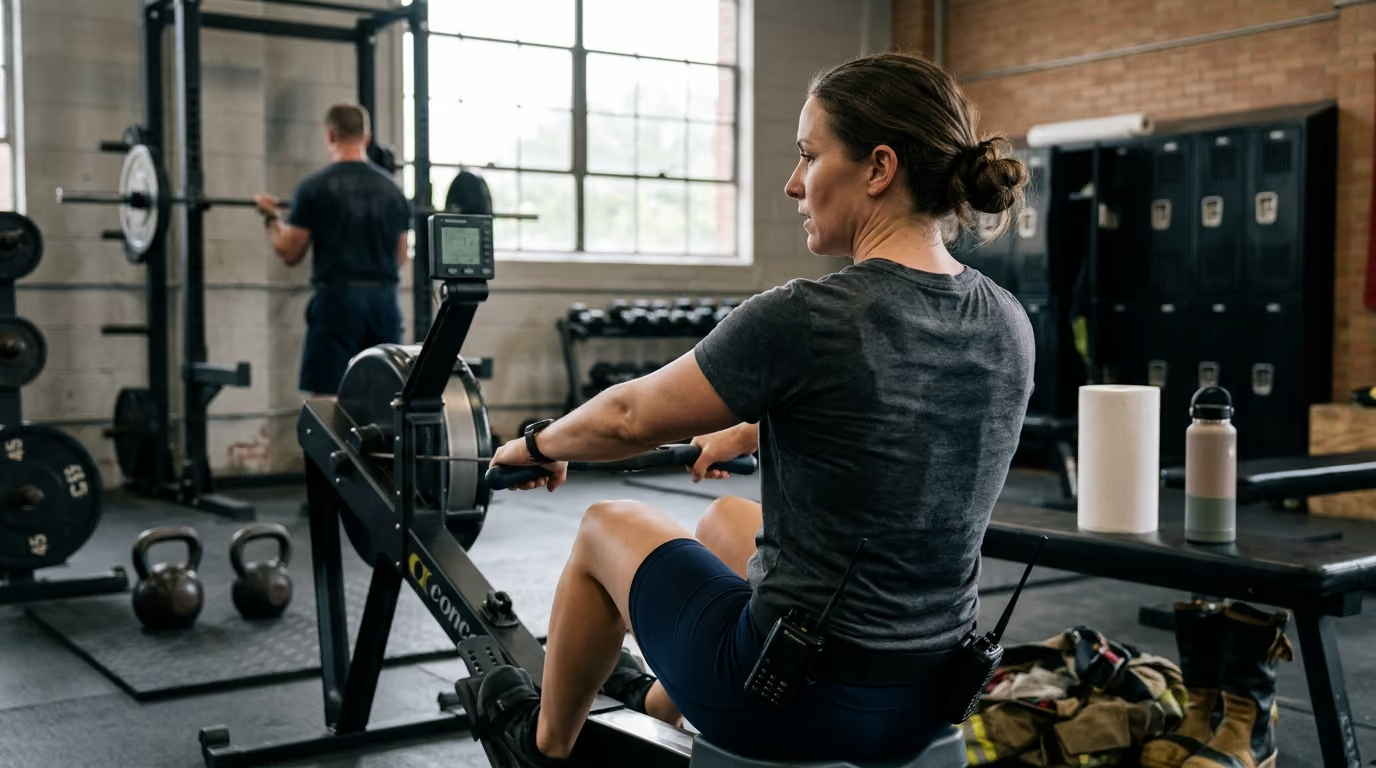

Four progressive training stages guide former first responders from initial medical clearance to sustainable endurance through targeted walking, cycling, and aquatic exercise.





Cardiovascular fitness after emergency service is the systematic restoration of aerobic endurance, metabolic health, and vascular capacity. It is not an aggressive return to tactical boot camps, nor is it an attempt to replicate the physical chaos of an active duty shift. Instead, this process rebuilds the underlying physiological engine that supports daily energy, joint integrity, and long-term vitality.
Rebuilding aerobic conditioning after years of emergency work requires a structured approach. You must establish baseline movement tolerance, manage lingering orthopedic pain, and slowly expand your weekly aerobic volume before adding high intensity. By using clear progression rules, lower-impact conditioning options, and objective effort scales, you can rebuild cardiovascular health safely and sustainably across the rest of your life.
Leaving active emergency service fundamentally changes physical stress patterns. Emergency work frequently relies on abrupt spikes of high-intensity output layered over long periods of sedentary waiting or administrative duties. Fire suppression, complex extrications, and sudden physical confrontations demand immediate anaerobic power. However, these emergency duties rarely build a stable aerobic base on their own.
Historical data indicates that cardiovascular disease accounts for approximately 45 percent of duty-related fatalities among firefighters. Research published in the New England Journal of Medicine demonstrated that fire suppression duties carry a relative risk of sudden cardiac death over 22 times higher than nonemergency tasks. Response to alarms, returning from calls, and intense physical training also show significantly elevated relative risks compared with baseline duties. These statistics highlight that intermittent high-intensity duty stress places immense strain on the heart, especially when paired with chronic sleep disruption, shift work, and unaddressed risk factors.
When emergency personnel retire or transition away from service, physical activity levels often drop sharply. This sudden shift triggers detraining. Detraining is the biological loss of training-induced adaptations following the reduction or cessation of regular exercise. Clinical reviews confirm that maximal oxygen uptake declines steadily after training cessation. Furthermore, systematic reviews in the European Journal of Preventive Cardiology show that endurance-trained individuals experience measurable reductions in left ventricular mass during detraining periods.
Detraining is not an all-or-nothing event. Former personnel who maintain light recreational activities or brisk walking preserve far more capacity than those who transition into complete inactivity. Maintaining moderate daily movement acts as a physiological buffer against rapid aerobic loss. A structured transition plan gives former responders a path to address accumulated risk factors, such as elevated blood pressure, dyslipidemia, and excess body weight, while progressively restoring their cardiorespiratory foundation.
Many former first responders confuse duty-specific work capacity with true cardiorespiratory fitness. Work capacity refers to the ability to complete specific physical tasks, tolerate heavy protective equipment, and withstand short surges of strenuous effort. Cardiorespiratory fitness represents the broader ability of your circulatory and respiratory systems to supply oxygen to working muscles during sustained physical exertion.
Cardiorespiratory fitness is commonly quantified as maximal oxygen uptake. This measurement reflects your ceiling for aerobic energy production. Aerobic endurance, by contrast, is your ability to maintain a submaximal workload for extended periods without severe fatigue. Exercise tolerance reflects how well your body handles movement without disproportionate breathlessness, joint pain, or cardiovascular distress.
Emergency scenes heavily tax anaerobic pathways and muscular stamina under extreme psychological arousal. You might retain the muscular strength to lift heavy equipment or carry loads for three minutes, yet struggle with thirty minutes of continuous brisk walking. This disconnect creates a false sense of security. Relying solely on past duty capability can cause individuals to overestimate their current cardiovascular endurance, leading to premature fatigue or injury when they attempt to resume training.
True cardiovascular health extends beyond maximal output. It encompasses healthy vascular elasticity, low resting heart rate, efficient glucose regulation, and normal blood pressure. Building a broad aerobic base through steady, low-to-moderate physical activity strengthens these health markers. Developing this aerobic foundation allows your body to recover more efficiently from all physical and psychological stressors.
A safe return to cardiovascular conditioning begins with honest risk stratification. Decades of irregular meals, disrupted circadian rhythms, and chronic operational stress can mask underlying cardiovascular, metabolic, or renal conditions. You should not attempt to test your heart with an aggressive run, heavy stair climb, or impromptu workout test.
The American College of Sports Medicine outlines four primary questions to guide preparticipation screening:
Clinical guidance specifies that individuals with known cardiovascular disease, or those experiencing active symptoms, must obtain medical evaluation before progressing their physical routine. You should schedule a comprehensive clinical assessment if you notice any of the following warning signs:
Former emergency responders deserve thorough preventive health screenings. This life transition offers the ideal window to evaluate lipid panels, resting blood pressure, fasting glucose, kidney function, and joint health. If you are managing chronic duty wear, reviewing proactive injury recovery strategies can help align your medical needs with sensible exercise programming.
Relying exclusively on smartwatch heart rate readings can be misleading. Wrist-worn optical monitors frequently suffer from motion artifacts, grip tension errors, and delayed readings during changing paces. Furthermore, common blood pressure medications like beta-blockers suppress heart rate responses, making standard age-predicted formulas inaccurate.
Using multiple subjective and objective tools provides a safer, more reliable way to regulate effort.
The Rating of Perceived Exertion scale rates effort from 0 to 10. A rating of 0 represents complete rest, such as sitting quietly in a chair. A rating of 5 to 6 corresponds to moderate effort, where your breathing is elevated but controlled. A rating of 7 to 8 represents vigorous effort, while 9 to 10 reflects near-maximal output.
The talk test is another practical, validated tool for real-time monitoring. During moderate-intensity activity, you should be able to speak in complete sentences comfortably, but you will lack the breath support to sing. Once your exertion shifts into vigorous intensity, you will only be able to speak a few words before pausing to take a breath. If you cannot speak a single complete phrase without gasping, your intensity has climbed into a high anaerobic zone.
Using these tools together protects you from overexertion. When managing warm weather, poor sleep, dehydration, or lingering joint aches, your perceived effort will naturally rise for any given pace. Adjust your speed to match your target effort zone rather than forcing your body to hit an arbitrary pace or heart rate number.
The safest progression model follows the established FITT principle: Frequency, Intensity, Time, and Type. For individuals rebuilding fitness after an extended break, the guiding rule is simple: start low and progress slow. Increasing workout duration before adding speed or resistance shields deconditioned joints, tendons, and heart tissue from excessive strain.
Structured progression follows a clear four-phase architecture.
This starting phase establishes your baseline without pushing into fatigue. You will track your resting blood pressure, resting joint comfort, and response to simple daily walking. Record how you feel during a 10- to 15-minute flat walk, noting your perceived effort and any next-day aches. The goal is gathering data, not chasing exhaustion.
The primary objective in Phase 1 is establishing a regular movement rhythm. Frequency is far more valuable than duration at this stage. Aim for three to five short sessions per week, keeping all work within a light-to-moderate effort range (RPE 3 to 5).
If needed, break your exercise into brief blocks. Ten minutes of walking three times a day provides substantial cardiovascular and metabolic benefits while sparing sensitive knees or lower backs. Adopting minimum effective dose training principles during this phase builds consistency without overwhelming your schedule or physical recovery capacity.
Once you can complete Phase 1 sessions consistently for three to four weeks without joint flares, begin expanding your total weekly volume. Gradually increase the duration of individual sessions by two to five minutes each week. Keep your intensity firmly in the moderate zone (RPE 5 to 6, where the talk test is easily maintained).
Global health guidelines from the World Health Organization recommend that adults accumulate 150 to 300 minutes of moderate aerobic activity weekly, or 75 to 150 minutes of vigorous activity, or an equivalent combination. Treat this 150-minute threshold as an ongoing target to build toward gradually over several months, rather than a mandatory starting requirement.
When you can comfortably complete 30 to 40 minutes of continuous moderate aerobic work, you can safely introduce short, controlled intervals. Phase 3 training improves vascular compliance, strokes volume, and aerobic peak power.
Begin with low-impact modalities such as stationary cycling, rowing, or incline walking. A sample framework involves completing four to six intervals of 30 to 60 seconds at a vigorous effort (RPE 7 to 8), followed by 90 to 120 seconds of easy active recovery. This structure trains your cardiovascular system to handle and recover from elevated demand without introducing orthopedic trauma.
Selecting the right training modality depends heavily on your orthopedic history, current body weight, and personal preferences. Rotating across several forms of exercise distributes mechanical forces across different joints and muscle groups, drastically reducing your risk of overuse injuries.
Walking is the most accessible, low-barrier modality for rebuilding aerobic health. Brisk walking on flat or rolling terrain naturally raises your heart rate into the moderate aerobic zone while keeping ground impact forces minimal.
To progress walking effectively:
Cycling provides smooth, non-impact aerobic conditioning. It is ideal for individuals managing degenerative joint disease, lumbar spine compression, or excess body mass. Upright stationary bikes, recumbent bikes, and outdoor road or gravel bikes allow precise resistance control.
Progression parameters for cycling:
Water provides natural buoyancy, taking compressive loads off the spine, hips, and knees. Guidelines from the Academy of Orthopaedic Physical Therapy explicitly highlight aquatic exercise as an effective, evidence-supported intervention for individuals with chronic musculoskeletal conditions.
Progression parameters for aquatic work:
Running is a high-impact discipline that places ground reaction forces of two to three times your body weight through your lower extremities with every stride. If you want to return to running, you must earn the impact tolerance first by building a reliable walking base.
Follow a structured walk-run progression:
Chronic musculoskeletal pain is exceptionally common among former emergency personnel. Years of lifting heavy stretchers, carrying equipment packs, climbing apparatus steps, and wearing heavy gear leave lasting structural footprints on spines, shoulders, and knees. However, living with chronic discomfort does not mean you must avoid cardiovascular exercise.
Modern pain science shows that pain does not automatically indicate active tissue damage. Clinical guidelines published in the British Journal of Sports Medicine consistently recommend maintaining physical activity and using aerobic exercise as a primary therapy for chronic musculoskeletal pain. Aerobic training promotes circulation, stimulates natural pain-modulating pathways in the central nervous system, and improves functional capacity.
Use a 24- to 48-hour symptom monitoring window to manage your training safely:
When a symptom flare occurs, do not stop moving entirely. Complete rest can worsen joint stiffness, amplify fear of movement, and accelerate cardiovascular detraining. Instead, modify your training dose systematically. Reduce your session duration, switch from a weight-bearing activity like walking to a non-impact option like cycling, or divide your daily target into three mini-bouts. Learning to use practical post-shift recovery routines will help you navigate lingering physical fatigue and keep pain levels under control.
Applying these cardiovascular principles requires a structured, multi-week plan tailored to your current starting point. Below are real-world case templates and a comprehensive 12-week progression model designed for sustainable long-term development.
Consider a retired paramedic who has spent the last three years in an administrative role with minimal structured exercise. She reports chronic lower-back tightness and mild bilateral knee stiffness. Her goal is to walk comfortably with family and improve her cardiovascular health markers.
Her program avoids high-impact running or heavy load carriage. Instead, she begins with alternating 15-minute recumbent cycling sessions and flat walking bouts four days per week. She includes two days of basic resistance training focusing on core stability, hip strength, and thoracic mobility. Over eight weeks, she gradually progresses her cycling and walking times to 30 continuous minutes per session, meeting health targets without aggravating her lower back.
The following 12-week progression outlines a safe pathway from baseline reconditioning to well-rounded cardiovascular fitness.
ities:** Flat brisk walking, stationary cycling, or gentle water walking.
A complete lifestyle plan should pair progressive training with supportive daily habits. Exploring our resource library on career longevity and life after service can provide helpful frameworks for stress management, sleep, and overall wellness. If you are also transitioning away from irregular emergency meal patterns, reviewing practical shift nutrition strategies will help you establish consistent, stabilizing daily habits.
Rebuilding your cardiovascular system is an ongoing physiological process that requires patience and self-awareness. Never attempt to push through active chest discomfort, lightheadedness, sudden joint swelling, or severe exercise intolerance. If your resting blood pressure is uncontrolled, or if you take medications that alter heart rate, collaborate directly with your healthcare provider to establish appropriate training parameters.
Always prioritize recovery over arbitrary performance metrics. If you experience poor sleep, extreme life stress, or an acute pain flare, scale back your workout intensity or switch to light movement. Sustainable cardiovascular fitness is built through months of consistent, submaximal work, not through isolated moments of extreme exertion.
Yes. For deconditioned individuals or those recovering from long-term occupational wear, brisk walking provides genuine moderate-intensity cardiorespiratory stimulation. By adjusting your walking speed, incorporating gentle hills, or using trekking poles, you can achieve substantial vascular and metabolic improvements while keeping joint impact low.
Smartwatches and optical wrist bands can be affected by sweat, loose fit, and rapid wrist movements. Validate your device readings by cross-referencing them with the talk test and your rating of perceived exertion. If your watch shows a low heart rate but you are breathing too hard to speak complete sentences, trust your breathing and perceived effort over the screen.
You must obtain clinical clearance and ensure your blood pressure is medically controlled before attempting vigorous interval training. Once cleared, low-impact intervals (such as stationary cycling) can be incorporated safely. Begin with short, submaximal efforts and generous rest periods, avoiding heavy breath-holding or straining.
Maximal oxygen uptake can begin declining within two weeks of complete inactivity, but the loss is gradual. If you must stop one modality due to an orthopedic injury, switching to an alternative, pain-free activity (such as swimming or upper-body rowing) will preserve your cardiovascular adaptations.
Restoring cardiovascular fitness after emergency service is about building durable health, vitality, and physical capability for the decades ahead. By respecting your body's current tolerance, progressing gradually, and choosing joint-friendly modalities, you can cultivate a resilient cardiovascular system that supports a long, active life after service.
Stay connected for research-led guidance on duty fitness, shift-work sleep, injury recovery, stress, nutrition and career longevity. Practical ideas for first responders who want to stay capable on the job, recover well and protect their health for the long run.



Read practical guidance on first responder fitness, recovery, sleep, nutrition and resilience for demanding work and a long, active career.
read the blog



