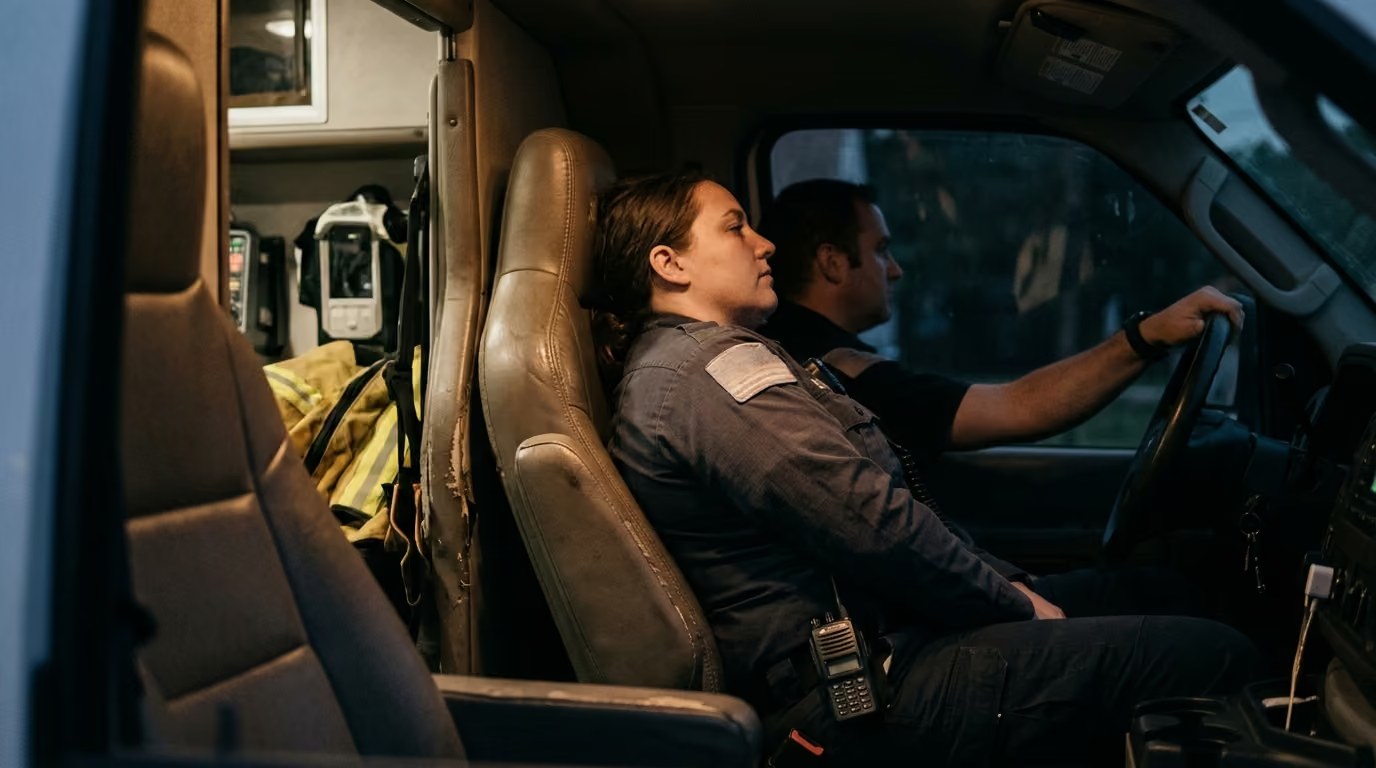

Circadian lows between 02:00 and 06:00 severely impair memory and reaction times, requiring targeted strategies to maintain mental performance across demanding shift rotations.





It is 03:45 on the fourth consecutive night shift. The radio tones drop or an alert flashes across the terminal. You feel awake, your eyes are open, and your movements feel deliberate. Yet, as you review a dispatch address, calculate a medication dose, or scan an intersection, your brain processes the information a fraction of a second slower than normal. You read the numbers twice. You miss a subtle visual cue that would have been obvious twelve hours earlier.
This gap between how awake you feel and how your brain actually operates is the central challenge of working outside normal biological hours. Cognitive performance on shift work is not a test of personal grit. It is an operational equation governed by circadian biology, sleep pressure, total wake time, workload volume, and system design.
A concise, practical understanding of shift-work cognition reveals a clear rule: subjective alertness is a poor predictor of objective mental capacity. When biological timing conflicts with duty requirements, vigilance drops, reaction time slows, working memory shrinks, and error detection degrades. Maintaining mental performance across extended and irregular shifts requires moving beyond willpower. It requires structured sleep protection, strategic mid-shift countermeasures, standardized operational checks, and schedule designs that account for human physiology.
Human brain function follows a daily cycle regulated by two distinct biological forces. The first force is homeostatic sleep pressure, which builds continuously with every hour spent awake. The second force is the circadian timing system, orchestrated by the master biological clock in the brain. This clock coordinates core body temperature, hormone output, metabolic function, and alertness across an approximate 24-hour cycle.
When you work during conventional daytime hours, these two systems work in harmony. Circadian alerting signals rise throughout the day to counteract the accumulating sleep pressure of wakefulness. When you work at night or on rotating schedules, these systems collide. You must perform complex tasks during the circadian low, roughly between 02:00 and 06:00, when biological alertness drops to its baseline.
This internal conflict creates circadian misalignment. Circadian misalignment occurs when work and wakefulness are forced into hours when the body is biologically prepared for sleep, while sleep is attempted when the body is primed for wakefulness.
The most dangerous aspect of shift-work fatigue is the divergence between subjective sensation and objective capability. Laboratory and field assessments consistently show that individuals lose the ability to accurately judge their own impairment as fatigue accumulates.
A responder or shift worker may feel functional, steady, and prepared for complex tasks. Yet objective testing during circadian lows reveals significant performance deficits:
Relying on self-assessment to determine whether you are fit to perform a complex calculation or drive a heavy vehicle is inherently unreliable during extended wakefulness.
Vigilance is the capacity to maintain focused attention and detect critical signals over prolonged periods. It represents one of the first cognitive domains to fail under sleep loss and circadian strain.
In operational environments, vigilance failures rarely look like someone falling asleep at their desk. Instead, they appear as subtle signal-detection errors. An equipment operator overlooks an abnormal pressure gauge reading. A driver fails to register a pedestrian stepping off a curb in poor lighting. A clinician overlooks an allergy warning on a patient chart.
Monotonous tasks make vigilance deficits far worse. When stimulation is low, the brain struggles to maintain cortical arousal, leading to momentary attention lapses known as microsleeps. These lapses can last from a fraction of a second to several seconds, during which the brain stops processing incoming sensory information.
Executive function encompasses high-level cognitive processes: prioritization, problem solving, working memory, emotional regulation, and cognitive flexibility. Working memory functions as the mental workbench where you hold and manipulate immediate information.
Under cumulative sleep debt and circadian disruption, this workbench shrinks. Retaining a multi-part radio instruction, comparing current patient symptoms with previous baseline readings, or tracking multiple units across an operational sector becomes difficult.
Fatigue restricts cognitive flexibility. When tired, workers tend to experience cognitive tunneling. They lock onto the first plausible hypothesis, ignore contradicting evidence, and struggle to switch tactics when conditions change. Decision-making shifts from proactive risk evaluation to reactive shortcutting.
The body of occupational research on shift work, sleep loss, and human performance provides strong, consistent evidence across multiple decades and industries. Researchers use laboratory psychomotor vigilance tasks, high-fidelity simulators, and real-world incident analyses to quantify operational risks.
Data compiled by the National Institute for Occupational Safety and Health (NIOSH) illustrates how accident and error risks scale across schedules:
In high-consequence healthcare environments, the relationship between shift length and clinical errors is pronounced. Systematic reviews and NIOSH training materials report that nurses working shifts of 12 hours or longer face more than three times the odds of making an error compared to those working 8.5-hour shifts. When shifts exceed 12.5 hours in critical-care units, the risk of patient-care errors nearly doubles, while the likelihood of staff struggling to stay awake increases by 50%.
Among medical residents and surgical trainees, extended shifts and chronic sleep deprivation correlate with a threefold increase in sharps injuries and needlesticks. Long hours combined with circadian lows impair the fine motor precision and spatial judgment required for invasive procedures.
A landmark study published in Scientific Reports evaluated chronic shift workers to isolate the distinct impacts of circadian alignment versus misalignment. Researchers found that circadian phase independently dictated psychomotor vigilance performance.
When workers operated during their biological night, their slowest 10% of reaction times worsened substantially, and the frequency of attention lapses increased. These lapses interacted directly with the number of hours elapsed since waking. The study confirmed that time awake and internal biological time act as dual risk multipliers.
The connection between sleep restriction and physical trauma in the workplace is documented in large-scale epidemiological data. A comprehensive meta-analysis evaluating workplace safety found that workers with chronic sleep problems had a 1.62-times higher risk of experiencing an occupational injury compared to workers without sleep problems.
When acute wakefulness extends without interruption, the neurobehavioral decrements become severe. Controlled reviews demonstrate that sustained wakefulness of 24 consecutive hours produces cognitive, vigilance, and motor decrements equivalent to a blood-alcohol concentration (BAC) of 0.10%. While individual responses vary based on baseline sleep debt and genetics, this benchmark underscores that prolonged wakefulness causes genuine neurological impairment.
To explore how these biological strains interact across emergency services, examine how extended rotations drive circadian strain and responder sleep debt.
In high-reliability fields such as emergency medicine, firefighting, law enforcement, and industrial operations, cognitive performance does not occur in a sterile vacuum. Shift workers face unique occupational factors that worsen baseline sleep debt.
Unlike industrial manufacturing where task pacing can be relatively predictable, emergency personnel face extreme variance in workload. A quiet evening can instantly shift into a multi-casualty incident, a complex rescue, or a violent confrontation.
This boom-and-bust cycle imposes heavy physiological demands:
When surge workloads occur late in a shift or during the circadian window of vulnerability, the probability of an operational mistake rises.
First responders and frontline healthcare providers regularly manage acute emotional strain, including direct exposure to traumatic scenes, severe physical suffering, verbal hostility, and high-consequence accountability.
Regulating emotional responses requires significant executive functioning. When cognitive resources are diverted to manage fear, disgust, grief, or frustration, fewer mental resources remain available for situational awareness and analytical decision-making.
Chronic emotional strain elevates baseline cortisol and sympathetic nervous system tone, which fragments subsequent daytime sleep opportunities. This creates a compounding cycle: poor sleep impairs emotional regulation, while unmanaged emotional strain undermines sleep quality. To build operational reset capacity during high-tempo tours, see active post-incident strategies for managing acute stress on shift.
Clear communication is essential for operational safety, yet it degrades rapidly under fatigue. Fatigued team members often demonstrate:
Safety-critical communication cannot rely on informal conversational styles during overnight operations. It demands structured communication protocols.
Managing mental performance requires a systematic routine before, during, and after every shift. Relying on ad-hoc choices when already exhausted rarely succeeds.
Preparation begins well before arriving at the station, hospital, or command center. Protecting sleep opportunity is the single most effective intervention for sustained alertness.
Aim to establish an anchor sleep period of seven to eight continuous hours. When preparing for a night shift block, transition your sleep window toward the afternoon preceding the first shift. Eliminate light, sound, and thermal disturbances in the sleeping area. Blackout window coverings, white-noise machines, and a cool room temperature (65 to 68 degrees Fahrenheit) are essential tools for counteracting daytime circadian wake signals.
If a full seven-to-eight-hour daytime sleep window is impossible due to family or operational demands, use a planned pre-shift nap:
If using a 90-minute nap, wake up at least 30 to 45 minutes before reporting for duty. This buffer allows sleep inertia to clear before you take command of a vehicle or make critical decisions.
For practical steps on setting up recovery blocks across various rosters, read through our guide to building a sleep plan for rotating shifts.
During the shift, direct your focus toward mitigating circadian dips, preserving working memory, and preventing attention lapses.
NIOSH guidelines recommend scheduling high-demand, non-emergency cognitive work when personnel are most alert. Complete complex administrative tasks, equipment calibrations, or critical policy reviews early in the shift. Avoid scheduling routine, complex analytical tasks between 03:00 and 06:00 unless operationally required.
NIOSH occupational reviews demonstrate that taking brief breaks every one to two hours during demanding operations prevents performance deterioration more effectively than waiting for a single long break late in the shift.
Even a 90-second physical break, stepping away from a computer screen, performing light mobility movements, washing your face with cold water, or completing a structured breathing exercise, helps restore cortical arousal. For actionable between-incident reset tools, review how quick grounding techniques help maintain focus on demanding shifts.
Do not rely on mental recall during night operations or extended tours. Implement concrete habits to externalize memory demands:
Cognitive protection extends to the journey home and the off-duty recovery period. The post-shift window dictates how well you will perform on subsequent tours.
The drive home after an overnight shift represents one of the highest-risk periods for occupational injury. Drowsiness behind the wheel causes severe motor-vehicle accidents among shift workers.
Morning sunlight contains high levels of blue-spectrum light, which stimulates retinal ganglion cells and signals the brain to halt melatonin production. If you must sleep during the day, wear dark sunglasses during your morning commute home. This minimizes circadian phase resetting and helps protect your upcoming daytime sleep window.
NIOSH recommends at least 10 consecutive hours of off-duty time between consecutive shifts. This window ensures adequate time for commuting, meals, personal hygiene, and seven to eight hours of protected sleep opportunity. After a block of three consecutive 12-hour shifts, schedule at least two full rest days to resolve accumulated homeostatic sleep debt.
Understanding what works, what has limited utility, and what is ineffective prevents dangerous operational mistakes.
Caffeine is a potent adenosine receptor antagonist. It blocks sleepiness signals in the brain, improving reaction time and sustained vigilance. However, poor caffeine habits undermine sleep quality.
The American Academy of Sleep Medicine (AASM) notes that low-dose caffeine (roughly 100 to 200 mg) taken early in a night shift improves alertness and cognitive processing during early tour blocks. Conversely, consuming caffeine late in the shift creates severe problems:
Establish a strict caffeine cutoff five to six hours before your planned sleep time. Use caffeine as a tactical tool early in the operational period rather than a continuous crutch.
For situations requiring rapid restoration, NIOSH highlights the caffeine nap strategy:
Allow five to ten minutes of physical movement before undertaking high-consequence duties.
Light is the primary environmental cue (zeitgeber) governing human circadian rhythms. Exposure to bright, cool-spectrum light suppresses melatonin production and promotes alertness.
AASM practice parameters emphasize that appropriately timed light exposure in the workplace can decrease sleepiness and support cognitive performance during night work. Keep operational areas well illuminated during active night duties. When rotating back to day schedules, bright light exposure immediately upon waking helps advance the circadian phase. Light must be applied intentionally, as poorly timed light exposure can disrupt circadian adjustment.
Melatonin is a hormone produced by the pineal gland that signals biological darkness to the body. AASM practice parameters indicate that low-dose exogenous melatonin may help night-shift workers initiate daytime sleep.
However, melatonin is not a general stimulant substitute or a cure for shift-work fatigue. NIOSH occupational reviews note that evidence is insufficient to recommend melatonin as a universal adaptation tool for all shift workers. It does not force complete circadian adaptation during rapid shift rotations. When used, timing and dosage should follow clinical sleep guidelines.
Because individual alertness fluctuates across a shift, high-reliability organizations use structural safeguards to catch errors before they lead to accidents.
In safety-critical environments, informal verbal exchanges increase the risk of dropped details. Implement closed-loop communication for all operational directives:
If a radio transmission or verbal instruction is not repeated back accurately, the sender must treat it as unreceived.
Shift handoffs represent major points of operational vulnerability. Information is easily omitted when tired personnel pass responsibilities to incoming teams.
Use structured handoff formats such as SBAR (Situation, Background, Assessment, Recommendation):
Handoffs should be conducted using written logs or checklists rather than unassisted memory.
Fatigued workers suffer from confirmation bias, seeing what they expect to see rather than what is actually present. For high-risk actions, such as administering concentrated medications, calculating structural load capacities, or clearing hazardous utility connections, use independent verification.
An independent check requires a second qualified team member to perform the calculation or inspect the setting from scratch, without being told the first person's result. If values differ, both workers stop and resolve the discrepancy.
Organizations must also establish clear stop-the-line authority. Any crew member, regardless of rank or seniority, must have the authority and duty to pause an operation if an unsafe condition, fatigue failure, or procedural deviation is observed.
Operational planning must balance productivity against human physiological limits. Ignoring these boundaries leads to predictable safety failures.
Organizations and individuals should establish operational thresholds where performance limits must trigger risk-control interventions:
Workplaces should adjust physical environments to support alertness:
When individual physical readiness is compromised by cumulative fatigue, willpower cannot compensate. Read more on why individual willpower fails to overcome cumulative duty fatigue across emergency services.
While fatigue is a predictable consequence of shift work, persistent or severe impairment may indicate an underlying clinical sleep disorder.
Shift Work Sleep Disorder (SWD) is a recognized circadian rhythm sleep disorder characterized by persistent insomnia, excessive sleepiness, or both, directly related to a work schedule that overlaps the normal sleep period.
Unlike standard shift fatigue, which resolves with adequate off-duty sleep, SWD leads to persistent, chronic impairment. Personnel experiencing unintended sleep episodes while driving, severe insomnia during protected sleep windows, or chronic mood changes should seek assessment from a qualified sleep-medicine physician.
Obstructive Sleep Apnea (OSA) is common among shift-working populations, particularly in physically demanding fields with irregular schedules. OSA involves repeated collapses of the upper airway during sleep, causing oxygen desaturations and frequent micro-arousals that destroy sleep architecture.
Occupational health reviews indicate that workers with untreated obstructive sleep apnea face nearly double the odds of workplace accidents compared to those without the condition. Symptoms requiring clinical evaluation include:
Treating underlying sleep disorders through continuous positive airway pressure (CPAP), oral appliances, or behavioral medicine significantly restores cognitive function, shortens reaction times, and protects long-term cardiovascular health.
Maintaining cognitive performance across a career of shift work is not about finding quick fixes or relying on sheer determination. It is an operational discipline built on respect for human physiology.
By treating sleep as a protected performance tool, structuring on-shift work to mitigate circadian lows, externalizing memory demands, and establishing organizational safeguards, shift workers can protect both their daily operational capability and their long-term health.
Revisit this performance guide whenever you:
Protecting cognitive capability across extended and irregular shifts requires aligning operational habits with human biology. When you systematically protect sleep opportunities and apply structured safety barriers on duty, you ensure both mission performance today and health for decades to come.
Stay connected for research-led guidance on duty fitness, shift-work sleep, injury recovery, stress, nutrition and career longevity. Practical ideas for first responders who want to stay capable on the job, recover well and protect their health for the long run.



Read practical guidance on first responder fitness, recovery, sleep, nutrition and resilience for demanding work and a long, active career.
read the blog



