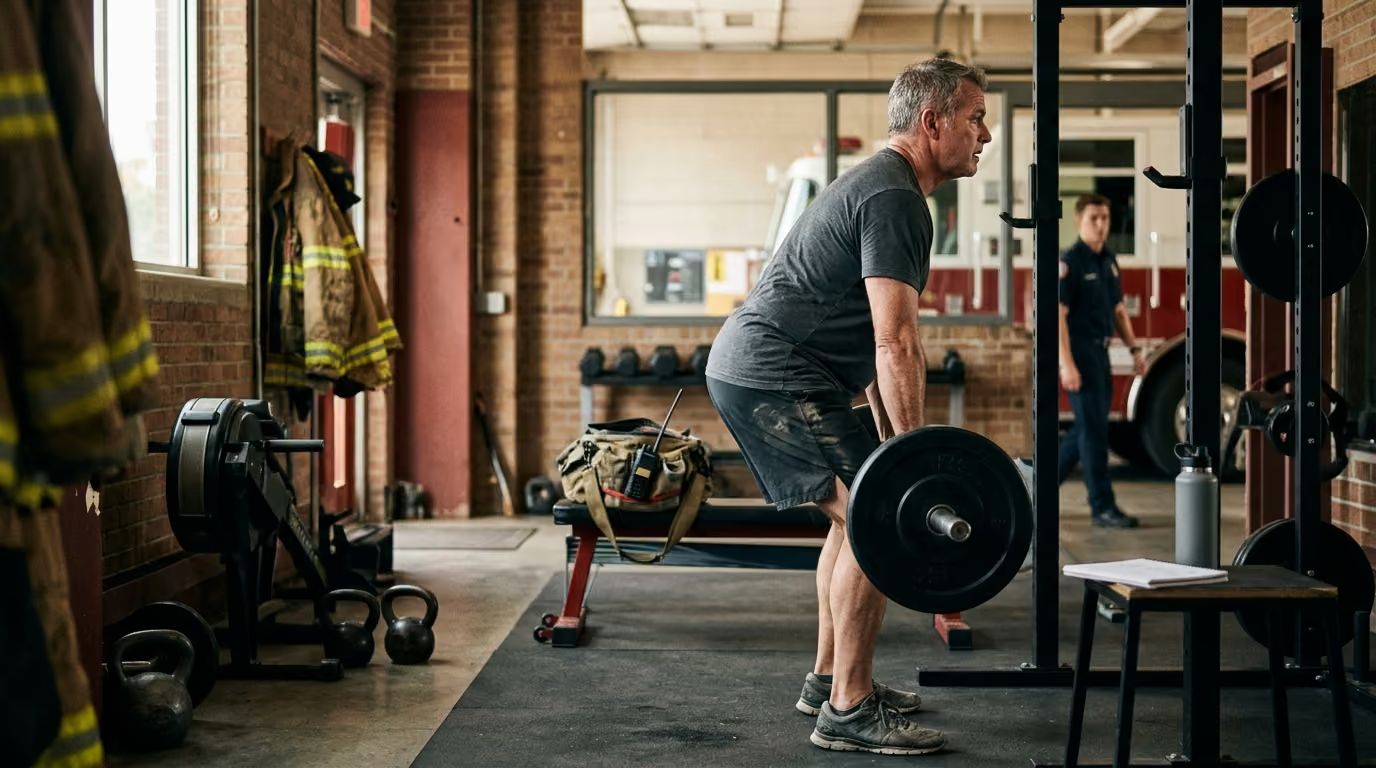

Former emergency personnel often assume past physical readiness protects their bodies, but maintaining long-term health requires targeted training across five essential movement capacities.





Fitness after first responder retirement is the systematic maintenance of strength, aerobic capacity, mobility, balance, and power to support lifelong physical autonomy. It is not an ongoing test of mental toughness, nor is it an attempt to maintain operational combat readiness indefinitely.
Leaving the fire service, law enforcement, or emergency medical services fundamentally alters your physical requirements. Decades of structural load, irregular sleep, sudden adrenaline surges, and repetitive joint stress leave an accumulated physical footprint. Transitioning into post-service life requires moving away from punishment-based training toward a sustainable model of joint preservation, metabolic health, and daily capability.
This guide breaks down the physiological shifts that occur after retirement, the five core capacities required for lifelong health, practical training templates, and realistic self-assessments.
Retirement immediately removes a substantial amount of involuntary physical activity. On duty, emergency personnel climb stairs, handle heavy extrication equipment, lift patients in tight quarters, and sprint during dynamic incidents. Even quiet shifts involve standing, walking around facilities, checking apparatus, and wearing gear that adds 20 to 50 pounds of passive resistance.
When those occupational demands vanish, daily energy expenditure drops dramatically unless intentional movement takes its place. A study examining fire service retirement published by the U.S. Fire Administration noted that 60.6 percent of retirees maintained regular physical fitness habits. However, only 46.5 percent engaged in regular aerobic exercise. This gap highlights how easily conditioning declines when the external structure of the job disappears.
The shift is also psychological. Emergency service culture often links self-worth to pain tolerance, high workloads, and a willingness to train through acute discomfort. When shift requirements end, many retirees struggle with an all-or-nothing mindset. Some push through severe joint pain to match their younger performance numbers, while others stop training entirely due to burnout, accumulated injuries, or a loss of team accountability.
Sustainable post-service fitness replaces the search for exhaustion with the minimum effective dose. Your workouts no longer need to simulate structural firefighting, suspect apprehension, or multi-casualty triage. The primary goal becomes preserving your physical independence, enjoying recreational pursuits, and protecting your cardiovascular system for decades to come. To explore how this transition fits into a wider post-service lifestyle, visit the career longevity and life after service resource hub.
Years of tactical readiness do not automatically protect you from age-related cardiovascular and metabolic decline. Occupational tasks build task-specific strength, but they do not guarantee long-term cardiovascular health.
A landmark study examining aging firefighters across different age cohorts revealed significant physiological changes over time:
These findings show that first responders experience the same age-related decline in aerobic fitness and metabolic health as the general population. Sudden cardiovascular events remain a major health risk for emergency personnel. National Institute for Occupational Safety and Health investigations show that underlying coronary artery disease contributes to the vast majority of line-of-duty cardiac fatalities. The combination of chronic sympathetic nervous system activation, shift-work sleep debt, and high-stress calls accelerates vascular strain over a full career.
According to global guidelines from the World Health Organization, maintaining baseline adult health requires 150 to 300 minutes of moderate-intensity aerobic activity each week, or 75 to 150 minutes of vigorous aerobic exercise. The World Health Organization also recommends full-body muscle-strengthening exercises at least two days per week. For older adults, the guidelines add a specific requirement: multicomponent physical activity that emphasizes functional balance and strength training on three or more days per week.
Evidence from the American College of Sports Medicine confirms that resistance training should remain flexible and individualized. Preserving muscle mass directly protects resting metabolic rate, supports glycemic control, and maintains bone mineral density. Cardio alone cannot prevent age-related muscle loss, known as sarcopenia. A comprehensive program must combine progressive resistance training with steady aerobic conditioning.
A career in the emergency services leaves behind distinct orthopedic and systemic patterns. Firefighters often carry chronic lumbar and shoulder wear from breathing apparatus, hose lines, and awkward extrication angles. Police officers frequently experience chronic hip, sacroiliac, and lower back dysfunction caused by decades of sitting in patrol vehicles wearing heavy duty belts. Paramedics and EMTs routinely suffer cervical and lumbar strain from repeated patient lifts in stairwells and confined spaces.
These occupational stresses alter how you should select exercises in retirement:
Decades of heavy axial loading mean that maximal spinal compression is rarely worth the risk. Bilateral barbell back squats and heavy conventional deadlifts can be replaced with joint-friendly alternatives. Belt squats, goblet squats, trap bar deadlifts, and step-ups provide identical muscular stimuli with significantly lower shear stress on the spine.
Decades of rotating shifts, night alarms, and broken sleep disrupt the autonomic nervous system. Active-duty personnel often exist in a state of chronic sympathetic dominance. Post-retirement training should help regulate your nervous system rather than further drain your recovery capacity. Incorporating steady, low-intensity aerobic work helps restore parasympathetic tone and lowers resting heart rate.
Emergency work forces the body into repetitive, asymmetrical movement patterns. Stepping out of tall apparatus, carrying gear on one side, or shooting from specific stances creates chronic muscular imbalances. Post-service programming must restore multi-planar movement. This includes rotational strength, lateral stability, and controlled thoracic mobility.
To understand how to manage stress and output over time, you can read our guide on training around cumulative duty fatigue and autoregulation.
Lifelong physical autonomy requires balancing five distinct physical capacities: strength, aerobic endurance, mobility, balance, and power.
Strength forms the foundation for all daily tasks. It preserves bone density, protects joints from osteoarthritis, and makes tasks like carrying groceries or lifting heavy objects easy.
Focus on seven primary movement patterns:
Train each pattern across a moderate repetition range, such as 6 to 12 repetitions per set. Stop each set with one to two repetitions left in reserve rather than training to complete muscular failure.
Cardiorespiratory endurance protects your vascular system, lowers resting blood pressure, and improves mitochondrial efficiency.
Prioritize steady Zone 2 cardiovascular work. This is an intensity where you can comfortably speak in complete sentences without gasping for breath.
Mobility is the active neuromuscular control of a joint through its full range of motion. Passive flexibility without strength leaves joints vulnerable to strain.
Integrate mobility into your daily routine and warm-ups:
Hold static stretches for 10 to 30 seconds without bouncing. Never force a joint into sharp or pinching pain.
Balance declines gradually with age due to decreases in sensory input, inner-ear vestibular function, and lower-body strength. Balance training helps prevent trips, slips, and debilitating falls.
Train your balance three days per week using brief, targeted drills:
Power is the ability to produce force quickly. Muscle power declines nearly twice as fast as raw strength during aging. Power allows you to catch yourself rapidly during a slip, step quickly over an obstacle, or rise swiftly from a low chair.
Research from the American College of Sports Medicine highlights that power is effectively trained using moderate loads, roughly 30 to 70 percent of your one-repetition maximum, moved with maximum intent during the concentric phase.
Safe power training options for retirees include:
For additional strategies on organizing training around variable energy levels, see our guide on minimum effective dose training for emergency personnel.
Transitioning from active service to retirement requires unlearning certain habits built during decades of shift work. Avoid these common training pitfalls:
Many retirees believe that because they passed rigorous academy physical tests or worked demanding calls for 25 years, their cardiovascular and musculoskeletal systems remain permanently conditioned. As the firefighter aging data proves, cardiorespiratory capacity and vascular health decline steadily without consistent aerobic and resistance stimuli. Past capacity does not replace current training.
Active-duty training culture often glorifies exhaustion, vomiting, and extreme muscle soreness. In retirement, chronic joint inflammation, delayed recovery, and systemic fatigue are signs of poor programming, not dedication. Sustainable progress comes from repeatable, submaximal training that leaves you energized rather than depleted.
Walking is an outstanding baseline activity, but it does not stress the musculoskeletal system enough to maintain upper-body strength, rotational capability, or bone density. A complete program must pair steady aerobic movement with progressive resistance training.
Stretching tight muscles provides temporary relief, but it does not build joint stability or motor control. Tightness is often the nervous system's response to an unstable or weak joint. Pair gentle mobility work with strengthening exercises through full, controlled ranges of motion to create lasting joint resilience.
First responders are trained to ignore acute pain to finish a call or complete an assignment. Carrying this mindset into retirement workouts is dangerous. Sharp joint pain, progressive tendon ache, radiating nerve sensations, dizziness, or chest tightness are clear stop signals. Learn to distinguish between the normal burn of working muscle and the warning signs of tissue overload.
Structuring your weekly training depends on your current health status, orthopedic history, and personal goals. Below are four distinct templates designed for different retirement profiles.
This template suits retirees with no major limiting joint issues who want balanced strength, cardiovascular health, and mobility.
This template is designed for retirees managing chronic lumbar pain, worn knees, or reconstructed shoulders. It minimizes axial spinal loading and joint shear.
This template serves retirees who want to maintain higher levels of athletic output, work capacity, and speed without breaking down their joints.
This template provides an accessible, low-barrier entry point for individuals who have been physically inactive for an extended period or who are managing metabolic health concerns.
For more insights into structuring duty-relevant fitness routines, explore our full library of duty fitness articles and training methodologies.
You do not need maximum heart rate tests, heavy one-rep maximum lifts, or grueling obstacle courses to evaluate your fitness. A safe, functional testing battery can be conducted every 8 to 12 weeks to measure progress across strength, balance, mobility, and cardiovascular health.
Retirees must recognize when physical symptoms require clinical evaluation rather than programmatic adjustments.
Given the high prevalence of underlying coronary artery disease among emergency responders, stop exercising and seek immediate medical evaluation if you experience:
Consult an orthopedic specialist or licensed physical therapist if you experience:
Physical training is an exceptional tool for physical health and daily routine, but it cannot replace professional clinical care. Decades of exposure to traumatic calls, fatal accidents, and severe sleep deprivation can manifest in retirement as depression, post-traumatic stress, anxiety, or substance reliance.
If you find yourself using extreme physical exhaustion as an emotional coping mechanism or struggling with persistent psychological distress, reach out to licensed mental health professionals who understand emergency service culture. To learn more about pacing output and nervous system recovery during operational years, read our overview on training around shift work and long duty cycles.
Shift work conditions first responders to accept chronic fatigue as normal. In retirement, you must reframe rest as a structured component of your physical capability. Adaptation does not occur during the workout; it occurs during the recovery window when your body repairs muscle tissue, restores glycogen, and regulates hormone levels. Taking planned recovery days allows you to train with higher quality and prevents overuse injuries.
Yes, provided the exercises match your current spinal tolerance. Avoiding resistance training often weakens the spinal erectors, glutes, and core musculature, which can worsen lower back pain over time. Replace heavy spinal loading movements with supported alternatives like goblet squats, belt squats, chest-supported rows, and trap bar deadlifts. Working with a physical therapist to identify pain-free ranges of motion will allow you to build spinal resilience safely.
Walking is an outstanding activity for cardiovascular health, metabolic regulation, and stress reduction, but it cannot replace resistance training. Walking does not provide enough mechanical tension to stimulate bone density preservation, maintain upper-body muscle mass, or build rotational trunk strength. An ideal routine pairs daily walking with two to three weekly resistance sessions.
Normal exercise fatigue is temporary and resolves within 24 to 48 hours after adequate nutrition, hydration, and sleep. Overtraining fatigue is persistent and systemic. Warning signs of overtraining include worsening sleep quality, chronic joint aches, resting heart rate elevations, loss of appetite, irritability, and a drop in workout performance. If these symptoms persist, reduce your training volume by 50 percent for a week to allow your body to recover.
Sustainable physical capability in retirement is built through consistency, progressive overload, and intelligent recovery. Preserving your strength, balance, mobility, and endurance protects your autonomy, keeps you engaged in meaningful pursuits, and ensures that the physical sacrifices of your career do not limit the quality of your retirement.
Stay connected for research-led guidance on duty fitness, shift-work sleep, injury recovery, stress, nutrition and career longevity. Practical ideas for first responders who want to stay capable on the job, recover well and protect their health for the long run.



Read practical guidance on first responder fitness, recovery, sleep, nutrition and resilience for demanding work and a long, active career.
read the blog



