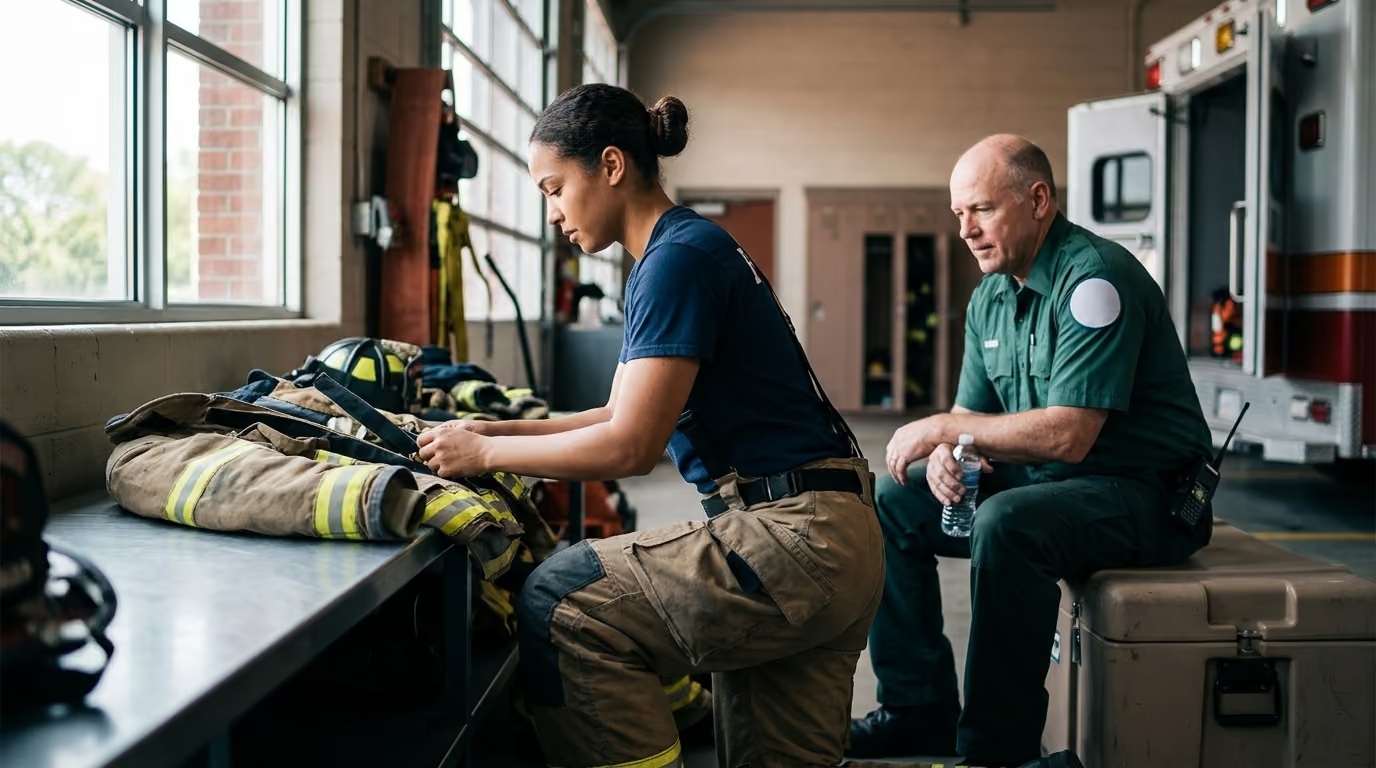

Long-term resilience against lower-back injuries comes from building multi-planar trunk stiffness, improving hip mechanics, and applying practical movement strategies on duty.





You step out of the cab at three in the morning after sitting for forty minutes on a rough highway. Your lower back feels compressed, stiff, and cold. Inside the residence, you find a two-hundred-pound patient wedged into a narrow space between a toilet and a bathtub. There is no room for a textbook squat, no clean angle for two rescuers, and no time to set up ideal leverage. You brace, reach across an awkward angle, and lift.
This scenario illustrates why generic back safety advice fails in emergency services. Lower-back problems in first responders are rarely the result of a single bad lift. They stem from a continuous imbalance between physical exposure and recovery capacity. Firefighters, paramedics, EMTs, and rescue personnel repeatedly combine sustained sitting, sudden heavy loads, awkward positions, gear weight, and sleep loss.
Preventing lower-back pain requires a systematic approach. Rather than relying on rigid rules, emergency personnel need a framework built on four operational pillars: trunk capacity, hip function, exposure reduction, and structured recovery.
Musculoskeletal disorders represent the largest category of occupational illness across emergency services. Research confirms that low-back symptoms affect a substantial portion of the workforce throughout their careers.
A meta-analysis examining emergency medical services personnel identified a pooled lower-back pain prevalence of roughly fifty percent. A related systematic review of EMS professionals reported an overall musculoskeletal disorder prevalence of over fifty-six percent, with the lower back being the most frequently affected anatomical region. Among structural firefighters, systematic reviews report injury prevalence rates ranging from nine percent to over seventy-four percent. This wide range reflects differences in reporting definitions, call volumes, and departmental tracking methods.
Evidence also shows that lower-back pain becomes more prevalent as years in emergency service accumulate. Cumulative loading, repeated minor strains, and unresolved tissue irritation create long-term vulnerability.
The data regarding workplace interventions provides clear operational direction. A major Cochrane systematic review evaluated manual handling training and the standalone provision of assistive devices. The review found no evidence that classroom lifting instruction alone prevented work-related back pain. Telling personnel to lift with their legs does not alter the physical demands of a confined rescue.
Conversely, an overview of occupational systematic reviews demonstrated that structured exercise programs, alone or paired with education, provide moderate-quality evidence for reducing back injury incidence and duration. Physical capacity must match or exceed the job's mechanical demands.
The World Health Organization guidelines for chronic primary lower-back pain support this conclusion. The guidelines conditionally recommend structured exercise programs, self-management education, and multimodal active therapies. The same guidelines advise against the routine use of lumbar support belts and passive modalities.
Recent research on firefighter health underscores a broader model. Physical factors like body mass index and conditioning interact directly with occupational stress and sleep disruption. Back health is an integrated physiological and operational outcome.
Emergency services place unique physical stresses on the human spine. In an industrial warehouse, loads are packaged, weights are labeled, and pathways are clear. In emergency response, every variable is unstable.
When a responder lifts a patient from the floor, the horizontal distance between the load and the spine dictates the actual torque experienced by the lumbar vertebrae. Holding an eighty-pound medical pack against the chest places manageable demands on the back. Holding that same weight two feet away from the torso creates massive compressive and shear forces across the lumbosacral junction.
In tight hallways, bathrooms, and vehicle extrications, responders cannot hold loads close to their center of gravity. Long moment arms are often unavoidable, placing extreme physical demands on the posterior chain.
Lifting in emergency services rarely occurs in a single plane of motion. Responders twist while lifting, navigate uneven steps while carrying stretchers, and support shifting loads when patients lose consciousness. Combining spinal flexion with axial rotation creates high stress on the outer fibers of the intervertebral discs.
Driving an ambulance or fire apparatus for long periods causes passive spinal tissues to deform, a process known as mechanical creep. When sitting for extended durations, the lumbar spine remains in slight flexion while absorbing low-frequency road vibration. This sustained posture reduces the responsiveness of stabilizing muscles. When a responder immediately exits the vehicle and performs a maximal lift, the stabilizing system is temporarily compromised.
Structural turnout gear, self-contained breathing apparatus, body armor, and duty belts add substantial dead weight. This extra load alters the wearer's center of mass, restricts hip mobility, and increases baseline spinal compression before any external work begins.
Stairs, wet grass, ice, debris, poor lighting, and tight spaces eliminate standard lifting mechanics. Responders must maneuver loads while balancing
on narrow steps or kneeling on hard surfaces, increasing demand on the stabilizer muscles of the trunk.
Trunk capacity represents the ability of the muscular system to protect the spine against uncontrolled movement under load. In first responder work, the core acts primarily as a force transmitter and stabilizer rather than a movement generator.
True trunk stability requires resisting movement in three primary planes:
Effective programming prioritizes exercises that train these isometric stabilizing qualities. Movements such as dead bugs, bird dogs, front planks, side planks, and Pallof presses establish baseline motor control.
These exercises teach the nervous system to brace the abdominal wall while the hips and shoulders move independently. Responders should also incorporate structured readiness training into their weekly routines to maintain these stabilizers without accumulating excessive fatigue.
Once baseline control is established, loaded carries bridge the gap between gym exercises and field demands. Carries challenge the trunk to maintain stability while the body is in dynamic motion.
Responders can progress carries by varying the weight, distance, speed, and terrain. Performing carries on uneven grass or while stepping over low hurdles prepares the stabilizer muscles for challenging scene conditions.
Many responders inadvertently hold their breath during heavy efforts. While a brief Valsalva maneuver creates intra-abdominal pressure during a maximal lift, sustained breath-holding during a long carry causes rapid fatigue and cardiovascular strain.
Responders must learn to brace the abdominal wall while continuing to breathe rhythmically. Training should include exercises where the athlete maintains thirty to fifty percent muscular tension in the trunk while taking controlled breaths through the nose. This skill preserves spinal stability during prolonged patient carries up flights of stairs.
The hips are designed to produce large amounts of force through wide ranges of motion. When hip mobility or strength is restricted, the lower back often compensates by bending or twisting excessively.
The hip hinge is the most important movement pattern for lower-back preservation. Hinging involves bending at the hips by driving the pelvis backward while maintaining a stable trunk position. This pattern places mechanical load on the gluteal muscles and hamstrings rather than the passive tissues of the spine.
Training the hinge requires mastering variations of the Romanian deadlift, kettlebell swing, and trap-bar deadlift. The objective is not necessarily lifting maximal weights, but developing the motor habit of loading the posterior chain during daily tasks.
Responders should practice hinging from various foot widths and staggered stances to replicate field environments.
Telling responders to always lift with their legs and keep their back perfectly straight is unhelpful on the fireground or in a cramped apartment. Real-world calls often make a neutral spine impossible.
Instead of demanding impossible posture perfection, training should expand movement tolerance across diverse joint angles. Responders need multiple strategies for accessing loads:
When planning fitness routines around irregular shifts, responders can review this guide on managing workouts around duty schedules to balance movement quality with operational recovery.
Exercise alone cannot overcome dangerous operational setups. The physical environment and mechanical demands of the job must be managed through engineering controls and clear teamwork.
The National Institute for Occupational Safety and Health established the Revised NIOSH Lifting Equation to calculate the Recommended Weight Limit for manual lifting tasks. Under ideal laboratory conditions, the equation sets a baseline load constant of fifty-one pounds. This base number is then reduced by multipliers that account for:
When applied to patient handling, NIOSH guidance notes that the calculated safe weight limit for manual lifting drops to thirty-five pounds under typical healthcare and emergency conditions. Unstable patient movement, lack of handles, awkward bed heights, and confined rooms rapidly lower safe lifting thresholds.
Because patients weigh far more than thirty-five pounds, manual handling without mechanical or team assistance inherently exceeds standard ergonomic safety thresholds.
Departments must invest in and enforce the use of mechanical transfer devices. Powered ambulance stretchers, mechanical load systems, powered stair chairs, slide sheets, and transfer boards significantly reduce peak lumbar forces.
Using slide sheets to transfer a supine patient across a bed onto a stretcher substitutes sliding friction for vertical lifting. Powered stair chairs eliminate the severe spinal compression caused by carrying heavy patients down tight staircases.
Responders should stage this equipment close to the operational area rather than leaving it on the vehicle to save time. The minutes saved by skipping equipment are easily outweighed by months of lost-duty injury recovery.
Before initiating a lift, crews should execute a brief preparation routine:
A persistent cultural barrier is the urge to perform solo lifts to appear capable. True professionalism means recognizing when a load exceeds safe physical capacities and requesting lift assistance from additional crew members.
Emergency responders spend hundreds of hours each year seated inside apparatus, patrol vehicles, and ambulances. Prolonged sitting degrades spinal capacity and leaves responders vulnerable when arriving on scene.
Driving posture must be adjusted to maintain the natural curve of the lumbar spine without causing slouching:
Long driving shifts expose the body to whole-body vibration, which fatigues deep spinal stabilizers. Over time, the ligaments of the spine stretch under sustained flexion, temporarily dulling the stretch reflexes that protect spinal joints.
To counteract this effect, responders should avoid jumping directly from a long drive into an immediate maximal lift. When exiting the vehicle:
Responders interested in building balanced physical readiness can review strategies for autoregulation and training readiness to adjust workout intensity based on recent driving and call volumes.
Injury prevention does not end when the shift concludes. The biological tissues of the spine, including muscles, tendons, ligaments, and intervertebral discs, require adequate recovery to adapt to physical stress.
Emergency work disrupts natural circadian rhythms and cuts into restorative sleep. Sleep deprivation impairs neuromuscular coordination, slows reaction times, and degrades motor control.
When a responder is severely fatigued, their ability to maintain precise abdominal bracing during unpredictable loads drops significantly. Fatigue leads to rushing, poor communication during team lifts, and increased reliance on awkward compensatory postures.
When responders experience low-grade lower-back stiffness after a demanding shift, the instinct is often complete bed rest. However, prolonged inactivity reduces blood flow to recovering tissues and causes muscular stiffness.
Active recovery promotes tissue healing without accumulating extra fatigue. Beneficial post-shift recovery strategies include:
First responders track apparatus maintenance and medical supply inventories, but rarely track their own physical exposure. Keeping a simple log of weekly demands helps identify when injury risk is elevated:
When the log reveals a cluster of high-stress shifts and poor sleep, workouts should shift toward mobility, technique, and low-intensity conditioning rather than heavy, maximal lifting.
Misunderstandings regarding back health remain widespread across public safety departments. Eliminating these misconceptions helps agencies build more effective injury prevention programs.
This standard workplace advice assumes that the spine can remain completely vertical while lifting. In real-world environments, bending the knees without hinging at the hips forces the responder far away from the load, increasing reach distance and shoulder strain.
Safe lifting involves using the hips, legs, and trunk together to share the load, keeping the object as close to the body as possible.
Maintaining a neutral spinal alignment reduces shear stress, but it does not make the back invulnerable to injury. A lift performed with a straight spine can still cause injury if the load is excessively heavy, lifted at high speed, or repeated under extreme fatigue.
Spinal safety is governed by total exposure, including volume, load, leverage, and tissue readiness, not posture alone.
Some responders wear supportive back belts during shifts, believing they protect against heavy strains. Clinical guidelines from the World Health Organization advise against the routine use of lumbar supports for back pain prevention.
Belts may provide a false sense of security, encouraging individuals to attempt lifts that exceed their physical capacity without improving underlying muscular stability.
Experiencing lower-back pain does not automatically mean a disc has herniated or a muscle has torn. Pain is an alarm system driven by the central nervous system in response to perceived stress, fatigue, inflammation, and physical load.
Many episodes of acute back discomfort resolve within days or weeks with gentle movement and load modification, without causing permanent tissue damage.
Mandatory annual slide presentations on proper lifting do not reduce department injury rates. True prevention requires combining physical conditioning, ergonomic equipment, adequate staffing, and clear departmental operating procedures.
Examining how these principles apply to common operational scenarios demonstrates the value of an integrated prevention system.
An EMS crew responds to a fall in a tight residential bathroom. The patient is lying between the vanity and the toilet.
Firefighters operate hydraulic rescue tools for forty-five minutes to extricate an entrapped driver on a steep highway embankment.
A crew arrives to transport a three-hundred-pound non-ambulatory patient down a narrow flight of residential stairs.
While most lower-back pain resolves with movement and conservative self-management, emergency personnel must recognize signs that indicate serious spinal pathology or nerve root compromise.
Responders experiencing lower-back pain should seek immediate medical evaluation if any of the following symptoms appear:
Returning to duty too quickly after an acute back injury increases the risk of reinjury. However, remaining completely inactive for long periods weakens the musculoskeletal system.
A safe return-to-duty process should follow an objective, functional progression rather than relying solely on elapsed time:
Responders recovering from musculoskeletal injuries can consult resources in our dedicated injury and recovery category to explore progressive rehabilitation pathways.
Self-management and functional training form the foundation of back injury prevention. However, when back symptoms interfere with daily life or duty readiness, professional medical evaluation is essential.
Responders should consult a licensed physical therapist, sports physician, or orthopedic specialist when:
A qualified professional can conduct clinical tests, evaluate movement mechanics, prescribe targeted rehabilitative exercises, and guide a structured return-to-performance plan.
For broader prevention strategies and physical conditioning resources tailored to first responders, visit the Rescuris injury prevention resource directory.
Building lower-back resilience requires effort at both the individual and departmental levels.
Lower-back resilience in emergency response is not built through a single lifting cue, a weight belt, or rigid posture rules. Sustainable career longevity requires an integrated system that develops robust trunk capacity, trains mobile hips, utilizes mechanical equipment, and protects recovery.
By managing the balance between cumulative duty exposure and physical capacity, first responders can protect their spines, perform effectively on scene, and enjoy a healthy, capable life throughout their careers and into retirement.
Protecting your lower back is an active, career-long investment in your operational capability and personal health.
Stay connected for research-led guidance on duty fitness, shift-work sleep, injury recovery, stress, nutrition and career longevity. Practical ideas for first responders who want to stay capable on the job, recover well and protect their health for the long run.



Read practical guidance on first responder fitness, recovery, sleep, nutrition and resilience for demanding work and a long, active career.
read the blog



