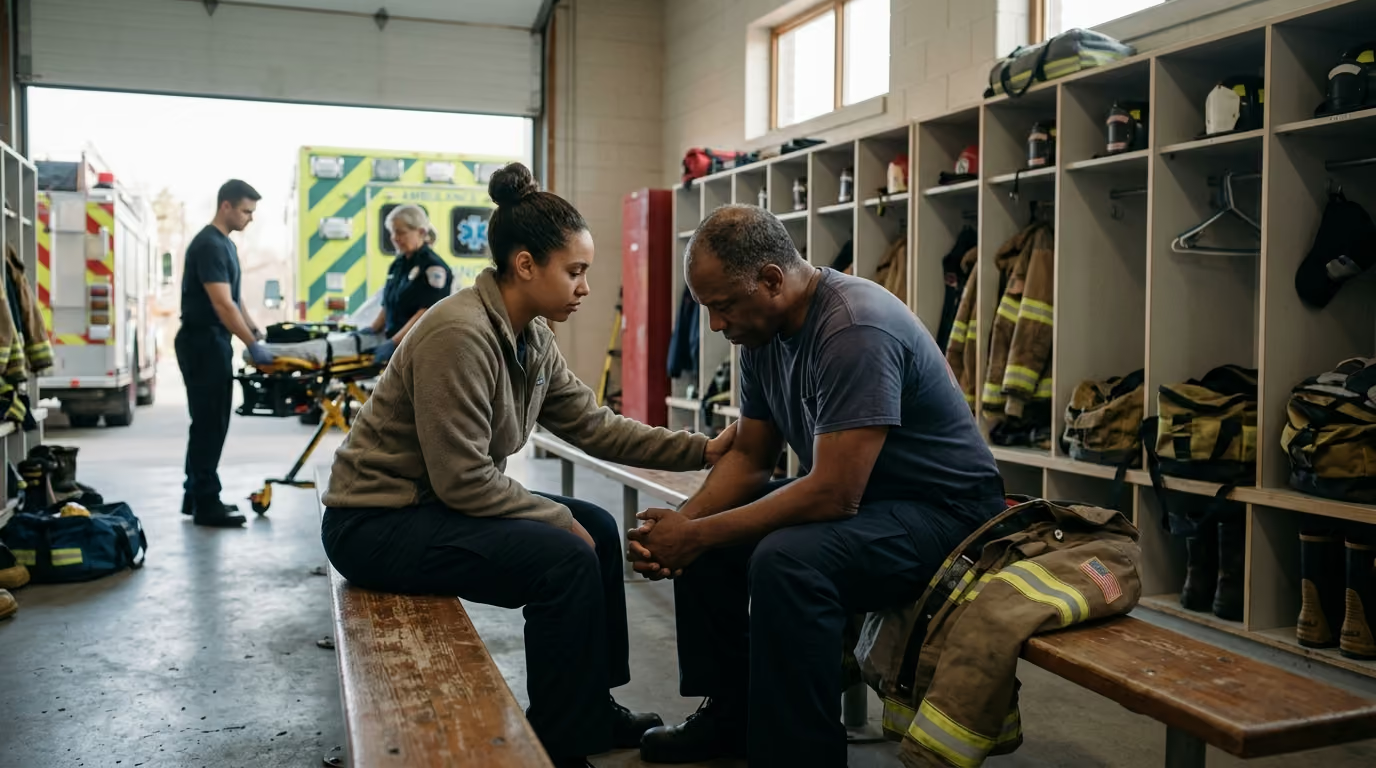

Sudden open calendars and shifting household roles after decades in emergency service can challenge families adjusting to life after first responder retirement.





If you or someone in your home is in immediate danger, call 911 right away. If you or a loved one is experiencing thoughts of suicide, call or text 988 to reach the Suicide & Crisis Lifeline in the United States and Canada. Veterans and military personnel can press 1 or text 838255. In the United Kingdom, call 111 or 999 for emergencies. In Australia, call 13 11 14 for Lifeline or 000 for emergency services.
The final shift ends, the gear is turned in, and the station radio falls silent. For decades, household life revolved around shift rotations, sudden call-outs, interrupted holidays, and recovery days. Suddenly, the retired firefighter, police officer, paramedic, or dispatcher is sitting in the kitchen on a Tuesday morning with an open calendar.
For spouses and family members, this shift can feel just as disorienting as it does for the retiree. Retirement is not simply an extended vacation. It is a fundamental restructuring of identity, daily habits, personal autonomy, and household responsibilities.
Navigating this transition requires supporting the individual without leaning on stereotypes. Family members do not need to walk on eggshells or assume every quiet mood is a trauma response. By building practical communication systems, setting healthy boundaries, and planning shared routines, families can establish a stable, fulfilling life after service.
Retirement represents a comprehensive life transition rather than an automatic psychological crisis. Emergency service provides decades of external structure, clear authority, intense camaraderie, and an urgent sense of purpose. When those elements disappear overnight, both the responder and the household experience a major shift in daily operations.
The transition is smoothest when families treat retirement as a joint project that requires patience, honest conversations, and practical adjustments. The goal is to address observable behaviors and daily friction without applying diagnostic labels. Supporting a retired responder means acknowledging the weight of their career while maintaining standard expectations for mutual respect, shared household participation, and healthy family boundaries.
Every retirement path looks different. Some responders step away voluntarily after reaching full service milestones, while others leave early due to physical injuries, organizational conflict, or medical conditions. Recognizing these distinct circumstances helps family members offer relevant, grounded support that respects the retiree's autonomy while protecting the overall health of the home.
Research across public safety personnel demonstrates that emergency responders face distinct occupational exposures throughout their careers. These personnel include police officers, firefighters, paramedics, correctional officers, and emergency communications dispatchers. Understanding population-level research helps family members gain perspective without assuming that every statistic applies directly to their loved one.
Large-scale survey data provides insight into the symptom burdens reported across emergency services. In a nationwide Canadian study of 5,813 public safety personnel, 44.5% of surveyed participants screened positive for clinically significant symptoms consistent with one or more mental disorders. Within that same sample, roughly 23.2% screened positive for symptoms consistent with post-traumatic stress disorder. Screening positive on a questionnaire indicates symptoms that warrant professional assessment, but it is not a formal medical diagnosis.
Mental health screening rates also vary across specific occupational roles within emergency services. Data from Canadian public safety research indicates that positive screens for at least one mental disorder reached approximately 34% among firefighters, 37% among municipal police, 48% among public safety communicators, 49% among paramedics, and 50% among national police personnel. These figures reflect active-duty burdens, showing why transition planning must account for long-term psychological health.
Systematic reviews examining suicidal thoughts and behaviors across police, fire, and emergency medical personnel indicate elevated risk compared to the general population. A study examining public safety personnel deaths in Ontario found documented post-traumatic stress disorder at the time of death in 19% of responder cases, compared to none in matched general-population controls. Depression remained the most common diagnosis across both groups. These findings underline the importance of proactive family awareness, open communication, and early safety planning.
Post-retirement research is expanding. A systematic review evaluating post-traumatic stress disorder prevalence among former emergency responders found a pooled point prevalence of approximately 15.4% across general exposure studies. The research literature on career longevity and life after service emphasizes that retirement does not automatically erase occupational strain. Comprehensive transition strategies should begin prior to separation and continue well into the post-service years.
Research also highlights significant differences based on the reason for leaving service. Studies reviewing career transitions note that personnel who undergo medical retirement report higher levels of psychological distress, anxiety, depression, and identity disruption than those who retire voluntarily. Physical injuries, chronic pain, and an involuntary exit compound the emotional challenge of leaving the job.
Finally, family systems research confirms that spouses and partners are essential partners in long-term health, yet they frequently experience significant stress of their own. Spouses often navigate complicated healthcare systems and support their partners through difficult periods while feeling overlooked by service organizations. Effective post-retirement planning must support the spouse and the family unit as independent individuals with their own valid needs.
Decades in public safety instill deeply ingrained operational habits. On duty, these patterns keep responders and their crews safe. When brought directly into the living room, however, they can create friction and confusion for spouses and children.
These behaviors are not inherently flawed or pathological. They are learned professional reflexes that require time and conscious effort to calibrate for civilian home life. Recognizing the operational root of these habits helps families respond with clarity rather than frustration:
During active service, families also adapt around first responder fatigue and shift length. Spouses often build independent routines, social circles, and parenting rhythms to keep the household running during long tours of duty.
When the responder retires, the sudden physical presence disrupts those established household systems. The responder may feel like a guest in their own house, while the spouse may feel their hard-won autonomy is being crowded out. Framing this dynamic as a practical adjustment rather than a personal slight helps both partners renegotiate their daily living arrangements constructively.
One of the steepest hurdles in retirement is the sudden disappearance of occupational identity. First responders rarely view their work as just a job. They are known within their communities and families as the officer, the captain, the paramedic, or the dispatcher.
When that uniform is put away, retirees often grapple with fundamental questions about their purpose and self-worth. Exploring these questions is a normal part of building career longevity and a healthy identity beyond emergency operations:
This identity shift often collides with the open calendar problem. During active duty, schedules are rigid and externally enforced. In retirement, an empty calendar can feel liberating for the first two weeks, but deeply disorienting soon after.
Families should distinguish between three distinct responses to an open schedule:
Families can help by encouraging continuity rather than demanding immediate replacement. A retired responder does not need to jump into a brand new career or heavy volunteer schedule on day one. Preserving continuity might mean staying connected with trusted retired colleagues, mentoring younger personnel, coaching local sports, or working on skilled hands-on projects. Replacing the operational role takes time, experimentation, and permission to try new things without pressure.
When a responder returns home full-time, the household balance shifts immediately. A spouse who managed the budget, home maintenance, and daily calendar for twenty years may suddenly find the retiree attempting to take over those tasks. Friction often arises not from ill will, but from an excess of time and a desire to be useful.
Establishing a shared plan with separate ownership prevents power struggles and protects independence for both partners.
Consider a common scenario: A firefighter retires after thirty years. Eager to contribute, they reorganize the pantry, alter the morning routine, and question how the family manages errands. The spouse, who ran the household smoothly during decades of 24-hour shifts, feels criticized, crowded, and resentful.
Resolving this dynamic requires clear structural agreements:
Preserving the spouse's pre-existing routine is essential. The non-responder partner should not be expected to drop their social life, career, or personal habits simply because the retiree is now at home with open availability.
Clear communication patterns keep retirement adjustments collaborative rather than combative. When emotional tension surfaces, using structured dialogue prevents conversations from turning into defensive arguments.
One practical framework is the Notice, Ask, Agree, Review cycle:
For instance, rather than saying, "You are depressed and isolating yourself," a partner might say: "I noticed you have stayed inside for the past four days and skipped your morning walk. How are you feeling this week?" From there, both can agree on a simple goal, such as taking a twenty-minute walk together every other morning, followed by a quick check-in the following Sunday.
Boundaries are not punitive measures designed to control the other person. A boundary is a clear statement of what a family member will do to protect their own emotional health, dignity, and physical safety.
A healthy boundary contains four components: the specific behavior, its observable impact, the defined limit, and the action the family member will take.
For example, a spouse might state: "When operational stress leads to yelling or sharp commands during our conversations, I feel overwhelmed and disrespected. I will pause the discussion and step into another room. We can revisit the topic tomorrow when we are both calm, or we can discuss it with a counselor." This approach sets a firm standard for respect while keeping the door open for productive dialogue.
Retired responders often maintain a strong desire for personal privacy. They may choose not to share graphic details of past traumatic calls, internal department politics, or deep personal grief. Spouses should respect this boundary. A responder has the right to process certain operational experiences privately or exclusively with professional counselors and vetted peers.
Privacy becomes destructive secrecy, however, when it conceals active safety risks. Hiding heavy alcohol use, secret debts, gambling, prescription medication misuse, or suicidal feelings damages the foundation of the home.
Families should agree on a consent-based coordination model. The retiree retains full control over personal details, medical records, and therapy sessions. Simultaneously, both partners agree that any issue affecting household safety, shared finances, or mental stability must be addressed openly and honestly.
Structuring the retirement transition prevents the disorientation of an open calendar from turning into chronic stagnation. Families benefit from breaking the transition down into structured phases.
Transition planning should begin at least six months prior to the final shift:
The first year of retirement unfolds across distinct phases, each requiring different adjustments:
To keep discussions comprehensive, families can evaluate their progress across five core life areas:
Reviewing these five domains quarterly allows couples to identify areas of stagnation early and make practical course corrections together.
Not all retirements follow a predictable, celebratory timeline. Distinct circumstances can complicate the transition, requiring specialized family strategies.
Leaving service due to physical disability or psychological injury carries profound emotional weight. Medical retirees often experience intense grief, frustration over lost physical capabilities, and administrative exhaustion from navigating workers' compensation or disability boards. Studies confirm that medical retirees experience higher symptom burdens of depression, anxiety, and stress than voluntary retirees.
Families should approach medical retirement with structured patience:
Retirements prompted by departmental politics, disciplinary disputes, fitness-for-duty determinations, or institutional betrayal often leave personnel with deep bitterness and mistrust. Responders in this position may obsess over past grievances, replay workplace conflicts, or isolate themselves from all former colleagues.
Family members should avoid forcing premature emotional closure or telling the retiree to simply move on. Instead, encourage the responder to work with culturally competent therapists or legal advisors to process the institutional injury. The family's role is to serve as a grounded, stable sanctuary that remains separate from past departmental conflicts.
Departures that follow high-profile mass casualty events, line-of-duty deaths, or intense public scrutiny can expose families to external pressure and media attention. In these situations, establishing strict digital boundaries is critical.
The family should agree on a unified approach to social media use, decline unscreened media inquiries, and protect the home environment from outside intrusions.
Volunteer firefighters and emergency medical personnel often dedicate decades to community protection without receiving formal pensions, structured decompression programs, or post-service organizational support.
When volunteer responders step down, they lose their primary community network and operational purpose overnight. Families of volunteer personnel should recognize the validity of this transition and actively help the retiree establish new civic or social outlets.
Many retirees immediately enter a second career in private security, consulting, skilled trades, or corporate management. While continuing to work can provide financial stability and daily structure, families should observe the underlying motivation.
If a second career is chosen out of genuine interest, it supports healthy long-term adaptation. If it is used as a mechanism to avoid emotional decompression, escape family life, or suppress unresolved health issues, it simply postpones necessary adjustment.
While most transitions proceed safely with time and mutual effort, families must have clear, objective protocols for managing acute mental health crises, substance abuse, or aggressive behaviors.
If a retired responder displays profound hopelessness, severe social withdrawal, sudden changes in personality, or gives away meaningful possessions, family members should address the situation directly. Asking someone straight out if they are having thoughts of suicide does not plant the idea in their head; it provides permission to speak honestly about severe distress.
Ask simple, direct questions:
If there is immediate danger, do not leave the person alone. Call 988, contact emergency services, or transport them to the nearest hospital emergency department immediately.
Increased alcohol consumption or reliance on prescription medications is a frequent pitfall during the retirement transition. Responders may use substances to self-medicate chronic physical pain, manage insomnia, or blunt intrusive memories.
Families must address substance use through objective impact rather than moral criticism:
Securing personal firearms and lethal medications in the home is a practical, life-saving safety measure during times of severe stress, depression, or cognitive decline. Research shows that putting time and distance between an individual in acute distress and lethal means significantly reduces suicide risk.
Means safety should never be handled as an angry ultimatum or a standalone chore. It is a shared health protocol arranged collaboratively between the responder, trusted family members, and healthcare providers:
Occupational stress, physical trauma, and operational backgrounds never justify intimidation, property destruction, threats, or physical violence in the home. If a retired responder becomes threatening or aggressive, family members must prioritize their own safety immediately.
In situations involving domestic abuse or coercive control, couples counseling is not recommended. Family members should reach out to specialized domestic violence resources, trusted advocates, or law enforcement to establish a safe personal exit plan.
Recognizing when an issue exceeds the family's internal resources is essential for long-term health. Professional guidance should be viewed as specialized operational support rather than a sign of personal failure.
Families should consider seeking licensed professional evaluation under specific circumstances:
When selecting healthcare professionals, prioritize providers who demonstrate cultural competence in public safety and military populations. Clinicians who understand emergency services know the operational realities of the job, speak the language without requiring basic explanations, and understand the distinct nuances of responder culture.
Spouses and children should also seek their own independent therapy or peer support. Having an individual, confidential space to process the emotional impact of the career, address transition fatigue, and build personal coping tools strengthens the resilience of the entire household.
Life after emergency service offers an opportunity to build a rich, healthy, and deeply connected future. A successful transition is not about erasing thirty years of service. It is about taking the integrity, leadership, resilience, and courage developed in uniform and applying those strengths to family life, personal health, and new creative pursuits.
By maintaining realistic expectations, establishing firm boundaries, and communicating openly without diagnostic labels, families can successfully navigate the operational shift of retirement. Sustainable capability is not measured by the ability to keep running on adrenaline forever. It is measured by the ability to step away with pride, adapt to civilian life, and build a lasting, meaningful foundation at home.
Return to this guide whenever major household transitions occur, such as relocating to a new home, navigating changes in physical health, facing unexpected financial adjustments, or reviewing the one-year retirement milestone.
Successful retirement is a continuous, collaborative practice of open communication, mutual respect, and long-term health management.
Stay connected for research-led guidance on duty fitness, shift-work sleep, injury recovery, stress, nutrition and career longevity. Practical ideas for first responders who want to stay capable on the job, recover well and protect their health for the long run.



Read practical guidance on first responder fitness, recovery, sleep, nutrition and resilience for demanding work and a long, active career.
read the blog



