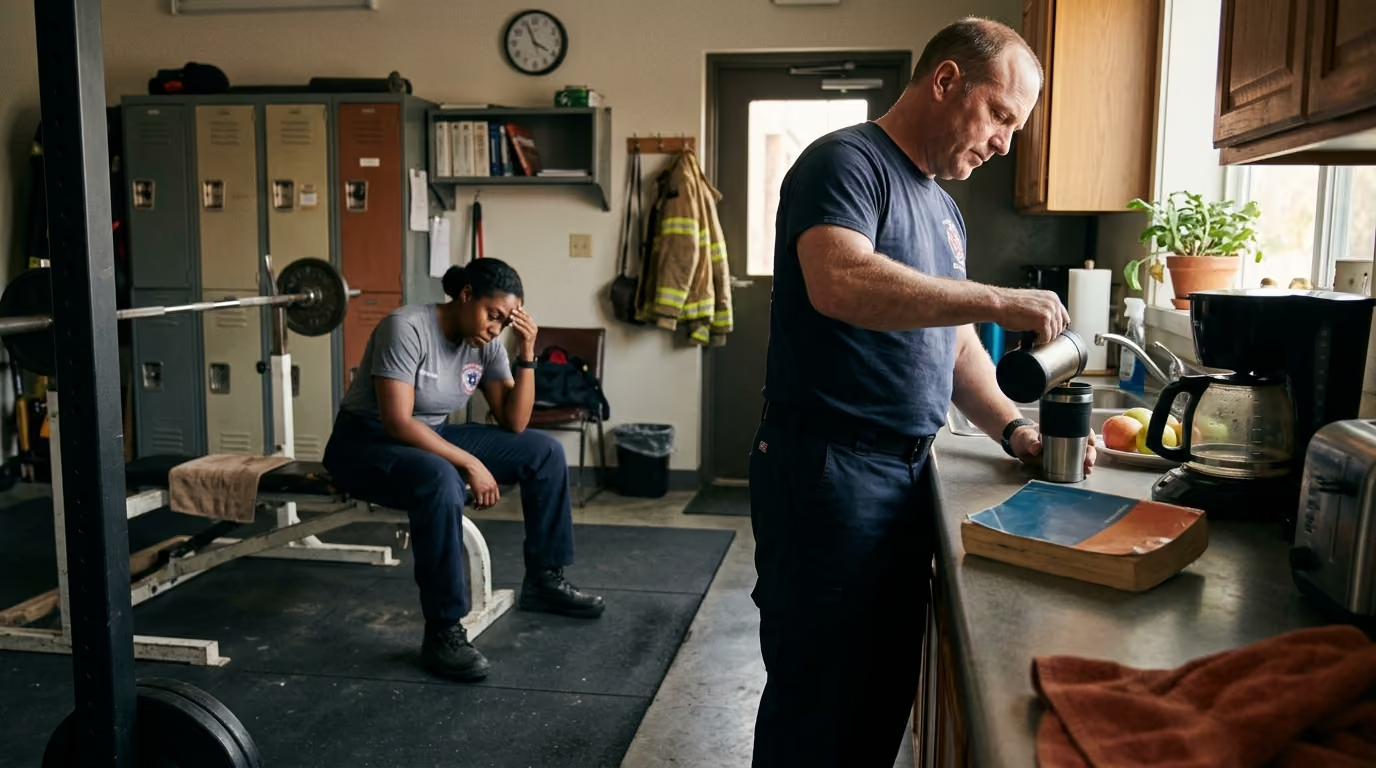

Five core performance domains help emergency responders systematically manage operational stress, optimize recovery, and maintain critical cognitive functioning during high-stakes duties.





If you are in immediate danger, call 911. For 24/7 support, call or text 988 and press 1 for the Veterans Crisis Line, or text 838255.
You are three hours into a twenty-four hour shift when tones drop for a multi-vehicle collision on a dark stretch of highway. Your body responds with familiar autonomic arousal, including an elevated heart rate, narrowed visual focus, and a surge of adrenaline. Twelve hours and four dispatches later, that same physiological activation feels blunted, replaced by cognitive heaviness, delayed word retrieval, and a persistent hum of fatigue. This drop in capacity is not a personal failure or a lack of mental toughness. It is the predictable physiological outcome of sustained operational stress without a structured system to manage it.
A first responder mental performance plan is an operational system rather than a collection of motivational slogans or a one-time classroom course. In plain terms, it is a practical blueprint designed to keep personnel alert, adaptable, emotionally steady, and decision-capable across routine shifts, night work, critical incidents, and extended career exposure. The system connects five core domains: operational demands, sleep and recovery, technical training, personal support networks, and known stress triggers. Responders build this system through four continuous stages: assess baseline capacity, implement specific operational habits, review objective performance indicators, and establish clear contingency plans for degraded states.
Credible occupational research demonstrates that mental performance is directly tied to physiological regulation, cumulative fatigue, and cognitive workload. Mental performance does not mean feeling calm during chaos. Rather, it represents the ability to apply sustained attention, sound judgment, working memory, emotional regulation, and clear communication under operational conditions. A responder can experience intense fear, grief, or physical arousal while continuing to execute high-stakes tasks safely. For this reason, researchers evaluate both subjective state, which is how a person feels, and functional state, which is how that person actually behaves, decides, and communicates.
The evidence base regarding first responder operational strain is strong and consistent across multiple emergency disciplines. Systematic reviews of occupation-induced fatigue demonstrate clear links between high fatigue levels, operational stress, organizational conflict, critical incident stress, and safety-compromising behavior. Fatigue is also strongly associated with on-duty injuries and hazardous exposures. When sleep loss combines with chronic occupational stress, the brain experiences measurable reductions in executive function, reaction speed, and cognitive flexibility.
(Self-correction: Ensure no ASCII diagrams are used anywhere in output. Use only clean prose, H3 subheadings, and bullet points.)
The prevalence of sleep disruption among emergency service workers is exceptionally high compared to the general public. Systematic research on first responders indicates estimated pooled prevalence rates of 31 percent for shift-work disorder, 30 percent for obstructive sleep apnea, 28 percent for insomnia, and 28 percent for excessive daytime sleepiness. These figures represent occupational realities rather than individual character defects. When sleep debt accumulates, baseline cognitive bandwidth shrinks, leaving less neurological capacity to process unexpected scene hazards or volatile interpersonal encounters.
The evidence for mental performance interventions shows mixed results depending on the specific modality. Structured resilience training and stress-inoculation programs show moderate, positive outcomes for operational focus and situational adaptability. Conversely, single-session forced psychological debriefings immediately following traumatic events show limited or even counterproductive results. The research indicates that individual mental performance plans cannot succeed in isolation. They must function alongside sensible scheduling, fatigue mitigation policies, and confidential access to licensed clinical care.
Emergency services impose physical, cognitive, and emotional burdens that rarely match standard civilian workplaces. First responders operate on irregular rotations, extended 24-hour shifts, mandatory overtime, and unpredictable recall schedules. These patterns disrupt natural circadian rhythms, suppress restorative slow-wave sleep, and elevate chronic cortisol output. You can find detailed strategies for handling these cycles in our guide on building a shift-specific sleep plan.
Physical load also changes how the brain functions under pressure. Carrying fifty pounds of protective equipment in extreme heat accelerates dehydration and glycogen depletion. These physiological stressors degrade working memory and emotional regulation long before an incident concludes. Prolonged periods of low-stimulation station waiting followed by sudden, high-acuity dispatches create extreme autonomic swings. Moving from resting physiology to maximum cardiovascular output within ninety seconds strains both the cardiovascular system and executive attention networks.
Responders also manage distinct categories of occupational strain that interact throughout a tour of duty:
This is the immediate physiological and psychological reaction occurring during or right after a high-threat call. It includes tunnel vision, auditory exclusion, elevated heart rate, and acute muscular tension.
This represents the gradual wear from hundreds of routine calls, persistent shift disruption, heavy administrative paperwork, and sustained vigilance. Over time, cumulative strain erodes baseline patience, memory retrieval, and emotional stability.
This distress stems from direct exposure to severe injury, death, violence, or scenes involving vulnerable populations like children. It can produce intrusive thoughts, nightmares, avoidance behavior, and persistent hyperarousal.
This strain arises from administrative friction, unpredictable scheduling, staffing shortages, equipment failures, and perceived lack of leadership support. Research demonstrates that organizational friction often exhausts responders faster than direct call volume.
This occurs when institutional constraints, legal limits, or chaotic operational realities prevent responders from delivering the care or protection they believe a situation demands.
Understanding these operational layers prevents personnel from misinterpreting fatigue or administrative burnout as a sudden loss of personal resilience. A reliable performance plan accounts for each of these factors rather than assuming that every difficulty stems solely from critical incident trauma.
An effective mental performance plan links personal habits with the demands of emergency service. Rather than relying on rigid rules, it organizes your operating habits into five functional domains.
This domain tracks your active exposure and occupational workload. It includes your shift length, call volume, physical hazards, driving duration, supervisory duties, and the degree of consequence attached to your daily decisions. Documenting these demands provides an accurate picture of your actual cognitive load. A 24-hour shift in a slow rural district requires a different operational strategy than a 14-hour night shift in a busy urban core.
Sleep is the biological foundation of all mental performance. This domain encompasses sleep duration, sleep environment management, nap protocols, hydration, nutrition, and cardiovascular conditioning. Without protected recovery windows, cognitive performance degrades regardless of your mental determination. Understanding fatigue from circadian timing and shift lengths helps personnel structure recovery windows that match their biological needs.
Competence under pressure reduces unnecessary cognitive friction. This domain covers scenario practice, tactical communication drills, equipment mastery, stress-inoculation exercises, and psychological flexibility skills. When motor skills and tactical procedures are automated through realistic practice, your brain retains free working memory to solve dynamic problems and maintain situational awareness.
Operational longevity requires solid connection outside the emergency services environment. This domain maps your trusted peer connections, department support teams, family communication routines, clinical contacts, and community networks. Protecting these relationships buffers against the cynical detachment and emotional numbness that often accompany cumulative operational exposure.
Every emergency responder develops specific operational sensitivities over time. These triggers may include pediatric trauma, severe burn injuries, hostile bystanders, line-of-duty vehicle crashes, or personal anniversary dates of difficult past incidents. Mapping these points of friction allows you to prepare proactive coping protocols before stepping onto the scene.
Creating a mental performance system starts with an honest, objective baseline assessment across your daily routines. Many responders normalize high levels of chronic fatigue and emotional exhaustion, assuming that feeling depleted is simply part of the uniform. A structured assessment establishes clear metrics for both physical readiness and operational capability.
Subjective feelings can be deceptive during high-tempo operations. An adrenaline surge can make an exhausted responder feel fully alert, masking significant cognitive deficits in reaction time and working memory. Your assessment must evaluate functional indicators alongside internal feelings:
A trigger inventory identifies predictable operational friction points before they generate acute performance failures. To build this inventory, document four specific components for your primary stressors:
Identify the specific call type, environmental condition, or administrative scenario that reliably spikes your stress response. Examples include pediatric resuscitations, high-speed vehicle responses in heavy rain, combative patients, or sudden shift holdovers.
Document your initial somatic and cognitive reactions to that trigger. These might include jaw clenching, rapid shallow breathing, sudden irritability, heat in the chest, or an urge to rush through procedural steps.
Identify what you tend to do when that trigger occurs without conscious intervention. Common defaults include emotional withdrawal, sharp communication, excessive caffeine intake, or aggressive driving.
Define a concrete, practiced alternative action. This could involve a structured exhalation cycle, standardizing your verbal
instructions, asking a partner for a secondary verification, or taking a structured sixty-second tactical reset immediately after clearing the incident.
Map your operational support resources before you find yourself in an acute crisis. Write down specific names and verified phone numbers across four distinct tiers:
Sleep cannot be treated as an optional luxury in public safety. It is a critical safety control. The Centers for Disease Control and Prevention recommends that adults obtain at least seven hours of sleep per 24-hour cycle. Furthermore, occupational guidelines from the National Institute for Occupational Safety and Health (NIOSH) emphasize providing at least ten consecutive hours of off-duty time per day to allow workers seven to eight hours of actual sleep.
Emergency schedules frequently compromise these targets. Therefore, your performance plan must treat sleep opportunity as an active operational objective rather than passive downtime.
Track your sleep parameters for two to four weeks across both on-duty shifts and off-duty recovery blocks. Note your total time in bed, estimated sleep duration, number of nighttime awakenings, daily caffeine timing, and subjective morning alertness. Look for dangerous operational patterns:
Daytime sleep requires deliberate environmental engineering to overcome circadian wake drives. Light exposure suppresses melatonin production and fragments sleep architecture. Equip your recovery bedroom with total blackout shades or use a high-density, contoured eye mask. Keep the ambient room temperature between 65 and 68 degrees Fahrenheit, as elevated room temperatures disrupt slow-wave sleep. Utilize a mechanical white noise machine or dense earplugs to block neighborhood traffic, deliveries, and household noise.
Planned naps provide immediate restorative benefits during long operational tours without disrupting overall sleep patterns. Short naps of fifteen to twenty minutes reduce subjective sleepiness, improve vigilance, and sharpen reaction times without inducing deep-stage sleep. If operational conditions permit a longer rest window before an all-night shift, aim for a ninety-minute nap to complete a full sleep cycle.
Always account for sleep inertia after waking. Sleep inertia is the temporary grogginess, slowed processing, and impaired coordination that occurs immediately upon awakening from deep sleep. Allow ten to fifteen minutes of active movement, bright light exposure, and cold water facial washing before undertaking safety-sensitive tasks like driving or operating emergency equipment.
Caffeine is an effective operational tool when used strategically, but it quickly becomes counterproductive when used to mask chronic exhaustion. Caffeine has an average elimination half-life of five to seven hours. Consuming high-dose stimulants late in a shift prevents deep slow-wave sleep, even if you fall asleep without difficulty. Establish a strict caffeine cutoff five to six hours before your planned sleep window, and explore our recommendations for practical reset skills between calls to maintain focus without relying solely on stimulants.
During high-tempo emergency operations, your autonomic nervous system naturally shifts toward sympathetic arousal. Your heart rate accelerates, peripheral blood vessels constrict, and attention narrows. This response improves your capacity for simple physical tasks, but it degrades complex decision-making, wide-angle situational awareness, and fine motor precision. Integrating practical downshifting tools keeps your physiological state within an optimal operational band.
Controlled breathing works by stimulating the vagus nerve and engaging parasympathetic downshifting. Practicing a deliberate exhalation pattern lowers operational heart rate, relaxes skeletal muscle tension, and prevents emotional reactivity.
A reliable in-shift breathing cycle follows a simple, repeatable sequence:
Lengthening the exhalation relative to the inhalation is the key physiological mechanism. This brief downshift does not make you passive or sluggish. It restores working memory and prevents impulsive tactical errors.
Under acute stress, working memory contracts, increasing the risk of confirmation bias and premature task closure. Use short, standardized verbal prompts to reorient your focus during volatile calls:
Speaking these questions aloud or cycling through them internally breaks perceptual narrowing and re-engages deliberate executive analysis.
Do not rely on unassisted working memory during complex or fatigued operations. Stress and sleep debt significantly reduce short-term recall capacity. Protect operational safety through structured cognitive off-loading tools:
Operational readiness fluctuates throughout a shift based on sleep history, call volume, nutritional status, and cumulative exposure. The three-zone performance model provides a clear, objective framework for categorizing your functional state and applying appropriate field adjustments.
In the Green zone, your biological and cognitive systems are functioning within normal operational limits.
In the Amber zone, acute fatigue, cumulative stress, or emotional overload has noticeably reduced your cognitive reserves.
In the Red zone, physiological or cognitive impairment compromises your ability to operate safely in high-consequence environments.
This three-zone system removes ambiguity. It transforms readiness from an abstract moral concept into an objective operational standard that protects both the responder and the public. You can read more about building resilient agency teams in our article on operational resilience frameworks.
How a crew handles the aftermath of a difficult call directly impacts long-term psychological recovery and operational retention. Emergency service culture historically oscillated between two unhelpful extremes: ignoring severe incidents entirely or mandating aggressive, immediate emotional debriefings. Modern trauma science offers a more effective, balanced path centered on practical psychological first aid.
The first two hours following a critical incident should prioritize basic biological safety and physical needs rather than psychological exploration. The World Health Organization guidelines for psychological first aid emphasize practical assistance, calming environments, and basic physical restoration.
During the initial 24 to 72 hours off-duty, the brain actively processes the incident and begins memory consolidation.
Within five to seven days post-incident, conduct a structured check on operational functioning:
A mental performance plan cannot remain static. It requires routine review cycles to track whether your habits are actively supporting duty capability. Without deliberate tracking, subtle signs of burnout, cognitive degradation, and sleep debt go unnoticed until an operational error occurs.
Perform a rapid self-check at the beginning and end of every shift:
Review your operational trends once per week during an off-duty window. Look for systemic patterns across your logs:
Every three months, review your overall operational framework with an emphasis on long-term sustainability. Evaluate whether your shift rotation remains viable, whether your off-duty relationships are thriving, and whether your trigger management strategies are working. Adjust your physical training volume, sleep protocols, and peer check-in schedules based on real-world data rather than idealized expectations. You can explore broader strategies across our stress resilience and mental performance resources.
A personal mental performance plan is an essential operational tool, but it has distinct limitations. Individual resilience habits cannot compensate for chronic organizational failures, severe understaffing, mandatory 72-hour work weeks, or toxic supervisory environments. Acknowledging these boundaries protects personnel from internalizing systemic problems as personal weaknesses.
When severe cognitive or physiological fatigue sets in, willpower alone cannot prevent operational failure. Clear safety limits must govern emergency operations:
If you or a fellow responder are experiencing overwhelming distress, severe depression, or thoughts of self-harm, immediate support is available. Call 911 for immediate life-threatening situations. You can call or text 988 to reach the Suicide & Crisis Lifeline, press 1 for the Veterans Crisis Line, or text 838255 for specialized support.
During periods of acute crisis, severe sleep deprivation, or heavy emotional distress, temporarily reducing access to lethal means at home is a proven, life-saving safety practice. This process should never be treated as a punitive measure or an isolated checklist item. Instead, collaborate openly with a trusted family member, peer support teammate, or mental health professional to securely store personal firearms, duty weapons, and medications away from immediate reach until full operational stability is restored.
Reviewing practical operational scenarios illustrates how this integrated performance plan functions under real-world conditions.
A veteran paramedic completes three consecutive 12-hour night shifts in a busy system. She notes increasing brain fog, frequent documentation errors, and rising irritability with emergency department nursing staff. Her default reaction is drinking another energy drink and pushing through.
Applying the performance plan: The paramedic recognizes Amber zone indicators during her shift scorecard. She sets a strict caffeine cutoff four hours before shift completion, drinks twenty ounces of water, and asks her partner to verify medication dosages on critical calls. Upon returning home, she activates her daytime sleep protocol, using blackout curtains and a white noise machine to achieve a protected six-hour rest window. She adjusts her physical training to light mobility work rather than heavy lifting, successfully halting the downward fatigue spiral.
A firefighter operates at a severe structure fire involving pediatric casualties. He reports feeling completely fine during the post-incident hot-wash, but over the next four days, he experiences vivid intrusive images, broken sleep, and emotional detachment from his spouse.
Applying the performance plan: Rather than forcing himself to tough it out or turning to heavy alcohol consumption, the firefighter references his trigger inventory. He identifies these intrusive symptoms as normal early stress processing. He reaches out to his mapped peer support contact for a brief conversation, maintains regular light cardiovascular exercise, and avoids major life decisions. Within seven days, his sleep stabilizes, and his functional readiness returns to Green without requiring formal clinical intervention.
A police officer faces months of mandatory staffing holdovers, administrative paperwork backlogs, and persistent departmental conflict. He feels cynical, exhausted, and detached from his community policing duties, mistakenly believing he has lost his mental toughness.
Applying the performance plan: The officer completes a comprehensive baseline assessment and recognizes that his impairment stems from cumulative organizational strain rather than a failure of personal courage. He establishes strict off-duty sleep boundaries, stops reading department emails at home, and schedules a confidential consultation with an emergency-services mental health professional. By addressing organizational boundaries and sleep recovery, his daily operational focus returns.
Individual mental performance systems are designed to manage normal occupational stress and maintain operational capability. They are not a substitute for professional medical care or clinical psychological treatment. Seeking an evaluation from a qualified, licensed healthcare professional is an appropriate and necessary action under specific conditions.
Consider scheduling a professional evaluation if you experience any of the following persistent signs:
A clinical evaluation provides clear diagnostics and specialized evidence-based care, including trauma-focused therapies and medical treatments tailored to the physical realities of emergency service.
Revisit this performance plan whenever you experience major operational transitions, including moving to a new shift rotation, promoting into a high-consequence command role, returning from medical or administrative leave, or navigating an extended disaster deployment. Regularly testing and refining your personal system ensures that your operational capability remains resilient, dependable, and aligned with a long, healthy career and a fulfilling life beyond the uniform.
Stay connected for research-led guidance on duty fitness, shift-work sleep, injury recovery, stress, nutrition and career longevity. Practical ideas for first responders who want to stay capable on the job, recover well and protect their health for the long run.



Read practical guidance on first responder fitness, recovery, sleep, nutrition and resilience for demanding work and a long, active career.
read the blog



