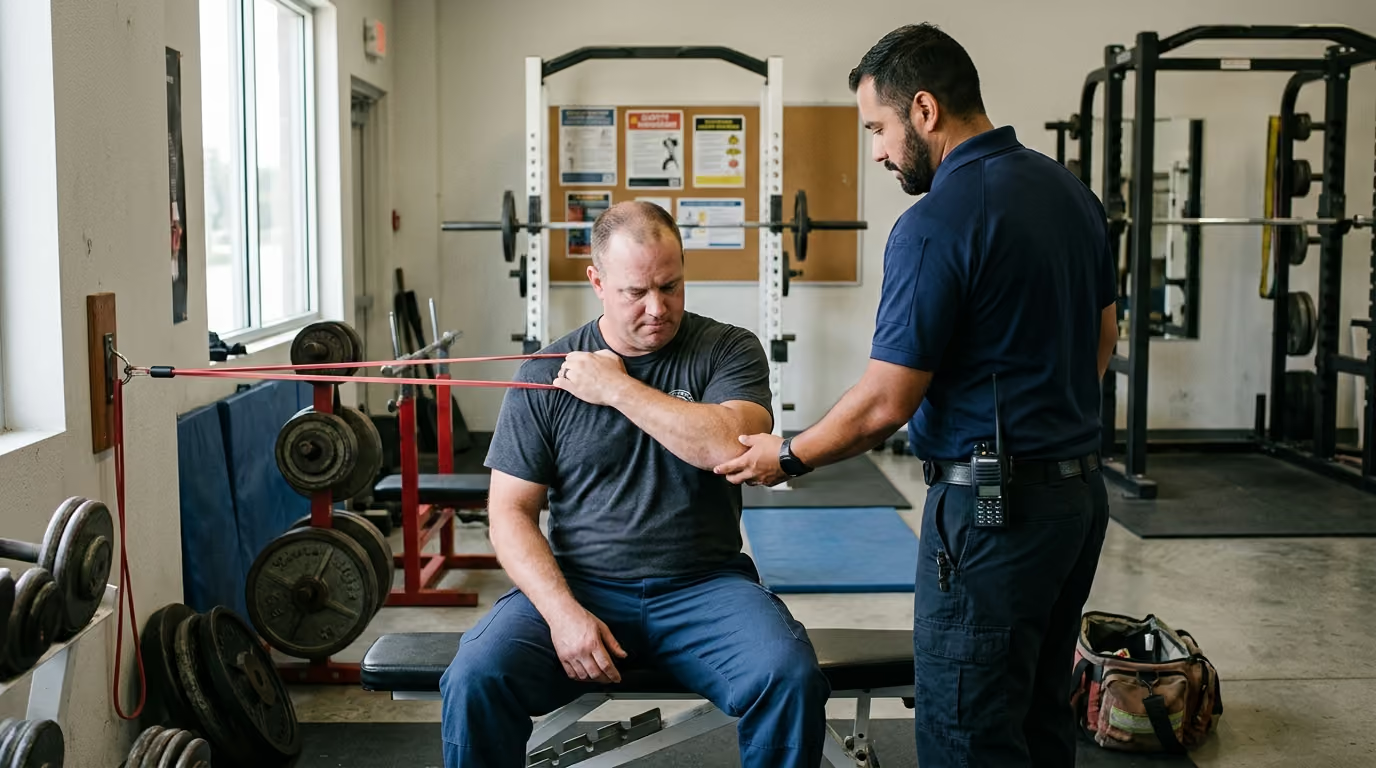

Physical conditioning alone cannot prevent overuse injuries, making early symptom assessment and practical workload adjustments vital for long-term first responder health.





You step out of the rig after the fourth ground-level patient lift of a twenty-four-hour shift. Your lower back feels tight, your right shoulder aches when reaching for the overhead compartment, and both knees feel warm and stiff. You finished the call, so you tell yourself it is just standard operational soreness. Within three weeks, that mild tightness turns into a sharp pinch that stops you from lifting a cot, landing you on light duty or off the line entirely.
Overuse injuries rarely start with a sudden, catastrophic snap. They develop quietly as repeated physical stress outpaces your ability to recover. In emergency services, where unpredictable environments and irregular schedules make textbook mechanics difficult, catching these warning signs early is vital for career longevity.
An overuse injury is a workload-recovery problem, not a personal failure or an unavoidable part of the job. When tissues face more mechanical stress than they can repair between shifts, microscopic damage accumulates until pain or movement loss occurs.
To manage early symptoms safely, follow these four immediate steps:
Taking action while symptoms are mild keeps small tissue irritations from turning into lost-time injuries.
Scientific research across occupational health, athletic training, and tactical strength fields shows that overuse injuries occur along a continuous spectrum. They develop when repetitive external loads exceed the current biological capacity of muscles, tendons, ligaments, joint surfaces, or bone.
Early in this process, subclinical tissue changes occur before a responder feels obvious pain. Tendon fibers can show structural disruption, local inflammation can develop in joint capsules, and bone can experience microdamage long before a shift is missed. This means that a lack of sharp pain does not guarantee that tissue is tolerating a workload. Changes in movement quality, local endurance, joint range of motion, and morning stiffness are reliable indicators of tissue fatigue.
The evidence categorizes musculoskeletal conditions into clear operational definitions:
High-quality systematic reviews demonstrate that physical conditioning alone cannot eliminate occupational injury risk when work design remains hazardous. Research evaluating interventions among physically demanding workers shows that combining ergonomic equipment, modified work patterns, and structured conditioning produces far better outcomes than relying on personal fitness alone. In healthcare and emergency medical environments, powered mechanical aids show the highest effectiveness for reducing back and shoulder strain.
Evidence also shows that fatigue directly amplifies musculoskeletal risk. Data from the National Institute for Occupational Safety and Health indicates that extended work periods of twelve hours or more associate with a 37 percent increase in injury risk. Sleep restriction impairs cellular tissue repair, slows motor control reflexes, and reduces pain tolerance. This makes shift workers particularly susceptible to cumulative strain.
Emergency service work combines high mechanical forces with extreme unpredictability. Unlike commercial fitness or industrial assembly, first responders cannot control their working environment. You must lift bariatric patients from tight bathrooms, drag heavy hose lines through compromised structures, and negotiate uneven terrain in poor lighting.
Municipal firefighting surveillance from the National Fire Protection Association highlights the constant physical toll of the job. In 2024, an estimated 53,575 municipal firefighters sustained occupational injuries. Overexertion and strain represented 27 percent of all fireground injuries, while slips, trips, and falls accounted for 22 percent. Multi-year fireground data from 2020 through 2024 shows an annual average of over 20,000 fireground injuries, with sprains and strains representing nearly a fifth of all recorded incidents.
Research reviewing broader emergency service populations reveals injury rates ranging from 9 percent to over 74 percent across different departments. The lower back and lower extremities consistently rank as the primary sites of reported damage. Sprains and strains remain the dominant injury type, driven by manual lifting, bending, squatting, and sudden muscle stressing under load.
Emergency medical services face equally demanding conditions. Studies in EMS settings document injury rates around 34.6 injuries per 100 full-time personnel. Lifting accounts for 40 percent of overexertion injuries, and more than half of all sprains and strains stem directly from patient handling.
Several unique operational factors compound this physical wear:
Structural turnout gear, self-contained breathing apparatus, body armor, and duty belts add substantial external mass. This gear alters your center of gravity, restricts normal joint movement, and forces surrounding muscles to work harder during basic movement patterns.
Responders regularly hold static, awkward postures for extended periods. Examples include crouching in an ambulance patient compartment, kneeling on hard concrete during resuscitation, or holding heavy hydraulic tools at chest height. These static holds restrict local blood flow and accelerate muscle fatigue.
Operating in heavy thermal protective gear or direct sunlight causes rapid fluid loss and elevated core body temperature. Heat strain reduces muscular endurance and impairs motor control, increasing joint shear forces during lifting and carrying tasks.
Rotating shifts, night runs, and mandatory holdovers prevent regular physical recovery. When sleep is interrupted, hormone production that drives tissue repair declines, leaving muscles and tendons vulnerable to cumulative microtrauma. Understanding how shift rotations drive fatigue and sleep debt is a critical part of recognizing your physical limits on duty.
Waiting for pain to become severe before taking action guarantees lost time and prolonged rehabilitation. The S.A.F.E.R. framework is a practical field screen designed to help emergency personnel identify, evaluate, and manage early overuse symptoms before structural failure occurs.
Evaluate what you are feeling and how those sensations behave over time. Notice the exact location and quality of the symptom. Is it a dull ache, sharp catching, stiffness, throbbing, or localized warmth?
Track symptom timing carefully:
Pain that alters its behavior by appearing earlier during work or lingering into rest indicates that tissue capacity is declining.
Compare your current physical demands against your baseline over the past three to four weeks. Identify any sudden spikes across duty and off-duty activities:
Identifying a workload change helps pinpoint the mechanical trigger behind the symptom.
Assess functional movement capacity rather than relying solely on subjective pain levels. Pain is influenced by adrenaline and stress, which can mask underlying functional limitations during active emergency calls.
Test basic operational movement patterns:
If you must alter your movement mechanics to complete a basic task, your body is compensating. This compensation transfers mechanical stress to adjacent joints and soft tissues.
Check immediately for symptoms that indicate structural compromise or neurological involvement. Look for progressive muscle weakness, numbness, pins-and-needles sensations, joint locking, noticeable swelling, or constant night pain.
Any red-flag finding requires prompt clinical evaluation and removal from hazardous duties rather than conservative field management.
Apply a temporary reduction in mechanical load and observe how the tissue responds over a 24 to 48 hour window. Modify aggravating tasks by using mechanical aids, sharing lifting duties, or substituting high-impact drills with low-impact conditioning.
If the symptom improves promptly with load reduction, the condition is likely an early-stage load intolerance that you can manage with gradual progression. If the symptom persists, returns immediately upon reloading, or worsens despite rest, professional evaluation is required.
Different operational roles place distinct mechanical stresses on the musculoskeletal system. Recognizing how overuse presents in specific body regions helps you take early corrective action.
Low back symptoms represent the most common musculoskeletal complaint across firefighting and emergency medical services.
The shoulder is an inherently mobile joint that depends heavily on dynamic muscular stabilization from the rotator cuff and periscapular muscles.
The knee absorbs massive compressive forces during loaded stair climbing, crawling, and deep squatting in full gear.
The lower leg and foot complex must absorb ground reaction forces while supporting your bodyweight plus forty to seventy pounds of gear.
Grip strength is essential for tool control, patient handling, and rope operations, making the wrist and forearm prime sites for repetitive strain.
Bone is dynamic tissue that continuously adapts to mechanical loading through remodeling. When repetitive impact or heavy load carriage outpaces bone remodeling, microscopic stress fractures can form.
Preventing overuse injuries requires more than personal discipline or stretching routines. Effective injury prevention relies on the Hierarchy of Controls, addressing hazards at the environmental and operational level before relying on individual behavior.
The most effective way to eliminate an overuse injury is to remove the unnecessary high-force exposure completely.
Replace high-strain manual tasks with mechanical alternatives.
Design equipment, vehicles, and facilities to minimize awkward postures and excessive mechanical force.
Implement organizational policies and operational guidelines that manage fatigue and physical exposure.
Individual practices serve as the final line of defense, building physical resilience against unavoidable operational demands.
When an early overuse symptom appears, aggressive early management can resolve tissue irritation within days. Use this structured approach to self-management during the first 48 to 72 hours.
Complete bed rest is rarely helpful for uncomplicated overuse conditions. Total inactivity leads to rapid deconditioning, muscle atrophy, and joint stiffness.
Instead, practice relative rest:
When managing an active overuse symptom during exercise or duty tasks, use a simple pain scale from 0 to 10:
Your baseline pain the next morning is your best guide. If your resting stiffness or pain is worse twenty-four hours after an activity, you exceeded your current tissue capacity.
Tracking simple operational metrics helps identify hidden patterns and triggers. Keep a brief log covering:
Reviewing this log across two to three weeks will clarify whether your symptoms are improving, staying static, or gradually worsening.
Relying on over-the-counter pain medications or non-steroidal anti-inflammatory drugs to push through a high-demand shift is a dangerous habit. Analgesics blunt the sensory feedback that warns you when tissue capacity is being exceeded.
Masking pain allows you to push deeper into mechanical damage, transforming a manageable tendon strain into a partial tear. Use medications only under the direction of a qualified medical provider, and never use them as an artificial pass to perform heavy operational lifts.
Self-management is appropriate only for mild, improving symptoms that do not impair basic functional capacity. You must recognize the clear boundary where self-management ends and formal clinical care begins.
Schedule a formal evaluation with an occupational health physician, physical therapist, or athletic trainer if you encounter any of the following:
Seek emergency medical assessment if you experience severe red flags. In the context of lower back pain, new loss of bowel or bladder control, numbness in the groin or saddle area, or severe progressive leg weakness indicates potential Cauda Equina Syndrome. This is a medical emergency requiring rapid surgical decompression.
Similarly, any joint that becomes hot, red, and swollen in conjunction with a fever or systemic malaise requires immediate assessment to rule out an infectious process.
Continuing to work through severe red flags does not prove toughness. It jeopardizes your crew, endangers the public, and risks turning a treatable condition into a career-ending disability. If you are navigating rehabilitation, review our specialized resources in the injury prevention and recovery section.
One of the largest obstacles to early intervention is the cultural stigma surrounding injury reporting. In many firehouses and EMS stations, admitting to pain is viewed as a sign of weakness or a lack of dedication. Responders fear being placed on administrative light duty, losing specialty assignments, or burdening their crew members with overtime.
This mindset is counterproductive and costly. When minor strains are hidden, they steadily progress into chronic tears, disc herniations, and structural joint damage. A problem that could have been resolved with two weeks of modified activity and physical therapy turns into six months of lost time, surgical intervention, and substantial workers' compensation costs.
Department leadership and station officers must actively build an operational culture that treats early physical maintenance with the same priority as apparatus maintenance:
No officer would allow a fire engine to run with a blinking oil warning light until the engine block cracks. Physical warning signs in personnel deserve the exact same proactive maintenance. Addressing early joint and soft tissue symptoms keeps front-line responders operational and capable.
Encourage personnel to speak up when physical capacity is reduced. If a crew member is managing an irritated lower back, adjust station drill assignments to focus on driver training, pump operations, or tactical radio reviews rather than high-repetition hose carries.
Public safety departments that integrate on-site athletic trainers and occupational physical therapists see marked reductions in lost-time claims. Having direct, confidential access to movement professionals allows responders to receive immediate screening, manual therapy, and corrective exercise programming before an issue reaches claim status.
Revisit this guide at the start of recruit academies, prior to seasonal peak periods such as wildland deployments, or whenever your department introduces new equipment, structural gear, or shift configurations. Review the S.A.F.E.R. framework whenever you notice lingering joint tightness, altered movement, or pain lasting more than two consecutive days.
Sustainable emergency service capability requires matching the physical demands of the job with intelligent workload management and prompt early intervention. Protecting your physical longevity ensures you can perform at your best throughout your active career and enjoy full physical health long after your service ends.
Stay connected for research-led guidance on duty fitness, shift-work sleep, injury recovery, stress, nutrition and career longevity. Practical ideas for first responders who want to stay capable on the job, recover well and protect their health for the long run.



Read practical guidance on first responder fitness, recovery, sleep, nutrition and resilience for demanding work and a long, active career.
read the blog



